# Understanding CBT Worksheets for Depression
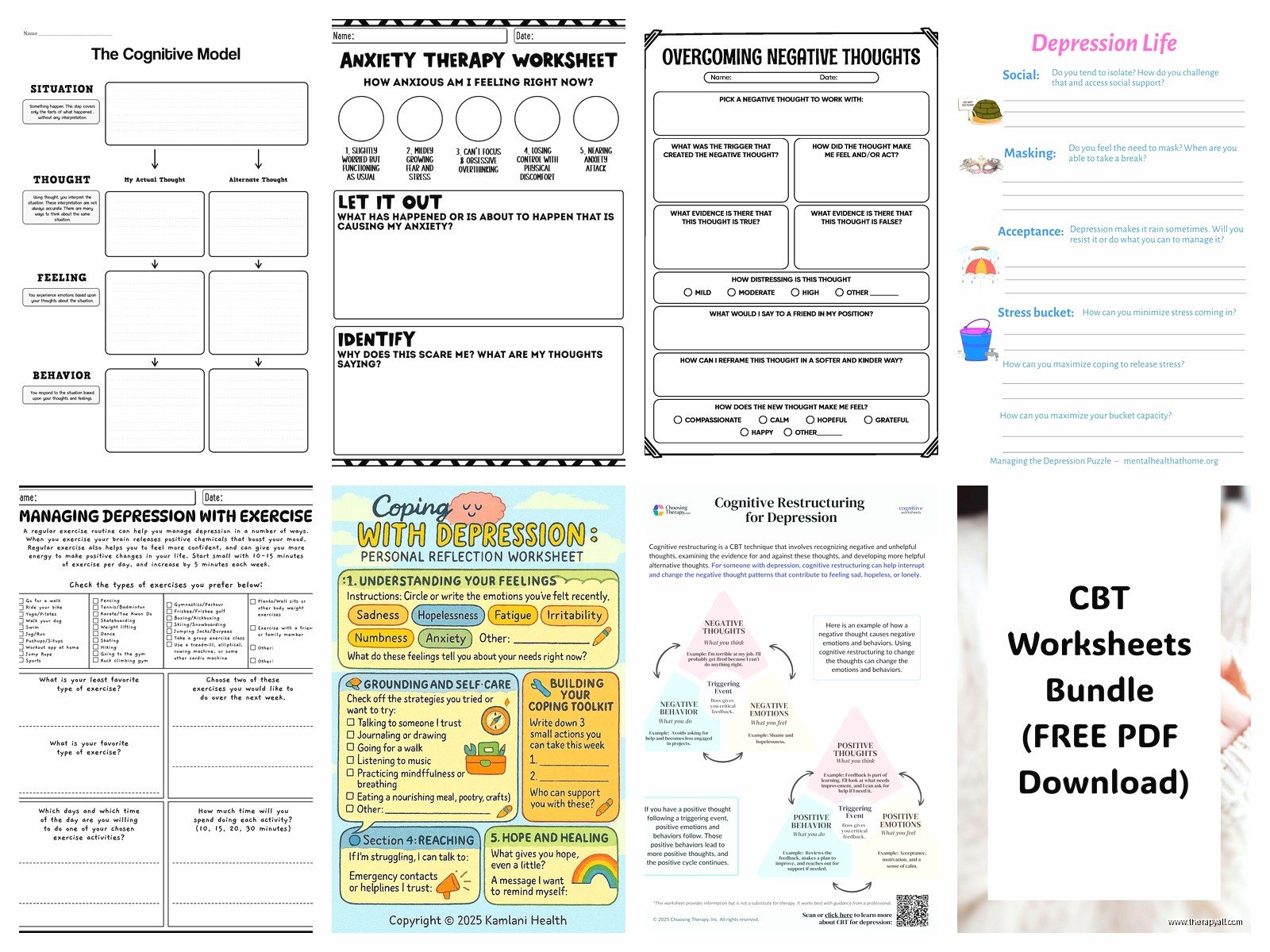
CBT worksheets for depression are structured documents that help you identify, challenge, and reframe negative thought patterns. They’re based on cognitive behavioral therapy principles, which operate on the premise that your thoughts, feelings, and behaviors are interconnected. When you’re depressed, your thinking tends to become distorted—you might catastrophize, overgeneralize, or engage in black-and-white thinking. These worksheets give you a systematic way to interrupt those patterns.
The most common types include thought records, behavioral activation logs, mood trackers, and cognitive distortion identification sheets. Each serves a different function in the treatment process.
## Thought Records and Cognitive Restructuring
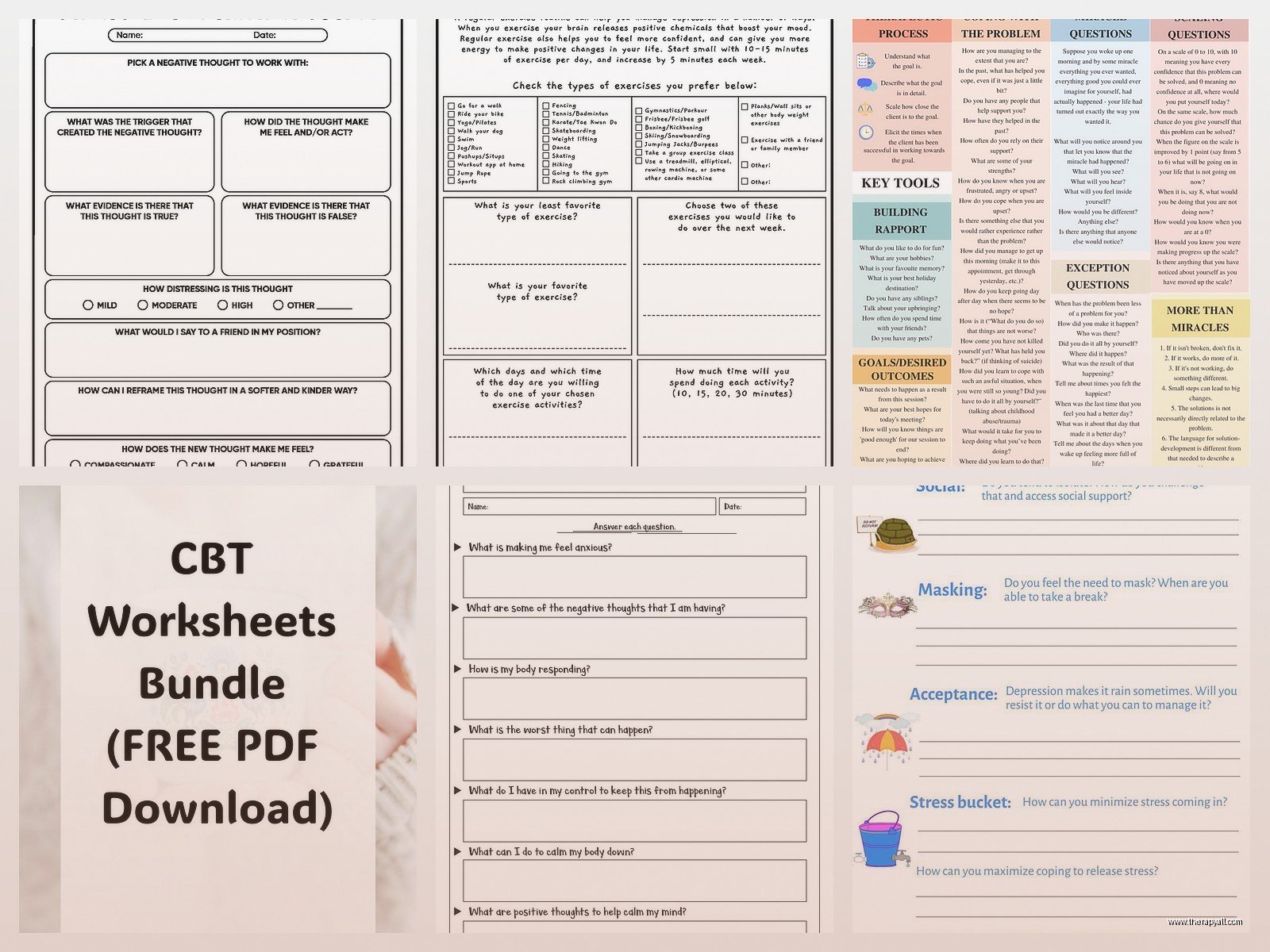
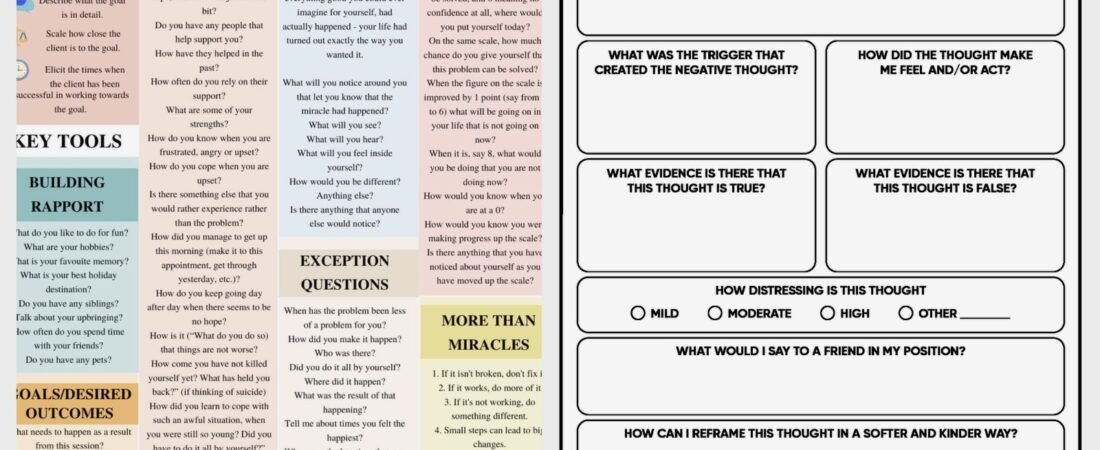
Thought records are the backbone of CBT work. You document a situation that triggered negative emotions, identify the automatic thoughts that arose, examine the evidence for and against those thoughts, and then generate a more balanced perspective.
I remember back in 2019, I was reviewing probably fifty different thought record templates for a roundup article, and I got so frustrated because half of them were just… badly designed. Too many columns, confusing language, or they’d use clinical jargon that nobody outside a therapy office would understand. The best ones are simple: situation, thought, emotion, evidence for, evidence against, alternative thought. That’s it.
When you first start using thought records, they feel mechanical. You’re gonna sit there thinking “this is ridiculous, I know my thoughts are irrational but that doesn’t make them feel less true.” That’s normal. The process isn’t about immediately believing your alternative thoughts—it’s about creating enough doubt in your negative thinking patterns that they lose some of their power.
A typical thought record might look like this: Situation is “didn’t get invited to friend’s party.” Automatic thought: “Nobody likes me, I’m always excluded.” Emotion: sad, rejected, intensity 8/10. Evidence for: “I wasn’t invited, they invited other people.” Evidence against: “This friend has included me in things before, I was busy the last two times they invited me somewhere, they might have assumed I was unavailable, I haven’t reached out to them in weeks either.” Alternative thought: “They might not have known I was available, or maybe it was a small gathering. One non-invitation doesn’t mean nobody likes me.”
The worksheet format forces you to actually examine your thoughts rather than just accepting them as facts.
## Behavioral Activation Sheets
Depression makes you want to withdraw. You stop doing things that used to bring pleasure or a sense of accomplishment. Behavioral activation worksheets help you schedule and track activities deliberately, even when you don’t feel like doing them.
These sheets typically have columns for the planned activity, the day and time, the actual completion (yes/no), and ratings for pleasure and mastery. Pleasure is how much you enjoyed it; mastery is how much accomplishment you felt. You rate both on a scale, usually 0-10.
What’s interesting is that people with depression consistently underestimate how much better they’ll feel after doing something. You think “going for a walk will be pointless, I’ll still feel terrible” but then you do it and rate it a 4 for pleasure and 6 for mastery, which is significantly better than the 0/0 you were experiencing while lying in bed.
The worksheet creates accountability and also provides data. After a couple weeks, you can look back and see which activities consistently improve your mood, even slightly. Maybe it’s calling a specific friend, or going to that coffee shop on the corner, or doing something with your hands—I don’t know, whatever works for you specifically.
One thing that kinda bugs me about how behavioral activation gets presented is this assumption that you should fill your schedule with bubble baths and meditation and nature walks. Nah. For some people, the activating behavior is cleaning out one drawer. Or watching a specific show that makes them laugh. Or going to the grocery store. It doesn’t have to be some wellness-magazine version of self-care.
## Core Belief Worksheets
These dig deeper than automatic thoughts. Core beliefs are fundamental assumptions you hold about yourself, other people, and the world. In depression, these often sound like “I’m worthless,” “I’m unlovable,” “The world is unsafe,” or “Other people can’t be trusted.”
Core belief worksheets help you identify these beliefs, trace their origins (often to childhood experiences or repeated patterns), and start building evidence against them. This is longer-term work than thought records—you’re not gonna shift a core belief in one session or even one month.
The worksheets usually ask you to identify the belief, rate how strongly you believe it (0-100%), list experiences that seem to support it, list experiences that contradict it, and develop a new, more adaptive belief. Then you track evidence for the new belief going forward.
My cat knocked over my coffee while I was working on this section and I just— anyway, the point is that core belief work requires consistency. You’re building a new neural pathway essentially, and that takes repetition.
## Activity Scheduling and Planning
This is different from behavioral activation, though they’re related. Activity scheduling is about structure. When you’re depressed, time becomes weird… you lose hours to rumination or you can’t remember what you did yesterday or the days blur together.
Activity scheduling worksheets break your day into chunks—usually hourly blocks—and you plan specific activities for each block. You include basics: meals, hygiene, sleep. Then you add in necessary tasks and, ideally, some activities that provide pleasure or mastery.
The act of planning creates intention. You’re less likely to spend six hours scrolling your phone if you’ve written down “9-10am: breakfast and shower, 10-11am: respond to three emails, 11am-12pm: walk around the block” etc.
## Gratitude and Positive Data Logs
I’m honestly conflicted about these because they can veer into toxic positivity territory real fast, but when used correctly within a CBT framework, they serve a purpose. Depression creates a negative filter—you literally don’t notice or remember positive events. Your brain is biased toward information that confirms your negative beliefs.
These worksheets ask you to deliberately record neutral-to-positive experiences daily. Not “I’m so blessed and grateful for my wonderful life” nonsense, but factual observations: “Coworker said my presentation was helpful,” “Sun was out today,” “Managed to return that phone call I’d been avoiding.”
The goal isn’t to force happiness. It’s to collect data that your depressed brain would otherwise discard. Over time, you’re building evidence against the belief that “nothing good ever happens” or “I never do anything right.”
## Problem-Solving Worksheets
Depression interferes with executive function. Problems that would normally be manageable feel overwhelming and insurmountable. Problem-solving worksheets break down the process into steps: identify the problem specifically, brainstorm possible solutions without judging them, evaluate each solution’s pros and cons, pick one, implement it, evaluate the outcome.
This is gonna sound obvious but depression makes you catastrophize problems and also makes you convinced that there are no solutions. The worksheet format externalizes the problem-solving process so you can see it more objectively.
For example, problem: “I can’t pay my electric bill.” Without structure, you spiral into “I’m going to lose my apartment, I’ll be homeless, I’ve ruined my life.” With the worksheet: possible solutions include “call electric company to ask about payment plan,” “borrow from family member,” “sell some items,” “pick up extra shift at work,” “apply for utility assistance program.” Then you evaluate which is most feasible and take one action.
## Cognitive Distortion Identification Sheets
These list common thinking errors—all-or-nothing thinking, overgeneralization, mental filtering, discounting the positive, jumping to conclusions, magnification/minimization, emotional reasoning, should statements, labeling, personalization—and help you recognize them in your own thoughts.
Summer of 2021 I was creating a distortion worksheet and I realized I was engaging in like four different distortions just while writing about distortions, which was… something. The meta-awareness didn’t immediately help but it was interesting.
You write down the thought, identify which distortion(s) it contains, and then reframe it without the distortion. “I always mess everything up” is overgeneralization and all-or-nothing thinking. Reframed: “I made a mistake on this specific task. I’ve succeeded at other things before and can learn from this.”
The thing is, you’ll probably resist the reframe at first. Your brain will insist that no, actually, you really do always mess everything up. That’s fine. The work is in practicing the identification and reframe anyway, even when you don’t fully believe it.
## Mood and Symptom Tracking
These are simple charts where you rate your mood daily, often multiple times per day, and note relevant factors like sleep quality, medication compliance, activities, social interaction, and stress levels.
Over time, patterns emerge. You might notice your mood consistently dips on Sundays, or improves on days when you exercise, or worsens during your luteal phase if you have a menstrual cycle, or correlates with how much sleep you got the night before.
This data is useful for you and for any therapist or prescriber you’re working with. It’s objective information about what helps and what doesn’t, which is valuable when depression is telling you that nothing helps and nothing matters.
## Where to Actually Find These Worksheets
Therapist Aid is probably the most comprehensive free resource—they have hundreds of CBT worksheets organized by topic, all available as PDFs. The design is clean, the language is accessible, and they’re actually usable.
Psychology Tools has a mix of free and paid worksheets. Their free section is solid but limited. If you’re willing to pay, their subscription gives you access to probably more worksheets than you’ll ever use.
Get Self Help is a UK-based site with tons of free CBT resources. The layout is kinda dated but the content is evidence-based and practical.
Positive Psychology has CBT worksheets mixed in with other therapeutic approaches. You sorta have to dig through their catalog but there’s good stuff there.
Many individual therapists and mental health organizations also offer free downloadable worksheets on their websites. Just search “[specific worksheet type] CBT worksheet PDF” and you’ll find options.
## How to Actually Use These Effectively
Don’t try to use all the worksheets at once. Pick one or two that address your current struggles and use them consistently for at least two weeks. CBT is a skill-building process—you get better with practice.
Set a specific time to complete worksheets. Daily thought records work best if you fill them out soon after a triggering situation, while the details are fresh. Behavioral activation planning works best the night before or morning of the day you’re planning.
Keep your completed worksheets. Looking back over weeks or months of data shows you patterns and progress that you won’t notice day-to-day. Depression will tell you you’re not improving—your worksheets might tell a different story.
Don’t expect worksheets alone to treat clinical depression. They’re tools that support therapy, medication, and other interventions. If you’re working with a therapist, bring your completed worksheets to sessions so you can process them together.
And look, some worksheets just won’t work for you. If a particular format feels confusing or unhelpful, try a different one or modify it. The point is the cognitive process, not the specific document.