# Understanding CBT Worksheets and How to Actually Use Them
CBT worksheets are structured paper or digital tools designed to help you identify, challenge, and reframe negative thought patterns using cognitive behavioral therapy principles. They’re basically the homework part of therapy that nobody tells you about until you’re sitting in session one and your therapist slides a packet across the table.
I remember back in 2019 when I was working with a group practice and we had this whole filing cabinet just stuffed with photocopied CBT sheets. The therapists would grab whatever looked relevant, and half the time clients would come back saying they didn’t understand what they were supposed to write in which box. That’s when I started realizing that not all worksheets are created equal, and some are genuinely confusing even when you know what you’re doing.
## What Actually Goes On a CBT Sheet
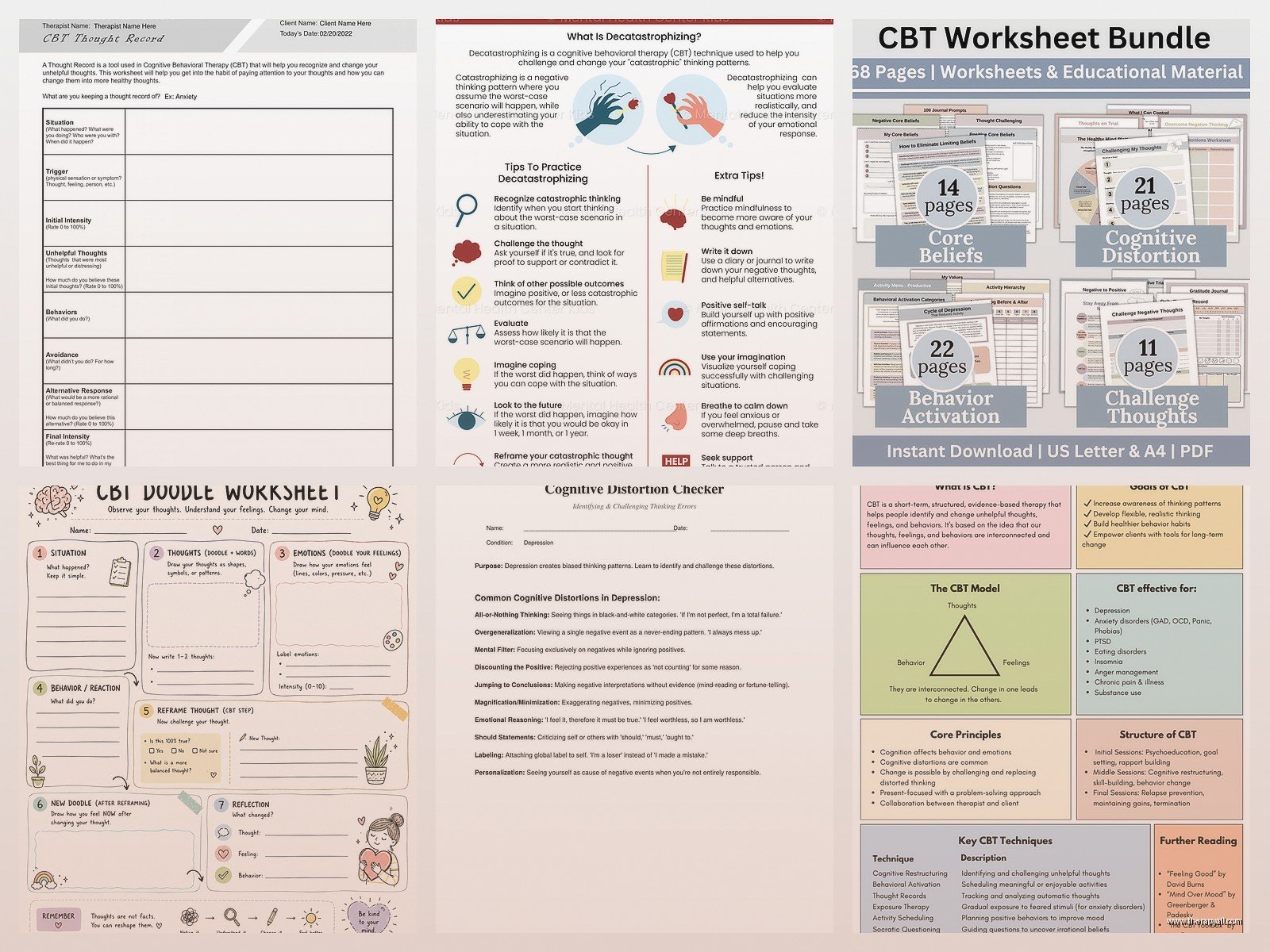
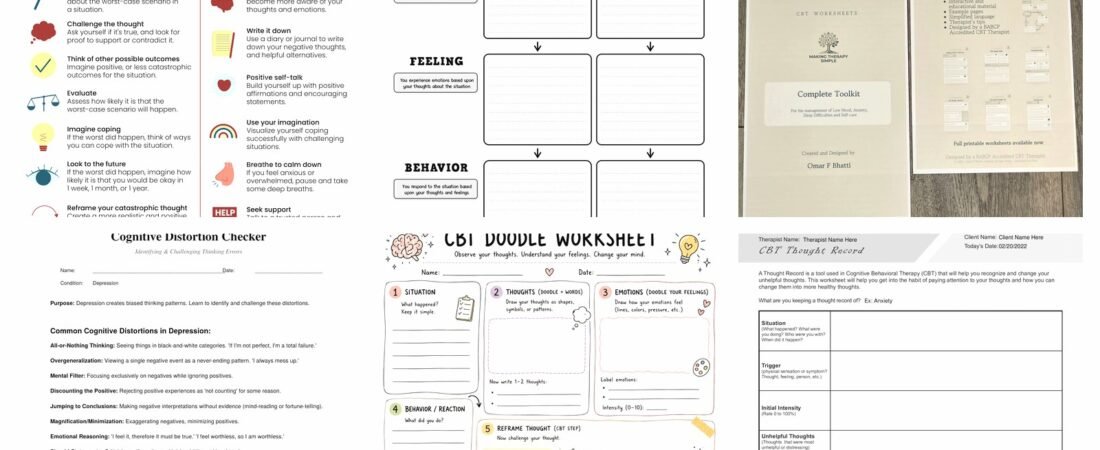
The standard CBT worksheet follows a pretty consistent format. You’ve got your situation or trigger at the top, then columns or sections for automatic thoughts, emotions, physical sensations, and alternative or balanced thoughts. Some versions include a section for evidence supporting and contradicting your initial thought. Others add a rating scale for how strongly you believe each thought or how intense each emotion feels.
The thought record is probably the most common type. You write down what happened (the activating event), what you immediately thought, how that made you feel, and then you work through whether that thought is actually accurate or helpful. The physical worksheet structure forces you to slow down and examine each piece separately instead of just spiraling through the whole anxiety loop in your head.
## Breaking Down the Columns
The situation column is usually straightforward. “My boss didn’t respond to my email” or “I saw my ex at the grocery store.” Keep it factual. You’re not interpreting yet.
Automatic thoughts are harder than they look. These are the immediate interpretations your brain makes. “He’s ignoring me because I screwed up” or “She looked happy which means she’s better off without me.” A lot of people want to write their feelings here, but feelings come next. This genuinely annoys me about most pre-made worksheets—they don’t explain the difference clearly enough, so people end up writing “I felt like I was stupid” in the automatic thoughts section when “I am stupid” is the thought and “ashamed” or “inadequate” is the feeling.
The emotions section should be one-word feeling labels. Anxious. Sad. Angry. Embarrassed. And yeah, you rate the intensity, usually 0-100 or 0-10. This helps you track whether the exercise actually reduces emotional intensity, which is kinda the whole point.
Evidence for and against is where the cognitive restructuring happens. You list actual facts that support your automatic thought, then facts that contradict it. Most of the time, you’ll find the “against” column fills up faster. That’s normal. Our brains are biased toward threat detection and we overlook contradicting information constantly.
Alternative or balanced thoughts are what you generate after reviewing the evidence. Not positive affirmations or toxic positivity—just more accurate, less catastrophic interpretations. “My boss might be busy” instead of “My boss hates me and I’m getting fired.”
## Types of CBT Sheets You’ll Actually Encounter
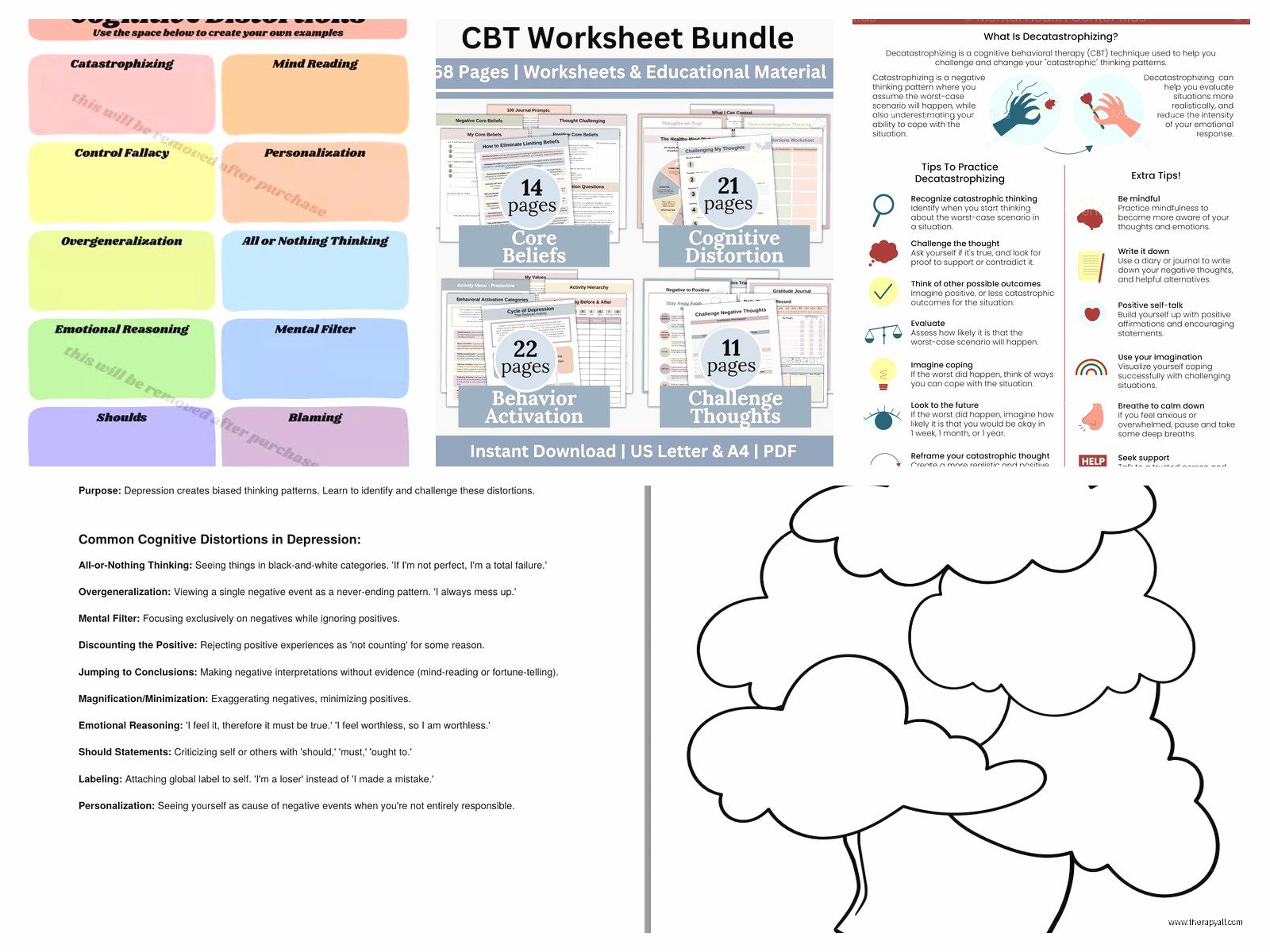
Thought records are the foundation, but there are dozens of specialized worksheets. Core belief worksheets dig deeper into the fundamental assumptions you hold about yourself, others, and the world. These usually involve identifying a pattern across multiple situations and tracing it back to an underlying belief like “I’m unlovable” or “People can’t be trusted.”
Behavioral activation sheets help you schedule activities when you’re depressed and everything feels pointless. You plan the activity, predict how much pleasure and accomplishment it’ll give you (0-10 scale), then rate the actual experience afterward. Usually the actual ratings are higher than predictions, which helps challenge the “nothing will make me feel better” belief.
Exposure hierarchy worksheets are for anxiety. You list feared situations from least to most scary, rate each one, then work through them systematically. I once had a client who made an exposure hierarchy for making phone calls and it had like 30 items on it, starting with “call automated customer service line” and ending with “call my mother-in-law without a script.”
Activity scheduling sheets are basically fancy calendars where you plan your week hour by hour and color-code activities by type—self-care, social, productive, rest. Sounds simple but when you’re depressed and your days are formless blobs of nothing, structure matters.
Worry time logs let you postpone anxious thoughts. You write down the worry, schedule a specific time to think about it later, then (theoretically) let it go until then. My cat knocked my coffee over while I was typing this and now there’s a brown stain on my desk mat, which is exactly the kind of thing I would’ve written in a worry log ten years ago.
## How to Fill Out a CBT Sheet Without Making It Useless
First, do it as close to the triggering event as possible. Memory is unreliable and emotions fade. If you wait three days, you’ll rationalize everything and the worksheet becomes pointless.
Be specific. “I felt bad” tells you nothing. “I felt anxious (7/10), guilty (5/10), and trapped (8/10)” gives you something to work with. “Someone was rude to me” versus “The barista rolled her eyes when I asked for oat milk” makes a difference when you’re trying to identify thought patterns.
Don’t just write what you think you’re supposed to write. I see this all the time in the therapy content world—examples that are too neat, too obvious, where the person clearly already knows the balanced thought before they start. Real thought records are messy. Sometimes you can’t think of a balanced thought and you just write “I don’t know, probably not everyone hates me?” That’s fine. That’s honest.
Actually rate your emotions and belief levels. The numbers aren’t just decorative. They help you track whether the exercise works. If you identify a balanced thought but your anxiety is still 9/10, that thought probably isn’t actually balanced or believable yet.
## Common Mistakes That Make Worksheets Ineffective
Using feelings as thoughts. “I feel like nobody likes me” is a thought with “feel like” stuck in front of it. The feeling is probably loneliness or rejection.
Skipping the evidence columns. This is where the cognitive work happens. If you jump straight from automatic thought to balanced thought, you’re just arguing with yourself, and your brain won’t buy it.
Making the balanced thought too positive. If your automatic thought is “I’m going to fail this presentation and get fired,” the balanced thought isn’t “I’m amazing at presentations and everyone will love me.” It’s more like “I’ve given presentations before and most went fine, and even if this one goes badly, one bad presentation doesn’t typically result in termination.”
Doing worksheets only when you’re in crisis. They’re more effective when you practice during lower-intensity situations. Build the skill when the stakes are smaller.
Not reviewing completed worksheets. Go back after a week or a month and look for patterns. Do you always jump to mind-reading? Do certain situations trigger the same core beliefs? That’s valuable information.
## Digital vs. Paper CBT Sheets
Paper worksheets have the advantage of being tactile and portable. You can fill them out anywhere without worrying about battery life or internet access. Some people find the physical act of writing helps them process better.
Digital options include PDFs you can type into, apps with built-in CBT tools, and even just using a notes app with a template you created. The advantage is searchability and the ability to track patterns over time more easily. Some apps will generate graphs showing how your mood or anxiety levels change.
Honestly, I go back and forth. I used to be all paper all the time, but then I lost an entire notebook of thought records during a move in 2020 and now I keep everything digital. Your mileage may vary.
## When CBT Sheets Actually Work
They’re most effective for anxiety, depression, and situations where your thoughts are genuinely distorted or unhelpful. If you’re catastrophizing, mind-reading, black-and-white thinking, or personalizing things that aren’t about you, CBT worksheets give you a structured way to catch and challenge those patterns.
They’re less effective—actually, they can be counterproductive—if you’re dealing with trauma, especially fresh trauma, or if your thoughts are accurate assessments of a genuinely bad situation. If you’re in an abusive relationship and you think “this person is hurting me,” that’s not a cognitive distortion. That’s reality. No amount of thought records will help there, and trying to use them might gaslight yourself.
You need a baseline of emotional regulation to use these effectively. If you’re in a full panic attack or dissociating or in a trauma flashback, you can’t access the part of your brain that does cognitive restructuring. In those moments, you need grounding techniques or crisis coping skills first.
## Integrating CBT Sheets Into Actual Daily Life
Set a specific time to do them. After dinner, before bed, during your lunch break. Waiting until you “feel like it” means you’ll never do them.
Keep blank worksheets accessible. I used to keep a stack in my car, which sounds weird but I’d fill them out in parking lots before going into stressful situations or… wait, sometimes after too when I was too anxious to drive home immediately.
Start with one per week if daily feels overwhelming. You’re building a habit and a skill. One thoughtful, complete worksheet beats seven rushed ones.
Bring completed worksheets to therapy if you’re working with a therapist. They’re incredibly useful for identifying patterns and showing your therapist what’s happening between sessions.
Don’t expect immediate emotional relief. Sometimes you’ll finish a worksheet and still feel anxious or sad, but you’ve planted a seed of doubt in the automatic thought. That’s progress even if it doesn’t feel like it yet.
## Adapting Worksheets for Different Issues
For social anxiety, you might add columns for what you feared would happen versus what actually happened. This creates concrete evidence that your predictions are usually worse than reality.
For depression, combine thought records with behavioral activation. Challenge the thought “nothing will help” and then test it by scheduling one small activity.
For anger, include a column for the underlying emotion beneath the anger—usually hurt, fear, or feeling disrespected. Anger is often a secondary emotion.
For perfectionism, add a column for “good enough” standards versus your typical all-or-nothing standards. What would satisfactory look like instead of perfect?
## Why Most Free CBT Worksheets Online Kinda Suck
They’re either too simplified or too complicated. The simple ones don’t have enough structure to actually guide cognitive restructuring. The complicated ones have seven columns and three rating scales and take 45 minutes to complete, which nobody’s gonna do consistently.
The examples are often ridiculous. Like “I thought everyone at the party hated me, but then I realized maybe they were just tired!” Real cognitive distortions are stickier and more believable than that.
The fonts are weirdly small and there’s never enough space to write actual sentences. You end up cramming tiny writing into boxes or continuing on the back, which defeats the organizational purpose.
Most don’t explain what goes in each section. They assume you already know, but if you already knew, you probably wouldn’t need the worksheet.