# Understanding Cognitive Worksheets and What They Actually Do
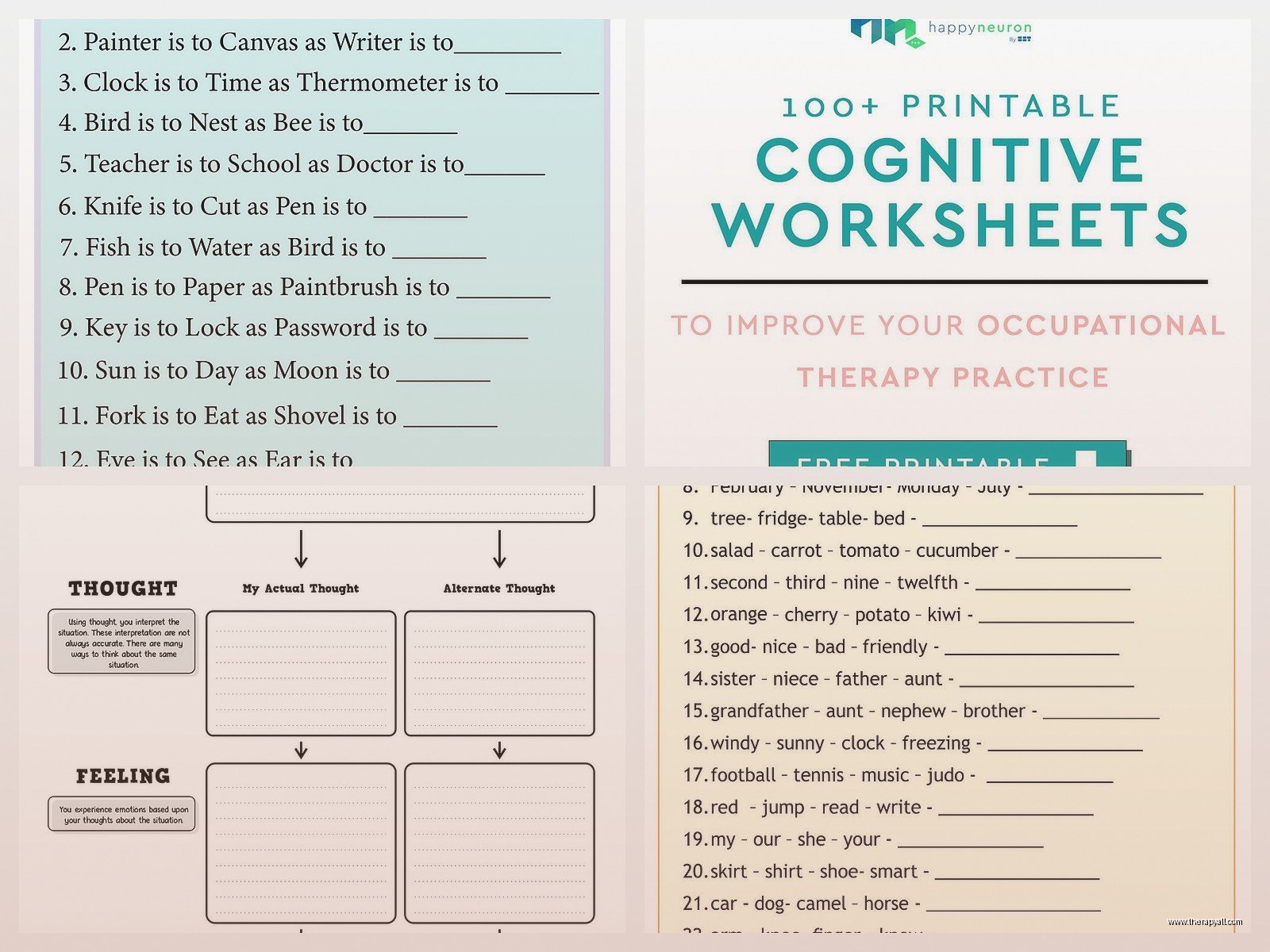
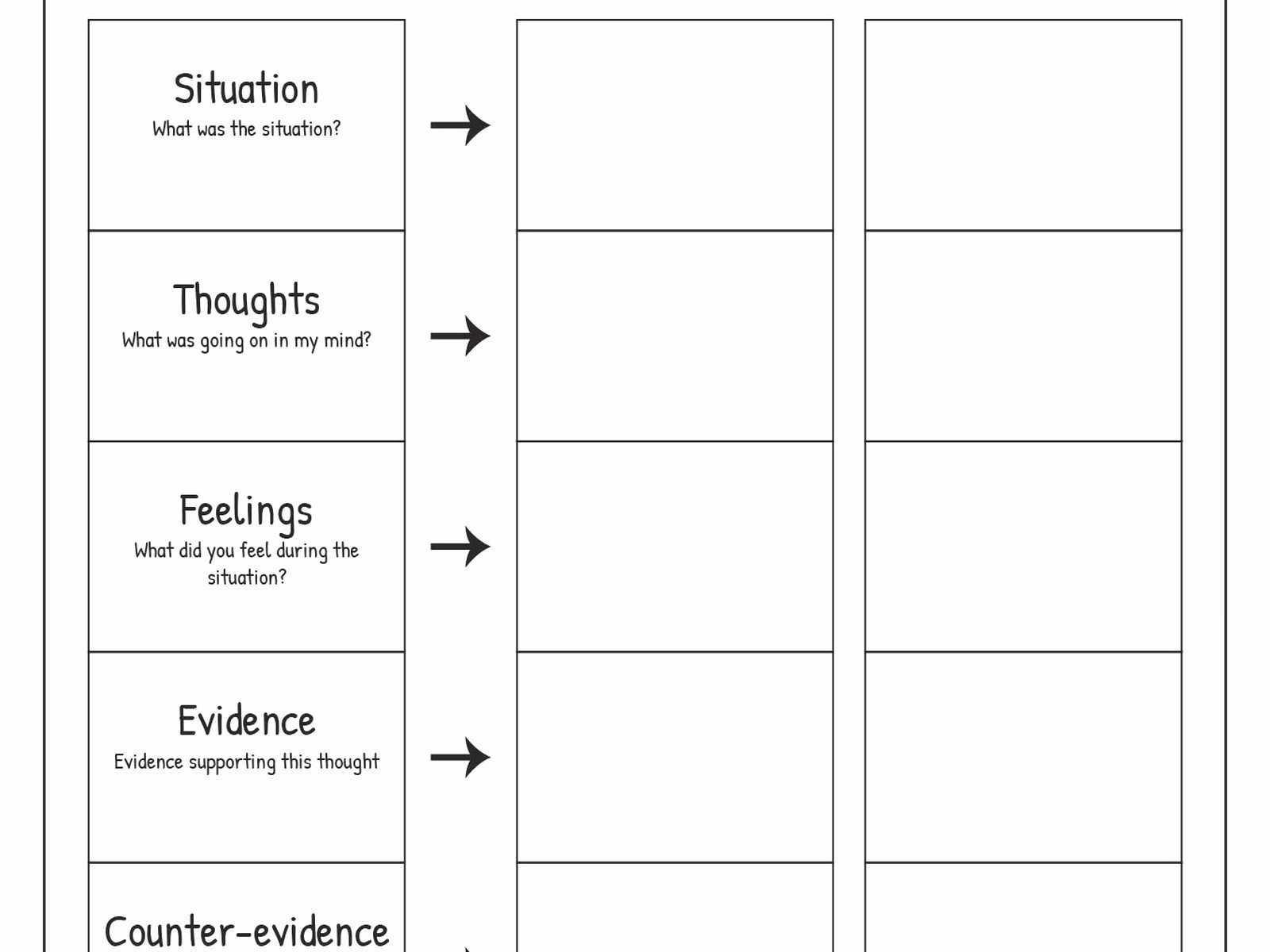
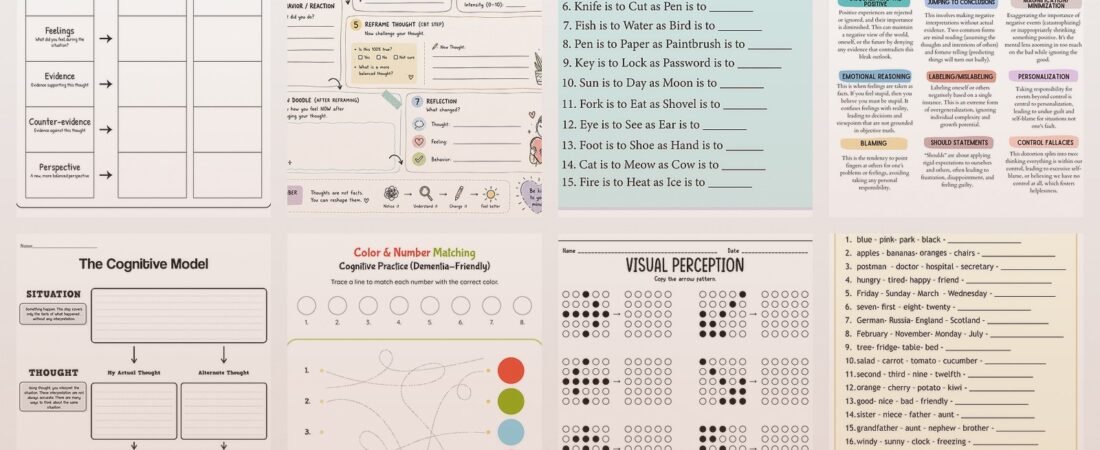
Cognition worksheets target the way your brain processes information, holds attention, remembers details, and solves problems. They’re not the same as CBT thought records or emotion logs—those deal with feelings and beliefs. Cognitive worksheets focus on the mechanics: memory exercises, attention drills, pattern recognition tasks, sequencing activities, and executive function practice.
I’ve been writing about mental health tools since 2017, and I gotta say, the number of people who lump all worksheets into one category drives me up the wall. A cognitive worksheet asking you to remember a sequence of numbers is fundamentally different from a CBT worksheet asking you to identify automatic thoughts. Both are useful. They’re just not interchangeable.
## Who Uses Cognition Worksheets
These resources show up in several contexts. Occupational therapists use them with clients recovering from traumatic brain injuries. School psychologists assign them to students with ADHD or processing difficulties. Neuropsychologists incorporate them into cognitive rehabilitation programs. Speech-language pathologists sometimes use them for clients with aphasia or other language-processing issues.
You’ll also find them in memory care facilities, where staff use them to slow cognitive decline in dementia patients. Some people use them independently—maybe you’ve noticed your focus slipping after a period of high stress, or you’re recovering from COVID and dealing with brain fog, or you just want to keep your mind sharp as you age.
I remember in 2019 working with a therapist who ran groups for older adults, and she told me half her participants just wanted something structured to do that felt productive. The cognitive worksheets gave them that sense of purpose, whether or not they were technically “improving” measurable skills. That stuck with me because it reminded me that clinical outcomes aren’t the only reason people engage with these tools.
## Types of Cognitive Skills These Worksheets Target
**Memory tasks** come in different flavors. Short-term memory exercises might show you a list of words, then ask you to recall them after a brief interval. Working memory tasks are more complex—you might need to manipulate information while holding it in mind, like reversing a sequence of numbers or reorganizing items by category.
**Attention exercises** can include visual scanning tasks where you search for specific symbols in a grid, or sustained attention activities that require you to monitor a long list for errors. Divided attention worksheets ask you to track multiple things simultaneously.
**Executive function worksheets** address planning, organization, and problem-solving. These might involve sequencing steps to complete a task, categorizing items using multiple criteria, or working through logic puzzles. My cat knocked over my coffee while I was sorting through executive function PDFs last week and I just sat there watching it spread across the table, which felt like its own executive function failure, honestly.
**Processing speed activities** push you to complete tasks quickly and accurately. You might match symbols to numbers under time pressure, or complete simple arithmetic problems as fast as possible.
**Visual-spatial worksheets** involve mental rotation tasks, pattern completion, or spatial reasoning puzzles. These are particularly relevant after strokes affecting certain brain regions.
## Where to Find Free Printable Cognitive Worksheets
**Therapy websites and private practice resources**: Many occupational therapists and speech-language pathologists share free downloads on their websites. The quality varies wildly—some are beautifully designed and evidence-informed, others look like they were made in Microsoft Word 2003 and… well, they probably were.
**Educational resource sites**: Teachers Pay Teachers has thousands of cognitive skill worksheets, with many free options. Just filter by price. You’ll find attention exercises, memory games, and executive function activities originally designed for classroom use but perfectly applicable to adult cognitive training.
**Medical and rehabilitation centers**: Some hospital systems and rehab facilities publish patient resources online. The Cleveland Clinic, for instance, has cognitive exercise PDFs. These tend to be more clinical in design and backed by research protocols.
**Aging and dementia organizations**: The Alzheimer’s Association and similar groups offer cognitive stimulation activities. These are usually gentler, with larger print and simpler instructions, designed for people experiencing cognitive decline.
**Academic institutions**: University psychology and neuroscience departments sometimes publish cognitive task batteries for research purposes that work perfectly well as practice worksheets.
I spent probably three months in summer 2021 just cataloging cognitive worksheet sources for a roundup article, and by the end I was so deep in grid-searching tasks and number sequencing that I started doing them myself during coffee breaks just to see if I could get faster. Turned out my processing speed was pretty average, which was somehow both disappointing and reassuring.
## How to Actually Use These Worksheets Effectively
Pick a specific skill you want to address. Don’t just print random worksheets because they look interesting. If you’re working on attention, focus there for a few weeks before moving to memory tasks.
Start below your actual ability level. This sounds counterintuitive, but if you begin with tasks that are too difficult, you’ll get frustrated and quit. You want to build confidence and establish a routine before increasing difficulty.
Schedule regular practice. Cognitive skills respond better to consistent practice than occasional marathon sessions. Fifteen minutes daily beats two hours once a week.
Track what you’re doing. Keep the completed worksheets in a folder or binder so you can see progress over time. Note the date and how long each task took. This documentation matters more than you think—when you’re three weeks in and feeling like nothing’s changing, being able to look back at your week-one performance provides concrete evidence of improvement.
## What Makes a Good Cognitive Worksheet
Clear instructions matter more than fancy design. If you have to read the directions three times to figure out what you’re supposed to do, the worksheet is poorly constructed. The cognitive load of understanding the task shouldn’t exceed the cognitive load of completing it.
Appropriate difficulty progression is crucial. A good resource set will offer the same type of task at multiple difficulty levels. You should be able to start simple and gradually increase complexity.
Answer keys or self-checking mechanisms help. You need to know if you’re doing it right. Some worksheets include answers on a separate page; others are self-evident (like if you’re supposed to find all instances of the letter “Q” in a paragraph, you can verify your own work).
Clean, uncluttered layout makes a difference, especially for people with visual processing issues or attention difficulties. Too much visual noise on the page becomes its own obstacle.
One thing that genuinely annoys me is when cognitive worksheets include motivational quotes or affirmations at the bottom. “You’re doing great!” or “Every day your brain grows stronger!” Just… no. I’m trying to practice my working memory, not attend a wellness retreat. Give me the task and let me complete it.
## Common Mistakes People Make
Doing too much too fast leads to burnout. You get excited about improving your cognitive function, print 40 worksheets, do them all in two days, then never touch another one. Pace yourself.
Not adjusting difficulty appropriately means you either get bored with tasks that are too easy or demoralized by tasks that are too hard. Pay attention to your accuracy rate—if you’re getting less than 60% correct, drop down a level. If you’re getting 95%+ correct, move up.
Expecting immediate results sets you up for disappointment. Cognitive training takes time. You might notice small improvements within a few weeks, but substantial changes require months of consistent practice.
## Specific Worksheet Categories Worth Knowing
**Stroop task variations** challenge your ability to manage conflicting information. The classic version shows color words printed in different colored ink—you have to name the ink color, not read the word. It’s harder than it sounds and directly targets cognitive control.
**N-back tasks** for working memory are kinda technical but really effective. You see a sequence of items and have to indicate when the current item matches one from N steps back. These come in worksheet form though they’re more commonly computerized now.
**Trail-making exercises** involve connecting numbered circles in order, or alternating between numbers and letters. Part A is numbers only; Part B alternates. The B version measures executive function and mental flexibility, and it’s used in actual neuropsychological assessments, so when you practice it you’re literally working with clinical-grade material.
**Clock-drawing tasks** assess multiple cognitive domains at once. You draw a clock face, place the numbers, and set the hands to a specific time. Simple instruction, but it requires planning, visuospatial skills, and executive function.
## Digital vs. Printable Versions
Printable PDFs offer tangible completion. You can physically cross things off, collect finished worksheets, and don’t need to worry about screen time or eye strain. They work anywhere—waiting rooms, coffee shops, your kitchen table.
Digital versions often include immediate feedback and automatic scoring. Some track your progress over time with graphs and metrics. The gamification can be motivating for some people, though it feels gimmicky to others.
You don’t have to choose one exclusively. I’ve seen people who do printable worksheets during the week and use apps on weekends, or vice versa, just for variety.
## Age-Specific Considerations
Children’s cognitive worksheets incorporate more visual elements and shorter tasks. They might use cartoon characters or game-like formats. The skills being targeted are the same—attention, memory, executive function—but the presentation differs.
Adult worksheets assume a certain baseline of knowledge and attention span. They’re often text-heavy and require sustained focus for longer periods.
Worksheets for older adults might feature larger print, higher contrast, and more explicit instructions. They often avoid timed elements because processing speed naturally declines with age, and the goal is cognitive maintenance rather than speed improvement.
## When Worksheets Aren’t Enough
If you’re recovering from a brain injury, stroke, or dealing with a diagnosed cognitive disorder, worksheets alone won’t cut it. You need professional assessment and treatment planning. An occupational therapist can evaluate your specific deficits and design a targeted intervention program.
If you’re experiencing sudden cognitive changes—memory loss, confusion, difficulty with familiar tasks—that’s a medical issue requiring evaluation, not a worksheet situation, and I probably shouldn’t have to say that but you’d be surprised how many people try to self-treat serious symptoms with downloaded PDFs.
If worksheets feel pointless or you’re not seeing any progress after several months of consistent practice, that’s also worth discussing with a healthcare provider. Sometimes the issue isn’t cognitive skills themselves but underlying conditions like depression, anxiety, sleep disorders, or medication side effects that affect cognitive function.
## Organizing Your Worksheet Practice
Create a dedicated folder or binder. Date everything. If you’re working on multiple skill areas, use dividers or separate sections.
Set a regular time. Doesn’t matter when—morning with coffee, lunch break, before bed—just keep it consistent. Your brain responds better to routine.
Keep pencils and a timer with your worksheets so you’re not hunting for supplies when it’s practice time. Reduce friction between intention and action.
Some people benefit from tracking sheets where they log which worksheets they completed, how long it took, and their accuracy. Others find that kind of record-keeping tedious and it kills their motivation. Know yourself, or like, figure it out through trial and error I guess.
## The Reality of Cognitive Training
Research on cognitive training is mixed. Some studies show improvements in practiced tasks but limited transfer to real-world function. Other studies demonstrate broader benefits, especially when training is intensive and varied.
The worksheets themselves aren’t magic. They’re practice tools. Whether they help depends on consistency, appropriate difficulty level, and sometimes the specific cognitive domain you’re targeting. Memory training tends to show more reliable benefits than general “brain training.” Executive function practice helps with planning and organization but might not make you better at remembering names.
You’re essentially exercising specific neural pathways. Like physical exercise, some people respond more dramatically than others. Genetics, age, baseline function, overall health—all of these factor in.