# Understanding Cognitive Behavioral Worksheets For Depression
Cognitive behavioral worksheets for depression are structured tools that help you identify, challenge, and reframe negative thought patterns. They’re based on cognitive behavioral therapy principles, which operate on the premise that our thoughts, feelings, and behaviors are interconnected—change one element and you can influence the others.
I remember back in 2019, I was consulting with a community mental health center that wanted to integrate more self-directed tools into their depression treatment program. The director handed me this massive binder of worksheets they’d photocopied from various sources, and maybe half of them were actually useful. The rest were either too abstract, used clinical language that would confuse anyone without a psychology degree, or just… didn’t actually guide you through the process. That’s when I realized how much variation exists in worksheet quality, and honestly, it’s frustrating because someone struggling with depression doesn’t need to wade through poorly designed resources.
## The Core Components You’ll Find In These Worksheets
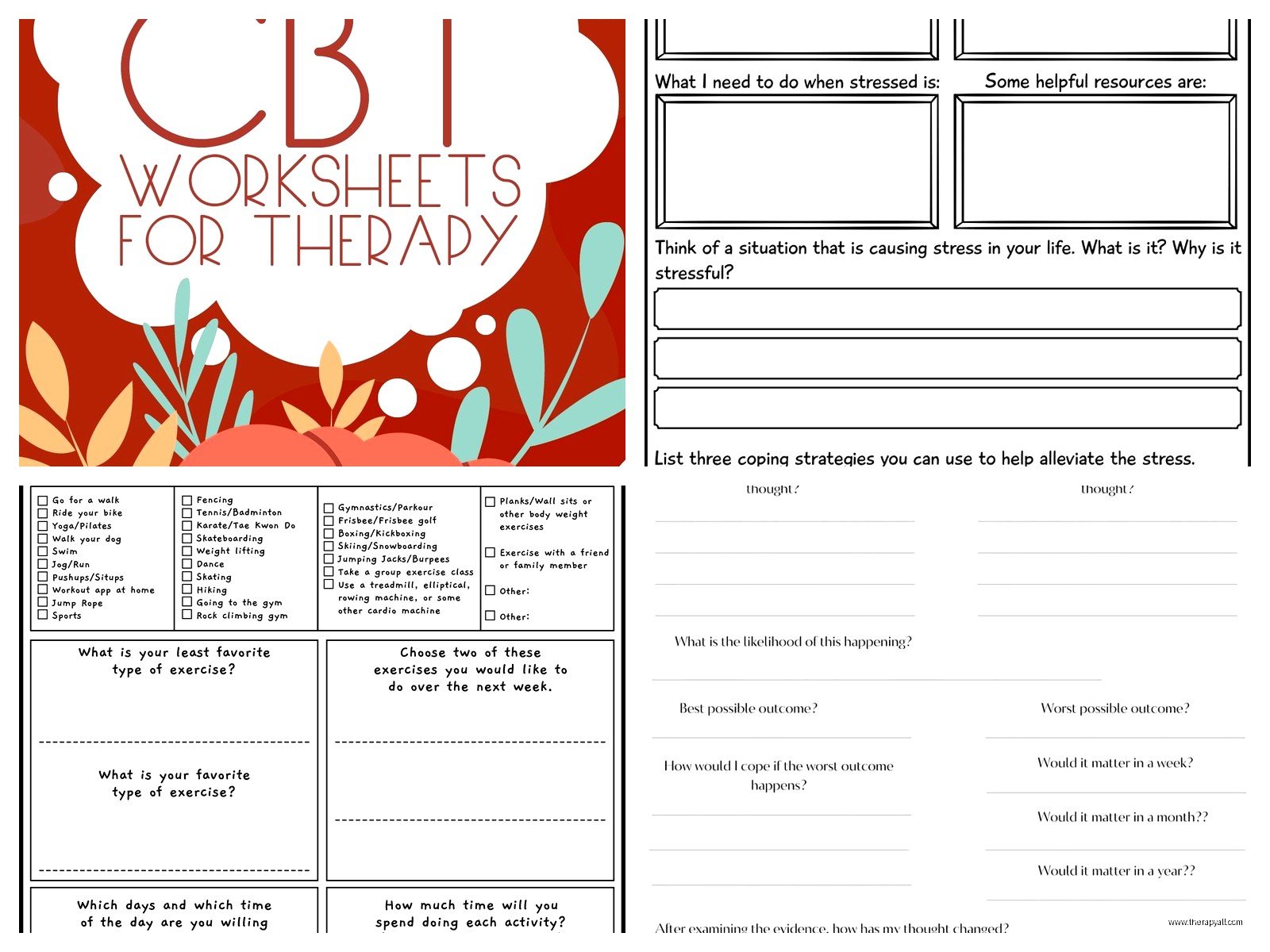
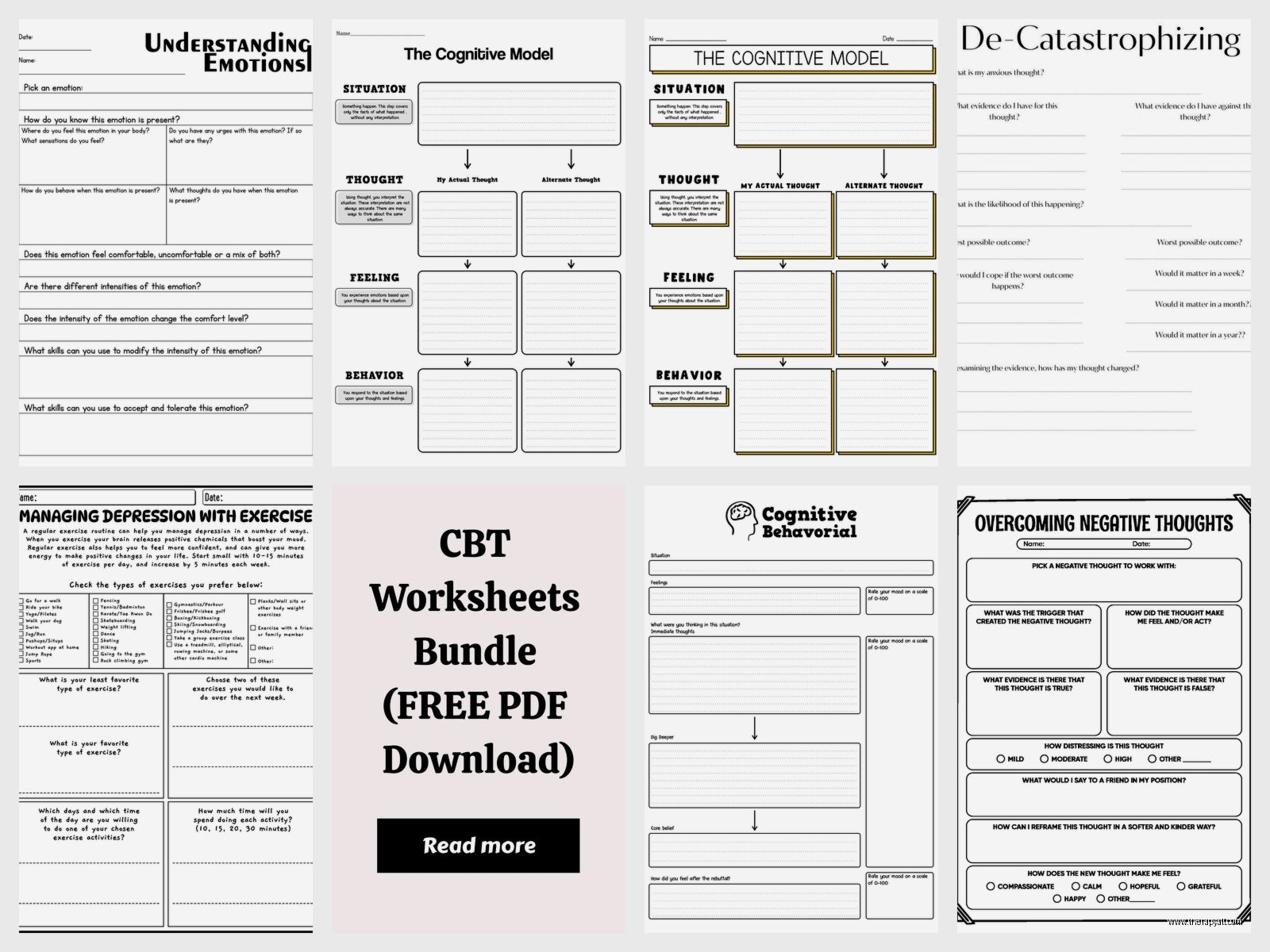
Most CBT worksheets for depression include sections for thought recording, which is where you document the situation that triggered a negative emotion, the automatic thoughts that arose, and the feelings that followed. The goal isn’t to immediately “fix” your thinking—it’s to create awareness of patterns you might not have noticed before.
Thought records typically ask for:
- The date and time (context matters more than you’d think)
- The triggering situation or event
- Automatic thoughts that emerged
- Emotions and their intensity (usually rated 0-100)
- Evidence supporting and contradicting the thought
- Alternative or balanced thoughts
- Re-rating of emotion intensity after reframing
You don’t have to fill out every section perfectly. I’ve seen people get stuck on “evidence contradicting” because when you’re depressed, your brain is gonna fight you on finding contradictory evidence. That’s normal.
## Behavioral Activation Worksheets
These focus on the behavioral component of CBT. Depression often creates a withdrawal cycle—you feel bad, so you avoid activities, which makes you feel worse, which leads to more avoidance. Behavioral activation worksheets help you schedule and track activities, particularly ones that historically brought you pleasure or a sense of accomplishment.
Activity scheduling worksheets usually include:
- A weekly calendar grid
- Space to plan activities in advance
- Rating scales for predicted vs. actual enjoyment or mastery
- Notes section for observations
The predicted vs. actual rating is crucial because depression lies to you constantly about how activities will feel. You might predict that meeting a friend for coffee will be a 2/10 for enjoyment, but then it’s actually a 6/10. That data becomes evidence against the depressive thought pattern that says nothing will help.
## Cognitive Distortion Identification Sheets
These worksheets help you recognize specific patterns in distorted thinking. There are about 10-15 common cognitive distortions depending on which CBT model you’re using, but the main ones that show up in depression are:
- All-or-nothing thinking (black and white, no middle ground)
- Overgeneralization (one negative event means everything is negative)
- Mental filtering (focusing only on negatives while ignoring positives)
- Discounting the positive (yeah, that good thing happened, but it doesn’t count because…)
- Jumping to conclusions (mind reading and fortune telling)
- Catastrophizing (assuming the worst possible outcome)
- Emotional reasoning (I feel it, therefore it must be true)
- Should statements (rigid rules about how things must be)
- Labeling (I’m a failure, I’m worthless, etc.)
- Personalization (everything is somehow my fault)
A good cognitive distortion worksheet will include examples of each type and space for you to record your own examples. The one that annoys me most in poorly designed worksheets is when they just list the distortions without explaining them in plain language or providing relatable examples. Someone in the middle of a depressive episode doesn’t have the cognitive bandwidth to decode what “emotional reasoning” means from a two-word label.
## Where To Actually Find Quality Free Worksheets
The internet is flooded with CBT worksheets, but quality varies wildly. Here’s where I’d actually look:
**Therapist Aid** offers a huge library of free worksheets specifically designed for depression. They’re clean, well-organized, and actually usable. You can filter by topic, and they include both client-facing worksheets and information sheets that explain the concepts.
**Psychology Tools** has some free resources alongside their paid content. Their worksheets tend to be more detailed and include helpful instructions, though—wait, I should mention they recently redesigned their site and it’s way easier to navigate now than it was even a year ago.
**Get Self Help** is a UK-based site created by a clinical psychologist, and everything is free. The worksheets are less visually polished but extremely practical. They have specific sections for depression that include thought records, behavioral activation planners, and problem-solving worksheets.
My cat just knocked over my water bottle onto a stack of printed worksheets, which is kinda ironic timing.
**Beck Institute** occasionally releases free resources based on Aaron Beck’s original CBT protocols. These tend to be more clinical in nature but they’re developed by the source, which means they’re theoretically sound.
**Centre for Clinical Interventions** (CCI) in Australia provides free workbooks that include multiple worksheets organized by theme. Their depression modules are comprehensive and include psychoeducation alongside the practical worksheets.
## How To Actually Use These Worksheets Effectively
You’re not supposed to just print them out and stare at them. The worksheets work best when integrated into a broader treatment approach, whether that’s therapy, medication, or both.
**Start with psychoeducation materials first.** Understanding the CBT model—how thoughts, feelings, and behaviors interact—makes the worksheets make sense. Without that framework, you’re just filling out forms.
**Begin with behavioral activation before diving into complex thought challenging.** When you’re deeply depressed, cognitive work is exhausting. Getting your behavior patterns shifted first can create some momentum and improve your mood enough to make the cognitive work more accessible.
**Fill them out in real-time when possible.** Memory is unreliable, especially when you’re depressed. If you wait until the end of the day to complete a thought record, you’ll have forgotten the details or your mind will have already rewritten the narrative.
**Don’t aim for perfection.** I’ve worked with people who spend 45 minutes on a single thought record trying to find the “right” alternative thought. That’s not the point. The point is practice and pattern recognition, not achieving some ideal reframe.
**Review your completed worksheets regularly.** This is where the real learning happens—looking back over multiple thought records and noticing that you use the same cognitive distortions repeatedly, or that certain situations consistently trigger specific thought patterns.
## Specific Worksheet Types Worth Trying
**The Dysfunctional Thought Record** is probably the most widely used CBT worksheet for depression. It’s the standard seven-column format that walks you through identifying and challenging negative thoughts. Some versions include a sixth column for behavioral experiments, which is where you test out your alternative thoughts in real situations.
**Activity Scheduling and Monitoring Forms** are deceptively simple but remarkably effective. You plan your day or week in advance, then track what you actually did and how it felt. The gap between what depression tells you will happen and what actually happens becomes visible.
**Core Belief Worksheets** dig deeper than automatic thoughts to examine underlying beliefs about yourself, others, and the world. These are usually more appropriate after you’ve been working with surface-level thoughts for a while. Core beliefs in depression often sound like “I’m fundamentally defective” or “I’m unlovable” or “The world is hostile and I’m powerless.”
**Behavioral Experiment Worksheets** help you test out your thoughts in reality. You predict what’ll happen based on your negative thought, conduct the experiment (which is just… doing the thing), and then record what actually happened. Depression is constantly making predictions that don’t come true, and these worksheets document that pattern.
**Gratitude and Positive Data Logs** are controversial in CBT circles because they can feel invalidating when you’re severely depressed, but they serve a specific function—counteracting the mental filtering distortion by deliberately recording positive or neutral experiences. I’m not talking about toxic positivity here; it’s more like training your brain to notice the full picture instead of only the negative details.
## Common Mistakes People Make With These Worksheets
**Trying to use them during a crisis.** These are skill-building tools for when you’re relatively stable, not emergency interventions. If you’re in acute distress, worksheets aren’t gonna cut it—you need immediate support.
**Using them to beat yourself up.** I’ve seen people complete thought records and then feel worse because they “can’t think of alternative thoughts” or “still believe the negative thought even after challenging it.” The worksheets don’t fix you instantly. They’re practice tools.
**Collecting them without reviewing them.** You can fill out 100 thought records, but if you never look back at them to identify patterns, you’re missing the point. The individual worksheet matters less than the accumulated data.
**Expecting them to replace therapy.** Worksheets are supplements, not substitutes. They work best when someone who understands CBT is helping you use them appropriately and process what comes up.
## Customizing Worksheets For Your Needs
Most free worksheets are designed for general use, which means they might not perfectly fit your situation. You can modify them. Seriously, just cross out sections that don’t work for you or add your own.
Some people find rating scales helpful (emotion intensity from 0-100), while others find them irritating and would rather just describe the feeling. That’s fine. The worksheet serves you; you don’t serve the worksheet.
If you have executive function challenges on top of depression, the standard worksheets might be overwhelming. Look for simplified versions with fewer columns or more structure. Some resources offer “beginner” versions of thought records that only have three or four columns instead of seven.
## Digital vs. Paper Worksheets
This is purely personal preference, but it’s worth considering. Paper worksheets have the advantage of being tactile and not requiring any technology. You can carry them with you, fill them out anywhere, and some people find the physical act of writing more engaging.
Digital versions (PDFs you can type into or apps that replicate worksheet functions) are searchable, easier to store, and you can’t lose them as easily. Some people find typing faster and easier than writing by hand, especially if their handwriting is illegible when they’re distressed.
I’ve noticed that people under 30 tend to prefer digital formats while people over 50 tend to prefer paper, but that’s not a hard rule—just a pattern I’ve observed over the years writing about these tools.
## What Makes A Worksheet Actually Useful
After reviewing hundreds of these things, here’s what separates good worksheets from bad ones:
- Clear instructions that don’t assume you already understand CBT concepts
- Adequate space to write (too many worksheets cram everything into tiny boxes)
- Examples included, preferably realistic ones
- Logical flow that guides you through the process step by step
- Not too cluttered or visually overwhelming
- Language that’s accessible without being condescending
The worst worksheets I’ve encountered are the ones that are clearly designed to look professional for therapists to hand out, but nobody actually thought about the user experience of someone filling it out while depressed. Tiny font, complicated layout, clinical jargon everywhere—it’s like they forgot who the audience was.
## Integration With Other Depression Treatments
CBT worksheets work alongside medication, other therapy modalities, lifestyle changes, and whatever else you’re doing to manage depression. They’re not competing with other interventions; they’re complementary.
If you’re in therapy, bring your completed worksheets to sessions. They give your therapist insight into your thought patterns between appointments and provide concrete material to work with. If you’re not in therapy, worksheets can still be useful for self-directed work, though having some kind of accountability—a friend, support group, or online community—makes it easier to stay consistent.