# Understanding Cognitive Defusion
Cognitive defusion is an Acceptance and Commitment Therapy (ACT) technique that changes your relationship with thoughts rather than trying to change the thoughts themselves. You’re essentially creating distance between yourself and your internal chatter without challenging whether those thoughts are “true” or “false.”
I remember sitting with a client in 2019 who kept saying “I AM anxious” and we must’ve spent twenty minutes just working on shifting that to “I’m having the thought that I’m anxious” — sounds like semantics but the relief on her face when she got it was kinda wild.
The basic premise: thoughts are just words, images, and sounds your brain produces. They’re not facts, commands, or threats that require immediate action. When you’re fused with a thought, you treat it as literal truth. When you defuse from it, you see it as mental activity.
## Why PDF Resources for Cognitive Defusion Matter
PDFs have become the go-to format for distributing cognitive defusion exercises, and honestly, I get why. They’re portable, printable, and you can scribble notes in the margins if you’re using a tablet. But what genuinely annoys me is how many “complete guide” PDFs out there are just recycled lists of the same five techniques with zero context about when to use what.
You need structured resources because cognitive defusion isn’t intuitive. Our brains evolved to take thoughts seriously — that’s how we survived. Seeing a thought as “just a thought” goes against our wiring, so having written exercises and prompts helps interrupt that automatic fusion process.
Good PDF guides should include:
– Psychoeducation about thought fusion vs. defusion
– Multiple techniques (because what works varies person to person)
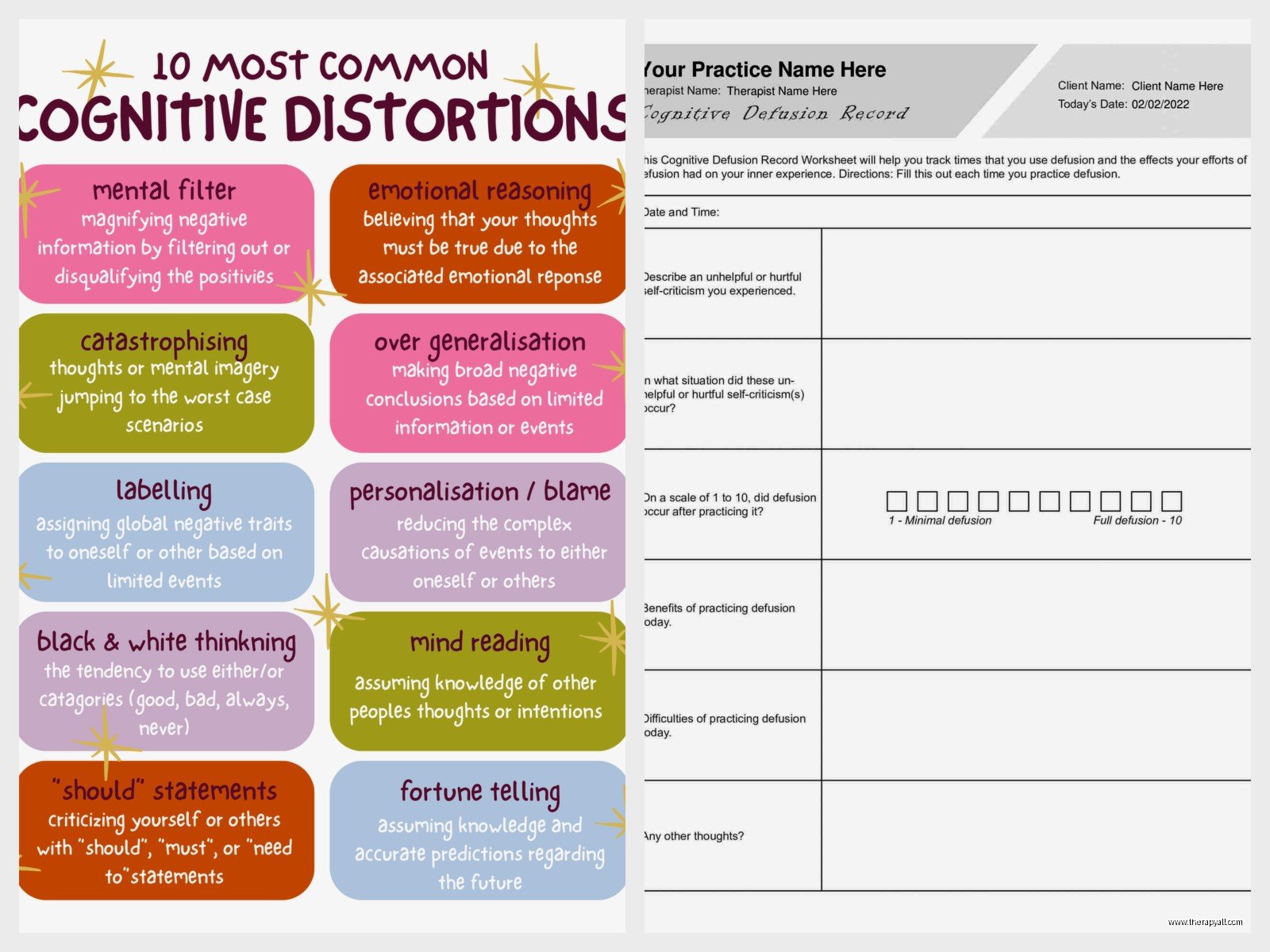
– Worksheets with space to write
– Examples of internal dialogue
– Practice logs or tracking sheets
## Core Cognitive Defusion Techniques
### The Observer Exercise
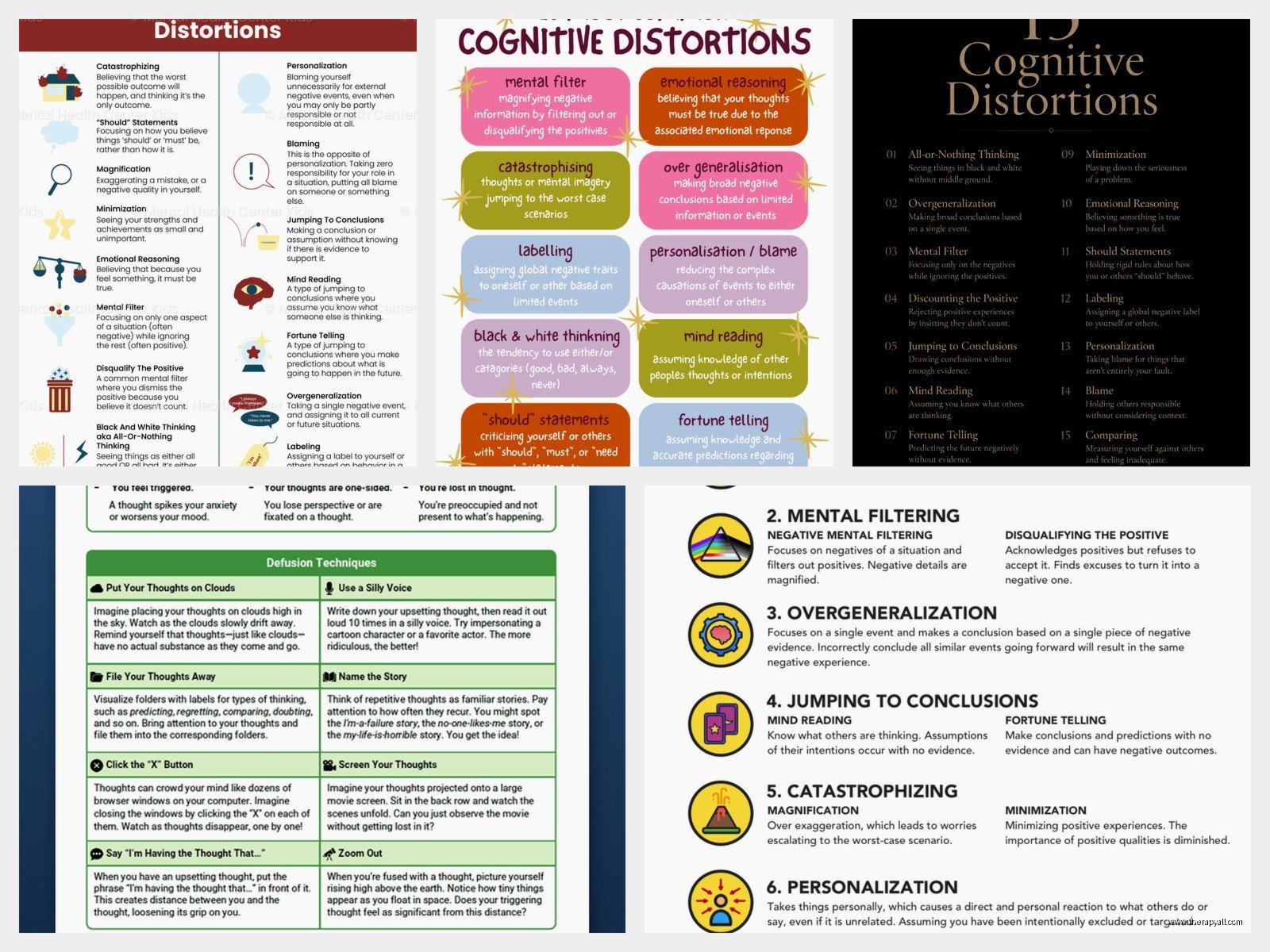
This one asks you to notice your thoughts like you’re watching clouds pass or leaves floating down a stream. You’re not grabbing the thoughts, analyzing them, or pushing them away. Just observing.
Write down a distressing thought you’ve been having. Now imagine it’s written on a cloud drifting across the sky. Watch it move. It doesn’t disappear, but it’s also not stuck to your face demanding attention.
The PDF version usually includes a diagram or visual representation because, let’s be real, “imagine a cloud” sounds ridiculous until you actually try it and realize your thought about being a failure doesn’t feel as heavy when it’s floating away on a cartoon cumulus.
### Naming the Story
Your mind loves narratives. It creates stories: “I’m unlovable,” “I always mess things up,” “Nobody respects me.” These stories feel true because you’ve thought them thousands of times.
Defusion involves naming these stories like you’re labeling files. When the thought appears, you say “Ah, there’s the ‘I’m not good enough’ story again” or “My mind is doing the ‘everyone’s judging me’ routine.”
I use this one myself when I’m writing — my brain has this whole narrative about how everything I write is derivative trash and someone’s gonna call me out in the comments. Now I just notice “okay, the Imposter Story is playing” and keep typing anyway.
### Silly Voices Technique
Take your negative thought and repeat it in different voices: cartoon character, opera singer, robot, whatever. The content stays the same but the emotional punch decreases.
This technique divides people. Some find it genuinely helpful. Others think it’s patronizing. A PDF guide should mention this — not everything works for everyone, and that’s fine.
### Thanking Your Mind
When an unhelpful thought shows up, you can literally say “Thanks, mind” or “Thanks for that input, brain.” You’re acknowledging the thought without buying into it.
This sounds sarcastic but it’s actually… not? You’re recognizing that your brain is trying to protect you (even if it’s doing a terrible job). “Thanks for warning me that this presentation might go badly, mind. I’ve got it from here.”
### Physicalizing the Thought
Write your thought on paper. Carry it in your pocket. Put it in a box. Stick it on your forehead (okay, maybe not literally, but you could). The point is making the thought into a physical object you can interact with differently.
PDFs often include printable thought cards for this exercise. You write the thought, cut out the card, and then you can physically place it somewhere — in your wallet, on your desk, wherever. It’s there, you’re aware of it, but it’s not controlling your behavior.
### The Passengers on the Bus Metaphor
You’re driving a bus (your life). Your thoughts are passengers shouting directions, criticisms, warnings. You can hear them — you can’t kick them off the bus — but you don’t have to let them grab the steering wheel.
This metaphor appears in probably 90% of ACT-based PDFs and it’s useful but also I’ve read it so many times I could recite it in my sleep at this point.
## What Should Be in a Complete PDF Guide
A truly complete guide goes beyond technique lists. You want context, application examples, and troubleshooting.
**Psychoeducation Section**: Explain what cognitive fusion is, why it happens, how it differs from cognitive restructuring (which is a CBT technique focused on challenging thoughts). I spent a whole summer in 2022 writing mental health content and the number of resources that mixed up ACT and CBT concepts was… frustrating.
**Assessment Component**: Include a brief fusion questionnaire. Something that helps you identify how fused you are with specific thoughts. Questions like “When you have the thought ‘I’m inadequate,’ how much does it feel like absolute truth?” or “How much do you alter your behavior to avoid triggering certain thoughts?”
**Technique Menu**: List multiple defusion strategies with clear instructions. Not everyone responds to visualization. Some people need physical exercises. Others prefer linguistic techniques.
**Practice Exercises**: Worksheets where you write down specific thoughts and apply different defusion techniques. Space to track what worked, what didn’t, observations about your experience.
**Real-World Applications**: Examples of using defusion in specific situations — social anxiety, work stress, relationship conflicts, depression, trauma responses. Generic advice is less helpful than “when you’re about to give a presentation and thinking ‘I’ll mess this up,’ try…”
**Common Obstacles**: What to do when defusion feels fake, when thoughts feel too intense to defuse from, when you forget to use the techniques in the moment.
## How to Actually Use These PDFs
Print them. I know, we’re supposed to be paperless or whatever, but there’s something about physically writing on a worksheet that helps the concepts stick. My cat knocked over my coffee onto a stack of printed therapy worksheets last week and I was unreasonably upset about it — but that’s because I’d actually filled them out and they mattered.
Start with one technique. Don’t try to master all twelve defusion strategies in your PDF at once. Pick one that sounds least ridiculous to you and practice it for a week with the same recurring thought.
Use the tracking logs. Most PDF guides include some kind of practice log — date, thought, technique used, helpfulness rating. Actually fill these out. You’ll notice patterns. Maybe silly voices work great for anxious thoughts but not for depressive ones. Maybe you need different techniques for different contexts.
Don’t expect thoughts to disappear. This is crucial and a lot of PDFs don’t emphasize it enough. Defusion doesn’t make thoughts go away. You’re gonna keep having the thought “I’m not good enough” probably forever. Defusion just changes whether that thought dictates your choices.
## When Cognitive Defusion Works and When It Doesn’t
Defusion is particularly helpful for:
– Repetitive negative thoughts that you’ve already examined logically (you KNOW the thought isn’t rational but it still hooks you)
– Anxious predictions about the future
– Self-critical internal commentary
– Intrusive thoughts that you’ve been struggling with or trying to suppress
– Moments when you need to take action despite uncomfortable thoughts
It’s less helpful for:
– Situations requiring actual problem-solving (if your thought is “I haven’t paid rent” that’s… not a thought to defuse from, that’s information)
– Active crisis moments when you need grounding techniques first
– When you’re new to the concept and haven’t practiced — defusion requires some baseline understanding and practice to be useful in intense moments
Some people find defusion feels dismissive of real pain or real problems. That’s a valid concern. The goal isn’t to minimize your experience but to create flexibility in how you respond to thoughts.
## Combining Defusion With Other ACT Components
Cognitive defusion is one piece of ACT’s psychological flexibility model. Most complete PDF guides should at least mention the other components — acceptance, present moment awareness, self-as-context, values, and committed action.
You use defusion to create space from unhelpful thoughts SO THAT you can move toward your values. It’s not about feeling better, it’s about doing what matters even when your mind is screaming at you.
For example: Your mind says “You’re gonna embarrass yourself.” You defuse from that thought (notice it, name it, whatever technique works). Then you do the thing that aligns with your values anyway — maybe that’s giving the speech, going to the party, submitting your work, having the difficult conversation.
## Creating Your Own Defusion PDF Practice
If you’re putting together your own practice guide or customizing an existing PDF, include sections for:
**Your Top Five Sticky Thoughts**: The thoughts you fuse with most often. Write them out. Get specific. Not just “I’m anxious” but “I’m going to have a panic attack in the meeting and everyone will think I’m incompetent.”
**Technique Experiments**: For each sticky thought, try three different defusion techniques. Rate their helpfulness. Some thoughts respond better to certain approaches — there’s no universal solution and honestly anyone who tells you there is hasn’t worked with enough different people.
**Context Mapping**: Where and when do these thoughts show up? Morning? Before social situations? After talking to certain people? When you’re tired? Understanding patterns helps you prepare.
**Values Clarification**: What do you want to do even though your mind is producing these thoughts? This connects defusion to actual behavior change, which is kinda the whole point.
## The Limitations Nobody Talks About
Defusion isn’t a cure-all and I’m genuinely tired of seeing it presented as some revolutionary technique that solves everything. It’s one tool. Sometimes it works brilliantly. Sometimes you need medication, or trauma processing, or to actually change your circumstances, or to develop different skills entirely.
Some thoughts are so intense or so tied to trauma that defusion feels impossible or even invalidating. That’s when you might need more intensive therapeutic support before these techniques become accessible.
Also — and this matters — practicing defusion doesn’t mean you never examine your thoughts for accuracy. Sometimes thoughts contain useful information. Sometimes you DO need to problem-solve or make changes. Defusion is for when thoughts are unhelpful mental noise, not for when they’re signaling real problems that need addressing.
The best PDF guides acknowledge these limitations instead of presenting defusion as a magic solution. They position it as one approach within a broader mental health toolkit and they’re clear about when to seek additional professional support.