# Couples Therapy Handouts – Everything You Need to Know
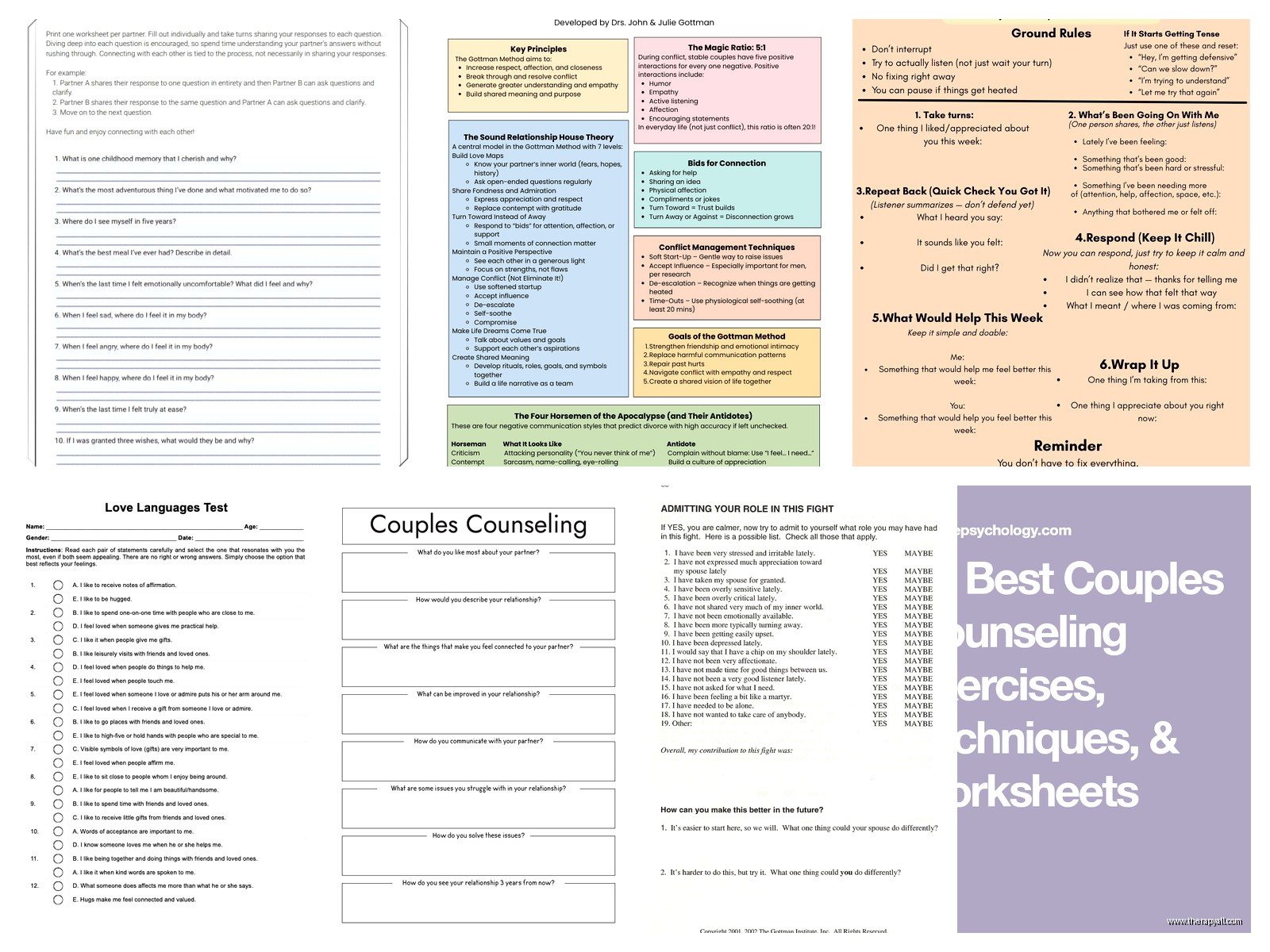
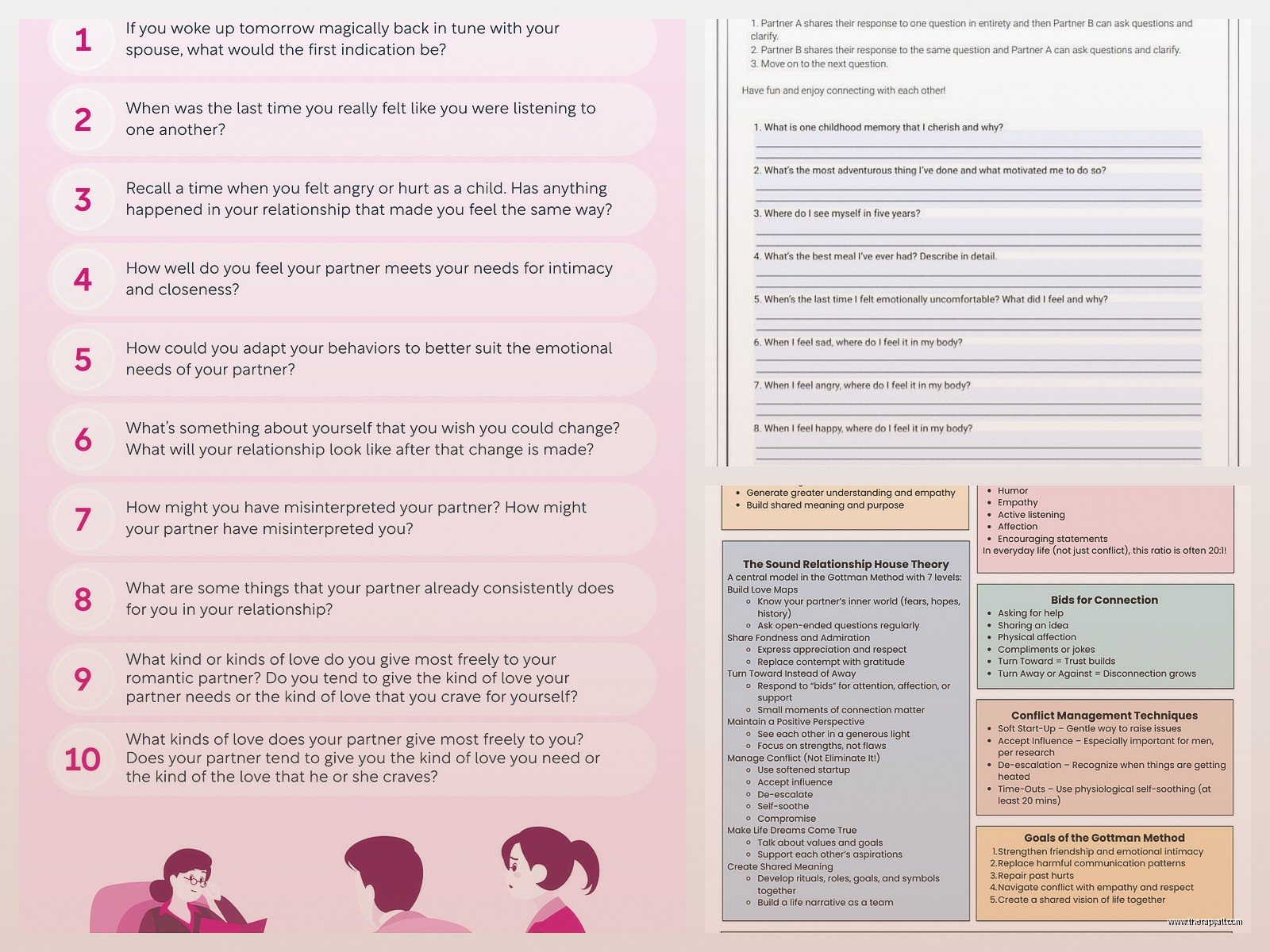
Couples therapy handouts are printed or digital worksheets, exercises, and educational materials that therapists give to couples during or between sessions. They serve as tools to reinforce concepts discussed in therapy, provide homework assignments, facilitate communication exercises, and help couples track patterns in their relationship.
The handouts typically fall into several categories: communication skill-builders, conflict resolution frameworks, intimacy exercises, attachment style assessments, relationship values clarifications, and psychoeducational materials about common relationship dynamics. Some focus on specific issues like infidelity recovery, blended family challenges, or sexual intimacy concerns.
## Why Therapists Use Handouts in Couples Work
I remember back in 2019 when I was writing content for a therapist directory platform and interviewed maybe fifteen couples therapists about their practice. Almost all of them mentioned handouts as essential tools, but what struck me was how differently they used them. Some therapists front-load handouts in the first few sessions to establish common language and frameworks. Others hold them back until couples demonstrate readiness to work independently between sessions.
The primary benefit is creating structure outside the therapy room. You get one hour per week, maybe, with your therapist. That leaves 167 hours when you’re navigating your relationship without professional guidance. Handouts bridge that gap by giving couples concrete activities and reference points.
Handouts also level the playing field in terms of therapeutic literacy. Not everyone walks into couples therapy understanding concepts like emotional bids, repair attempts, or the difference between complaints and criticisms. A well-designed handout explains these concepts in accessible language and provides examples that couples can reference when they’re in the middle of an argument at 11 PM on a Tuesday.
From a therapist’s perspective, handouts reduce the need to re-explain foundational concepts every session. When both partners have a handout defining active listening techniques, the therapist can say “remember the reflective listening handout from week two” rather than re-teaching the entire concept.
## Common Types of Couples Therapy Handouts
**Communication exercises** make up probably the largest category. These include speaker-listener technique guides, “I statement” templates, active listening checklists, and conversation starters for difficult topics. The classic format walks couples through a structured dialogue where one person speaks for a set time while the other just listens and reflects back what they heard before responding.
What annoys me about a lot of communication handouts I’ve seen is they’re designed like corporate training materials from 1987, just really dry bullet points that make having a vulnerable conversation with your partner feel like filling out a tax form. The best ones I’ve encountered actually acknowledge that following a script feels awkward at first and normalize that discomfort.
**Conflict resolution frameworks** help couples identify their fight patterns and develop healthier ways to disagree. These often include the Gottman Four Horsemen handouts (criticism, contempt, defensiveness, stonewalling), conflict style assessments, and de-escalation techniques. Time-out agreements are common here too, where couples establish protocols for pausing arguments before they become destructive.
**Intimacy-building exercises** range from emotional connection activities to physical intimacy worksheets. You’ll see things like “36 questions to fall in love” adaptations, appreciation lists, date night planning templates, and sensate focus exercises for couples working on sexual concerns. Some handouts focus on non-sexual physical affection, helping couples who’ve fallen into roommate dynamics rebuild touch and closeness.
**Assessment tools** help couples identify patterns they might not consciously recognize. Attachment style questionnaires are huge right now, everyone’s suddenly an anxious-avoidant pairing after reading one Instagram post. Love language assessments remain popular despite some therapists questioning their empirical basis. Relationship satisfaction scales, conflict frequency trackers, and emotional needs inventories also fall into this category.
**Psychoeducational handouts** explain relationship dynamics, common challenges, and therapeutic concepts. These might cover the cycle of pursue-withdraw, how childhood experiences shape adult relationships, the neurobiology of conflict, or stages of relationship development. They give couples context for understanding their struggles as part of broader patterns rather than personal failures.
## How Handouts Get Used in Actual Practice
During sessions, therapists might introduce a handout to illustrate a concept that’s emerged in conversation. If a couple is stuck in a pattern where one partner’s bids for connection go unnoticed, the therapist might pull out a handout explaining emotional bids and ask the couple to identify examples from their own relationship.
Between sessions, handouts become homework. The therapist might assign a communication exercise to practice three times before the next appointment, or ask each partner to complete an attachment style assessment independently and then discuss their results together.
Some couples use handouts as reference materials during conflicts at home. I’ve heard stories of couples literally pulling out their “fair fighting rules” handout mid-argument to reset their approach, though I suspect that works better for some couples than others depending on how escalated things have gotten.
The effectiveness really depends on follow-through. A handout sitting in a folder or lost in someone’s email doesn’t do anything. Therapists who successfully integrate handouts typically spend session time reviewing homework, troubleshooting obstacles, and adapting exercises based on how they went at home.
## Where Therapists Source Their Handouts
Many therapists create their own handouts, tailoring content to their theoretical orientation and client population. A Gottman-trained therapist uses handouts based on that research. An Emotionally Focused Therapy practitioner develops materials around attachment and bonding conversations.
Published workbooks provide another major source. Books like “The Gottman Institute’s Guide to Couples Therapy” or “Hold Me Tight” by Sue Johnson come with companion exercises that therapists excerpt and copy for clients. There’s actually a whole licensing thing here that therapists are supposed to navigate regarding copyright, but that’s kinda its own rabbit hole.
Online platforms like Therapist Aid, Psychology Tools, and TherapyWorksheets.com offer libraries of downloadable handouts. Some are free, others require subscriptions. The quality varies wildly—some are evidence-based and well-designed, others are just generic advice formatted into a PDF.
Professional training programs often provide handouts as part of certification courses. When therapists complete training in a specific modality, they usually receive materials they’re licensed to use with clients.
## Digital vs. Printed Handouts
The shift to digital handouts accelerated during 2020 for obvious reasons, and I was writing worksheet roundups that summer for a teletherapy platform and started actually using some of the couples exercises with my partner because we were driving each other slightly insane in a one-bedroom apartment. The digital format has advantages: easier to share via email or client portals, can include hyperlinks to additional resources, couples can type responses directly into PDFs rather than handwriting.
But printed handouts still have their place. Some couples prefer the physical act of writing, finding it more thoughtful than typing. Having a printed handout on the fridge or bedroom nightstand serves as a visual reminder. And not everyone has equal access to devices or feels comfortable with digital formats.
Some therapists offer both options, letting couples choose their preference. Others have moved entirely to digital systems integrated with their practice management software.
## Customization and Cultural Considerations
Generic handouts don’t work for everyone. A communication exercise designed for heterosexual couples might not resonate with same-sex partners. Cultural backgrounds influence communication styles, conflict approaches, and relationship expectations in ways that one-size-fits-all handouts often miss.
Thoughtful therapists adapt handouts to fit their clients’ contexts. This might mean changing gendered language, adjusting examples to reflect different cultural norms around directness or emotional expression, or modifying exercises that assume certain relationship structures.
Language accessibility matters too. Couples where English isn’t the primary language benefit from handouts in their native language when possible, or at minimum, handouts written in clear, simple English without unnecessary jargon.
## Limitations and When Handouts Don’t Help
Handouts can’t replace the therapeutic relationship or the nuanced, responsive work that happens in session. Some couples treat handouts like magic solutions—if we just do this worksheet our problems will disappear. That’s not how it works, or maybe it works for very specific, skill-based issues but not for deeper attachment wounds or trauma-based patterns.
Certain couples aren’t in a place to use handouts productively. If there’s active abuse, a handout about communication skills could actually create more danger by suggesting the problem is just poor communication rather than a power and control dynamic. If one partner has untreated addiction or serious mental health symptoms, couples therapy handouts won’t address those individual issues.
Literacy levels and learning differences affect handout accessibility. Not everyone processes written information easily, and some people learn better through demonstration, discussion, or experiential exercises rather than reading and writing.
## Specific Handouts Worth Knowing About
The **Gottman Aftermath of a Fight** worksheet walks couples through processing an argument after emotions have cooled. Each partner answers questions about their perspective, feelings, and triggers, then they share responses and look for understanding rather than agreement. It’s structured enough to prevent re-escalation while creating space for repair.
**Imago Dialogue** handouts guide couples through a specific communication format developed by Harville Hendrix. One partner speaks while the other mirrors back what they heard, validates the perspective, and expresses empathy before switching roles. It feels really mechanical at first but some couples find it genuinely helpful for discussing triggering topics.
**Emotional needs lists** help partners identify and articulate what they need from the relationship. These usually include categories like emotional support, physical affection, quality time, appreciation, and autonomy. Partners rank or select their top needs, then share and discuss where there’s alignment or disconnect.
**Weekly relationship check-in templates** provide structure for regular conversations about the relationship’s state. Questions typically cover what went well, what felt challenging, upcoming stressors, and requests for the coming week. My cat just knocked over my water bottle and I’m realizing I’ve been writing for a while without a break, but anyway—these check-in templates work best for couples who struggle with bringing up issues proactively rather than letting them build until they explode.
**Intimacy menus** or **yes/no/maybe lists** help couples explore physical and sexual preferences. Partners independently mark activities they’re interested in, not interested in, or willing to try, then compare lists to find overlap. These are particularly useful for couples navigating mismatched desire or trying to rebuild sexual connection.
## Creating Effective Homework Compliance
Therapists increase handout completion by making assignments specific, manageable, and clearly connected to the couple’s goals. “Practice active listening” is vague. “Use the speaker-listener technique for fifteen minutes Tuesday evening to discuss your budget concerns” is concrete.
Troubleshooting obstacles in session helps too. If a couple didn’t complete their homework, exploring what got in the way—time constraints, anxiety about the topic, confusion about instructions—and problem-solving together increases future follow-through.
Some therapists start handout exercises in session so couples know what to expect and can ask questions. Practicing the first round with guidance makes home practice less intimidating.
## The Evolution of Couples Therapy Materials
Handouts have gotten more sophisticated over the years, incorporating research findings and moving away from purely psychodynamic or behavioral approaches toward integrative models. There’s more emphasis now on attachment, neurobiology, and trauma-informed frameworks.
The design has improved too, generally speaking, though you still encounter some truly ugly handouts out there. Visual elements, clear formatting, and user-friendly language make materials more accessible and increase the likelihood couples will actually engage with them.
Digital interactivity is expanding what’s possible. Some platforms now offer handouts with embedded videos, audio guides, or interactive elements where couples can save and track their responses over time, identifying patterns in their relationship data.