# Understanding the COPE AHEAD Worksheet
The COPE AHEAD skill is one of those DBT tools that sounds deceptively simple until you actually try to teach it to someone who’s never worked with dialectical behavior therapy before. It’s part of the emotion regulation module, which I always have to clarify because people assume everything in DBT is about crisis management and distress tolerance. Nah, emotion regulation is its own beast.
COPE AHEAD stands for: Cope ahead of time by preparing for emotional situations. The acronym itself walks you through the steps, though honestly I’ve seen about fifteen different versions of how people break down the letters and it drives me a little crazy when resources don’t stay consistent.
## What COPE AHEAD Actually Does
You’re essentially rehearsing how you’ll handle a situation that you know is coming up and will likely trigger strong emotions. Not in a “think positive thoughts” way, but in a genuinely practical, step-by-step mental rehearsal kind of way. Think of it like athletes visualizing their performance before a competition, except you’re visualizing yourself not having a meltdown at Thanksgiving dinner or staying calm during a performance review.
I remember back in 2021 I was working on a whole series of DBT worksheet guides and I kept running into this problem where people would download the COPE AHEAD worksheet, look at it, and then… just not fill it out. They’d tell me later it felt too abstract or they didn’t understand what counted as “coping” versus just “hoping things go better.” That gap between understanding the concept and actually implementing it is real.
The skill works because you’re not just thinking “oh I hope I don’t get anxious,” you’re mapping out: what situation am I worried about, what emotions might show up, what specific skills will I use, what obstacles might get in my way, and how will I troubleshoot those obstacles.
## The Structure of a COPE AHEAD Worksheet
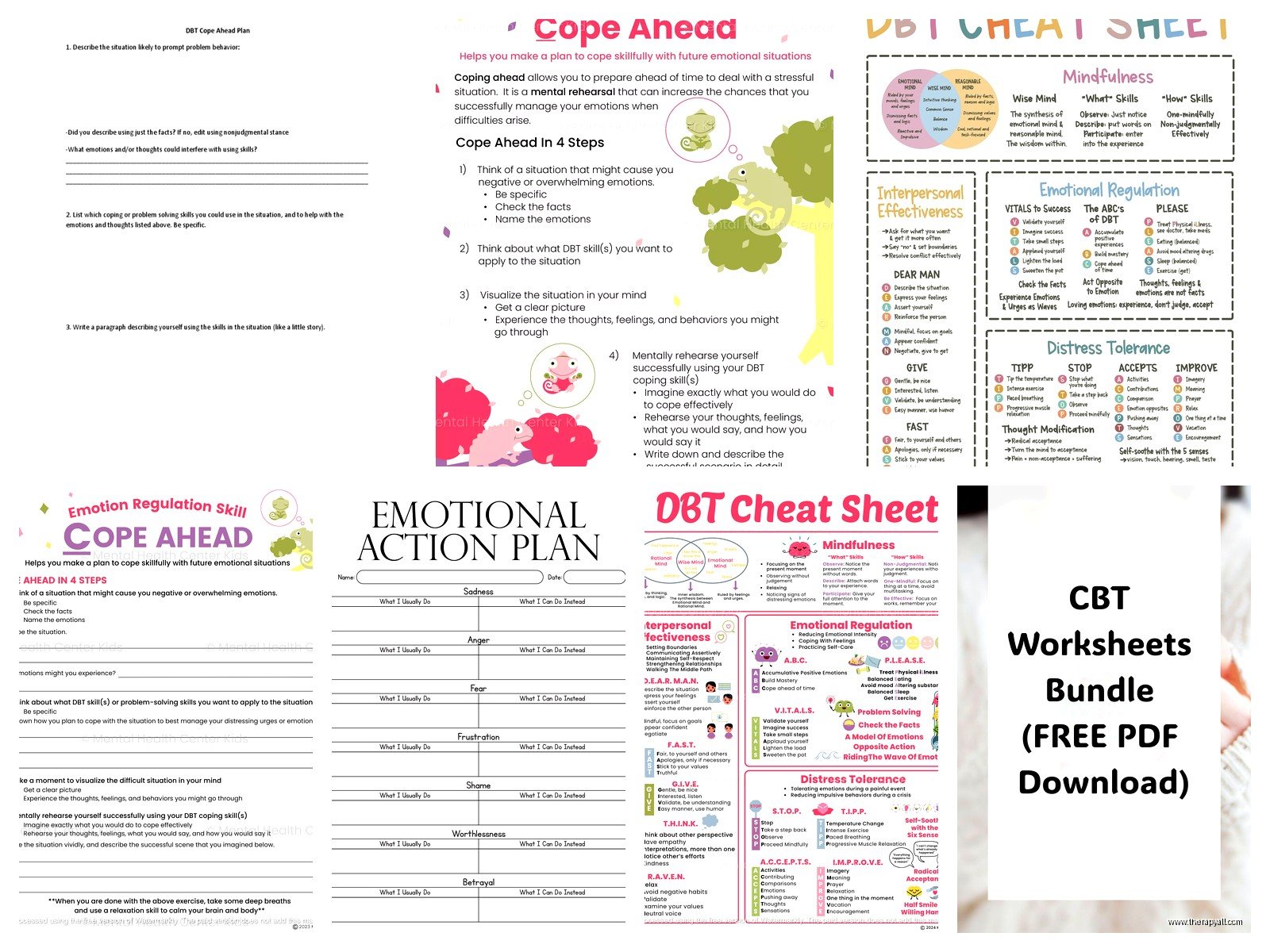
Most COPE AHEAD worksheets follow a similar format, though the exact wording varies depending on who created it. You’ll typically see these components:
**Describe the situation that is likely to prompt uncomfortable emotions.** This needs to be specific. Not “family gatherings” but “Saturday dinner at mom’s house where my sister will probably criticize my job situation.” The more detailed you are, the better you can prepare.
**Decide what coping or problem-solving skills you want to use in the situation.** This is where you pull from your DBT skills toolbox. Maybe you’re gonna use TIPP skills if you feel panic rising, or DEAR MAN if you need to assert a boundary, or self-soothing if you just need to get through it without engaging.
**Imagine the situation in your mind as vividly as possible.** This is the rehearsal part. You’re essentially running a simulation in your head. What does the room look like, who’s there, what are they saying, what do you smell and hear. The more sensory detail, the more your brain treats this like actual practice.
**Rehearse in your mind coping effectively.** See yourself using those skills. Watch yourself notice the rising anxiety, excuse yourself to the bathroom, splash cold water on your face, use paced breathing, return to the table calmer.
**Practice relaxation after rehearsing.** Because mental rehearsal of stressful situations can actually stress you out in the moment, which is kinda funny when you think about it.
One thing that genuinely annoyed me for years is how many COPE AHEAD worksheets I’d find online that were just… poorly formatted PDFs clearly made in Word 2003 with weird fonts and boxes that didn’t line up. Like, if someone’s already struggling with motivation to use a skill, handing them an ugly worksheet isn’t helping. My cat knocked over my coffee onto a stack of these once and honestly I wasn’t that upset about it.
## Where to Find Free COPE AHEAD Worksheets
The DBT tools landscape online is kind of a mixed bag. You’ve got official-ish resources from DBT training organizations, you’ve got therapist blogs, you’ve got Pinterest pins that lead to dead links or require you to sign up for seventeen newsletters.
**DBT Self-Help** has a straightforward version that’s actually fillable as a PDF, which I appreciate because not everyone wants to print things out. They keep it simple without a lot of extra fluff.
**Therapist Aid** offers a COPE AHEAD worksheet that’s clean and professional-looking. They have both a version with instructions and a version without, which is useful once you’re familiar with the skill and don’t need the hand-holding.
**Psychology Tools** has one but I think you need to create a free account. The worksheet itself is solid though, and they include an example which helps people understand what level of detail they should aim for.
Some therapists put their own versions on Google Drive or Dropbox and just share the link freely, which is cool but also means those links break all the time when people reorganize their files or leave practices. I’ve bookmarked resources only to find them gone six months later, so if you find a worksheet you like, save it to your own device.
## How to Actually Use the Worksheet (Not Just Fill It Out)
There’s a difference between completing a worksheet and using the skill. I see this all the time—people treat it like homework where the goal is just to have it done, but COPE AHEAD only works if you genuinely engage with the mental rehearsal part.
**Start with a situation that’s moderately stressful, not your worst-case scenario.** If you’re trying to COPE AHEAD for something that gives you a panic attack just thinking about, you might need to work up to that. Practice with situations that are like a 4 or 5 out of 10 on the stress scale first.
**Be honest about what skills you’ll actually use.** Don’t write down that you’ll practice radical acceptance if you know damn well you’re more likely to use distraction or self-soothing. The worksheet is for you, not for impressing anyone. It needs to match your actual skill level and preferences.
**Rehearse multiple times.** One mental run-through isn’t usually enough. Athletes don’t visualize their free throw once and call it good. You might rehearse the same situation three or four times, and that’s actually recommended in most DBT programs.
**Update your plan if you think of obstacles you missed.** That’s one of the sections on most worksheets—imagining what could go wrong with your coping plan. If halfway through your rehearsal you realize “oh wait, I can’t exactly excuse myself during a job interview to do jumping jacks,” you need to adjust your skill choice.
You want to rehearse while you’re relatively calm, not in the middle of already being activated. That’s something I had to learn myself because I’d be writing about these skills and then realize I was trying to COPE AHEAD while already anxious about the thing, and that’s… not the same. It’s like trying to study for a test while taking the test.
## Common Mistakes People Make
**Being too vague about the situation.** “I want to cope better with stress at work” isn’t specific enough. “I want to stay calm during Tuesday’s team meeting when my manager reviews my project in front of everyone” gives you something concrete to rehearse.
**Skipping the mental imagery part.** Just writing down “I’ll use TIPP skills” without actually visualizing yourself doing it means you’re missing the main point of the exercise. The rehearsal is where the learning happens.
**Choosing skills you don’t actually know how to use yet.** If you’ve never practiced paced breathing before, don’t make that your go-to skill for a high-stakes situation. COPE AHEAD works best when you’re rehearsing skills you’ve already practiced in low-pressure situations.
**Forgetting to rehearse success.** Some people get stuck in the “imagining everything that could go wrong” phase and never actually visualize themselves coping effectively. You need both—anticipate obstacles, but then see yourself overcoming them.
**Not actually doing it.** Yeah, the biggest mistake is downloading the worksheet and then letting it sit in your Downloads folder forever. I’m gonna be real with you, I’ve done this with plenty of resources I intended to use.
## When COPE AHEAD Actually Helps
This skill shines in situations where you know something difficult is coming and you have time to prepare. Upcoming difficult conversations, medical procedures, social events that typically trigger anxiety, court dates, family gatherings, presentations, performance reviews.
It’s less useful for unexpected situations obviously, since the whole point is preparation. That’s where your other DBT skills come in—distress tolerance for crisis moments, COPE AHEAD for situations you can see coming.
I’ve found it’s particularly helpful for situations where you’ve struggled before and want to do better this time. Like if every year the holidays are a disaster and you end up in conflict with your family, spending some time in November doing COPE AHEAD for specific holiday scenarios can genuinely change the outcome. Not because you’re being more positive, but because you’ve literally practiced a different response pattern.
Some people use COPE AHEAD weekly, sitting down on Sunday and thinking through the week ahead. Others pull it out only for major events. There’s no rule about frequency, it depends on what your life looks like and what you’re working on.
## Adapting the Worksheet for Different Needs
Not everyone works well with standard worksheet formats. Some people do better with a voice memo where they talk through the COPE AHEAD steps. Others prefer a simplified version with fewer prompts. I’ve seen people turn it into a checklist in their phone notes app.
The core elements you need are: identify the situation, choose your skills, visualize yourself using them, plan for obstacles. However you capture that information is fine.
For people who are very visual thinkers, drawing or finding images that represent the situation and their coping strategies can work better than writing paragraphs. For people who think better out loud, doing COPE AHEAD with a therapist or trusted friend might be more effective than solo worksheets.
The worksheet is a tool to facilitate the actual skill, which is the mental rehearsal. Don’t get so caught up in filling out boxes perfectly that you forget to do the visualization part, which is where the actual therapeutic benefit lives.