# EFT Worksheet Overview
EFT stands for Emotional Freedom Techniques, sometimes called tapping, and it’s basically a self-help method that combines elements of cognitive therapy with acupressure. You tap on specific meridian points on your body while focusing on a particular emotional issue or physical sensation. The theory goes that this tapping helps calm the amygdala and reduce the fight-or-flight response while you’re processing whatever’s bothering you.
I remember back in 2019 when a client brought in this crumpled EFT worksheet she’d printed from some random website, and half the meridian points were labeled wrong—like they had the karate chop point listed as being on the wrist instead of the side of the hand. It was a mess. That’s when I realized how many poorly designed resources are floating around out there, and people are using them thinking they’re doing it right when the instructions are just… off.
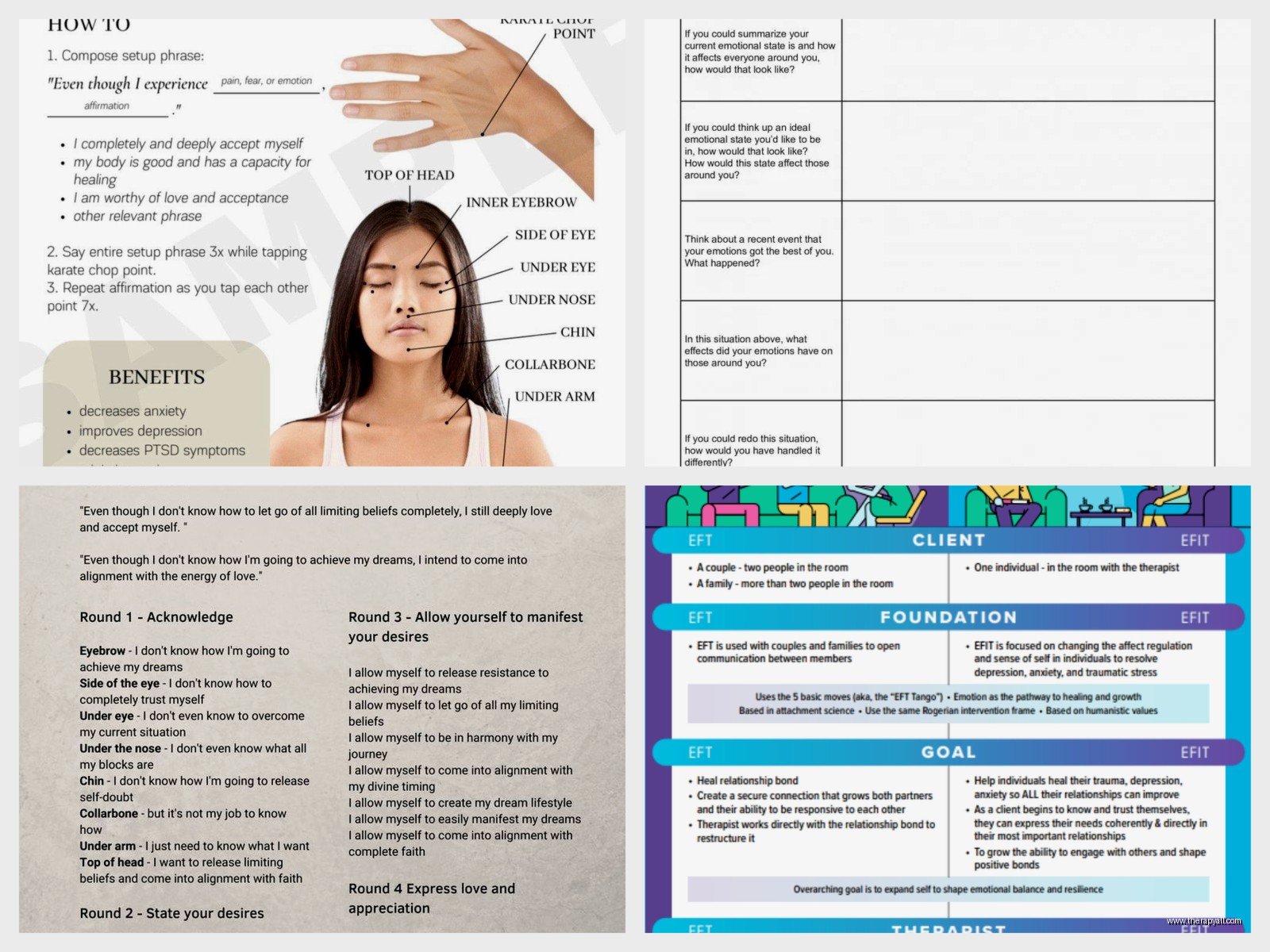
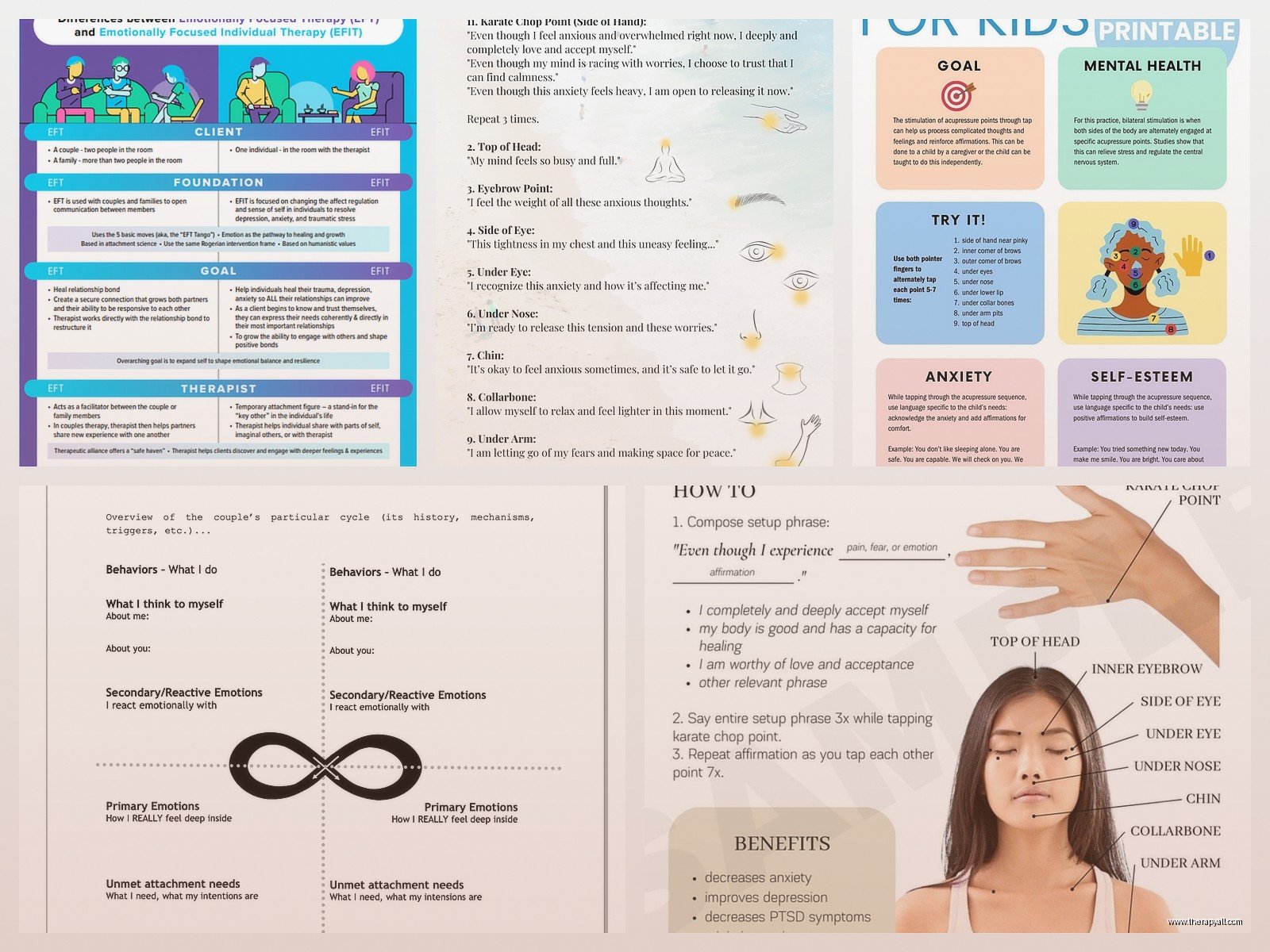
The basic EFT sequence involves tapping on about 8-9 points in order: top of the head, beginning of the eyebrow, side of the eye, under the eye, under the nose, chin point, beginning of the collarbone, under the arm (about four inches below the armpit), and sometimes the wrist points. You tap each point 5-7 times while repeating a reminder phrase related to your issue.
## How EFT Worksheets Actually Work
A good EFT worksheet walks you through the setup statement first. This is where you identify the specific problem and create an acceptance statement. The classic format is “Even though I have this [specific problem], I deeply and completely accept myself.” That second part annoys the hell out of me sometimes because clients will fixate on whether they truly accept themselves, and then we’re in this philosophical debate when really the phrase is just meant to create cognitive dissonance that helps shift the emotional charge.
You write down your specific issue with as much detail as possible. Not “I feel anxious” but “I feel tightness in my chest and my thoughts are racing about the presentation tomorrow at 2pm.” The more specific, the better the results tend to be. Worksheets should have space for you to rate your distress level before starting—usually on a 0-10 scale called the Subjective Units of Distress Scale or SUDS.
Then you’ve got the actual tapping sequence section. Most worksheets will have little diagrams showing where each point is located, which is helpful if you’re new to this. I’m gonna be honest, the diagrams in a lot of free PDFs look like they were drawn in Microsoft Paint circa 2003, but as long as they’re accurate, who cares.
The reminder phrase section is where you write down short phrases to repeat at each tapping point. These are usually shortened versions of your main issue. So if your setup statement was about anxiety regarding the presentation, your reminder phrase might just be “this presentation anxiety” or “tight chest” or “racing thoughts.” You cycle through these while tapping.
## What Should Be In A Quality EFT Worksheet
Space for multiple rounds. One round of tapping rarely does the trick. You need room to document at least 3-4 rounds, each with updated SUDS ratings. The emotional intensity should decrease with each round if the technique is working for that particular issue.
A section for tracking what comes up during the process. Sometimes when you’re tapping on one issue, a related memory or emotion surfaces. Like you’re tapping on work stress and suddenly you remember your third-grade teacher yelling at you, or—wait, that’s probably too specific, but you get the idea. The worksheet should have space to note these connections because they’re often where the real therapeutic gold is.
Clear instructions that don’t assume you already know what you’re doing. The worst worksheets just have the diagram and blank spaces. The better ones include step-by-step directions, even if you’ve done EFT before. Memory’s not perfect and it’s easy to skip steps.
Room for post-tapping reflection. After you complete your rounds, you should document what shifted, what didn’t, whether new aspects of the problem emerged. I’ve seen people have breakthroughs not during the tapping itself but in the reflection afterwards when they’re writing about what changed.
## Common EFT Worksheet Formats
The single-issue worksheet focuses on one specific problem per page. These are good for daily practice or when you’re working on a particular trigger. You’ve got your setup statement, your tapping sequence, your SUDS ratings, done.
The tracking worksheet covers multiple sessions over time. It’ll have columns for date, issue, starting SUDS, ending SUDS, and notes. This format is better if you’re using EFT regularly and want to see patterns. Like maybe you notice your anxiety about social situations consistently drops from 8 to 3, but your anxiety about deadlines only goes from 9 to 7, which tells you something about where your deeper work needs to happen.
The aspects worksheet is for complex issues that have multiple components. Say you have a phobia of flying—that might include fear of heights, fear of being trapped, fear of dying, memories of turbulence, and worry about what other passengers think of your anxiety. Each aspect gets its own tapping sequence, and the worksheet helps you organize all of that instead of just randomly jumping between different fears.
Some worksheets include the “movie technique” or “tell the story” approach where you identify a specific memory and tap through it like you’re watching a film, pausing whenever the emotional intensity spikes. These worksheets have scene-by-scene breakdowns with SUDS ratings for each part of the memory.
## Where To Find Free EFT Worksheets
The EFT International website has several free downloadable PDFs. They’re pretty standard, maybe a little dry, but they’re accurate and comprehensive. The tapping points are correctly labeled, which is more than I can say for a lot of what’s out there.
TherapistAid.com used to have some EFT resources though I think they’ve shifted focus more toward CBT and DBT materials in recent years. Worth checking their anxiety section though.
Individual EFT practitioners often offer free worksheets as lead magnets on their websites. Quality varies wildly. Some are excellent and include guided scripts. Others are just glorified printouts of the basic sequence you could find anywhere.
Pinterest has approximately nine million EFT worksheets pinned, but here’s the thing—you gotta verify the information before using them. I’ve seen ones that include random chakra healing stuff mixed in, or ones that tell you to tap for like 30 seconds per point which is just unnecessarily long, or ones that completely skip the setup statement and jump straight to tapping which defeats the whole purpose.
My cat just knocked over my water bottle and I’m trying to type this while mopping up my desk, so if this section seems distracted, that’s why.
## Creating Your Own EFT Worksheet
Sometimes the pre-made worksheets don’t fit your specific needs. You can make your own in a basic word processor or even handwrite them. Include these elements:
Date and time at the top. Helps you track patterns and remember context later.
The issue statement with space to describe it in detail. I usually leave about 4-5 lines for this.
Starting SUDS rating with a 0-10 scale clearly marked.
The setup statement written out three times—you’re supposed to say it three times while tapping the karate chop point, so having it written three times reminds you to actually do that.
A table or list with each tapping point and space next to it for your reminder phrase. Some people like checkboxes next to each point so they can track that they actually tapped all of them.
Ending SUDS rating after the first round.
Space for notes about what shifted or what came up.
Then repeat this structure for rounds 2, 3, and 4.
A final reflection section at the bottom.
## How To Actually Use These Worksheets
Fill out the issue section before you start tapping. Don’t tap first and then try to remember what you were working on—that’s backwards and less effective.
Be honest with your SUDS ratings. There’s no prize for getting to zero, and if you’re fudging the numbers, you’re just lying to yourself. If it’s still a 6, write down 6.
You don’t have to use the exact same reminder phrase at every point. Some people switch it up as they move through the sequence, getting more specific or shifting perspective. The worksheet should allow for that flexibility.
If a round doesn’t seem to change your SUDS rating much, you might need to get more specific about the issue or address a different aspect. The worksheet helps you figure that out by documenting what’s not working.
Don’t throw away worksheets after one use. I know people who keep EFT journals going back years. You can see how your relationship to certain issues has evolved, or notice that something you tapped on in 2021 has completely resolved and you haven’t thought about it in months.
## The Science-ish Part
EFT research is kinda mixed. There are studies showing it reduces cortisol levels and helps with PTSD symptoms, anxiety, and phobias. Other research suggests the benefits come from the exposure therapy element—focusing on the distressing thought—rather than the tapping itself. The placebo effect probably plays a role too.
I’m not gonna sit here and tell you EFT is a miracle cure or that it’s pure pseudoscience. It’s somewhere in the middle. Some people get significant relief from it. Others feel silly tapping on their face and don’t notice any change. The worksheets help you track your own response so you can make an informed decision about whether it’s worth continuing.
What bugs me is when EFT practitioners claim it can cure serious mental illness or replace medication. Nah. If you have clinical depression or bipolar disorder or schizophrenia, you need actual psychiatric care. EFT might be a helpful complementary tool, but it’s not a substitute for proper treatment.
## Troubleshooting With Worksheets
If you’re tapping and not seeing any change in your SUDS ratings after 3-4 rounds, your issue might be too global. Instead of “I’m anxious,” you need “I’m anxious about checking my email because my boss might have sent that performance review.” The worksheet should help you narrow down.
Sometimes the SUDS rating goes up during tapping. That’s not necessarily bad—it might mean you’re accessing the emotion more fully before it can release. Document that increase and keep going for another round or two.
If completely unrelated emotions or memories surface while you’re tapping, write them down in the notes section but don’t necessarily switch focus mid-session. Finish working on your original issue, then use a new worksheet for the new material that came up.
## Printable vs Digital Worksheets
Printable PDFs are great if you like physically writing things out. There’s something about the act of handwriting that helps with processing and memory. Plus you can keep them in a binder or folder and flip back through them easily.
Digital fillable PDFs work better if you’re doing this on your phone or tablet, or if your handwriting is terrible. You can save them with dates in the filename and search through them later. The downside is it’s easier to lose them in your downloads folder or forget to back them up.
Some people use both—they’ll use a digital worksheet during the actual tapping session because it’s convenient, then transfer key insights to a handwritten journal later for deeper reflection.
## Specialized EFT Worksheets
There are worksheets designed specifically for pain management where you map the physical sensation in detail before tapping. Others are made for children with simpler language and cartoon diagrams. Some focus on addictive cravings with sections for tracking triggers and patterns.
The “chasing the pain” worksheets are for when physical discomfort moves around your body during tapping—like you start with shoulder tension and it shifts to your lower back. These worksheets help you track that migration and adjust your tapping accordingly.
Personal peace procedure worksheets list out all the specific bothersome memories you can think of and systematically work through them one by one. It’s like a long-term project approach to EFT rather than crisis intervention.