# Therapy Printables — What They Actually Are and How to Use Them
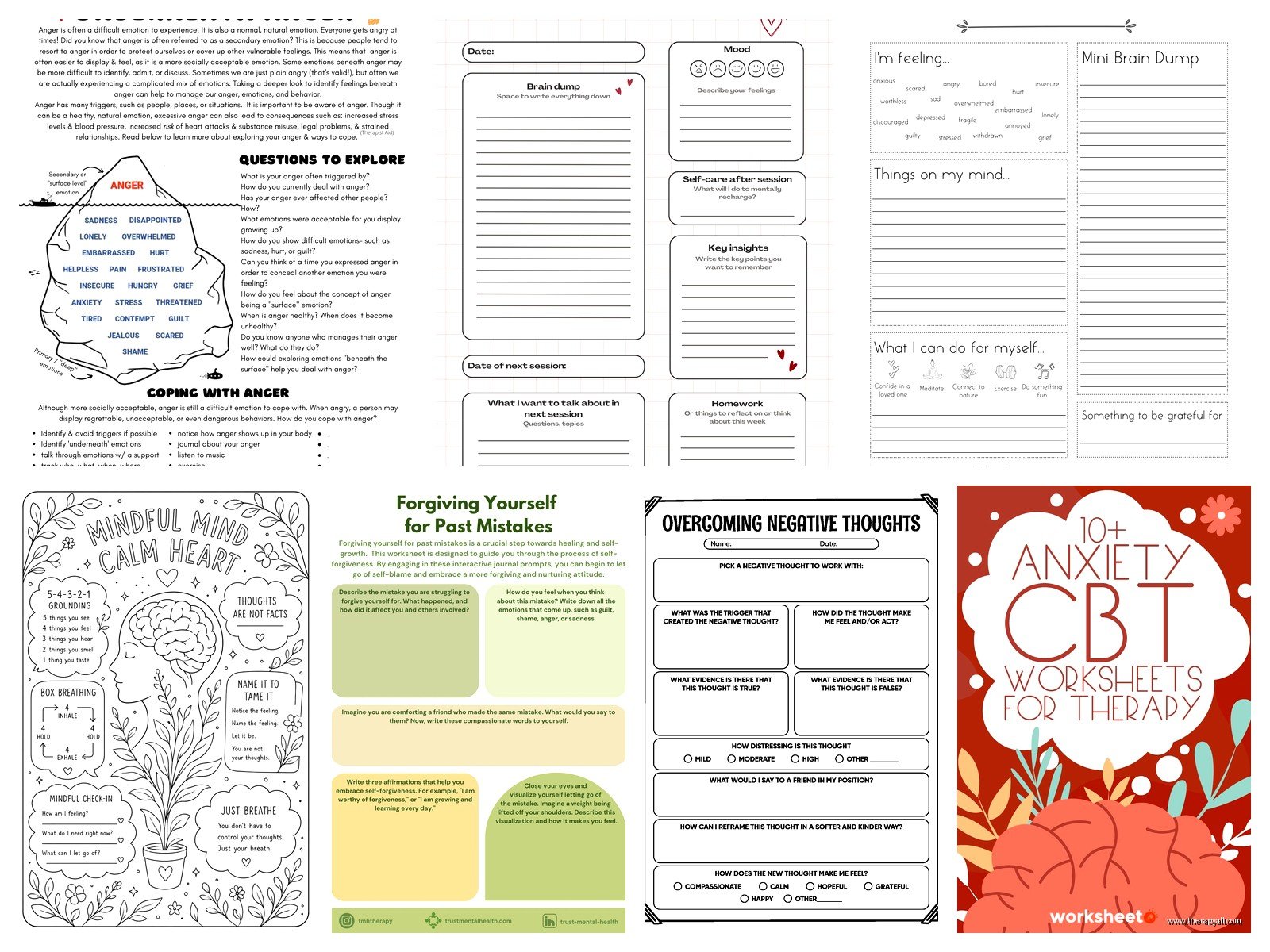
Therapy printables are downloadable worksheets, trackers, journals, and activity sheets designed to support mental health work between sessions or as standalone tools for self-reflection. They’re typically PDFs you can print at home or fill out digitally, covering everything from CBT thought records to emotion wheels to gratitude logs.
I started creating therapy printables back in 2018 when I was running group therapy sessions and realized I was photocopying the same handouts every single week. One client asked if she could just get a stack of them to take home, and that’s when I thought—why not just make these available as downloads? Fast forward to now, and the printables market is absolutely flooded with options, which is both helpful and overwhelming.
## The Main Categories of Therapy Printables
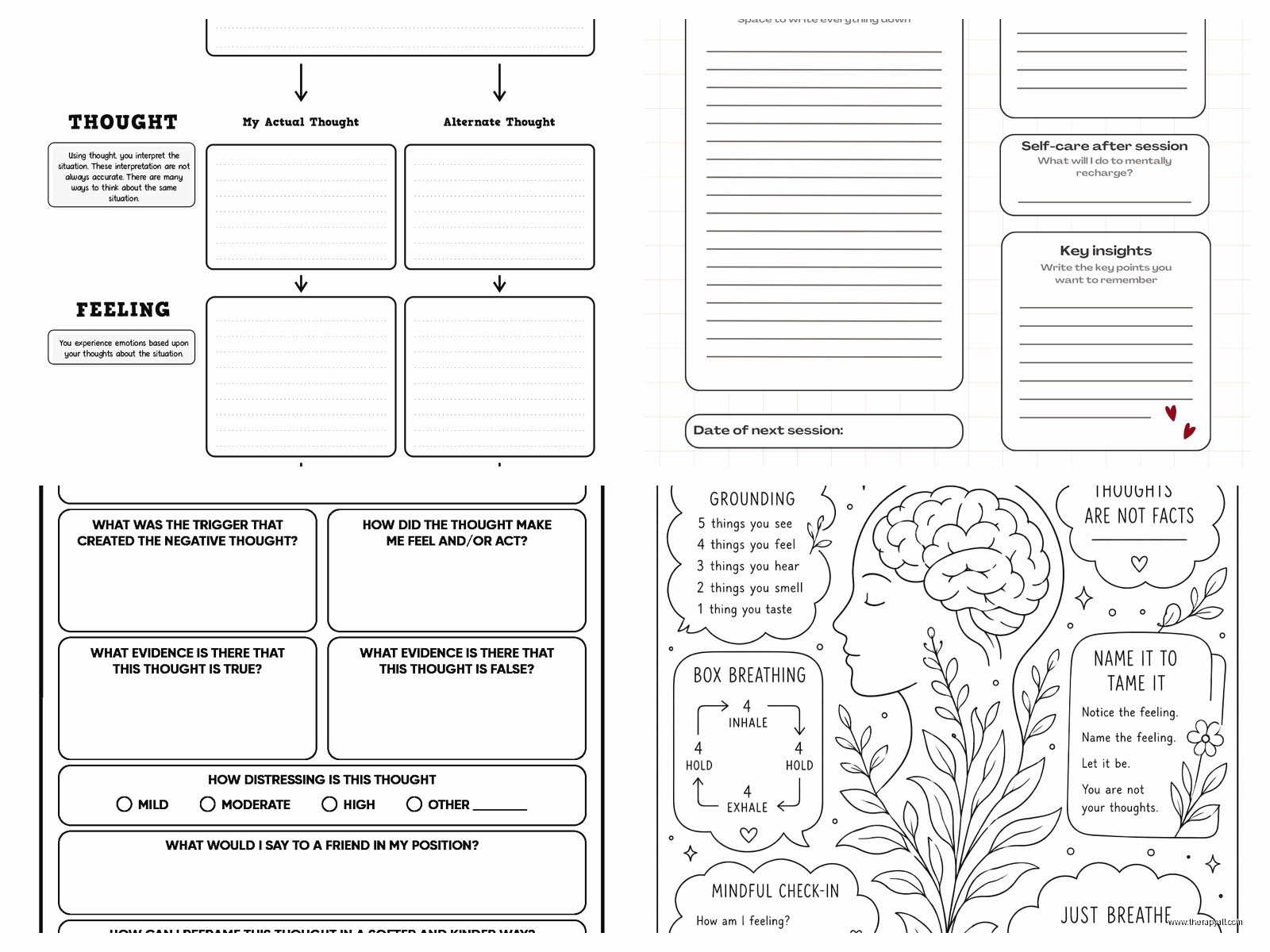
Cognitive Behavioral Therapy worksheets make up probably 40% of what’s out there. These include thought records where you identify automatic thoughts, challenge cognitive distortions, and develop balanced thinking. The classic three-column format (situation, thought, feeling) or the expanded seven-column version that adds evidence for and against the thought.
Emotion regulation tools are huge right now. Mood trackers, feeling wheels, distress tolerance worksheets, and DBT-specific handouts like the TIPP skill breakdown or the pros-and-cons worksheet. I remember in summer 2021 I was creating like four mood tracker variations a week because everyone wanted a different layout—some people wanted hourly tracking, some wanted just daily check-ins, some wanted color-coding options.
Goal-setting and habit trackers have crossed over from the productivity world into therapy spaces. These help you break down larger therapeutic goals into actionable steps, track medication adherence, monitor sleep patterns, or build new coping skills through repetition.
Journaling prompts and reflection pages give structure to freeform writing. Instead of staring at a blank page, you get specific questions like “What triggered my anxiety today?” or “Describe a moment when I felt genuinely calm this week.”
Self-care and wellness planners—and honestly, this is where I get kinda annoyed because the term “self-care” has been so diluted that half these printables are just bubble bath checklists with no actual therapeutic value. Real self-care printables should help you identify your actual needs across physical, emotional, social, and psychological domains, not just remind you to light a candle.
Relationship and communication worksheets help map attachment patterns, practice assertiveness scripts, work through conflict, or identify relationship values. These are particularly useful for couples therapy homework.
Specialized printables for specific conditions: anxiety worksheets with exposure hierarchy planners, depression behavioral activation schedules, ADHD time-blocking templates, trauma processing worksheets (though these should really only be used under professional guidance), eating disorder meal planning and thought challenging sheets.
## How Therapy Printables Actually Get Used
In professional therapy settings, therapists assign printables as homework between sessions. You might work on a thought record throughout the week and bring it to your next appointment to review together. This extends the therapeutic work beyond that 50-minute session and gives concrete data to discuss.
The tracking aspect is genuinely valuable—I’ve had clients who insisted their anxiety was constant and overwhelming, but when they actually tracked it hourly for a week, they discovered it peaked predictably around certain times or situations. That data completely changed our treatment approach.
For self-directed mental health work, printables provide structure when you’re trying to apply therapeutic concepts on your own. If you’ve read about CBT but don’t have a therapist, a good thought record worksheet walks you through the process step by step.
Some people use them journaling-style, just as a framework for daily reflection without any specific clinical goal. That’s fine, though it’s worth knowing that’s more wellness maintenance than actual therapy work.
Group therapy and support groups often use printables as shared activities. Everyone fills out the same worksheet, then you discuss your responses together, which can reduce the feeling of isolation and help people see different perspectives on similar struggles.
## What Makes a Therapy Printable Actually Useful
Clear instructions matter more than you’d think. I’ve seen beautifully designed printables that are essentially useless because there’s no explanation of what you’re supposed to do with each section. A good printable either has built-in instructions or comes with a separate guide.
Adequate space for writing is crucial—those printables with tiny little boxes where you’re supposed to write out your entire automatic thought pattern? Nah, they just frustrate people. You need room to actually process, not just jot down keywords.
Evidence-based frameworks should underpin the design. A mood tracker is just a mood tracker, but a printable teaching you to use the ABCDE model from REBT or the STOP skill from DBT is grounded in actual therapeutic methodology.
Customization options help because everyone’s brain works differently. Some people need structure with multiple-choice options, others need open-ended space. Some want daily formats, others weekly overviews. My cat knocked over my coffee all over a stack of printables last week and honestly the ones that survived were the ones with plastic sleeves, so… there’s a practical consideration too.
The design should support the function, not distract from it. I get really frustrated with printables that prioritize aesthetic over usability—tons of decorative elements, complex color schemes, fonts that are hard to read. This isn’t a Pinterest board, it’s a clinical tool. Keep it clean and functional.
## Where to Find Therapy Printables
Therapist websites and mental health blogs offer free printables as resources. These are often created by actual clinicians and tend to be well-designed from a therapeutic standpoint, though the visual design might be basic.
Etsy has become a massive marketplace for therapy printables, with thousands of sellers offering both free and paid options. Quality varies wildly—some are created by licensed therapists, others by graphic designers with no clinical background. You gotta read descriptions carefully and check reviews.
Teachers Pay Teachers isn’t just for classroom stuff anymore; there’s a whole mental health section with printables designed for school counselors that work just as well for personal use or private practice.
Therapy-specific platforms like Therapist Aid, Psychology Tools, and Get Self Help have extensive free libraries. These are solid, evidence-based options created by professionals. Psychology Tools has both free and paid versions, with the paid ones offering more comprehensive workbooks.
Mental health apps sometimes offer downloadable printables as part of their resources. These usually align with the app’s specific approach—a CBT app will have CBT worksheets, etc.
Creating your own is always an option if you can’t find exactly what you need. I use Canva for this because it’s user-friendly and has templates, though honestly sometimes I still just open a Word document and make a simple table because that’s all you really need for a basic thought record.
## The Limitations You Should Know About
Printables aren’t therapy. They’re tools that support therapeutic work, but filling out worksheets alone doesn’t replace the relationship, insight, and guidance you get from working with an actual therapist. I’ve met people who collected hundreds of printables thinking they were “doing therapy” when really they were just… collecting paper.
Some issues require professional intervention and printables can actually delay people from getting appropriate help. If you’re working through trauma, experiencing suicidal ideation, or dealing with severe symptoms, you need a clinician, not a PDF.
The quality control problem is real—anyone can create and sell therapy printables regardless of their qualifications. I’ve seen printables that misrepresent therapeutic concepts, oversimplify complex issues, or even reinforce unhelpful thinking patterns. That “positive vibes only” toxic positivity stuff masquerading as CBT? Yeah, that’s everywhere.
Printables require follow-through, and most people download them with good intentions and then never actually use them or use them once and abandon them. That’s not necessarily bad—sometimes just reading through a worksheet gives you the insight you needed—but if you’re spending money on printables you never use, that’s worth examining.
They work best when integrated into a broader approach, not as isolated activities. A sleep tracker is more useful when you’re also working on sleep hygiene, talking to a doctor about sleep issues, and actually implementing changes based on what you track.
## Practical Tips for Actually Using Therapy Printables
Start with one printable at a time. Don’t download seventeen different mood trackers and thought records and journaling prompts all at once. Pick one that addresses your most pressing need and use it consistently for at least a week before adding anything else.
Schedule when you’ll fill them out—therapy homework works better with a specific time attached. “I’ll fill out my thought record when I feel anxious” sounds reasonable but often means you won’t do it because you’re, you know, anxious. “I’ll fill it out every evening at 8pm” is more concrete.
Keep them visible and accessible. If your printables are buried in a folder on your computer or stuffed in a drawer, you’ll forget about them, I mean unless you’re one of those incredibly organized people but most of us aren’t.
Review what you’ve completed. The real value often comes from looking back at patterns over time, not just the act of filling them out. Set aside time weekly or monthly to review your completed worksheets and notice trends.
Adapt them to fit your needs—if a worksheet has sections that don’t apply to you, cross them out. If it needs additional space or categories, add them. These are tools for you, not rigid assignments.
Share them with your therapist if you have one. Bring completed printables to sessions as discussion points. They provide concrete examples and data that can make therapy time more productive.
## Digital vs. Print Considerations
Digital printables you fill out on a tablet or computer offer searchability, easy storage, and the ability to duplicate templates infinitely. Apps like GoodNotes or Notability work well for this. You can also use free PDF editors.
Physical printing has benefits too—the act of handwriting can increase processing and retention for some people. There’s also something about physically seeing a stack of completed worksheets that makes progress more tangible, or maybe that’s just me being old-school about it.
The hybrid approach is what I usually recommend: print the ones you’ll use regularly and keep them in a dedicated binder, but maintain digital copies so you can print more when needed or access them when you’re not home.
Cost-wise, printing can add up if you’re using a lot of printables. Consider black-and-white printing for most things since the color doesn’t usually add therapeutic value, just aesthetic appeal and ink costs.
## When Therapy Printables Are Most Helpful
During the early stages of learning a therapeutic skill, printables provide scaffolding. Once you’ve internalized the process—like challenging automatic thoughts—you might not need the worksheet anymore, but it’s essential while you’re building that habit.
When you’re between therapy sessions or on a waitlist for therapy, printables can help you start working on issues immediately rather than just waiting.
For maintenance after therapy ends, printables serve as refreshers. You might not need weekly thought records anymore, but keeping a template handy for when old patterns resurface can prevent relapse.
They’re particularly useful for specific, concrete goals like building a habit, tracking a symptom pattern for medical appointments, or working through a structured process like exposure hierarchy.