# Treatment Worksheets – Free PDF & Printable Resources
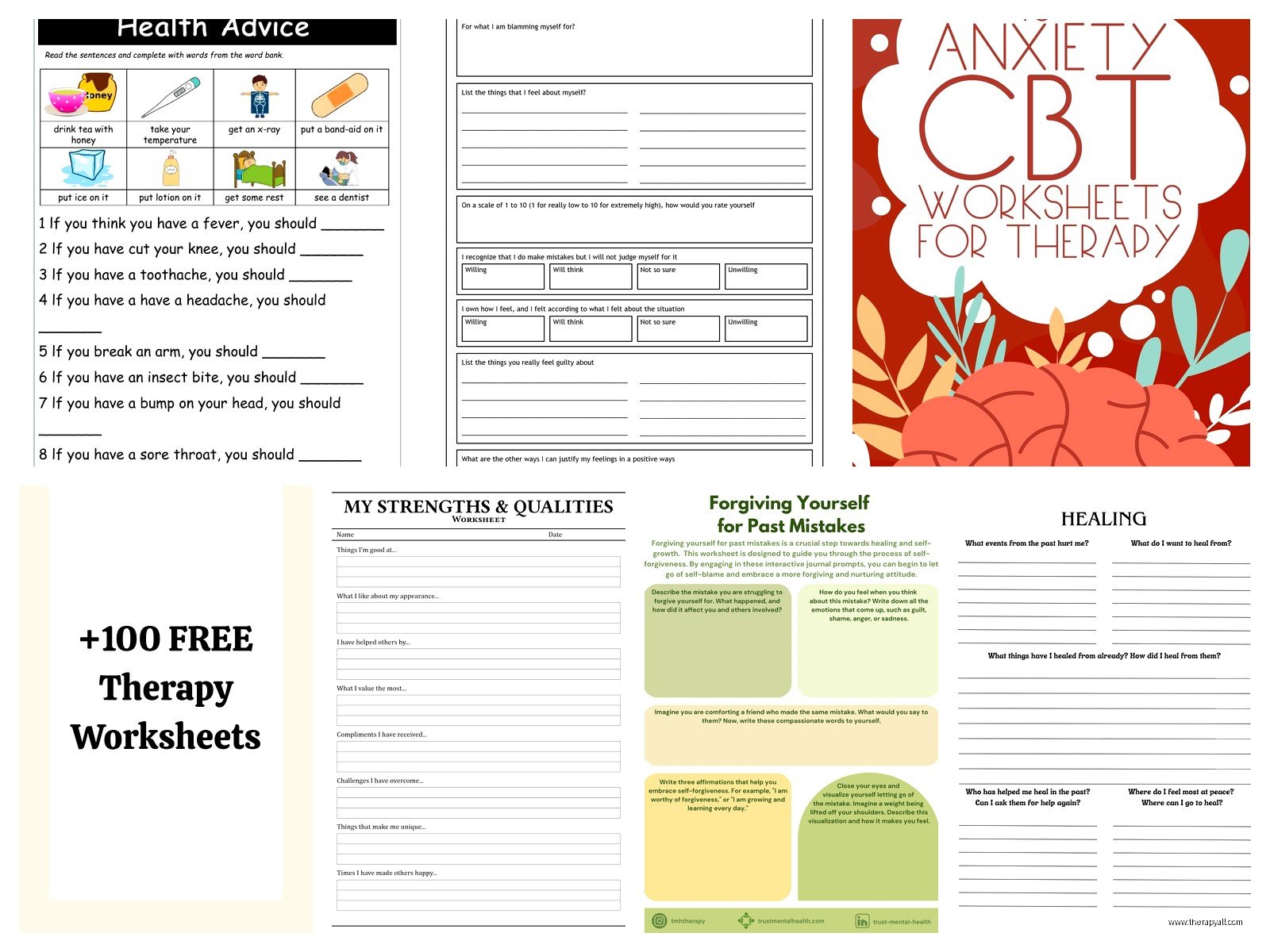
Treatment worksheets are structured tools that therapists and clients use to track thoughts, behaviors, emotions, or patterns between sessions. They’re essentially guided exercises on paper—or more often these days, PDFs you can download, fill out digitally, or print and complete by hand. The goal is to externalize what’s happening internally so you can actually see patterns instead of just feeling stuck in them.
I remember summer 2019, I had a client who was dealing with severe social anxiety and she kept saying she “couldn’t remember” what triggered her panic attacks. We started using thought records—just basic CBT worksheets—and within two weeks she had documented like fifteen instances with clear patterns around anticipatory anxiety before group settings. It wasn’t that she couldn’t remember. She just needed the structure to capture it in the moment instead of trying to reconstruct everything in session.
## Why Worksheets Actually Work
The research behind therapeutic worksheets is pretty solid. They serve as homework that bridges the gap between your 50-minute therapy session and the other 10,030 minutes in your week. When you write something down—whether it’s a negative thought, a behavioral experiment, or a mood rating—you’re creating distance between yourself and the experience. That distance is kinda crucial for insight.
Worksheets also give you something concrete to bring back to therapy. Instead of “I had a bad week,” you show up with documented evidence of what “bad” actually looked like. Your therapist can see frequency, intensity, context. It turns vague feelings into data points.
The repetitive nature matters too. Doing the same worksheet format multiple times trains your brain to start asking those questions automatically. After filling out enough thought records, you start catching cognitive distortions in real-time without needing the paper prompt.
## Types of Treatment Worksheets You’ll Actually Encounter
Cognitive Behavioral Therapy (CBT) Worksheets
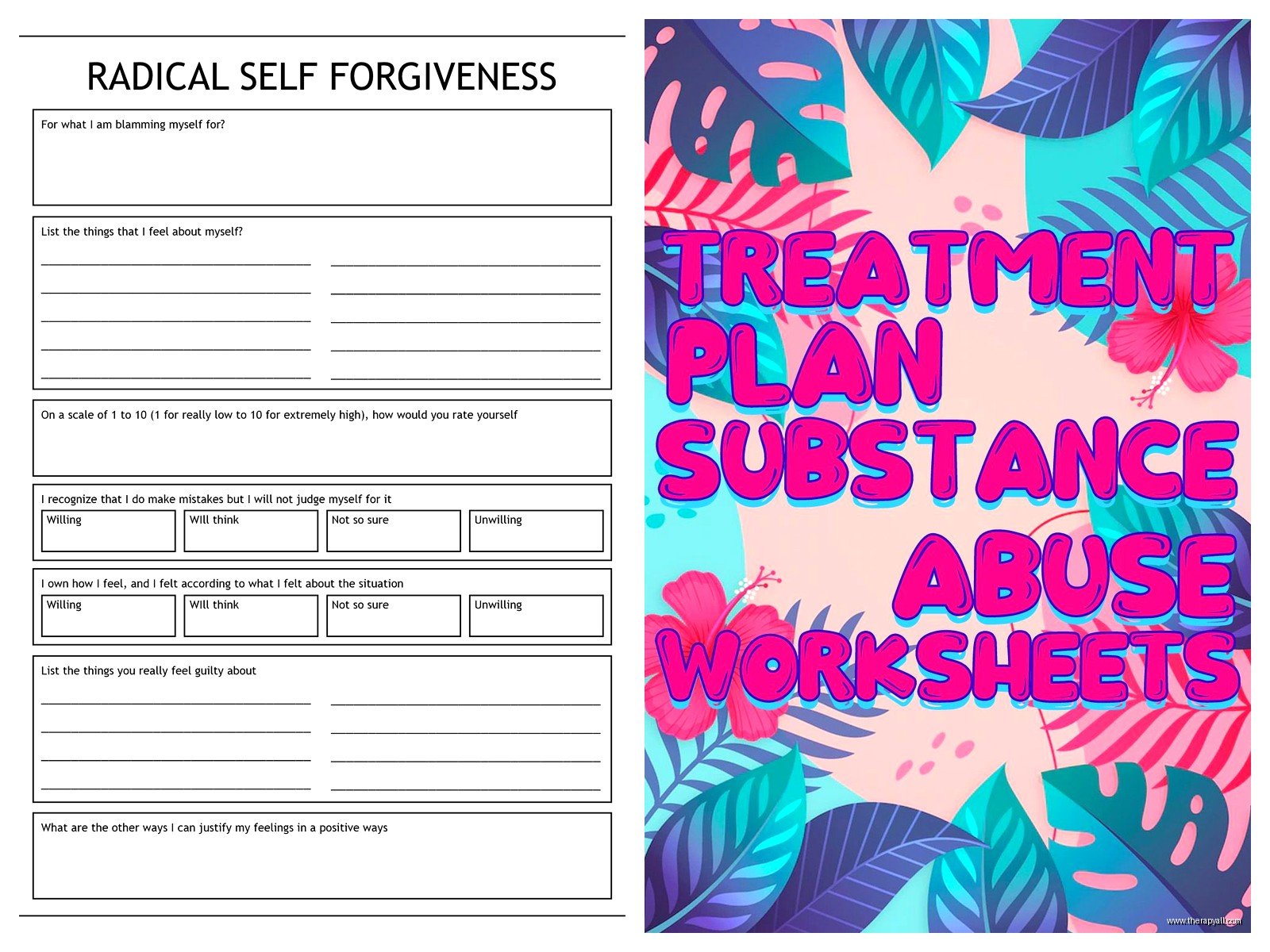
These are probably the most common. CBT worksheets focus on the relationship between thoughts, feelings, and behaviors. The classic thought record is the foundation—you document a situation, identify the automatic thought that popped up, notice the emotion and its intensity, examine the evidence for and against that thought, and then generate a more balanced perspective.
Other CBT worksheets include behavioral activation schedules (planning activities when you’re depressed), exposure hierarchy forms (ranking feared situations from least to most anxiety-provoking), and cognitive distortion identification sheets. There’s also worry time logs, problem-solving worksheets, and assertiveness planning documents.
What annoys me about a lot of CBT worksheets I see online is they’re so overly complicated. Like, someone designed a thought record with twelve columns and color-coding requirements and… nah. If a worksheet takes longer to understand than to complete, it’s not helpful. The best ones are dead simple.
Dialectical Behavior Therapy (DBT) Worksheets
DBT worksheets tend to focus on the four skill modules: mindfulness, distress tolerance, emotion regulation, and interpersonal effectiveness. You’ve got diary cards for tracking emotions, urges, and skill use—these are daily logs that DBT clients fill out religiously. There are PLEASE worksheets for physical health basics, opposite action planning sheets, and the DEAR MAN script for navigating difficult conversations.
Chain analysis worksheets are used after a crisis behavior or intense episode. You map out every link in the chain from the prompting event through vulnerability factors, thoughts, feelings, and actions that led to the problem behavior. It’s detailed work and it takes time, but it reveals so much about your personal patterns.
Acceptance and Commitment Therapy (ACT) Worksheets
ACT worksheets look different because the therapy itself is more metaphor-heavy and experiential. You’ll see values clarification exercises where you identify what actually matters to you across life domains. There are worksheets for cognitive defusion—getting distance from thoughts—and committed action planning where you set goals aligned with your values.
The creative hopelessness worksheets are interesting, they basically help you map out all the ways you’ve tried to control or avoid difficult internal experiences and how well that’s worked (spoiler: usually not well). My cat knocked over my coffee while I was working on this section and I had to stop and clean it up, which honestly feels like a good metaphor for how life interrupts our carefully planned avoidance strategies.
Mindfulness and Grounding Worksheets
These provide structured approaches to present-moment awareness. The 5-4-3-2-1 grounding technique is often formatted as a worksheet—identify five things you see, four you can touch, three you hear, two you smell, one you taste. Body scan worksheets guide progressive attention through different body parts.
Gratitude journals technically fall here too, though I’m gonna be honest, the gratitude worksheet trend has gotten out of hand and sometimes feels more like toxic positivity than actual therapeutic intervention.
Trauma-Focused Worksheets
Trauma processing worksheets are more specialized. You’ve got trauma narrative templates for gradually writing out traumatic experiences in a controlled way. There are worksheets for identifying triggers and creating safety plans, and tools for challenging trauma-related beliefs like “It was my fault” or “I should have done something different.”
EMDR worksheets exist too—subjective units of distress (SUDS) tracking forms, safe place development guides, and float-back logs for identifying earlier memories connected to current distress.
## Where to Find Free Treatment Worksheets
The Therapist Aid website is probably the most comprehensive free resource. They’ve got hundreds of worksheets organized by topic and therapeutic approach, all available as PDFs. The design is clean, the instructions are clear, and you don’t need to create an account or give your email to download them.
Psychology Tools offers a mix of free and paid worksheets. Their free section is still pretty robust with CBT and mindfulness resources. The worksheets are evidence-based and they include information sheets that explain the theory behind each tool.
The Beck Institute has free CBT resources including thought records and activity schedules. These come directly from the source—Aaron Beck basically founded cognitive therapy, so the worksheets stick to the original protocols.
DBT-specific worksheets are available through various DBT programs’ websites. The Linehan Institute (Marsha Linehan created DBT) has some resources, though honestly the most comprehensive DBT worksheet collection I’ve found is just… passed around between therapists as shared documents. There’s this whole informal network of clinicians who’ve compiled and refined these tools over years.
For ACT worksheets, the Association for Contextual Behavioral Science has free resources. Steven Hayes’ website also offers some downloads.
## How to Actually Use Worksheets Effectively
Just downloading a worksheet doesn’t do anything. I’ve seen people collect PDFs like they’re gonna read them someday (I do this with articles about organizational systems and then never implement any of them, so I get it). But for therapeutic change, you gotta actually complete them, and ideally do it consistently.
Start with one worksheet type and stick with it for at least two weeks. If you’re doing thought records, commit to filling one out whenever you notice a mood shift. Set a phone reminder if you need to. The pattern recognition only works with repetition.
Fill worksheets out as close to the event as possible. If you wait until your therapy session to try to remember what happened Tuesday afternoon, you’re gonna lose important details. The automatic thoughts, the physical sensations, the context—all of that fades fast. Keep a worksheet in your bag or save a PDF template on your phone.
Be honest. Worksheets only work if you write what actually happened, not what you think should have happened or what sounds good. If your thought was “Everyone thinks I’m pathetic,” write that, not the already-balanced version. The whole point is to capture the raw automatic response.
## Common Problems with Worksheet Use
People often start strong and then drop off after a week or two. Homework compliance in therapy is actually a significant predictor of outcomes—clients who complete between-session assignments show better improvement. But life gets busy, or the worksheet starts feeling like just another chore, or you avoid it because facing your thoughts on paper feels overwhelming.
Some clients get perfectionistic about worksheets. They’ll spend thirty minutes crafting the perfect balanced thought or agonizing over exactly how to rate their emotion intensity. That’s counterproductive. These are tools for exploration, not performance evaluations.
There’s also the issue of worksheets becoming rote. You fill them out because you’re “supposed to” but you’re not actually engaging with the content. You write down a more balanced thought but don’t believe it at all. At that point the worksheet is just busywork.
Sometimes people use the wrong worksheet for their issue, or they try to use a worksheet without understanding the therapeutic framework behind it. A DBT diary card won’t make much sense if you haven’t learned DBT skills. An exposure hierarchy is useless if you don’t actually do the exposures. Context matters.
## Digital vs. Paper Worksheets
This is mostly personal preference. Digital worksheets—either fillable PDFs or apps—are convenient because you always have your phone. You can type faster than you write, and you can save everything in one place. Some apps even let you track patterns over time with graphs and analytics.
Paper worksheets work better for some people because the physical act of writing by hand increases processing and memory retention. There’s also something about paper that feels more private—no worry about cloud storage or someone accessing your phone. Plus if you’re trying to reduce screen time or you find phones distracting, paper removes that variable.
I’ve worked with clients who do hybrid systems—they keep paper worksheets during the week and then photograph them to share digitally with me before sessions. Or they use apps for quick mood tracking but print out more complex worksheets for deeper work.
## When Worksheets Aren’t Enough
Worksheets are tools, not treatment. They support therapy but they don’t replace it. If you’re working through significant trauma, a worksheet isn’t gonna process that for you—you need a trained therapist to guide that work safely. If you’re in crisis, you need immediate support, not a PDF.
Some issues are too complex for worksheet-based approaches. Personality disorders, severe dissociation, active psychosis—these need specialized treatment that goes way beyond self-help resources. And some people just don’t respond well to structured written exercises. Maybe you’re more verbal, more kinesthetic, more creative. Therapy should adapt to how you process information, not force you into a format that doesn’t fit.
There’s also the reality that worksheets require a certain level of literacy, cognitive functioning, and executive function. If you’re in a severe depressive episode where you can barely get out of bed, a five-column thought record might be genuinely inaccessible. That doesn’t mean you’re failing at therapy—it means the tool needs to be modified or a different approach needs to be used.
## Specific Worksheet Recommendations by Issue
For depression, behavioral activation worksheets are incredibly effective. Start tracking activities and mood ratings to identify what actually lifts your mood even slightly, then schedule more of those activities. Thought records help too, especially for the negative thinking patterns that maintain depression.
For anxiety, exposure hierarchies and worry worksheets are your primary tools. Map out what you’re avoiding, rank situations by difficulty, and start working through them systematically. Worry time logs help if you’ve got generalized anxiety—you designate a specific 15-minute period for worrying and postpone anxious thoughts to that time.
For anger issues, the anger log worksheet helps you track triggers, physical sensations, thoughts, and behavioral responses. The goal is identifying your personal anger pattern so you can intervene earlier in the sequence.
For relationship issues, communication worksheets like DEAR MAN scripts or XYZ statements (“When you do X in situation Y, I feel Z”) help structure difficult conversations. There are also worksheets for identifying relationship patterns and attachment styles.
For substance use, urge logs track cravings including intensity, duration, triggers, and coping strategies used. Relapse prevention plans map out high-risk situations and specific responses.
## Creating Your Own Worksheets
Once you understand the basic principles, you can adapt worksheets to your specific needs. I remember working with a client who was a graphic designer and she basically redesigned all the CBT worksheets into this minimalist format that worked way better for her brain. She kept the same content but changed the visual layout completely.
You can simplify overcomplicated worksheets by removing unnecessary columns or questions. You can combine elements from different worksheets if you’re working on multiple things at once. You can change the language to match how you actually talk—if “automatic thought” feels too clinical, call it “brain garbage” or whatever makes sense to you.
The key is maintaining the core therapeutic element. A thought record works because it makes you examine evidence and generate alternatives. If you remove those components, you’ve lost the mechanism of change.