# Self-Help Worksheets: What They Are and How to Actually Use Them
Self-help worksheets are structured documents that guide you through specific mental health exercises, thought patterns, or behavioral changes. They’re basically the homework part of therapy, except you can do them without paying $150 an hour. Most come in PDF format so you can print them or fill them out digitally, and they cover everything from anxiety tracking to relationship communication patterns.
I spent the summer of 2019 compiling worksheet libraries for a mental health nonprofit, and by August I had looked at so many poorly formatted PDFs that I started dreaming about checkbox layouts. That’s when I realized most people have no idea how to actually use these things effectively, they just download seventeen of them and then never open the files again.
## The Main Categories You’ll Actually Encounter
Worksheets fall into pretty clear categories based on therapeutic approach and target issue. Cognitive Behavioral Therapy (CBT) worksheets are the most common because CBT is structured and workbook-friendly by nature. You’ll see thought records, cognitive distortion identifiers, behavioral activation schedules, and exposure hierarchy builders. These work by making you write down your thoughts in columns so you can spot patterns, which sounds boring but it’s genuinely one of the most effective techniques we have.
Dialectical Behavior Therapy (DBT) worksheets focus on the four main skill modules: mindfulness, distress tolerance, emotion regulation, and interpersonal effectiveness. The diary cards are probably the most used DBT worksheet, where you track emotions, urges, and skill use daily. I used to think these were overkill until I saw how much data you can gather in just two weeks of consistent tracking.
Anxiety and depression-specific worksheets include mood logs, worry time schedulers, gratitude journals (which I find kinda overrated but they work for some people), activity scheduling, and sleep trackers. The anxiety hierarchy worksheet is particularly useful because it breaks down your fears into manageable steps instead of just telling you to “face your fears” like that means anything actionable.
Relationship and communication worksheets cover conflict resolution frameworks, attachment style assessments, love language identifiers, and boundary-setting scripts. These tend to be more popular with couples, but honestly I’ve seen individual clients benefit from them when they’re trying to understand patterns across multiple relationships.
Trauma processing worksheets should come with a warning label, actually. Things like trauma timelines, trigger identification maps, and grounding technique menus can be helpful but they’re not meant to be used alone if you’re dealing with significant PTSD or complex trauma. You need a therapist guiding that process.
## Where to Find Quality Free Worksheets
Therapist Aid is probably the most comprehensive free resource out there. They have hundreds of worksheets organized by topic and therapeutic approach, all professionally designed and evidence-based. The worksheets include instructions for both clients and therapists, which is helpful because you can understand the intent behind each exercise.
Psychology Tools offers a mix of free and paid worksheets, but their free selection is solid. They’re particularly strong on CBT resources and they translate many worksheets into multiple languages. The paid version gives you access to more specialized tools and the ability to customize worksheets, but you don’t need it unless you’re a practicing therapist.
My cat just knocked over my coffee and I’m gonna pretend that didn’t happen and keep writing.
The Centre for Clinical Interventions (CCI) in Australia has phenomenal free workbooks that are essentially multiple worksheets packaged together around specific issues like perfectionism, social anxiety, panic, and depression. These are more comprehensive than single worksheets and walk you through entire treatment protocols.
MindTools has worksheets that lean more toward general personal development and stress management rather than clinical mental health, but there’s overlap. Their resources on time management, decision-making, and problem-solving can be useful if your mental health struggles include executive function issues.
Individual therapist websites and blogs often share worksheets they’ve created, but quality varies wildly. Some are excellent and others are just… someone put a bunch of questions in a Word document and called it a worksheet. Check if the creator has actual credentials before you spend time on their materials.
## What Makes a Worksheet Actually Useful vs Just Paper Waste
A good worksheet has clear instructions that don’t assume you already know what you’re doing. This drives me nuts, actually, how many worksheets I’ve seen that say something like “identify your cognitive distortions” without explaining what cognitive distortions are or providing examples. If someone already knew all the terminology, they probably wouldn’t need the worksheet.
Effective worksheets include examples or sample responses so you can see what a completed version might look like. This is especially important for thought records and other CBT tools where the format matters. You need to see that “I’m a failure” goes in the automatic thought column, not the evidence column.
The best worksheets have enough space to actually write your responses. Sounds obvious, but you’d be surprised how many give you three lines to describe a traumatic memory or a complex relationship dynamic. Digital worksheets should have expandable text boxes, printed ones need adequate spacing.
Worksheets should match your current functioning level. If you’re in crisis, a complex 12-step worksheet about core beliefs isn’t gonna help you, you need something immediate like a grounding technique menu or a crisis plan template. Save the deep work for when you’re more stable.
Good worksheets can stand alone but better ones are part of a series or program. A single thought record is fine, but a sequence that builds from identifying thoughts to challenging them to developing alternatives is more effective.
## How to Actually Use These Instead of Just Hoarding Them
Pick one worksheet at a time based on your most pressing issue right now. You don’t need seventeen different anxiety worksheets, you need one that targets your specific anxiety pattern and you need to actually complete it. I’m guilty of this too, I have a folder on my desktop called “worksheets maybe” with like 47 PDFs I’ve never opened.
Set a specific time to work on worksheets, ideally when you’re not already overwhelmed. Trying to complete a thought record during a panic attack is not the move, that’s when you use your already-prepared coping skills. Worksheets are for the calm moments when you can think clearly and establish patterns.
Complete worksheets by hand if possible, even if you have to print them first. There’s research suggesting that handwriting engages different cognitive processes than typing, and for therapeutic work that connection can matter. Plus it’s harder to ignore a physical paper sitting on your desk than a PDF buried in downloads.
Review your completed worksheets regularly, like once a week or once a month depending on the type. The point isn’t just to fill them out, it’s to notice patterns over time. Are the same automatic thoughts showing up repeatedly? Are certain situations consistently triggering? That’s the useful data.
Don’t expect worksheets to replace therapy if you actually need therapy. They’re supplementary tools or entry-level resources for people who can’t access therapy yet or who need practice between sessions. If you’re working through serious mental health issues, worksheets alone aren’t enough, you need professional guidance.
## Common Issues People Run Into With Worksheets
The perfectionism trap hits hard with worksheets because they have blank spaces that your brain wants to fill “correctly.” There is no correct, there’s just honest. A thought record where you write “I don’t know” in half the boxes is more useful than one where you made up answers you think sound right.
Some people use worksheets as avoidance, which sounds counterintuitive but it happens. You feel productive filling out worksheets about your anxiety instead of actually doing exposure exercises. Or you complete relationship worksheets instead of having the difficult conversation. Worksheets are tools to facilitate change, not replacements for actual behavior change.
The language in many worksheets assumes a certain educational level or cultural background, which creates accessibility issues. Terms like “cognitive distortion” or “maladaptive schema” aren’t universal knowledge. If a worksheet doesn’t make sense, that’s often the worksheet’s fault, not yours.
People abandon worksheets after one or two attempts if they don’t see immediate results. But these tools work through repetition and pattern recognition, which takes time. You probably won’t have a breakthrough from one thought record, but after completing twenty you might notice that you consistently catastrophize about work situations but not social ones, and that’s valuable information.
Digital vs paper is a genuine debate and honestly it depends on your brain. Some people need the physical act of writing, others will never print anything and need typeable PDFs. There’s no superior method, just use whatever you’ll actually complete.
## Specific Worksheet Types Worth Trying
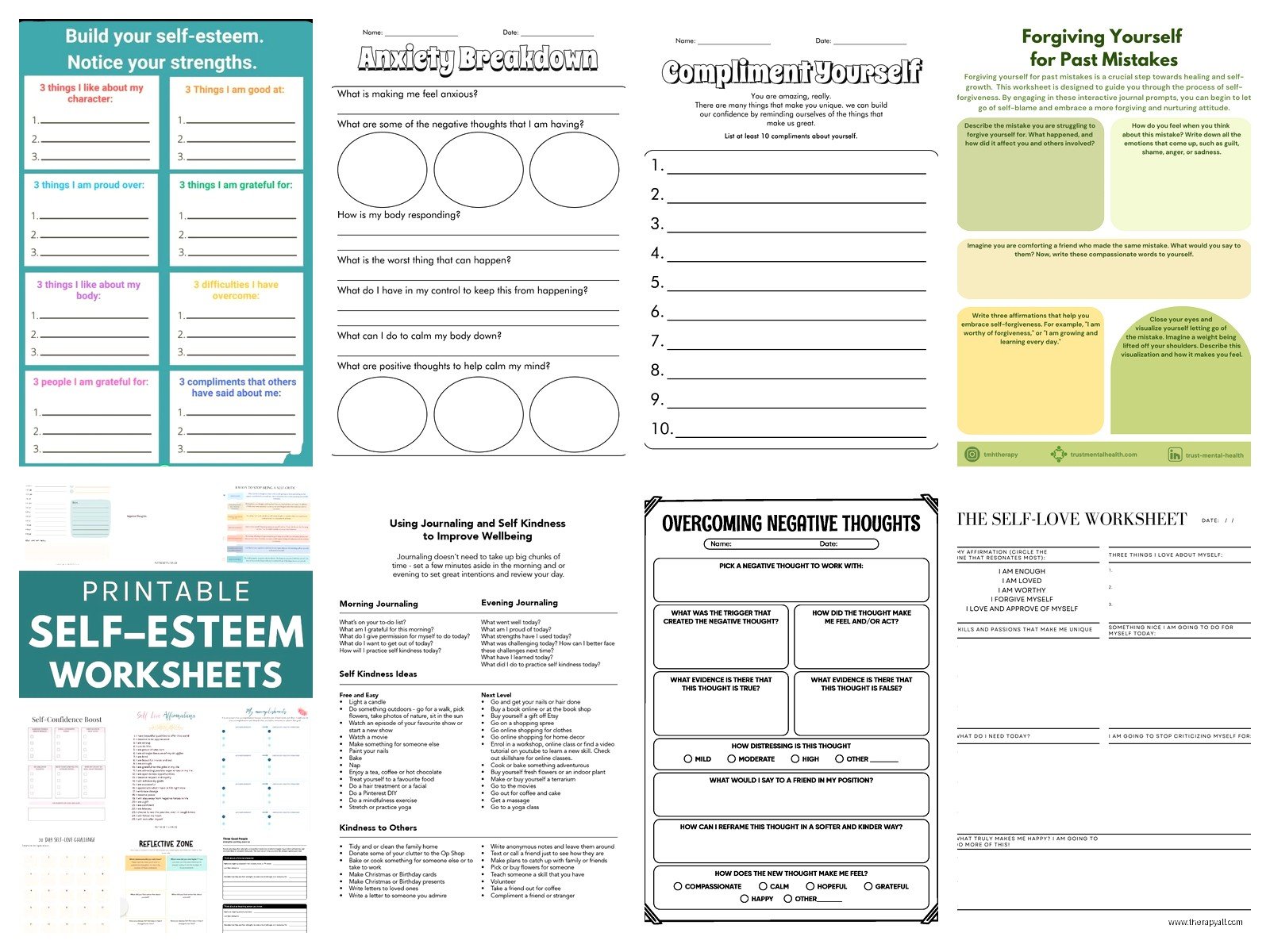
Thought records are the foundation of CBT work and probably the most versatile worksheet type. The classic format has columns for situation, automatic thought, emotions, evidence for the thought, evidence against the thought, and alternative thought. It feels mechanical at first but that’s the point, you’re training your brain to pause and evaluate instead of accepting every thought as truth.
Behavioral activation schedules help with depression by tracking activities and their impact on mood. You plan activities hour by hour and rate your mood before and after, which shows you what actually helps versus what you think will help. I remember a client who was convinced only big events would improve her mood, but the schedule showed that fifteen-minute walks had more consistent positive impact than elaborate plans.
ABC worksheets (Activating event, Belief, Consequence) break down emotional reactions into components so you can see where intervention might help. The activating event usually can’t change, but beliefs about the event are flexible, which changes the emotional consequence.
Exposure hierarchies for anxiety list feared situations from least to most anxiety-provoking, usually rating each from 0-100. Then you systematically work through the list starting with lower-rated items. This prevents the common mistake of trying to jump straight to your biggest fear and then giving up when it’s overwhelming.
PLEASE skills worksheets from DBT give you a menu of physical self-care actions that support emotion regulation: treating PhysicaL illness, balanced Eating, avoiding mood-Altering substances, balanced Sleep, and getting Exercise. Sorta basic but depression and anxiety make basic stuff really hard, so having a checklist helps.
Interpersonal effectiveness worksheets like DEAR MAN scripts help you prepare for difficult conversations by breaking them down into components: Describe the situation, Express feelings, Assert what you need, Reinforce why it matters to the other person, stay Mindful, Appear confident, Negotiate. It feels artificial to script conversations but the structure helps if confrontation usually makes your brain go blank.
## The Stuff That Doesn’t Work or Gets Overused
Gratitude journals have become this default recommendation for basically any mental health issue, and while there’s research supporting gratitude practice, the worksheet versions are often too simplistic. Writing three things you’re grateful for every day can start to feel performative and empty, especially if you’re depressed and everything feels awful. You end up writing “my bed, coffee, my dog” for the fiftieth time and it means nothing.
Positive affirmation worksheets where you just write “I am strong, I am capable, I am worthy” repeatedly don’t do much if you don’t believe the words. Affirmations can be useful when paired with evidence-gathering and cognitive work, but alone they’re just words on paper fighting against deeply held negative beliefs.
Vague “self-reflection” worksheets with questions like “what brings you joy?” or “describe your authentic self” sound meaningful but they’re too broad to be useful, especially if you’re struggling. You need specific, concrete prompts that generate actionable information.
Worksheets that are basically just charts to fill out with no guidance on what to do with the information afterward are incomplete tools. A mood tracker is only useful if you then analyze patterns and adjust behavior based on what you learn.
The “one worksheet fixes everything” approach that some websites promote is misleading. Mental health work requires multiple tools and approaches over time, not a single magical PDF that solves anxiety or depression or trauma.
## Making Worksheets Part of Regular Practice
Keep completed worksheets in a binder or folder so you can review them together rather than having loose papers scattered everywhere. The accumulated data is what creates insights. One thought record tells you about one moment, twenty thought records tell you about your thinking patterns.
Bring worksheets to therapy if you’re in therapy so your therapist can see what you’re noticing and working on between sessions. Most therapists appreciate when clients do this kind of homework because it makes sessions more productive, you spend time going deeper instead of just catching up on the week.
If a worksheet isn’t working for you after trying it a few times, stop using it and try something else. Not every tool fits every person or every problem. I’ve seen people force themselves through worksheets they hate because they think they “should” do them, but that’s just creating another source of stress.
Consider creating your own modified versions once you understand what you need. If the thought record format doesn’t work but a simplified version with just three columns does, use that. The worksheet structure exists to serve your growth, not the other way around.