# Understanding the Core Framework
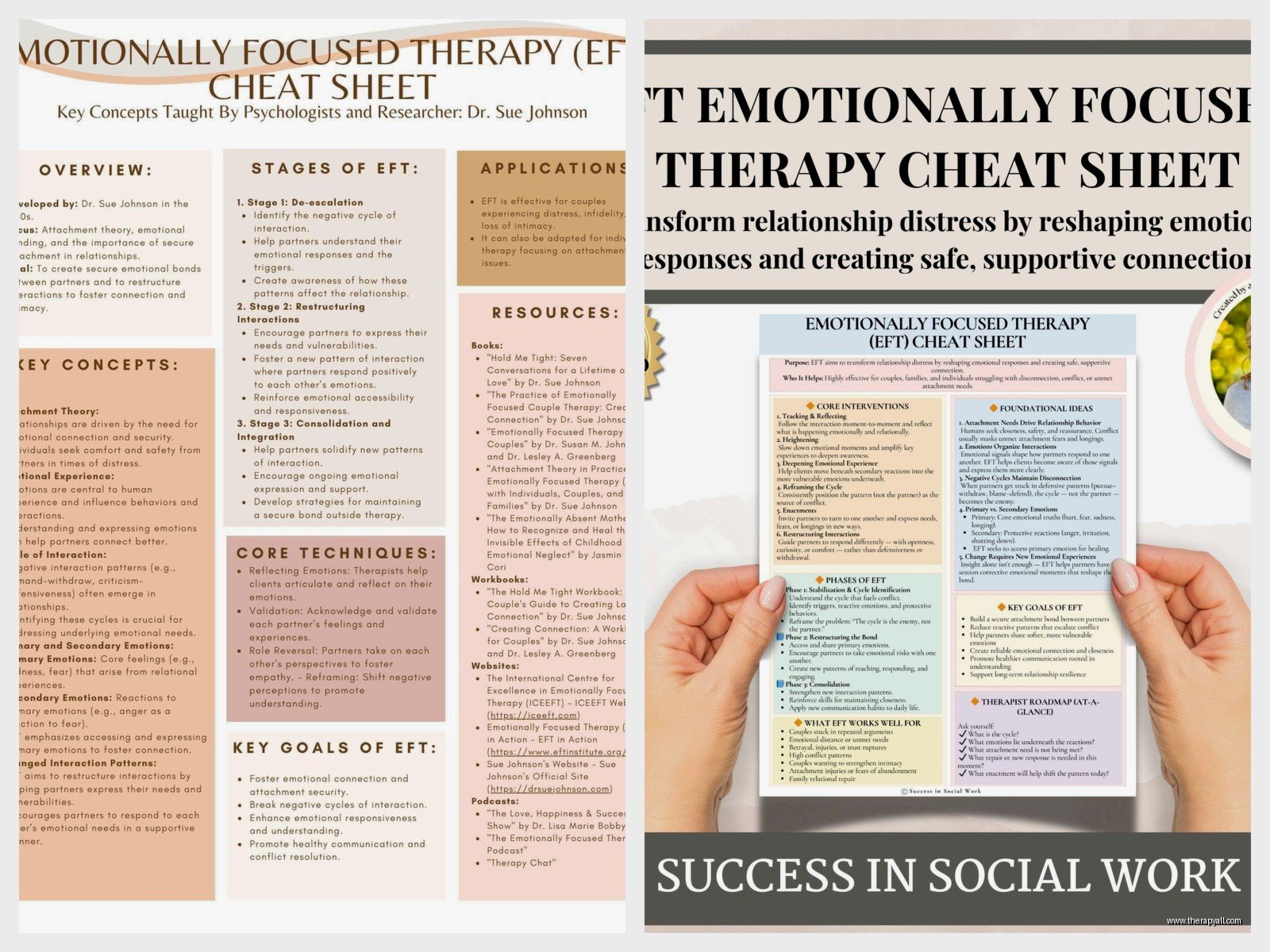
Emotionally Focused Therapy operates on the premise that emotional responses and attachment needs drive human behavior, especially within intimate relationships. Sue Johnson developed EFT in the 1980s, and it’s become one of the most empirically validated approaches for couples therapy. The model draws heavily from attachment theory—basically, we’re wired to seek connection, and when that connection feels threatened, we respond with predictable patterns of distress.
I remember sitting in on a supervision session back in 2019 where a therapist kept calling it “emotion-focused” instead of “emotionally focused” and the supervisor kept correcting her, and honestly it bugged me more than it should have because—okay, they sound almost identical, but the distinction matters when you’re trying to look up research or training materials and you keep hitting dead ends because you’ve got the name slightly wrong.
The therapy unfolds in three main stages, which sounds simple until you’re actually in the room trying to figure out which stage you’re in and whether you’ve rushed past stage one because the couple seems ready to talk about deeper emotions but actually they’re still blaming each other for who left the garage door open.
## Stage One: De-escalation
You’re looking at identifying negative interaction cycles here. Couples come in and they’re stuck in this loop—one person pursues (criticizes, demands, needs reassurance) and the other withdraws (shuts down, gets defensive, stonewalls). Sometimes both people pursue. Sometimes both withdraw, which actually makes the therapy feel different because there’s less heat in the room but also less… anything.
The therapist’s job is to slow everything down and help each partner see the cycle as the enemy, not each other. I’ve watched recordings where the therapist literally draws the cycle on a whiteboard and gives it a name like “the spiral” or “the shutdown dance,” and clients will actually start referring to it that way in later sessions. “Oh, we did the spiral three times this week.”
You gotta identify the primary and secondary emotions. Secondary emotions are the ones on the surface—anger, frustration, irritation. Primary emotions are underneath—fear, hurt, shame, loneliness. When someone says “I’m just so angry that you never listen,” the anger is secondary. The primary emotion might be “I’m terrified that I don’t matter to you.”
Getting to those primary emotions is the whole ballgame in stage one, but it’s also where a lot of therapists stall out. I’ve done it myself. You think you’re there, the client says something that sounds vulnerable, and then the next week they’re right back in the blame cycle because you didn’t actually help them experience and express the primary emotion in a way that landed with their partner.
## Attachment Injuries and Holds
One thing that drives me absolutely nuts in therapy content is when people write about attachment injuries like they’re just “past hurts” or “trust issues.” An attachment injury in EFT has a specific definition: it’s a moment when one partner needed the other during a critical time, reached out for support, and the other partner wasn’t there. Could be a miscarriage, a parent’s death, a medical crisis, job loss—something where the absent partner’s lack of response created a fundamental rupture in trust.
My cat just knocked over my water bottle and I’m gonna ignore it for now because the floor is already a disaster.
These injuries don’t heal just by talking about them. The EFT protocol involves having the injured partner express the pain and unmet need, and having the other partner genuinely acknowledge and respond to that pain. The injured partner needs to hear something like “I wasn’t there when you needed me, and I see how much that hurt you, and I’m here now.” Not a defensive explanation. Not a justification. An actual acknowledgment.
The “Hold Me Tight” conversations are structured dialogues that Johnson developed for couples to practice. There are seven conversations total, and they’re kinda scaffolded to move from recognizing the cycle through to building trust and sexual intimacy. Therapists don’t always use all seven—it depends on what the couple needs—but they provide a roadmap when you’re not sure where to go next in a session.
## Stage Two: Restructuring Interactions
This is where you’re actively creating new patterns. Stage one was about stopping the bad cycle. Stage two is about building something different.
You’re working with withdrawer reengagement and blamer softening. The withdrawer needs to step toward their partner, to share their inner experience instead of shutting down. The blamer needs to soften their approach, to ask for what they need from a place of vulnerability instead of criticism.
I had this moment last summer—2022, I was writing maybe four or five therapy explainer articles a week for different platforms and I started actually mapping my own relationship patterns using the EFT framework, which felt uncomfortably meta but also clarified some stuff I’d been avoiding. Turns out I’m a textbook withdrawer when I feel criticized, which I definitely should have noticed earlier given my whole career situation.
Blamer softening is typically the pivotal moment in EFT. It’s when the partner who’s been pursuing and criticizing drops the armor and expresses their attachment needs directly. Instead of “You never prioritize me,” it becomes “I need to know that I matter to you. I’m scared that I’m not important in your life.” When that softening happens and the other partner responds with presence and reassurance, you can literally see the shift in the room.
But here’s the thing—you can’t force softening. Some therapists try to rush it, they coach the blamer to say vulnerable things before the blamer actually feels safe enough to be vulnerable, and it falls flat. The withdrawer has to have reengaged enough that the blamer believes their vulnerability will be met with care, not dismissal.
## The Tango and the Attachment Dance
EFT therapists talk about the “tango” constantly—the back-and-forth between partners, the rhythm of the relationship. You’re choreographing new steps, essentially. When one partner moves toward vulnerability, the other needs to move toward responsiveness. When that pattern gets established, the relationship starts to feel different for both people.
The attachment dance metaphor gets used interchangeably with the tango sometimes, and honestly they’re saying the same thing. We’re wired to connect, to seek proximity and responsiveness from our partner, and when we don’t get it, we either protest (pursue, criticize, demand) or we protect ourselves (withdraw, shut down, disconnect).
## Stage Three: Consolidation
You’re solidifying new patterns and helping the couple integrate what they’ve learned. This stage gets less attention in the literature, but it matters because couples need to practice their new dance enough that it becomes somewhat automatic.
Therapists help couples identify potential triggers and plan for future conflicts. Not in a pessimistic way, but realistic—you’re gonna hit rough patches, so how will you recognize when you’re slipping into the old cycle, and what will you do differently?
Some EFT therapists do specific exercises around forgiveness and building a new narrative about the relationship. Others focus more on strengthening the positive cycles. There’s flexibility here depending on what the couple needs.
## Key Emotional Moves and Interventions
EFT therapists use specific techniques to access and restructure emotional responses. Evocative responding means you’re not just listening to content—you’re responding to the emotion and the attachment need underneath the words. If someone says “I guess I just don’t care anymore” in a flat voice, you might respond to the resignation and the protection in that statement rather than taking it at face value.
Heightening involves amplifying emotional experiences so they become more vivid and accessible. You might repeat a phrase, slow down the moment, or ask someone to say something directly to their partner instead of talking about them.
Validation and empathic conjecture are constant throughout EFT. You’re letting clients know their feelings make sense, and you’re making educated guesses about their inner experience when they’re struggling to articulate it. “It sounds like when she pulls away, you feel like you’re not enough for her—is that close?”
## Common Patterns and Positions
The pursue-withdraw pattern is the most common, probably showing up in 70-80% of distressed couples. One partner needs reassurance and closeness, pursues it through criticism or demands, the other partner feels overwhelmed or inadequate and withdraws, which increases the pursuer’s anxiety, which increases the pursuit, which increases the withdrawal—round and round.
Withdraw-withdraw patterns are less common but sorta harder to work with because there’s less emotional energy in the room. Both partners have given up on getting their needs met and they’re just… coexisting. You need to find ways to create enough safety that one person is willing to risk reaching out again.
Pursue-pursue looks like constant conflict. Both partners are protesting the disconnection, both are demanding responsiveness, and nobody’s slowing down enough to be vulnerable about the fear underneath the anger.
## What EFT Isn’t
It’s not about teaching communication skills, though communication changes as a byproduct of emotional shifts. It’s not about negotiating compromises or solving practical problems, though couples often solve problems more easily once they feel securely connected. It’s not individual therapy done with two people in the room—the relationship itself is the client, and you’re always tracking the interaction between partners, not just each person’s individual psychology.
The model assumes that relationship distress comes from attachment insecurity and disconnection, which means it’s not the right fit for relationships where there’s active abuse, unaddressed addiction, or fundamental incompatibility around core values. Some therapists try to force EFT onto every couple and that’s just… not gonna work.
## Research Base and Outcomes
EFT has success rates around 70-75% for couples who complete therapy, with improvements maintained at follow-up. It’s been adapted for families, individuals dealing with trauma, and various cultural contexts. The research shows changes in relationship satisfaction, attachment security, and individual symptom reduction.
Johnson and her colleagues have done fMRI studies showing that EFT changes brain activity in regions associated with emotional regulation and social connection. The model has treatment manuals, certification programs, and a whole infrastructure of training, which makes it accessible but also kinda corporate sometimes in a way that feels weird for a therapy approach.
## Practical Application Points
Sessions typically run 8-20 sessions for couples, though some need more if there are significant attachment injuries or trauma histories. The therapist is active and directive—you’re not just reflecting, you’re choreographing new interactions and sometimes literally telling someone “Can you turn toward her and tell her that directly?”
You track each partner’s position in the cycle, their primary emotions, and their attachment needs. You intervene at the process level, not the content level—it doesn’t matter whether they’re fighting about money or housework, it matters that one person feels unimportant and the other feels inadequate, and they’re stuck in a pattern that reinforces both of those feelings.