# Understanding Couples Therapy Worksheets and What Actually Works
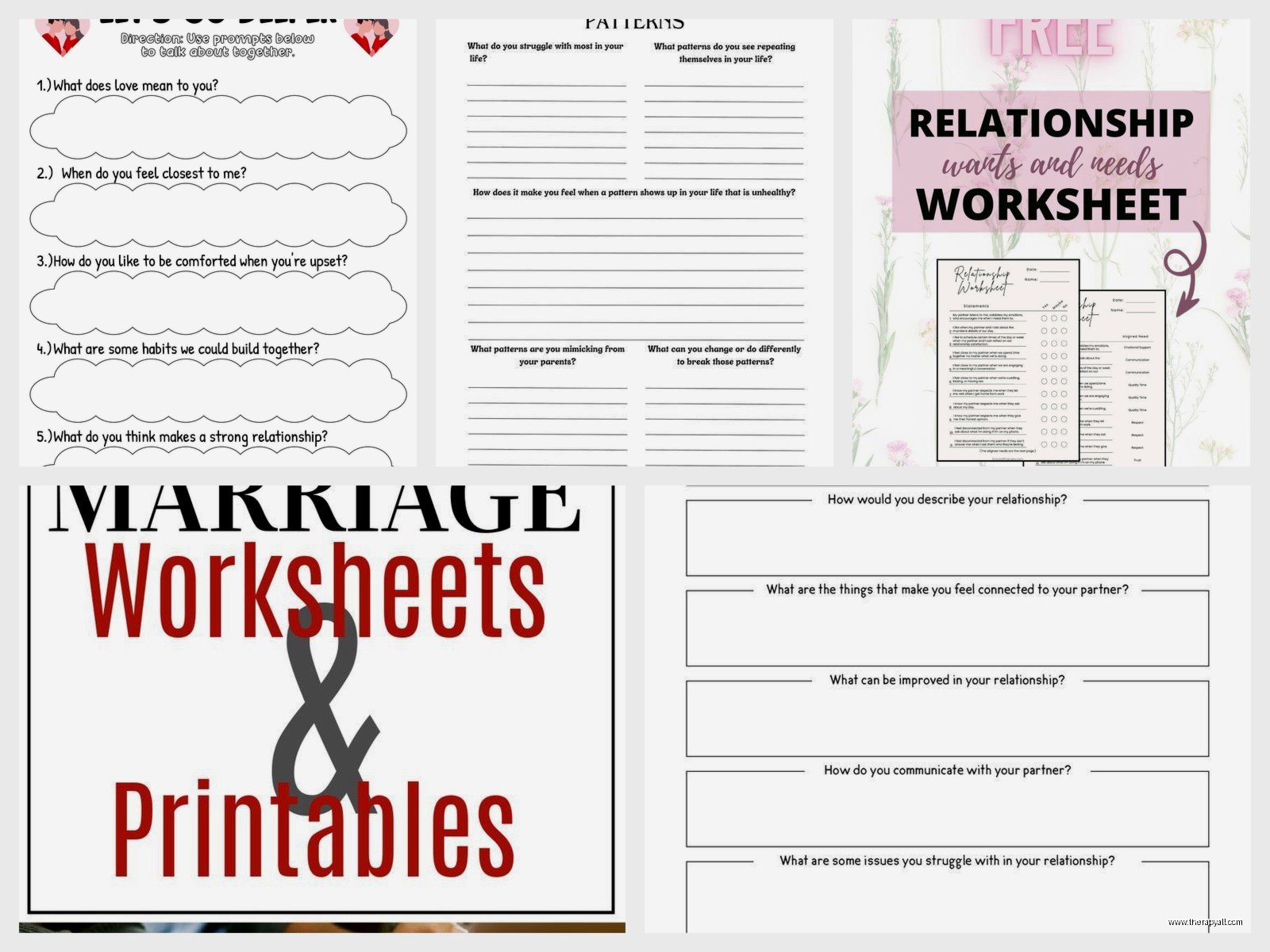
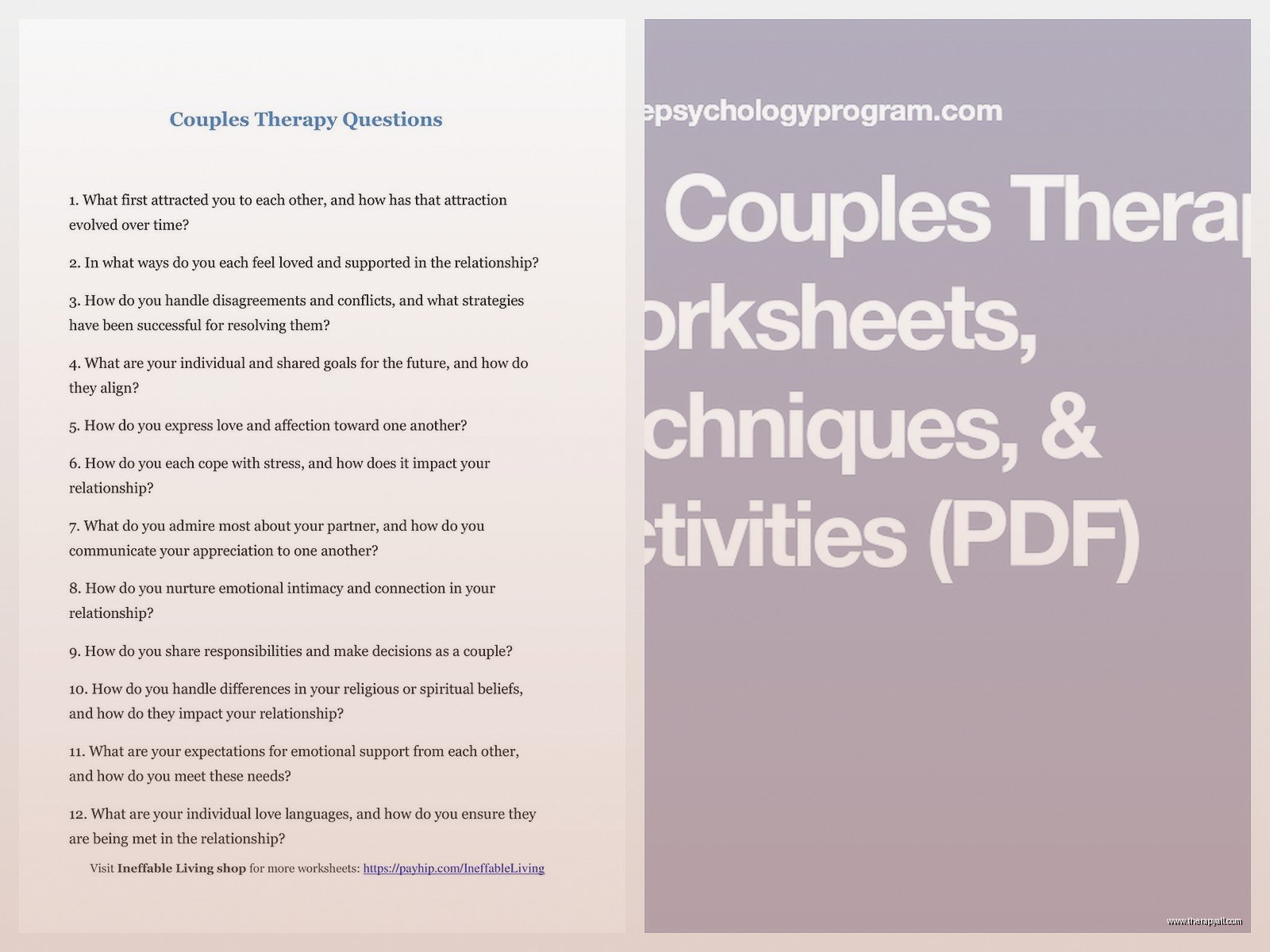
Couples therapy worksheets are structured tools designed to facilitate communication, identify patterns, and create actionable change between partners outside the therapy room. They’re not magic—they’re scaffolding. You print them, you fill them out, ideally together but sometimes separately first, and they give you a framework when emotions are running too hot to think straight.
I spent most of fall 2021 reviewing worksheet collections for a mental health platform and honestly got kinda annoyed at how many were just the same five prompts repackaged with different fonts. “What are your partner’s love languages?” appeared in literally 14 different PDFs I reviewed. The useful ones have specificity. They ask about actual behaviors, not abstract feelings.
## Why Printable Worksheets Work for Couples
The physical act of writing creates distance from immediate emotional reactivity. When you’re filling out a worksheet about conflict patterns, you’re engaging your prefrontal cortex instead of just your amygdala. That’s the clinical explanation. The practical one is that you can’t scream and write legibly at the same time.
Worksheets also create documentation. Couples forget what they fought about three weeks ago, or they remember it completely differently. Having a written record—even if it’s just “Tuesday: disagreement about dishes again, but really about feeling unappreciated”—gives therapy something concrete to reference.
They’re accessible. Not everyone can afford weekly couples therapy at $150-250 per session. A PDF you print at home for free isn’t therapy, but it’s movement. It’s something.
## The Core Categories You’ll Actually Use
Most couples therapy worksheets fall into maybe seven or eight categories, though content creators love to subdivide them into 47 micro-niches to inflate their listicles.
### Communication Pattern Worksheets
These focus on how you talk to each other, not what you’re talking about. The classic is some version of “I feel ____ when you ____ because ____” but the better ones include sections for identifying your own communication style. Are you a pursuer or a withdrawer? Do you go silent or do you escalate? I remember one client couple where both insisted they were the “calm one” in arguments until we mapped out their last three fights and they were both… not calm. They were taking turns escalating, just about different topics.
Speaker-listener technique worksheets give you actual rules: one person talks for X minutes uninterrupted, the other person reflects back what they heard before responding. It feels artificial because it is artificial, but when your default is talking over each other, artificial structure beats chaotic authenticity.
### Conflict Resolution Templates
These walk you through disagreements step-by-step. What’s the actual issue (not the surface issue)? What does each person need? What are possible compromises? They usually include sections for identifying what you’re willing to change versus your hard boundaries.
The ones I’ve found most useful include a section for “what we agree on” because couples in conflict forget they agree on anything. You both want the relationship to work. You both feel hurt. You both think you’re trying. Starting there matters, even though—or actually, I should say especially when—you disagree on everything else.
### Emotional Needs Assessments
These help you identify and articulate what you actually need from your partner. Not “I need you to be more thoughtful” but “I need you to text me when you’ll be late” or “I need 20 minutes to decompress when I get home before we discuss problems.”
My cat has this thing where she meows at me until I acknowledge her, and then she just walks away—doesn’t want food or anything, just wanted confirmation I knew she existed. Partners do this too, just with more words and resentment.
The challenge with needs assessments is that people confuse needs with strategies. “I need you to unload the dishwasher” isn’t a need. “I need to feel like household labor is shared” is a need. The dishwasher is one possible strategy. Good worksheets help you separate these.
### Intimacy and Connection Builders
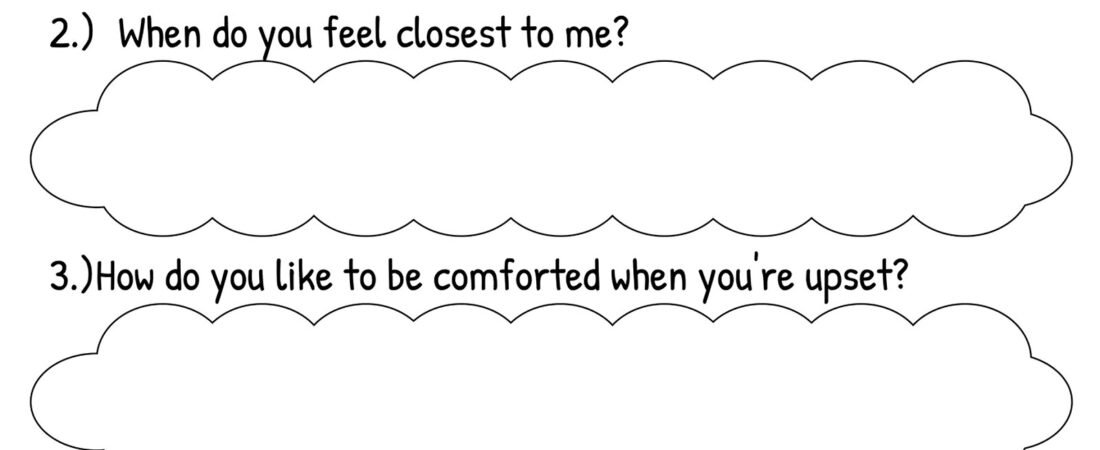
These aren’t always about sex, though some are. They’re about the broader concept of closeness—emotional, physical, intellectual, recreational. They often include dated prompts like “plan a date night” which, sure, fine, but the more useful ones ask you to identify when you last felt genuinely connected and what was happening.
There are worksheets specifically for sexual intimacy that ask about desires, boundaries, and barriers. Those tend to be either uselessly vague (“What does intimacy mean to you?”) or awkwardly clinical. The middle ground is hard to find.
### Trust and Betrayal Worksheets
These come up after infidelity, financial deception, or other significant breaches. They’re structured around accountability, making amends, and rebuilding. The person who broke trust answers different questions than the person who was hurt.
I gotta say, these are the worksheets where I see the most garbage advice. A lot of them push forgiveness on a timeline, which isn’t how trauma works. The better ones focus on transparent communication and behavioral change without demanding the hurt partner “move on” before they’re ready.
### Attachment Style Explorers
Based on attachment theory—anxious, avoidant, secure, disorganized. These worksheets help you identify your attachment patterns and how they show up in your relationship. When you’re anxiously attached and your partner is avoidantly attached, you create this pursue-withdraw cycle that feels personal but is actually kinda predictable once you see the pattern.
The annoying thing about attachment style content is that everyone became an expert after one Instagram infographic, and now people use “I’m avoidant” as an excuse for treating their partners poorly instead of as information to work with.
### Values and Goals Alignment
These ask about life direction—where do you see yourselves in five years, what matters most to each of you, how do you define success. They’re especially useful for couples at transition points: moving in together, considering marriage, deciding about kids, navigating retirement.
Sometimes couples discover they’re fundamentally incompatible. That’s painful, but it’s information. Better to know before you’re three years into a marriage and realizing one person needs to live in a city and the other needs land and solitude.
## What Makes a Worksheet Actually Useful
Format matters more than people think. Enough space to write real answers, not just one line. Clear instructions. Questions that are specific enough to generate actual thought.
The best worksheets I’ve encountered include reflection prompts, not just fill-in-blanks. “After completing this section, what surprised you?” or “What was hardest to write about?” These meta-questions help you process what came up.
Worksheets should create dialogue, not just documentation. If you’re both filling them out separately and never discussing them, you’re journaling, not doing couples work. Some worksheets build in discussion prompts: “Share your answers with your partner and identify two points of similarity and two points of difference.”
## Where to Find Quality Free Worksheets
Therapist websites and blogs often offer free resources. Look for licensed professionals—LMFTs, psychologists, clinical social workers—who are sharing tools they actually use in practice. The worksheets on general “wellness” sites are hit or miss, usually miss.
TherapistAid has a whole section of couples therapy worksheets. They’re clean, well-designed, evidence-based. Completely free. I’ve recommended their stuff for years.
The Gottman Institute offers some free downloads. John Gottman’s research on couples is probably the most cited in the field, so their tools are grounded in actual data about what predicts relationship success or failure.
Psychology Today’s website has therapist-created resources, though you have to dig a bit. Individual therapist websites often have free downloads in exchange for email signups—annoying, but understandable. Just make a separate email for this kind of thing if you don’t want your inbox flooded.
Positive Psychology has a collection that includes couples worksheets alongside individual mental health tools. Their stuff tends toward the optimistic end, which isn’t my usual vibe but some people find it helpful.
## How to Actually Use These Tools
Print them. Don’t just save the PDF with good intentions. Print them and put them somewhere visible. I know, I know, we’re all digital now and paper is wasteful or whatever, but there’s something about physical worksheets that increases follow-through.
Schedule time to complete them together. Not during a fight. Not when one of you is exhausted. Treat it like an appointment—30 minutes on Sunday morning, Thursday evening after dinner, whenever works for your schedule.
Start with easier topics before diving into the heavy stuff. Communication style inventories before betrayal recovery worksheets. Build some tolerance for the process before you’re processing your deepest wounds on a template.
You don’t have to complete every section. If a question doesn’t apply or feels pointless, skip it. These are tools, not tests. There’s no grade.
Be honest, but be kind. The point is clarity and connection, not ammunition for the next argument. If you find yourself writing things designed to hurt your partner when they read it, you’re not ready for that worksheet yet.
## Common Mistakes People Make
Using worksheets as a substitute for therapy when therapy is what’s actually needed. If there’s abuse, active addiction, or severe mental health crises, worksheets aren’t gonna cut it. They’re supplementary tools, not crisis intervention.
Filling them out alone and never discussing them. Or worse, filling them out and then using them as evidence of why you’re right and your partner is wrong.
Doing too many at once. You don’t need to complete 20 worksheets in one weekend. Pick one, work through it, implement something from it, then move to the next.
Expecting immediate change. Worksheets create awareness and intention. Behavior change takes time, repetition, and usually some failure along the way.
## The Limitations of DIY Couples Work
Worksheets can’t identify what you can’t see. A therapist notices patterns you’re both too close to recognize. They interrupt unproductive cycles in real-time. They hold space for hard conversations in a way that paper can’t.
Some issues need professional intervention. Trauma, personality disorders, complex family systems—these require expertise. Worksheets might be part of therapy for these issues, but they’re not standalone solutions.
You need baseline goodwill for worksheets to work. If you’re both willing to try, willing to be vulnerable, willing to change—worksheets can facilitate that. If one or both of you has already checked out, no worksheet will revive a relationship that’s over.
## Specific Worksheets Worth Looking For
The daily temperature reading is structured check-in with five components: appreciation, new information, puzzles (things you’re confused about), complaints with requests for change, and wishes/hopes/dreams. It’s comprehensive without being overwhelming.
Fair fighting rules worksheets establish ground rules for disagreements—no name-calling, no bringing up past issues, take breaks if needed. You agree on the rules when you’re calm, then reference them when you’re not.
Love maps questionnaires are based on Gottman’s concept—how well do you know your partner’s inner world? These ask specific questions about preferences, fears, dreams, stressors. Couples who stay together know this stuff. Couples who drift apart gradually stop knowing it.
Repair attempt worksheets help you identify and practice ways to de-escalate during conflict. What phrases or actions help you both calm down? What makes things worse?
Weekly relationship check-ins create structure for ongoing maintenance. What went well this week? What was hard? What do we need to address? Is there anything you need from me this coming week?
The relationship bill of rights lists what you each deserve in a healthy relationship—respect, honesty, space for individual identity. Sometimes people need permission to expect basic decency, which is depressing but true.
Worksheets for specific situations exist too: blended family challenges, long-distance relationships, recovering from infidelity, navigating different parenting styles, managing extended family conflict. The more specific to your actual situation, the more useful they’ll be.