
Mental Health, Therapy resources
Therapeutic Toolbox – Complete Guide

Aug
What Actually Goes in a Therapeutic Toolbox
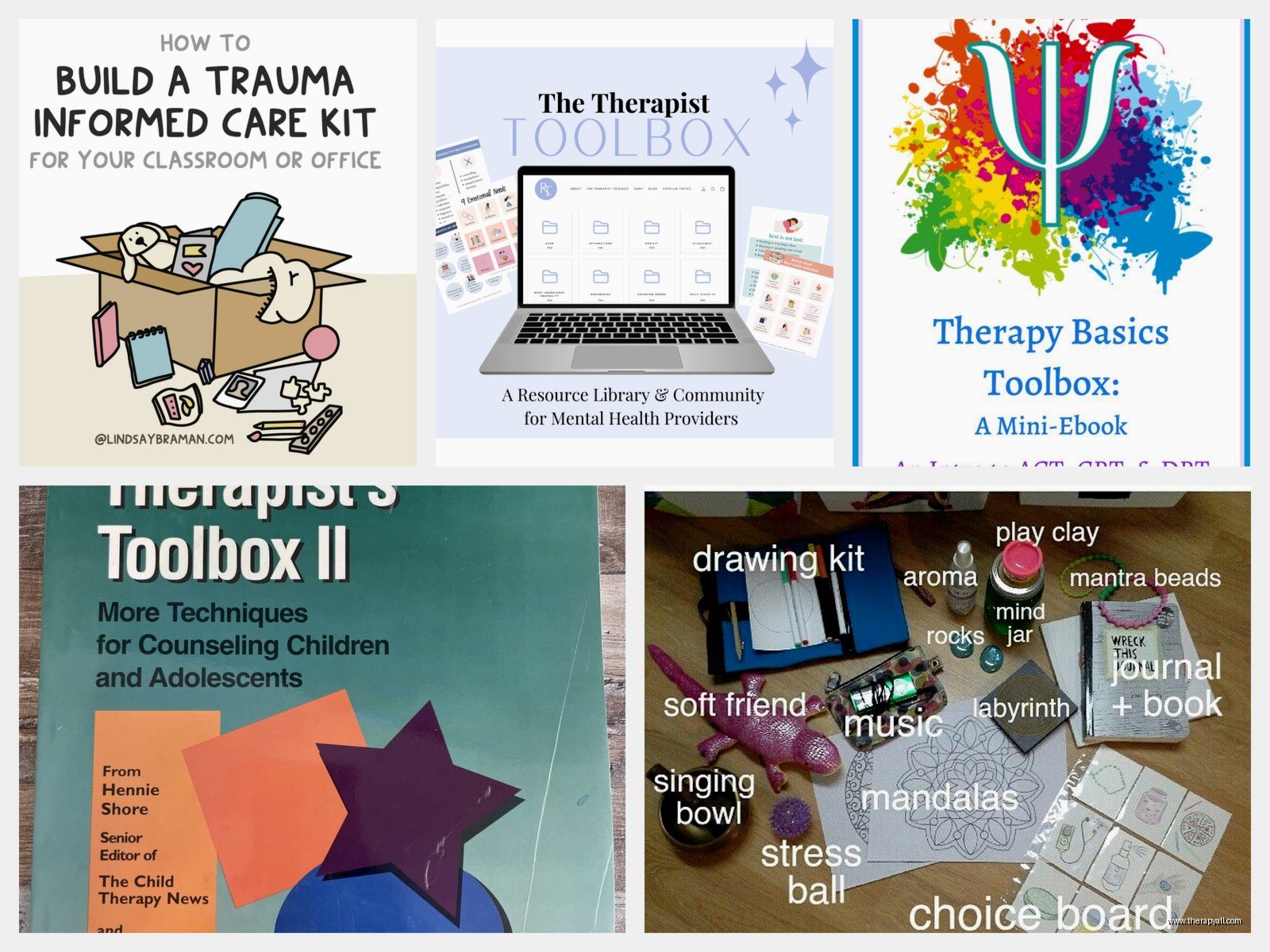
A therapeutic toolbox isn’t a literal box, though I’ve had clients show up with actual toolboxes they decorated and honestly that’s kinda brilliant. It’s a collection of coping strategies, grounding techniques, emotional regulation skills, and cognitive tools you can pull from when things get rough. The idea is you build it when you’re stable so it’s ready when you’re not.
I remember back in 2019 working with a teenager who kept saying she “forgot” all her coping skills during panic attacks. We literally made her a checklist on her phone with reminders and alarms. Sometimes the toolbox needs to be that concrete because your brain doesn’t cooperate when you’re in crisis mode.
Grounding Techniques
These are your first-line defense against dissociation, panic, flashbacks, or any moment where you feel disconnected from reality. The 5-4-3-2-1 technique gets thrown around everywhere and honestly it annoys me how oversimplified it’s become in Instagram infographics—like people think naming five things you see is gonna fix a trauma response. But it does work for mild to moderate distress.
You identify five things you can see, four you can touch, three you can hear, two you can smell, one you can taste. The point is engaging your sensory system to anchor you in the present moment. Your amygdala is freaking out about a perceived threat, so you’re basically telling your brain “hey look we’re in a room, there’s a lamp, the chair is scratchy, I hear traffic outside.”
Physical grounding works differently. Hold ice cubes, put your feet flat on the floor and press down, splash cold water on your face. Temperature and pressure are neurologically hard to ignore. I’ve used the ice cube thing myself during some particularly rough writing deadlines when my anxiety was—wait, that’s probably too much information.
Body Scan Variations
Progressive muscle relaxation belongs here too. You tense and release muscle groups systematically, usually starting with your feet and moving up. It’s evidence-based for anxiety and insomnia. The mechanism is partly physiological (you’re literally releasing tension) and partly attentional (you’re focusing on something other than your racing thoughts).
Some people hate body scans because they increase body awareness in an uncomfortable way, especially if you have trauma history or chronic pain. That’s valid. Not every tool works for everyone and the wellness industry really needs to stop pretending otherwise.
Cognitive Restructuring Tools
This is classic CBT territory. Thought records, cognitive distortions lists, evidence for and against worksheets. The basic premise is that thoughts influence feelings and behaviors, so if you can identify and challenge distorted thinking patterns, you can shift your emotional experience.
Common cognitive distortions include all-or-nothing thinking, catastrophizing, mind reading, emotional reasoning, should statements. You learn to catch yourself doing these and ask questions like “what’s the evidence for this thought?” or “what would I tell a friend in this situation?”
I spent summer 2021 writing what felt like hundreds of thought record templates for different platforms and started actually using them for my own anxiety spirals about deadlines and emails I hadn’t returned. Turns out I catastrophize about professional stuff way more than I realized.
The Downward Arrow Technique
This one’s useful for getting to core beliefs. You take a thought and keep asking “and if that were true, what would it mean?” until you hit bedrock. Like: “I made a mistake at work” → “what does that mean?” → “I’m incompetent” → “and if you’re incompetent?” → “I’ll get fired” → “and then?” → “I’ll end up alone and worthless.”
Now you can see you’re not really upset about the mistake, you’re dealing with a core belief about your worth being tied to productivity. That’s different work.
Emotional Regulation Skills
DBT gave us a lot of practical stuff here. The acronym soup is real—TIPP, PLEASE, DEAR MAN, GIVE, FAST—but they’re actually useful once you get past the cutesy naming.
TIPP is for crisis moments: Temperature (cold water again), Intense exercise (jumping jacks, running), Paced breathing, Paired muscle relaxation. These are designed to activate your parasympathetic nervous system quickly.
PLEASE is maintenance: treat PhysicaL illness, balanced Eating, Avoid mood-altering substances, Sleep hygiene, Exercise. It’s the boring stuff that actually prevents crises. Nobody wants to hear that getting enough sleep and eating regularly will help their mental health more than a gratitude journal, but here we are.
Opposite Action
This is my favorite DBT skill and it’s so counterintuitive that people resist it. The idea is when your emotion doesn’t fit the facts or isn’t effective, you act opposite to the urge. Anxious? Approach instead of avoid. Angry without justification? Be gentle instead of aggressive. Sad and isolating? Get up and do something active.
It works because behavior change can drive emotional change. You’re not stuffing the emotion down, you’re just not letting it run the show.
Distress Tolerance Strategies
Sometimes you can’t fix the situation and you just gotta survive it. That’s what these are for. Crisis survival mode.
Distraction techniques: the ACCEPTS acronym covers Activities, Contributing, Comparisons, Emotions (opposite ones), Pushing away, Thoughts (other), Sensations. Basically find something else to focus on until the intensity passes.
Self-soothing through five senses: light a candle, listen to music, take a bath, eat something you enjoy, wrap up in a soft blanket. My cat usually handles the tactile soothing part by demanding to be held at inconvenient times, which is actually—okay that’s not relevant.
Radical Acceptance
This isn’t about liking or approving of reality, it’s about acknowledging what is without fighting it. Fighting reality creates suffering on top of pain. You can acknowledge “this situation is awful” without adding “this shouldn’t be happening, it’s not fair, why me.”
It’s probably the hardest skill to develop and it sounds like toxic positivity when explained badly, which happens constantly in therapy content online. I genuinely get annoyed when I see posts that frame acceptance as giving up or as somehow meaning you’re okay with injustice or harm.
Behavioral Activation
Depression kills motivation and makes everything feel pointless. Behavioral activation says do the things anyway, start with small achievable tasks, and the motivation might follow. It’s activity scheduling, breaking tasks into tiny steps, focusing on process not outcome.

You make a list of activities that used to bring you pleasure or gave you a sense of accomplishment. Then you schedule them even when you don’t feel like it. You track your mood before and after. Usually you’ll notice you feel at least slightly better after doing something, even if you dreaded it beforehand.
The evidence base for behavioral activation in depression is actually really strong. For mild to moderate depression it’s as effective as medication or cognitive therapy in some studies.
Mindfulness Practices
I know mindfulness has become this buzzword that gets slapped on everything from coloring books to corporate wellness programs, but the actual skill is just present-moment awareness without judgment. That’s it.
Formal practice includes meditation, body scans, mindful breathing. Informal practice is doing daily activities mindfully—washing dishes, walking, eating. You notice when your mind wanders (it will constantly) and bring attention back without criticizing yourself for wandering.
The goal isn’t to empty your mind or achieve some zen state. It’s to change your relationship with your thoughts. Instead of being caught up in thought content, you observe thoughts as mental events. “I’m having the thought that I’m a failure” instead of “I am a failure.”
Breath Work Basics
Box breathing: inhale four counts, hold four, exhale four, hold four. Repeat. 4-7-8 breathing: inhale four, hold seven, exhale eight. The longer exhale activates your vagus nerve and calms your nervous system.
Some people hate breathing exercises because they increase anxiety or feel controlling. Again, that’s fine. Pick different tools.
Interpersonal Effectiveness Skills
These are for navigating relationships and communication without destroying them or yourself in the process. Setting boundaries, making requests, saying no, handling conflict.
DEAR MAN is for asking for what you need: Describe the situation, Express feelings, Assert by asking, Reinforce by explaining positive effects, stay Mindful, appear Confident, Negotiate. It’s structured communication that keeps you from either being passive or aggressive.
GIVE is for maintaining relationships: be Gentle, act Interested, Validate, use an Easy manner. FAST is for self-respect: be Fair, no Apologies (unnecessary ones), Stick to values, be Truthful.
These acronyms feel corny but they give you a framework when emotions are high and you might otherwise just react.
Values Clarification and Committed Action
This comes from ACT (Acceptance and Commitment Therapy). You identify your core values—not goals, but directions. Like “being a supportive friend” is a value, “call my friend every week” is a goal aligned with that value.
Then you take committed action toward those values even when it’s uncomfortable. You’re gonna mess up, you’re gonna avoid sometimes, but you keep reorienting toward what matters to you.
Values work helps when you’re feeling lost or when you’re making decisions. Instead of asking “what will make me happy?” or “what will reduce my anxiety?” you ask “what moves me toward the person I want to be?”
Safety Planning
If you deal with suicidal thoughts, self-harm urges, or other crisis situations, you need a safety plan in your toolbox. This includes warning signs that you’re entering crisis, internal coping strategies you can try, people you can contact, professionals or agencies you can call, means restriction (removing access to lethal means).
It’s specific and personalized. Not just “call someone” but “call Rachel at [number], if she doesn’t answer try Marcus at [number], if neither answers call crisis line at [number].”
Combining Tools and Personalizing
You don’t need every tool. You need the ones that work for your brain, your life circumstances, your specific struggles. Some people need more cognitive tools, some need more somatic tools, some need more interpersonal skills work.
Experiment with different techniques when you’re relatively stable. Don’t wait for a crisis to try to learn a new skill—that’s like trying to learn to swim while drowning. Build the toolbox now, practice the tools regularly, then you’ll have some automatic responses available when things get hard.
The toolbox also needs updating. What worked last year might not work now. You might need different tools for different situations. Panic attacks need different interventions than depressive episodes than relationship conflicts.
Keep what works, discard what doesn’t, stay curious about new approaches. Your therapist can help you figure out which tools match your needs, but ultimately you’re the one who has to use them.
ADHD & Neurodiversity
Life Planner Bundle – Life Organizer
Self-Care & Personal Growth
Acceptance And Commitment
Anxiety & Stress
Stress Processing Journal & Reflection Worksheets For Daily Self – Care
Self-Care & Personal Growth
Self – Reflection Guided Journal With Guided Prompts 30
Emotional Wellness
Decision Processing – Thought Processing Journal For Daily Self – Care
Therapist Resources
Physiotherapist Journal PDF Planner Tracker Or Log Book
Self-Care & Personal Growth
Customizable Self – Confidence & Self – Esteem Guided Journal
ADHD & Neurodiversity
ADHD Behavior Tracker PDF Planner Tracker Or Log Book