What CBT Worksheets for ADHD Actually Do
CBT worksheets designed for ADHD aren’t your standard “thought records” or generic anxiety trackers. They’re built around the specific executive function challenges that make ADHD what it is: working memory issues, impulsivity, time blindness, and that lovely ability to hyperfocus on the wrong thing at the wrong time. The cognitive-behavioral framework here targets the patterns that develop around these neurological differences—the avoidance behaviors, the negative self-talk after yet another missed deadline, the compensatory strategies that worked once and now you’re clinging to them even though they stopped working two years ago.
I remember in 2021 I was reviewing like dozens of ADHD worksheet templates for a platform I was writing for, and maybe 60% of them were just regular CBT worksheets with “ADHD” slapped in the title. That genuinely annoyed me because people with ADHD need tools that account for the fact that a five-column thought record is gonna get abandoned halfway through when something more interesting catches their attention. The effective ones break tasks into smaller chunks, use visual cues, and don’t require you to remember what you were thinking about fifteen minutes ago.
Breaking Down the Core Components
The worksheets that actually work for ADHD management incorporate several specific elements. First, they use immediate tracking rather than retrospective analysis. You’re not trying to remember how you felt three hours ago—you’re capturing it right now or within minutes. Second, they build in external structure because internal structure is unreliable when your executive functions are taking an unscheduled vacation.
Visual organization matters more than you’d think. Color coding, boxes, checkboxes, anything that creates clear boundaries on the page. I started using some of these myself during that summer when I was churning out content and realized I was forgetting to track my own… wait, what was I saying? Right, the visual elements. They compensate for the working memory issues by making information easier to process at a glance.
Time Awareness Tools
Time blindness is probably the most misunderstood aspect of ADHD, and the worksheets addressing it need to be really specific. We’re talking about tools that help you estimate task duration, track actual time spent, and compare the two. The gap between estimated and actual time is where a lot of the learning happens.
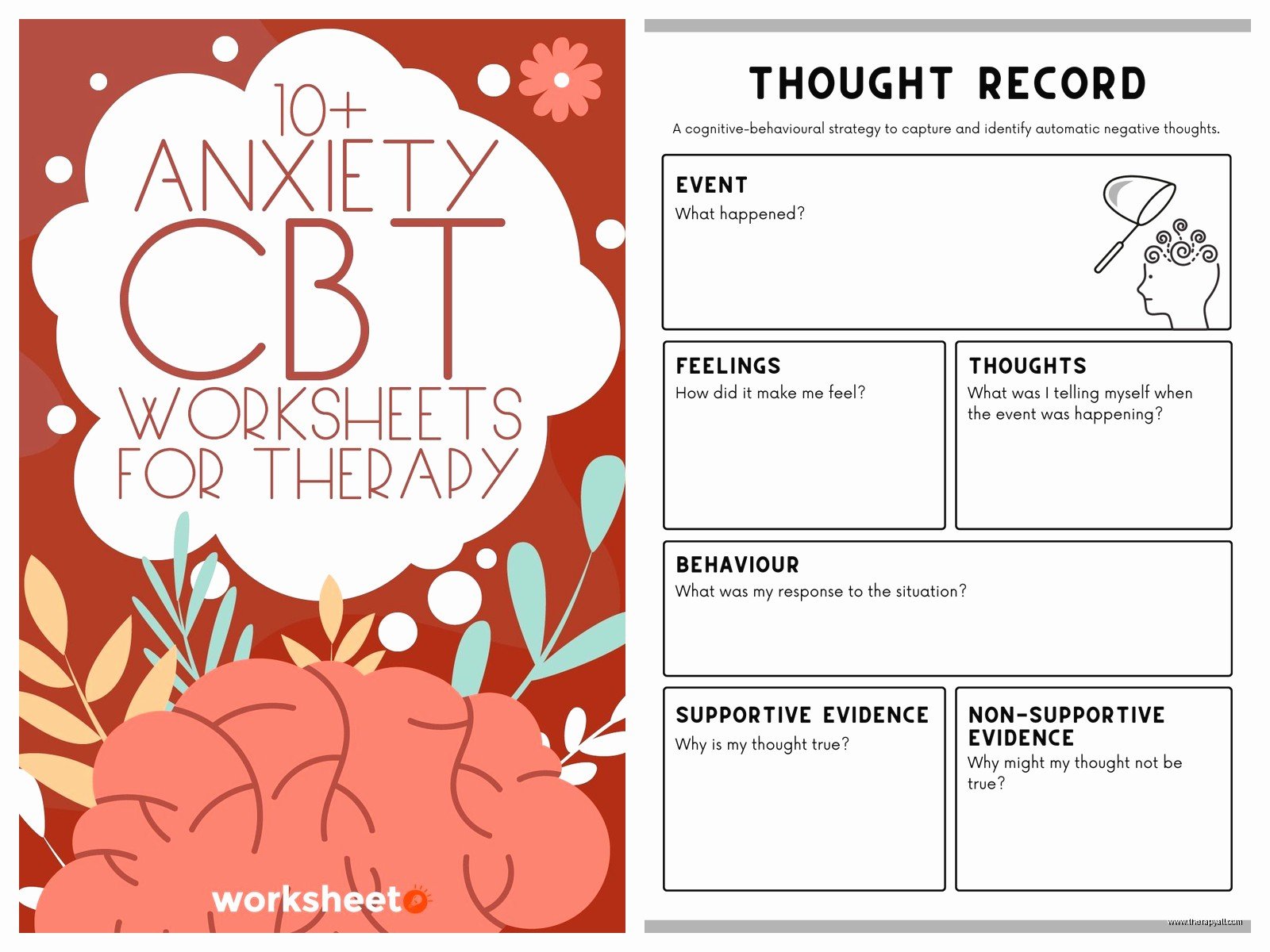
A practical worksheet here might have you list a task, guess how long it’ll take, set a timer, then record the actual duration. You do this repeatedly because one data point means nothing. After two weeks, you start seeing patterns—you consistently underestimate email responses by 15 minutes, or you’re actually pretty accurate with physical tasks but terrible with anything involving phone calls.
The behavior change comes from adjusting your planning based on real data instead of the optimistic fiction your brain prefers. You’re not trying to “get better at time management” in some vague way. You’re collecting evidence about your actual relationship with time and adjusting accordingly.
Impulse Control Tracking
Impulsivity worksheets for ADHD aren’t about stopping yourself from acting—that’s usually not realistic in the moment. They’re about building awareness of your impulse patterns so you can design your environment and routines around them. You track the impulse, whether you acted on it, what happened as a result, and what the cost was if any.
The worksheet might have columns for: trigger situation, the impulse, what you did, immediate consequence, and delayed consequence. Over time, you identify high-risk situations. Maybe you’re fine with impulse control until you’re hungry, or until after 8pm, or when you’re in a specific store. That’s actionable information.
You can also track successful redirects—times when you felt an impulse and managed to channel it into something less problematic. That’s not about willpower; it’s about having an alternative ready. My cat does this thing where she redirects her hunting impulse onto a specific toy instead of my feet, and honestly that’s kinda what we’re going for here with impulse management.
Attention and Focus Monitoring
Focus tracking worksheets need to account for the fact that ADHD attention is inconsistent, not uniformly impaired. You might have incredible focus for four hours on something that interests you, then can’t read a single paragraph of something boring but necessary. The worksheets help you map when your focus is naturally better, what conditions support it, and what derails it.
A functional focus tracker has you check in every 30-60 minutes (with reminders, because you’ll forget) and note: what you were supposed to be doing, what you actually did, your focus quality on a 1-5 scale, and any relevant factors like caffeine, sleep, noise level, or whether you’d eaten recently. This isn’t about judgment. It’s data collection.
After a week or two, patterns emerge that are specific to you. Maybe your focus is terrible in the two hours after lunch regardless of what you do. Maybe you focus better with brown noise but not white noise. Maybe—and this is common—you focus better on “urgent” tasks even if they’re not important, which means you can sometimes artificially create urgency to harness that.
Task Breakdown Worksheets
The classic ADHD struggle: you know you need to do something, but the task feels like an overwhelming blob, so you avoid it, then you feel terrible about avoiding it, but you still can’t start it because it’s still a blob. Task breakdown worksheets force you to turn the blob into discrete, specific actions.
The structure is usually: name the overwhelming task, break it into subtasks, break those into specific actions (like, “send email” isn’t specific enough—it’s “open email, find contact, write three sentences, attach document, send”), estimate time for each micro-action, and identify any dependencies or materials needed before you start.
This sounds tedious and it kinda is, but the alternative is spending three hours anxious about the blob while scrolling your phone. The worksheet externalizes the executive function of task planning, which is exactly what’s impaired. You’re not getting better at planning in your head—you’re building a system that doesn’t require you to hold it all in your head.
Emotional Regulation and Rejection Sensitivity
ADHD comes with emotional intensity that a lot of people don’t realize is part of the package. Rejection sensitive dysphoria is real and it’s brutal. Worksheets addressing this help you track emotional reactions that seem disproportionate, identify triggers, and develop specific coping responses.
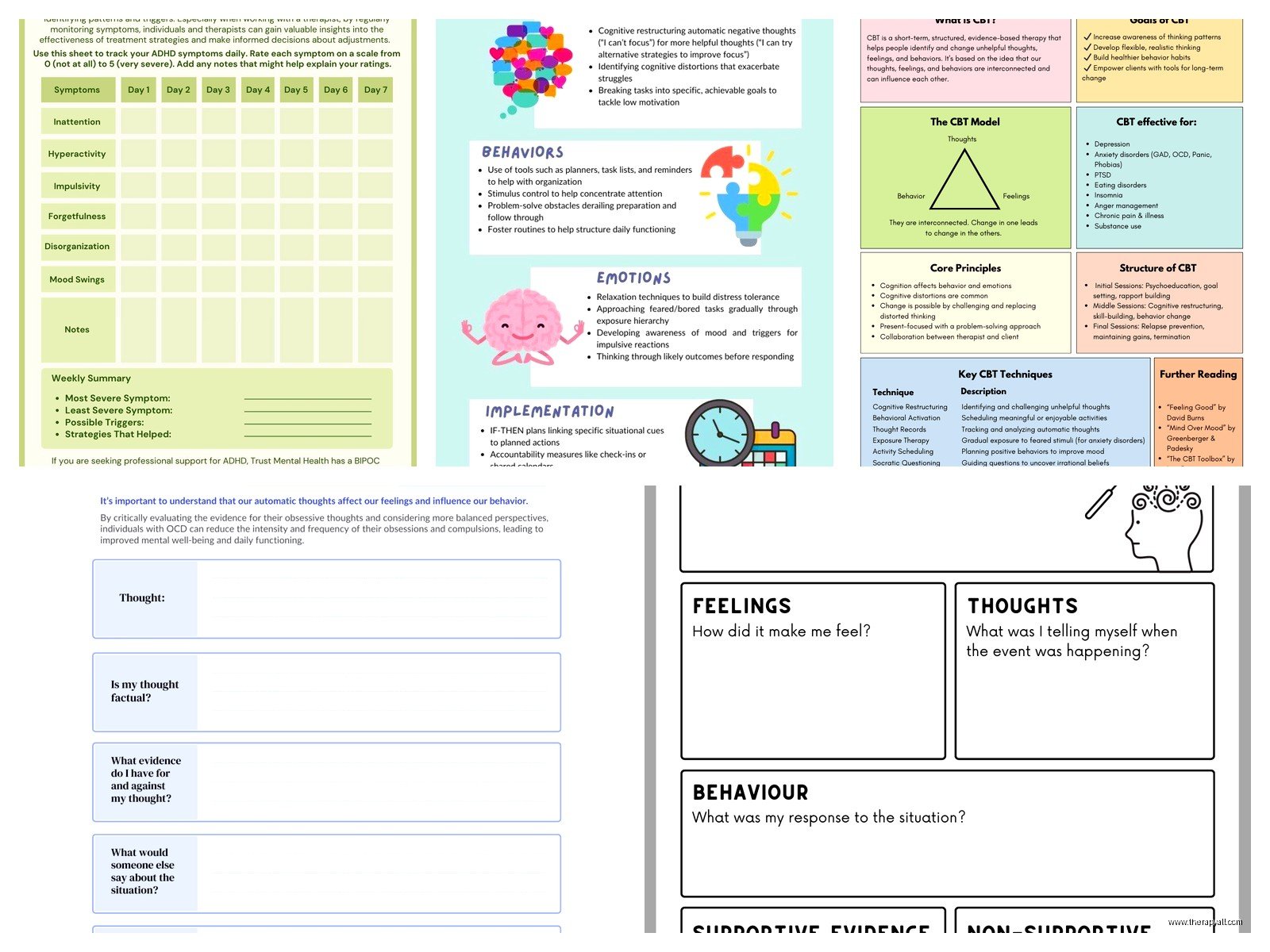
A rejection sensitivity worksheet might have you record: the situation, your immediate emotional reaction (scaled 1-10), what you think the other person meant, alternative interpretations, evidence for each interpretation, and what you did in response. The goal isn’t to talk yourself out of your feelings—that doesn’t work. It’s to create a pause between the emotional spike and your behavioral response.
You start seeing patterns in what triggers the sensitivity. Sometimes it’s specific people, specific types of feedback, or specific contexts like work versus personal. That information lets you prepare. If you know performance reviews trigger intense rejection sensitivity, you can plan extra support around those, or practice specific self-talk ahead of time, or schedule something stabilizing right after.
Reward and Motivation Systems
The ADHD brain doesn’t respond to delayed rewards the same way a neurotypical brain does. “You’ll feel accomplished later” doesn’t cut it. Worksheets that build in immediate reward systems are about designing motivation that actually works with your dopamine system instead of against it.
These worksheets help you identify what actually feels rewarding to you (not what “should” be rewarding), then attach those rewards to specific behaviors or task completions. You’re literally building an external motivation system because the internal one is unreliable.
The worksheet structure: list the task, identify a small immediate reward (and it has to be immediate—same day, ideally within an hour), decide on the criteria for earning it, track completion, and note whether the reward actually motivated you or not. You adjust based on what works. Maybe gold stars feel patronizing but checking off a box feels satisfying. Maybe you need a bigger reward for harder tasks or… honestly the reward system is highly individual and most pre-made worksheets get this wrong.
Habit Tracking with ADHD Modifications
Regular habit trackers assume consistency is achievable through willpower and routine. ADHD habit trackers need to account for the fact that you might do great for six days, forget the habit exists for three days, remember it again, feel bad about the gap, and then abandon it entirely because the streak is broken anyway.
Modified habit worksheets use flexible tracking that doesn’t penalize gaps. You track frequency over time periods (like “5 times this week” instead of “every day”), you note barriers when you miss days, and you celebrate frequency improvements rather than perfection. The worksheet might show a monthly overview where you mark days completed, but the focus is on the total count and the upward trend, not the gaps.
You also track what helped on successful days. Did you do the habit at a specific time? Was there a trigger or reminder that worked? Were you pairing it with something else? This information helps you design better environmental supports rather than relying on memory and willpower.
Problem-Solving Frameworks for Executive Function
When executive function fails, you need an external problem-solving structure. These worksheets walk you through a specific process: define the problem in concrete terms, list possible solutions without judgment, evaluate each solution’s pros and cons, pick one to try, implement it with specific steps, evaluate the result, and adjust.
The key is externalizing each step. You’re not trying to do this in your head—you’re writing it down because your working memory can’t hold all these pieces simultaneously. The worksheet format prevents you from jumping to solutions before you’ve defined the problem, or from getting stuck in analysis paralysis by forcing you to pick something and try it.
I’ve seen people get weirdly resistant to this level of structure, like it’s admitting defeat or something. But it’s not about what you “should” be able to do in your head—it’s about what actually works. If using a worksheet helps you solve a problem you’ve been stuck on for weeks, that’s a win, not a failure.
Priority and Decision-Making Matrices
ADHD makes everything feel equally urgent or equally pointless, which makes prioritization nearly impossible some days. Decision-making worksheets for ADHD use external frameworks—usually matrices or scoring systems—to add objectivity to what feels subjectively overwhelming.
The Eisenhower matrix shows up a lot: urgent/important, urgent/not important, not urgent/important, not urgent/not important. You physically place tasks in boxes, which is easier than holding the framework in your mind while also thinking about the tasks. Some worksheets add a third dimension like energy required or interest level, because something can be important but if it requires high focus and you’re depleted, it’s not happening today.
Decision-making worksheets for bigger choices use weighted criteria. You list your options, identify what matters in this decision, assign weight to each criterion, score each option, and calculate totals. This sounds mechanical but when your brain is bouncing between options without making progress, having a systematic approach gets you unstuck.
Distraction Logging and Analysis
You can’t manage distractions you don’t understand. Distraction logs track what pulled your attention away, how long you were distracted, what you were supposed to be doing, and what brought you back on track if anything. After a week of logging, you analyze patterns.
You might discover that certain types of distractions are actually avoidance behaviors—you’re not randomly distracted, you’re actively avoiding something difficult or boring. Or you might find that distractions cluster at specific times of day, or that certain environments are distraction factories for you. Sometimes the distraction is actually your brain telling you that you need a break, and fighting it makes things worse.
The worksheet helps you categorize distractions: external (phone, people, noise), internal (thoughts, emotions, physical discomfort), and task-related (the task itself is unclear or overwhelming). Different categories need different interventions. You can silence your phone but you can’t silence your thoughts the same way, so the strategies have to be specific to the distraction type.
Weekly Planning with Buffer Time
Standard planners assume tasks take the time you think they’ll take and that nothing unexpected will happen. ADHD-friendly planning worksheets build in buffer time, flexibility, and realistic estimates based on your actual patterns, not your optimistic ones.
The weekly planning sheet has you list priorities, break them into specific tasks, estimate time (then multiply by 1.5 because you’re gonna underestimate), assign them to specific days with specific time blocks, and include unscheduled buffer blocks for the inevitable fires, forgotten tasks, or days when your brain just isn’t cooperating. You also plan breaks and transitions, because those take time too and forgetting to account for them throws off everything.
At the end of the week, you review what actually happened versus what you planned. Not to feel bad about yourself, but to get better data for next week’s planning. If you consistently overbook Mondays, stop doing that. If Friday afternoon is a executive function wasteland for you, plan accordingly instead of setting yourself up for failure every single week.