What Marital Counseling Worksheets Actually Do
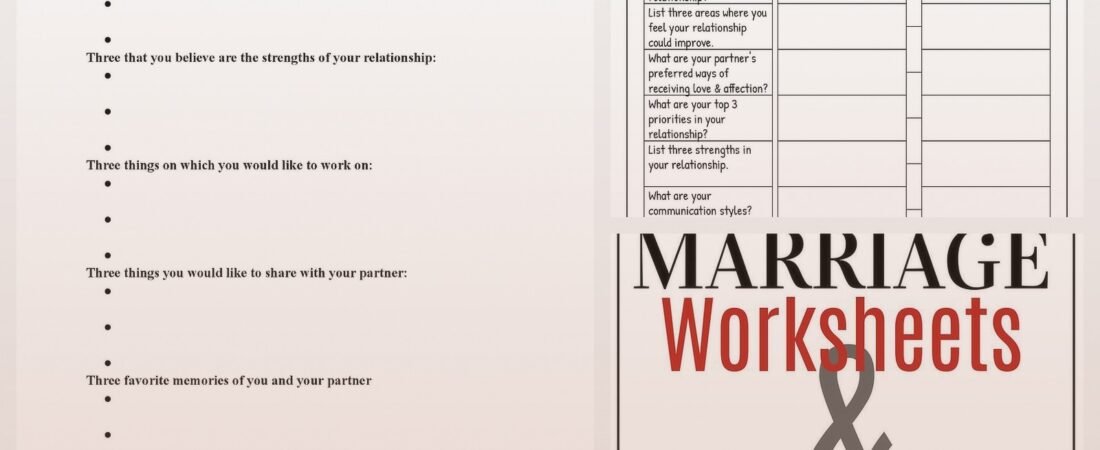
Marital counseling worksheets are structured documents designed to help couples identify conflict patterns, communicate more effectively, and work through specific relationship issues outside of therapy sessions. They’re not magic—they’re homework. Most therapists assign them between sessions to keep momentum going and to give couples concrete tasks instead of just “talking about it” until the next appointment.
The worksheets typically include prompts, reflection questions, communication exercises, and tracking tools. You fill them out individually or together, depending on the type. Some focus on trust rebuilding after infidelity, others on attachment styles, some on daily appreciation practices. I remember back in 2019 working with a therapist who used the Gottman worksheets exclusively, and honestly, the repetition was kinda annoying but it worked—the structure forced me and my then-partner to actually sit down instead of having the same argument while loading the dishwasher.
The goal is behavioral change through consistent practice. Worksheets externalize problems, make abstract feelings concrete, and create a written record you can look back on. They also reduce the therapist’s role as referee because you’re doing the work together on neutral ground.
Trust Rebuilding Worksheets and How They’re Structured
Trust worksheets after betrayal or repeated disappointments usually start with acknowledgment exercises. The person who broke trust writes out what they did, the impact they understand it had, and what they’re willing to do differently. The hurt partner writes about the specific ways trust was broken and what they need to feel safe again.
This isn’t about blame—it’s about clarity. I’ve seen couples get stuck in vague territory like “you never respect me” when what they actually mean is “you told your mother about our financial problems after I asked you not to.” Worksheets force specificity.
Common sections include:
- Timeline reconstruction (what happened, when, and what was said)
- Emotional impact statements (how the breach affected daily life, self-esteem, security)
- Transparency agreements (what information will be shared going forward, access to phones/accounts if relevant)
- Repair action plans (concrete steps, not promises)
- Check-in schedules (weekly trust temperature readings)
One worksheet I used with clients asked both partners to rate their current trust level on a scale of 1-10 every week, then explain what would move it up one point. Simple, but it prevented the “you should just trust me by now” argument because there was a number on paper showing progress or regression.
Communication Pattern Worksheets
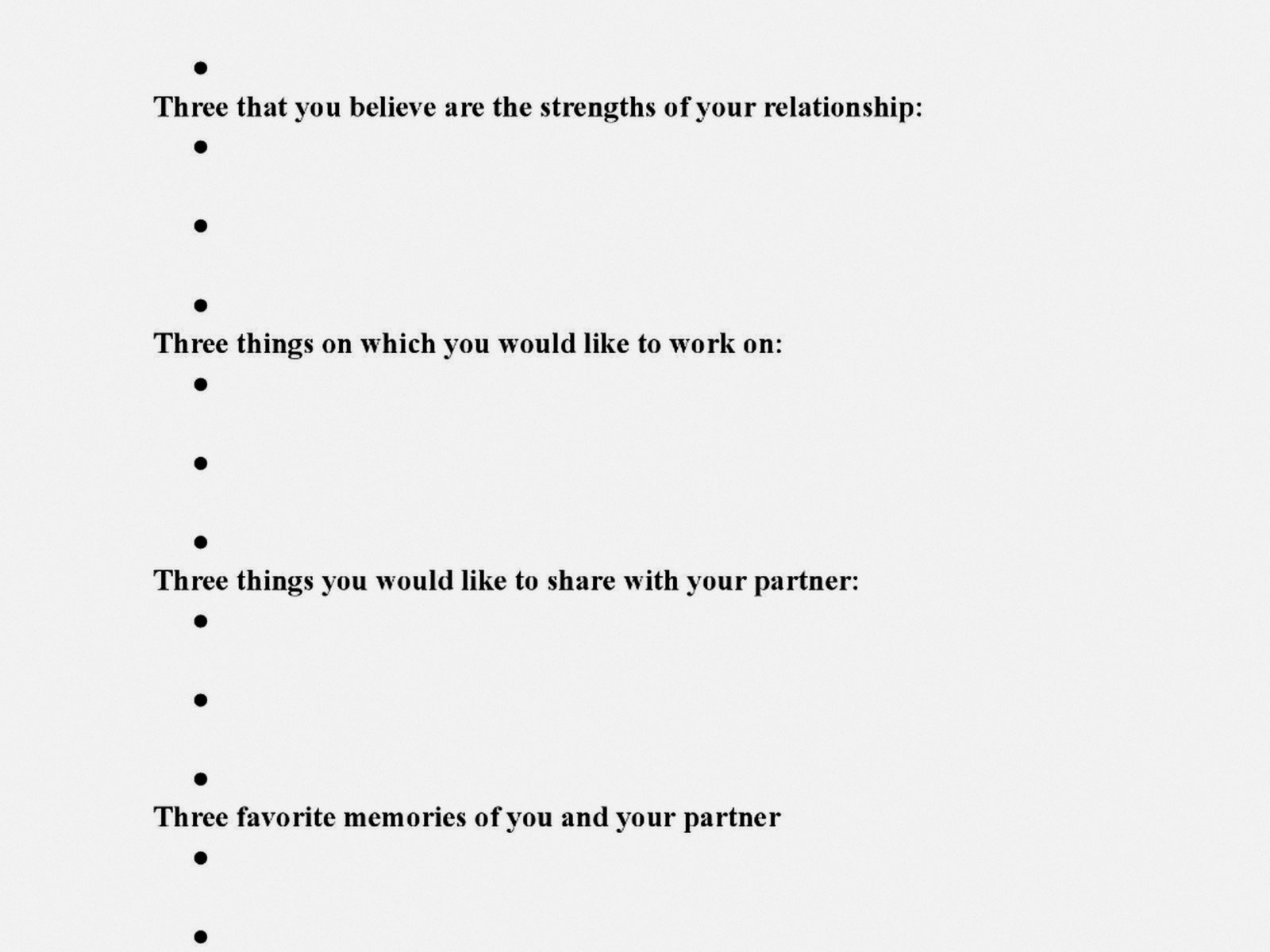
These focus on how you fight, not what you fight about. The Gottman Institute has several that map out the Four Horsemen—criticism, contempt, defensiveness, and stonewalling. You identify which patterns show up in your arguments and then work through alternative responses.
For example, if you tend toward criticism (“you always leave dishes in the sink, you’re so lazy”), the worksheet walks you through converting that to a complaint with a specific request (“I feel frustrated when dishes pile up, can we agree to load the dishwasher before bed?”). It feels mechanical at first, but that’s the point. You’re building new neural pathways.
I gotta say, the worst worksheets are the ones that try to make this cutesy or use corporate jargon like “stakeholder feelings” or “relationship KPIs”—I saw one last year that literally asked couples to do a SWOT analysis of their marriage and I wanted to throw my laptop out the window.
The better ones include:
- Argument tracking logs (what triggered it, what you said, what you wish you’d said)
- Active listening scripts (repeating back what you heard before responding)
- Time-out protocols (how to pause a fight without stonewalling)
- Repair attempt exercises (how to de-escalate mid-conflict)
There’s also worksheets for identifying your conflict style—are you a pursuer or a withdrawer? Do you escalate or shut down? Most couples have opposite styles, which is why the same fight happens on loop.
Emotional Needs Identification Tools
These worksheets help you figure out what you actually need from your partner beyond “support” or “love,” which are too vague to be useful. They usually include lists of needs—emotional safety, physical affection, quality time, words of affirmation, practical help, sexual intimacy, intellectual connection, shared goals—and you rank them or identify your top five.
Then you compare lists. Often there’s misalignment, and that’s valuable information. You might think your partner needs more date nights when what they actually need is for you to ask about their day and listen for ten minutes without offering solutions.
I worked with a couple once where he kept buying her gifts (his love language) and she kept trying to initiate deep conversations (her need), and they both felt rejected because they were speaking different languages—the worksheet made that visible in about fifteen minutes, though it took them months to actually change the behavior.
Some worksheets include:
- Needs vs. wants sorting exercises
- Unmet needs from childhood that show up in marriage
- How you ask for needs (directly, indirectly, through complaints)
- Needs that conflict between partners
- Negotiation frameworks for competing needs
The hard part isn’t identifying needs—it’s accepting that your partner might not be able or willing to meet all of them, and figuring out which ones are dealbreakers versus which ones you can get met elsewhere (through friends, hobbies, therapy).
Intimacy Rebuilding Exercises
After trust breaks or during high-conflict periods, physical and emotional intimacy usually tanks. These worksheets focus on graduated re-connection without pressure.
They might start with non-sexual touch exercises—holding hands for five minutes, back rubs, sitting close while watching TV. Then move to structured conversation prompts about vulnerability, shared memories, hopes for the future. Eventually they include sexual intimacy planning if that’s part of the relationship.
I remember summer 2021 I was writing worksheet content for a therapy platform and had to create like eight different versions of “rekindling intimacy” and by the end I was so tired of the euphemisms—just say sex, just say you’re scared to be vulnerable, just say you don’t know if you’re attracted to each other anymore, you know?
Effective worksheets in this category include:
- Touch comfort scales (what feels safe right now, what feels like too much)
- Desire discrepancy logs (tracking when you want connection vs. when your partner does)
- Emotional intimacy before physical intimacy sequencing
- Fear and barrier identification (what’s blocking closeness)
- Sensate focus exercises adapted for couples therapy
The key is removing performance pressure. You’re not trying to fix everything—you’re trying to find one small way to feel connected that doesn’t trigger defensiveness or avoidance.
Values and Vision Alignment Worksheets
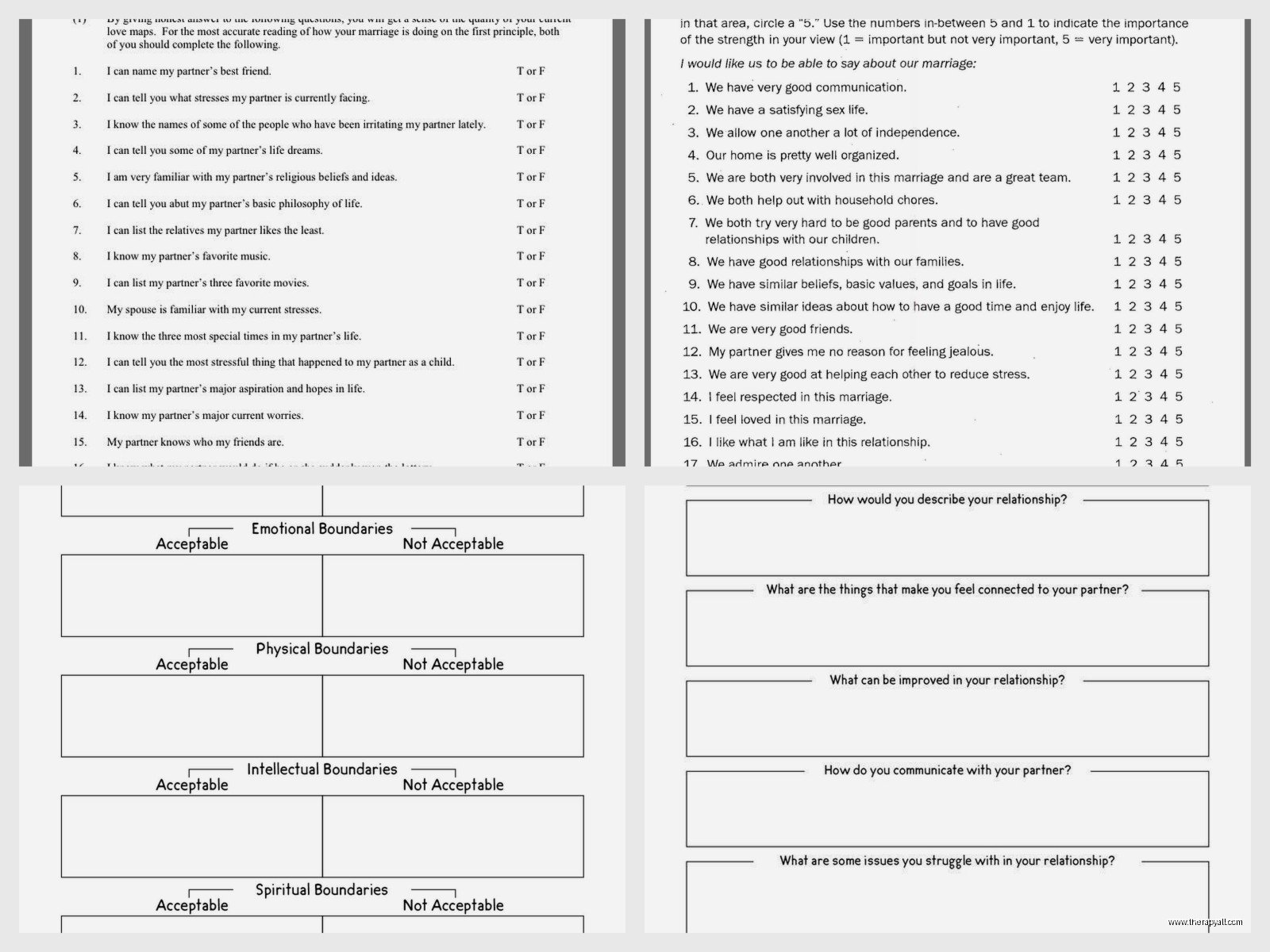
These help couples figure out if they’re still heading in the same direction or if they’ve diverged without noticing. You each write out your individual values, life goals, and vision for the relationship five or ten years from now, then compare.
Sometimes the misalignment is huge—one person wants kids, the other doesn’t, or one wants to move across the country for a job and the other’s entire family is local. Sometimes it’s smaller but still significant—different ideas about money, social life, how much time to spend together versus apart.
The worksheet doesn’t solve the problem, but it makes the problem clear. Then you can decide if it’s negotiable or not. I’ve seen couples realize they want completely different lives and choose to separate, and I’ve seen couples realize they assumed they disagreed when they actually wanted similar things but were using different words.
Common exercises include:
- Individual values lists (rank your top ten values)
- Shared values identification (where do you overlap?)
- Five-year vision writing (describe your ideal life in detail)
- Non-negotiables vs. flexible areas
- Decision-making frameworks for big choices
My cat just knocked over my water bottle and I’m gonna have to deal with that in a second, but anyway—these worksheets work best when you do them before a major life transition, not during a crisis, though people usually only think about this stuff when things are already falling apart.
Accountability and Tracking Worksheets
If one or both partners have broken agreements repeatedly, you need accountability structures. These worksheets track commitments and follow-through.
They’re basically behavior charts for adults, which sounds condescending but is actually just practical. You agree on specific actions—”I’ll text if I’m going to be more than 30 minutes late,” “I’ll go to my AA meeting twice a week,” “I’ll put my phone away during dinner”—and then you track whether it happened.
Weekly review sessions let you look at the data together without accusations. Either you did the thing or you didn’t. If you didn’t, what got in the way? What support do you need? This removes the “you never” or “you always” dynamic because you have actual evidence.
Types of tracking include:
- Daily check-in completion logs
- Agreement follow-through percentages
- Repair attempt tracking (did you apologize when you said you would?)
- Therapy homework completion rates
- Relapse prevention monitoring for addictions or affairs
I’ve had clients get really resistant to this because it feels like surveillance or punishment, and honestly, if there’s no trust at all, a worksheet won’t create it—you might need separation or more intensive therapy first. But if there’s a foundation and you’re trying to rebuild, data helps.
Conflict Resolution Protocol Worksheets
These give you a step-by-step process for working through disagreements without losing your minds. They usually include time limits, turn-taking structures, and cool-down procedures.
A typical protocol might look like:
- Identify the issue in one sentence each
- Set a timer for 10 minutes—Partner A explains their perspective without interruption
- Partner B repeats back what they heard until Partner A confirms accuracy
- Switch roles
- Take a 10-minute break if things get heated
- Brainstorm three possible solutions together
- Choose one to try for a week
- Schedule follow-up discussion
It feels rigid and unnatural at first, but that’s because most couples’ natural conflict style is destructive. The structure prevents escalation.
Some worksheets include pre-made conflict resolution templates where you fill in the blanks—”When you [specific behavior], I feel [emotion] because [need/value]. I would like [specific request].” It’s formulaic but it works, or at least it works better than screaming or silent treatment.
Attachment Style Worksheets
These help you understand your attachment patterns—anxious, avoidant, secure, or disorganized—and how they play out in your relationship. You usually take a questionnaire first, then work through exercises about your childhood experiences, how you respond to conflict or closeness, and what triggers your attachment wounds.
The worksheets often include:
- Attachment history mapping (early relationships with caregivers)
- Current relationship pattern identification (protest behaviors, distancing strategies)
- Trigger logs (what makes you anxious or makes you withdraw)
- Secure attachment skill-building (how to self-soothe, how to reach out effectively)
- Partner’s attachment style understanding exercises
The thing that annoys me most about attachment theory content is how it’s become this excuse for bad behavior—”I’m avoidant so I can’t help shutting down” or “I’m anxious so you have to text me back immediately”—when the whole point is to recognize the pattern and then work against it, not just label yourself and call it a day.
Understanding that you have an anxious attachment style should lead to you developing self-soothing skills and learning to communicate needs without clinging, not to demanding your partner manage your anxiety for you. The worksheets are supposed to build awareness and then change, not just awareness.
How to Actually Use These Worksheets
You can’t just download a worksheet, fill it out once, and expect your marriage to transform. They work when you use them consistently over weeks or months, usually in conjunction with couples therapy.
Best practices include setting a regular time to work on them together—same day and time each week if possible. Treat it like an appointment you can’t skip. Turn off phones, sit somewhere comfortable but not too comfortable (not in bed where you might fall asleep or get… distracted, or in the kitchen where you’ll get interrupted).
Read instructions together before you start. Decide if you’ll fill them out individually first then share, or go through them together question by question. Neither is better—it depends on the worksheet and your dynamic.
Don’t use worksheet time to air new grievances or start arguments. If something comes up that needs more discussion, write it down and bring it to your next therapy session or schedule a separate conversation.
Keep completed worksheets in a binder or folder so you can look back and see progress. Sometimes you can’t feel things getting better, but you can see that three months ago you rated trust at a 2 and now it’s at a 5, or that you used to fight four times a week and now it’s once every two weeks.
And look, some worksheets just won’t work for you—if something feels patronizing or irrelevant or like it’s making things worse, tell your therapist and try a different one. There’s no universal worksheet that fixes all marriages because all marriages are different and all people are different, which should be obvious but apparently needs to be said.