What These Worksheets Actually Do
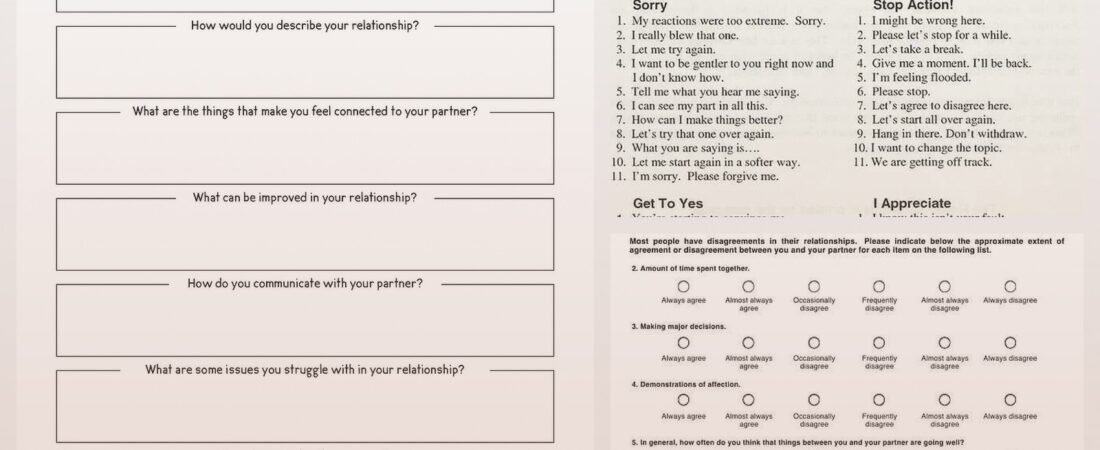
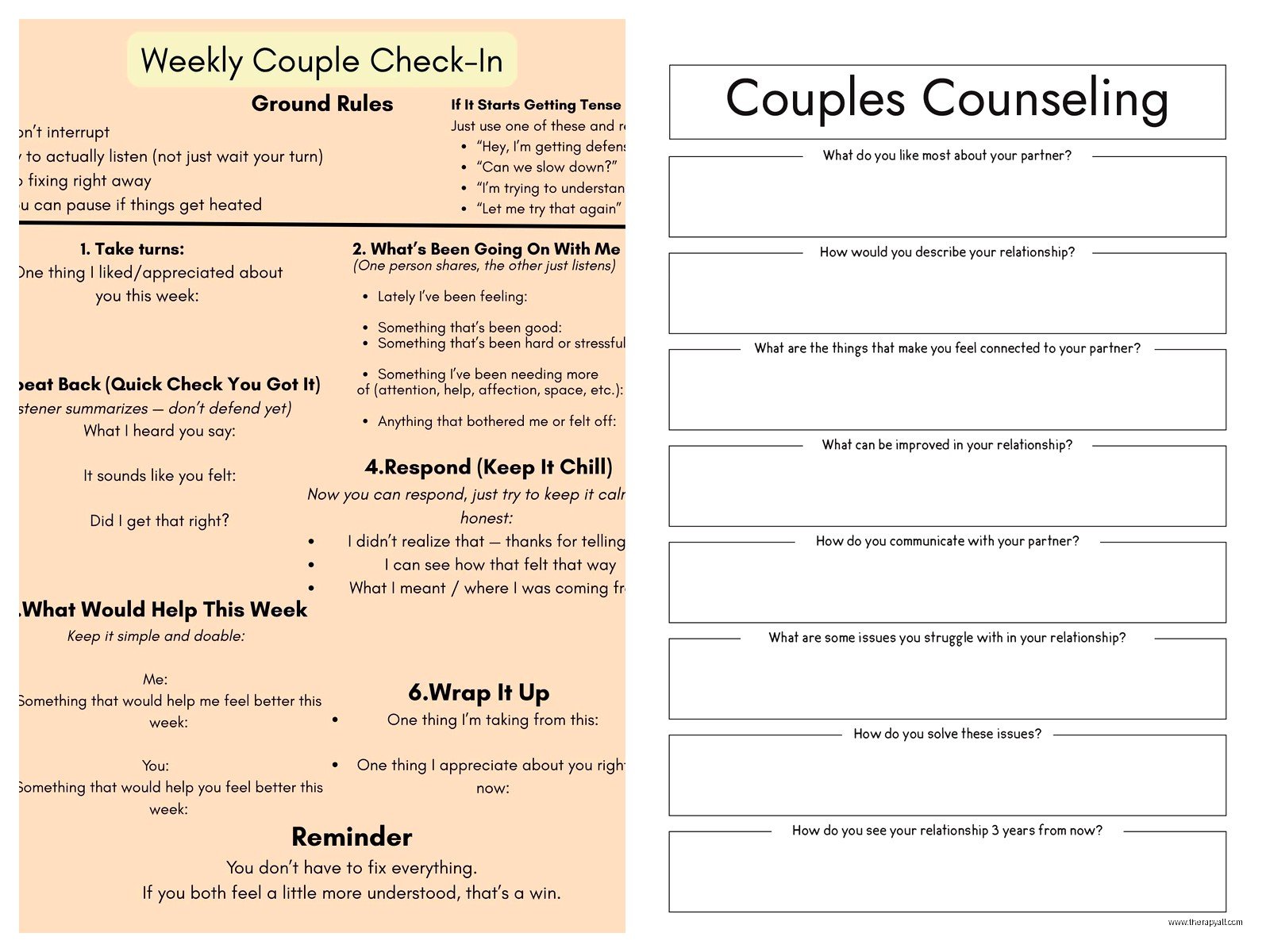
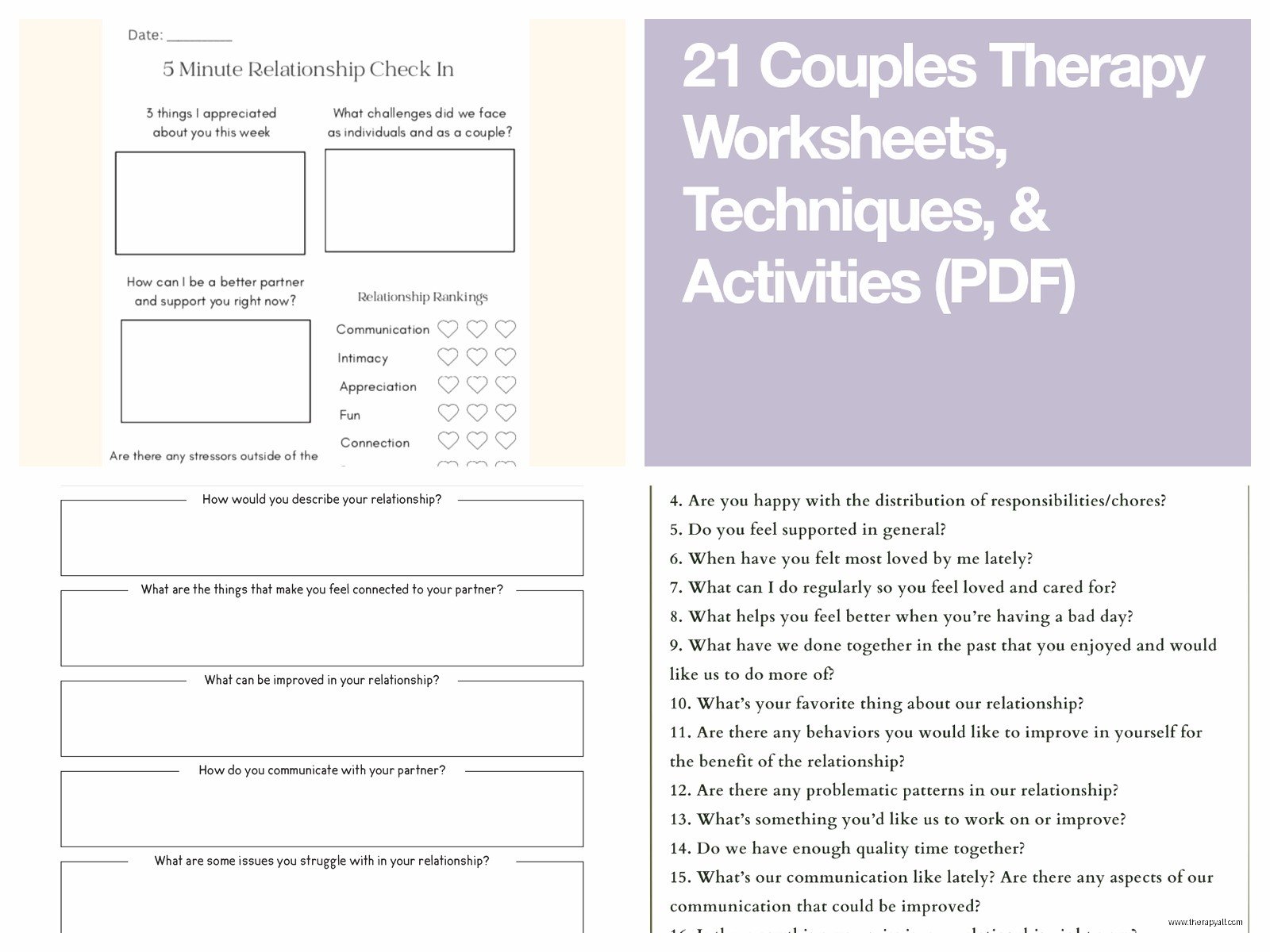
Couples counseling worksheets are structured exercises designed to guide partners through specific communication skills, conflict resolution strategies, and emotional awareness practices. They’re typically paper or digital forms with prompts, fill-in-the-blank sections, rating scales, and reflection questions that both people complete either together or separately before discussing their responses.
The worksheets serve as conversation scaffolding. Instead of sitting across from each other trying to figure out where to even start when everything feels broken, you have a framework. I remember back in 2019 when I was consulting with a therapist who ran couples intensives, she told me the couples who did the between-session worksheets had noticeably better outcomes than those who just showed up every two weeks expecting the hour itself to fix everything. The worksheets kept the work active instead of passive.
You’re essentially creating a third point of focus. Rather than staring at each other in accusatory silence or interrupting every five seconds, you’re both looking at questions on a page. It externalizes the process just enough to reduce defensiveness.
The Speaker-Listener Technique Worksheet
This is probably the most commonly used structured communication exercise. One person holds an object—literally a pen, a coaster, whatever—and that person is the Speaker. The other person is the Listener. The Speaker makes a statement using “I” language about their feelings or perspective. The Listener then paraphrases what they heard before responding.
The worksheet version usually has boxes for each role with prompts like “Speaker: I feel ___ when ___ because ___” and “Listener: What I’m hearing you say is ___. Did I get that right?”
It feels ridiculously artificial the first time you do it. I’ve heard couples say it makes them feel like they’re in kindergarten. But that’s kinda the point—when your default communication pattern is interrupt, defend, counterattack, repeat, you need something disruptively simple to break the cycle.
The worksheet keeps track of whose turn it is and prevents the common problem where the Listener starts defending themselves before they’ve even confirmed they understood the Speaker. You switch roles after each round. Most worksheets recommend 10-15 minute sessions with this structure, not hour-long marathons that leave everyone exhausted.
Emotion Identification Charts
These worksheets present feelings wheels or emotion lists with varying degrees of intensity. You’ve got your basic “happy, sad, angry, afraid” in the center, then more nuanced emotions radiating outward—disappointed, resentful, anxious, overwhelmed, vulnerable, dismissed.
The exercise usually asks each person to identify what they’re feeling in a specific situation or about a recurring conflict, then share not just the surface emotion but the layers underneath. Like, “I said I was angry but when I look at this chart I’m actually feeling disrespected and underneath that I’m feeling scared that my needs don’t matter to you.”
What genuinely annoyed me for years—and still does honestly—is when these worksheets present emotions as though naming them is the entire solution. I’ve seen so many badly designed resources that stop at identification without any follow-up about what to do with that information. You both circle “resentful” on your respective papers and then what? Stare at each other? The good worksheets include a second section about expressing those emotions constructively and a third section about what each person needs in response.
The Daily Temperature Reading
This worksheet structure comes from Virginia Satir’s work and it’s divided into five sections you work through in order: Appreciations, New Information, Puzzles, Complaints with Recommendations, and Wishes/Hopes/Dreams.
You start with appreciations because beginning with complaints is how you end up in a two-hour fight at 10 PM on a Tuesday. The worksheet literally has numbered lines—three appreciations minimum before you’re allowed to move to the next section. New Information is just updates about your day, your internal world, things your partner might not know. My cat knocked over a plant this morning and I had to clean up dirt for twenty minutes and I was already running late, that kind of mundane sharing that actually builds connection.
Puzzles are things you’re confused about or curious about in the relationship. Not accusations, just genuine questions. “I noticed you seemed distant after dinner last night and I’m puzzled about whether I said something that bothered you or if something else was going on.”
The Complaints with Recommendations section is the critical part. You don’t just complain—you have to offer a specific, actionable recommendation. “I’m frustrated that I’m always the one who initiates plans for the weekend. I’d like you to suggest something we could do together by Thursday each week.” The worksheet format forces specificity instead of vague resentment.
Conflict Resolution Mapping
These worksheets ask you to diagram a recurring fight. There’s usually a timeline section where you identify the trigger, the escalation points, the peak of the conflict, and the resolution or lack thereof. Then separate columns for what each person was thinking, feeling, and wanting at each stage.
I gotta say, the visual component helps couples see patterns they’ve been repeating for years without realizing it. You map out three different arguments and suddenly you notice that every fight escalates at the exact moment one person brings up something from the past, or when someone’s tone shifts, or when you’re both hungry and tired after work.
The worksheet also includes sections for identifying your individual conflict styles—avoider, accommodator, competitor, compromiser, collaborator. You rate yourself and your partner rates you, then you compare. The discrepancies are often more revealing than the agreements. You think you’re compromising but your partner experiences you as steamrolling.
Needs and Requests Clarification
This type of worksheet distinguishes between needs (abstract, ongoing states) and requests (specific, time-bound actions). It’s based somewhat on Nonviolent Communication principles but adapted for couples work.
The format usually has you identify an underlying need—like connection, autonomy, respect, security, spontaneity—and then translate that need into three concrete requests. So instead of “I need you to care about me more” which is impossibly vague and sets everyone up for failure, you write: “I need connection. Three requests: 1) Put your phone away during dinner. 2) Ask me one question about my day before talking about yours. 3) Initiate physical affection at least once per day.”
You also indicate which requests are negotiable and which feel non-negotiable to you. Then you switch and your partner does the same exercise. The worksheet creates space to discuss where there’s overlap, where there’s conflict between your needs, and where you can both experiment with meeting each other’s requests.
Appreciation and Fondness Exercises
These worksheets focus on rebuilding positive sentiment override, which is just therapy-speak for remembering that you actually like this person. When you’re stuck in negative patterns, you start interpreting everything through a critical lens. Your partner offers to make dinner and you think “they’re just trying to avoid the conversation we need to have” instead of “that’s thoughtful.”
The exercises usually ask you to list specific things you appreciate about your partner—not generic stuff like “they’re nice” but actual moments and qualities. “I appreciate that you remembered I had a difficult meeting today and texted to ask how it went.” “I appreciate the way you always check the door locks at night so I don’t have to worry about it.”
There’s often a section where you write about a good memory together, with sensory details. Where were you, what did it smell like, what were you wearing, what did you laugh about. I remember working on a worksheet collection in summer 2021 and I actually started using this exercise with my own partner because I realized how much I’d been focusing on annoyances and how little time I spent actively remembering the good stuff.
Some worksheets include a daily practice component—write down one thing you appreciated about your partner each day for two weeks, then share them all at once. The accumulation effect is significant.
Boundaries and Agreements Documentation
These are probably the least sexy worksheets but among the most useful. They’re basically structured forms for documenting what you’ve agreed to regarding specific issues—finances, parenting, household responsibilities, extended family involvement, social media, privacy, whatever keeps coming up.
The format includes sections for: the specific area being addressed, what each person’s boundary or need is, what you’re agreeing to do or not do, how you’ll handle violations of the agreement, and when you’ll revisit the agreement to see if it’s still working.
Having it written down matters because—and this is gonna sound obvious but it’s amazing how often this happens—people remember agreements differently. You think you agreed to check with each other before making purchases over $200. Your partner thinks the threshold was $500. The worksheet removes the ambiguity.
It also creates accountability. When something’s just verbally discussed, it’s easy to let it slide or forget or reinterpret. When you’ve both signed a worksheet that says “We agree to discuss major parenting decisions together before implementing them rather than undermining each other,” it’s harder to pretend that wasn’t the deal.
Repair Attempts Inventory
This worksheet helps you identify and expand your repertoire of repair attempts—the things you do or say to de-escalate conflict or reconnect after disconnection. Research from the Gottman Institute shows that successful couples aren’t couples who don’t fight, they’re couples who know how to repair.
The worksheet typically lists common repair attempts in categories: humor, affection, taking responsibility, calling a timeout, apologizing, expressing need, offering appreciation. You check off which ones you currently use, which ones your partner uses, which ones work well, and which ones tend to backfire.
Then there’s space to brainstorm new repair attempts you could try. Maybe humor works for you but not for your partner who needs direct apology. Maybe your partner’s repair attempts feel dismissive to you because they’re trying to fix things with affection before you’ve felt heard. The worksheet makes these patterns explicit.
There’s usually a section for creating a specific repair ritual—like a code word you can use when things are escalating that means “I need a break but I’m not abandoning this conversation” or a physical gesture that signals “I’m still on your team even though we’re disagreeing.”
Sexual and Physical Intimacy Check-ins
These worksheets address the topic most couples find hardest to talk about directly. They include sections for rating current satisfaction, identifying barriers to intimacy, expressing desires and boundaries, and discussing frequency and initiation patterns.
The structure removes some of the vulnerability and awkwardness. Instead of trying to spontaneously articulate “I want more physical affection but I feel pressured when it always leads to sex and I don’t know how to say that without you feeling rejected,” you’re responding to prompts like “I feel most connected to you physically when…” and “I’d like to explore…” and “I need more/less of…”
Good worksheets in this category separate physical affection, sensual touch, and sexual activity into distinct sections because those are different needs and you might want more of one and less of another. They also include space to discuss what makes you feel safe or unsafe, desired or objectified, connected or disconnected.
You complete these separately first, then share and discuss. The separate completion is crucial because otherwise you just defer to each other or censor yourself in real-time.
Values Alignment Exploration
These worksheets list common values—family, career, adventure, stability, creativity, service, independence, tradition, growth, pleasure, etc.—and ask each person to rank them or sort them into categories of importance. Then you compare and discuss where your values align and where they conflict.
The exercise also usually includes questions about how you each express those values in daily life and what you need from your partner to honor your core values. Someone who values adventure might need a partner who’s willing to try new things regularly or at least supports their solo pursuits. Someone who values stability might need financial security and predictable routines.
Where it gets interesting is when you discover that you share values but express them completely differently, or when you realize that what looks like a personality clash is actually a values difference. You think your partner is boring but they value stability and you value spontaneity and neither is wrong, you just haven’t figured out how to honor both.
Tracking Patterns Over Time
Some worksheets are designed for repeated use—weekly check-ins or monthly reviews where you track the same metrics over time to see if things are improving, declining, or staying stuck. These might include satisfaction ratings across different relationship domains, frequency counts of positive and negative interactions, or progress markers toward specific goals.
The longitudinal data helps you see whether the work you’re doing is actually making a difference or whether you need to try different approaches. It also helps during discouraging periods to look back and see “okay, three months ago we were fighting every single day and now it’s twice a week, that’s actually progress even though it doesn’t feel like enough yet.”
I’ve seen couples use these tracking worksheets to identify external stressors that impact their relationship—like noticing that their conflict always increases during tax season or when extended family visits or during work deadline periods—which then allows them to plan ahead and build in extra support during those times.