# Art Therapy Worksheets: Creative Exercises for Emotional Wellbeing
Art therapy worksheets combine structured therapeutic exercises with creative expression. You’re essentially using visual art-making as a processing tool, not trying to create museum-quality work. The worksheets provide prompts, frameworks, and guided activities that help you externalize internal experiences—emotions, memories, conflicts, patterns—through drawing, coloring, collage, or other visual methods.
I remember sitting in a community mental health center back in 2019, watching a therapist pull out a stack of photocopied art therapy sheets for a group session. Half the participants immediately tensed up with that “but I can’t draw” anxiety, which honestly is the most frustrating misconception about this entire modality. Art therapy worksheets aren’t about artistic skill. They’re about the process of making marks on paper and what happens psychologically when you do that.
## How Art Therapy Worksheets Actually Function
The worksheets serve as containers for emotional expression. When you’re working with intense feelings—grief, anger, anxiety, trauma responses—sometimes verbal language fails or feels inadequate. Visual expression accesses different neural pathways and can bypass some of the cognitive defenses that keep you stuck.
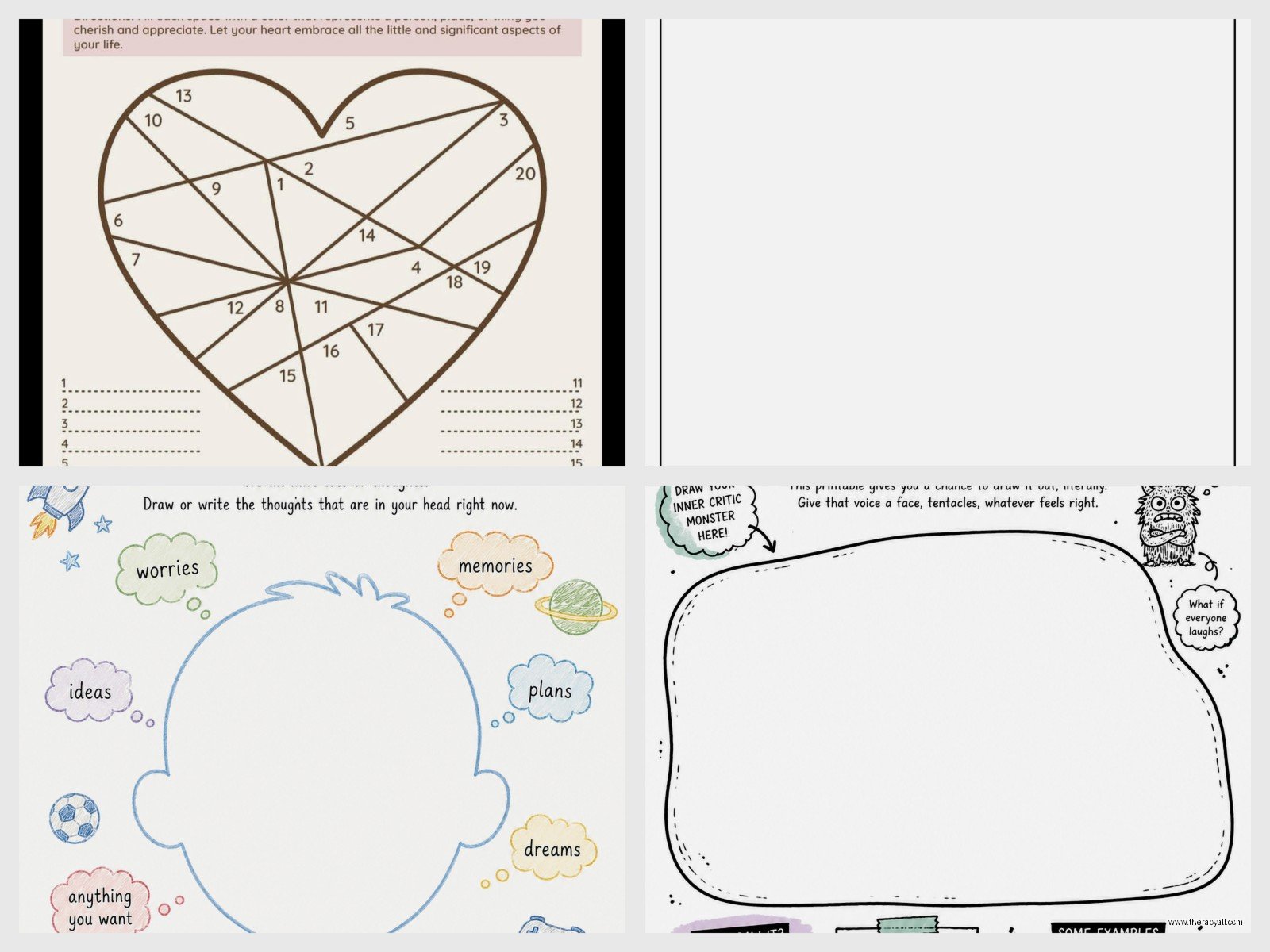
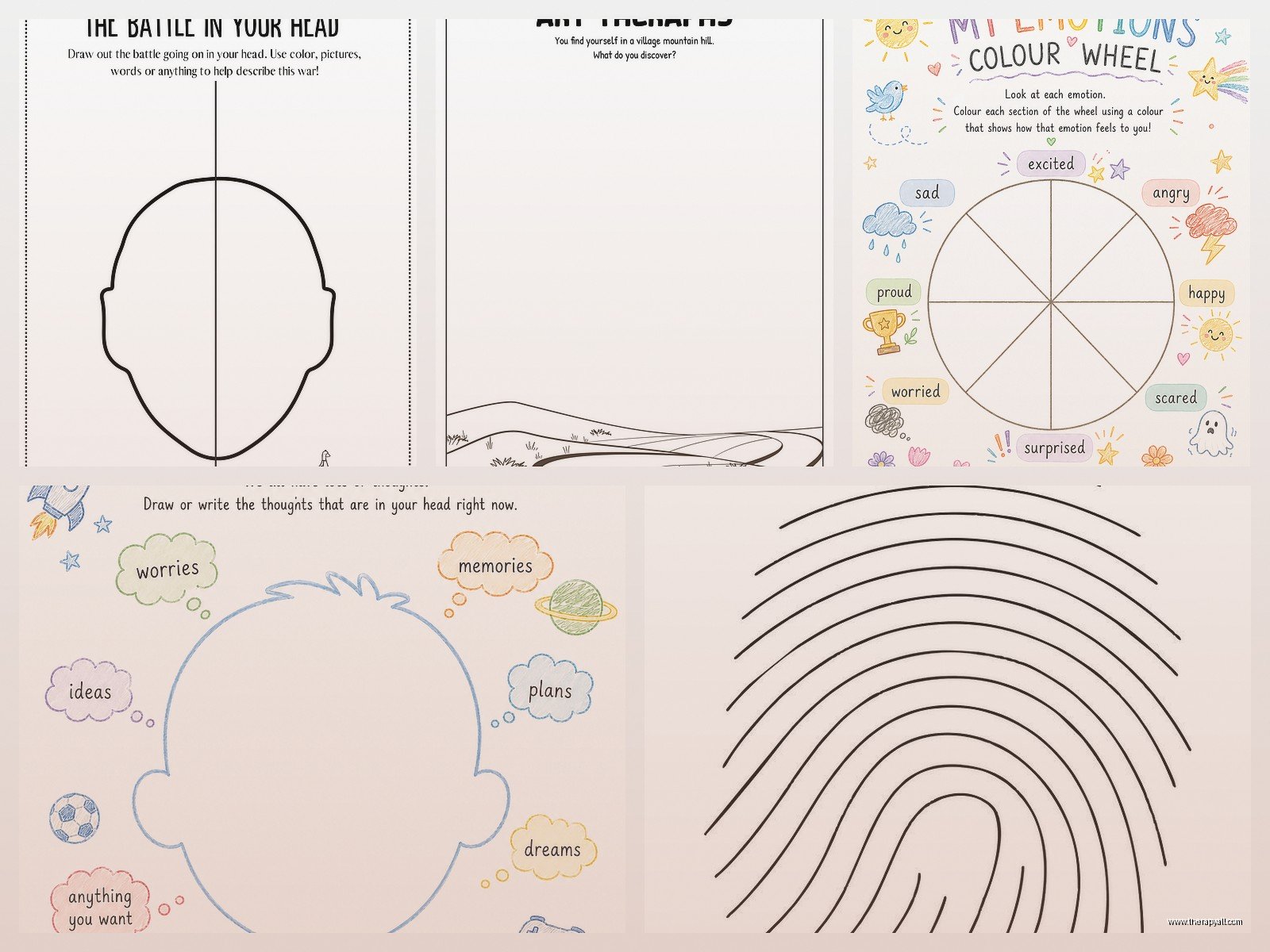
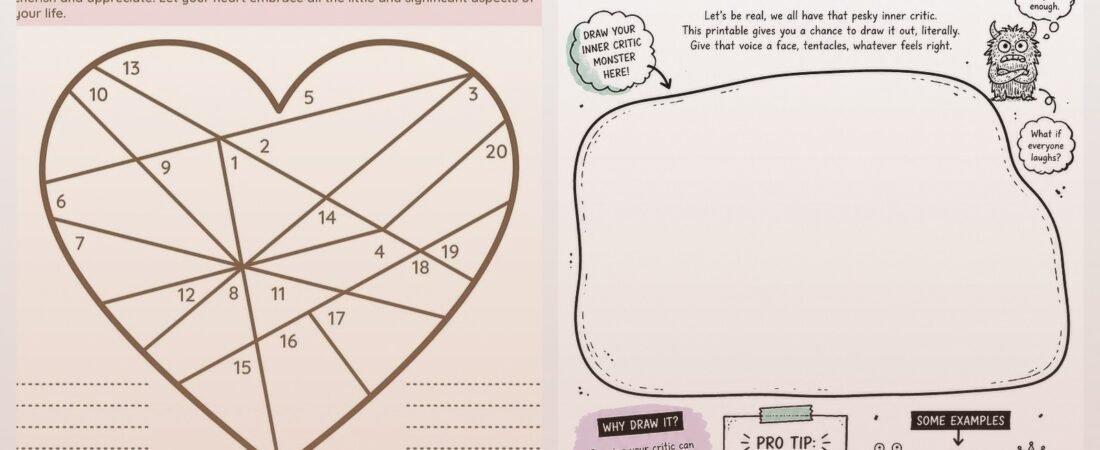
Standard formats include emotion wheels you color-code based on where you feel different emotions in your body, mandala templates for meditative coloring, body outline drawings where you map physical sensations, feeling faces you complete with different expressions, and timeline exercises where you illustrate significant life events. There are also more complex prompts like “draw your safe place,” “illustrate your anxiety as a character,” or “create a visual representation of before and after a significant event.”
The therapeutic benefit isn’t in the finished product. It’s in what you notice while you’re making it. What colors you gravitate toward. How hard you press the pencil. Whether you stay inside the lines or deliberately go outside them. What images emerge that you didn’t plan. The worksheet structure gives you a starting point so you’re not staring at a blank page feeling paralyzed.
## Types of Worksheets and What They Target
Emotion identification worksheets help you build emotional literacy. These typically show faces with different expressions, color-coded feeling charts, or prompt you to draw what specific emotions look like to you. If you’ve spent years disconnecting from feelings or were raised in an environment where emotions weren’t named or validated, these basic tools actually matter. You learn to distinguish between anger and frustration, between sadness and disappointment, between anxiety and excitement.
Body mapping worksheets address the somatic component of emotional experience. You color where you feel stress, tension, pain, or specific emotions in a body outline. This is particularly useful if you’re someone who intellectualizes everything or if you’ve experienced trauma that created disconnection from physical sensations. I’ve gotta say, the first time I did one of these myself—during that summer in 2022 when I was churning out worksheet content constantly and decided to actually try them—I was surprised how much tension I was carrying in my jaw that I’d completely tuned out.
Narrative and timeline worksheets let you visually organize your story. You might create a river drawing where different widths represent different life phases, or a road with significant events marked along it, or illustrated chapters of your life. These help you see patterns, identify turning points, and recognize that your current moment is part of a larger continuum.
Coping skills worksheets provide visual reminders and planning tools. You might create a coping toolkit illustration, a sensory grounding poster, or a visual schedule for self-care activities. The act of drawing or coloring these makes them more memorable than just reading a list.
Relationship mapping worksheets help you visualize your social connections and dynamics. You draw yourself in the center and place people at different distances based on closeness, or you use different colors or shapes to represent different types of relationships. This is useful for understanding patterns in how you relate to others or identifying where you might need boundaries.
## The Actual Implementation Process
You don’t need fancy supplies. Printer paper and a basic set of colored pencils or crayons work fine. Some people prefer markers, others like the control of fine-tip pens. The worksheet itself can be a downloaded PDF, a photocopied page from a workbook, or something you draw yourself based on a prompt.
Set aside 15-30 minutes when you won’t be interrupted. Put your phone somewhere else—my cat knocked mine off the table yesterday and honestly it was probably doing me a favor. You don’t need music or ambiance or whatever, just a space where you can spread out a bit.
Read the prompt or look at the worksheet structure first. Notice your initial reaction. Resistance? Curiosity? Anxiety? That reaction is data. Then start making marks. If you freeze up, start with just one color or one section. The perfectionism that makes people say “I can’t draw” is actually a defense mechanism against vulnerability, and the worksheet structure helps because you’re working within a predetermined framework rather than creating from scratch.
While you’re working, pay attention to what you’re thinking and feeling. Do certain colors evoke memories? Does drawing a particular symbol make you uncomfortable? Are you rushing through it or taking your time? This metacognitive awareness—thinking about your thinking—is where therapeutic benefit lives.
## What Makes a Worksheet Effective vs. Useless
Good art therapy worksheets have clear but open-ended prompts. They provide structure without being prescriptive. Bad ones are either too vague (“draw your feelings”) or too restrictive (those adult coloring books marketed as “therapy” that are really just… coloring books, which, nah, that’s not the same thing).
Effective worksheets include reflection questions. After you complete the visual component, there should be prompts asking what you noticed, what surprised you, what was difficult, or what you learned. Without this reflective component, you’re just making art, which is fine but isn’t therapy.
The worksheet should match your current capacity. If you’re in acute crisis, you need simple grounding-focused worksheets with clear structure. If you’re doing deeper processing work, you can handle more ambiguous or emotionally challenging prompts. Badly designed resources don’t differentiate between these levels, and I’ve seen so many trauma-focused worksheets that would absolutely overwhelm someone who isn’t ready for that depth of processing—it genuinely annoys me when content creators don’t consider the timing and readiness factors.
## Integration With Other Therapeutic Approaches
Art therapy worksheets complement talk therapy, they don’t replace it. You might complete a worksheet between therapy sessions and bring it in to discuss. Or a therapist might use one during a session when you’re stuck verbally. They work well with CBT approaches—you can draw your cognitive distortions or create visual thought records. They integrate with DBT skills like opposite action (drawing yourself doing the opposite of what the emotion urges) or radical acceptance (illustrating acceptance vs. resistance).
For trauma work, particularly with EMDR or somatic approaches, art worksheets can help with resource building and creating mental safe places. You might draw your container for difficult memories or illustrate your support system before processing traumatic material.
If you’re working with parts or ego states (like in IFS or schema therapy), visual representation helps clarify these internal dynamics. Drawing your different parts, giving them shapes or colors or positions relative to each other—this makes abstract internal experiences concrete.
## Common Challenges and Adjustments
The “I can’t draw” block is real but manageable. Start with worksheets that use mostly coloring, checking boxes, or simple shapes rather than freeform drawing. Use stick figures. Use symbols. Trace things if you need to. The point is engagement with the process, not the product.
Emotional overwhelm can happen, especially with deeper prompts. If you notice yourself dissociating, becoming flooded with emotion, or feeling destabilized, stop. Use a grounding technique. Return to simpler, more concrete worksheets. This is why having a therapist involved is ideal—they can help you regulate if things get intense, or wait, actually, even if you’re using these independently, you should have a plan for what to do if something comes up that’s too much.
Resistance shows up as procrastination, perfectionism, or dismissiveness (“this is stupid”). That resistance is information about what you’re avoiding. Sometimes you push through it gently, sometimes you honor it and choose a different worksheet or approach.
Cultural considerations matter. Some worksheet imagery or prompts assume Western psychological frameworks or cultural contexts that might not fit your experience. Adapt them. Change the prompts. Use imagery that’s meaningful to your background.
## Digital vs. Physical Formats
Physical worksheets—actual paper you mark on with actual drawing tools—generally work better. The tactile experience matters. The slowing down matters. You can’t undo or delete, which means you have to work with what emerges rather than controlling and perfecting it.
That said, digital art therapy apps and PDFs you complete on tablets have advantages for accessibility. If you have motor difficulties, digital tools might be easier. If you’re always on the go, having worksheets on your phone means you can work on them anywhere. Some people feel less precious about digital work and experiment more freely.
The key is noticing whether the medium itself becomes a distraction. If you’re spending more time picking the perfect digital brush than actually processing emotions, maybe switch to paper and one pencil.
## Frequency and Consistency
You don’t need to do art therapy worksheets daily. Some people benefit from a regular practice—maybe Sunday evenings or after therapy appointments. Others use them as needed when emotions feel confusing or overwhelming. There’s no therapeutic mandate for consistency here, it’s more about having the tool available when it’s useful.
Keeping completed worksheets lets you track patterns over time. You might notice that you always draw anxiety as spiky and red, or that your body maps consistently show tension in the same areas, or that your safe place imagery has evolved. This longitudinal view provides insight that single worksheets can’t.
## Where to Find Quality Resources
Therapist-created resources are generally more sophisticated than generic online content. Look for worksheets developed by actual art therapists (ATR or ATR-BC credentials) or licensed mental health professionals with training in expressive therapies. Many therapists share free resources on their websites or social platforms.
Therapy workbooks often include art-based exercises. ACT workbooks, DBT workbooks, and trauma recovery workbooks frequently incorporate visual elements. These have the advantage of being integrated into a larger therapeutic framework.
Pinterest and therapy blogs have tons of free printables, but quality varies wildly. Check who created it and whether they have relevant credentials. Some of the most popular art therapy content is created by people with zero mental health training, which, I mean, sure, some of it works fine, but some of it is also potentially harmful if you’re dealing with serious mental health issues.
Therapy worksheet subscription sites like Therapist Aid or Psychology Tools have art-based options among their resources. These are typically well-designed and include facilitator notes explaining the therapeutic rationale.
## Limitations and Contraindications
Art therapy worksheets aren’t appropriate for everyone in every situation. If you’re experiencing active psychosis, some visual prompts might exacerbate symptoms. If you have severe PTSD, certain imagery or prompts could be triggering without proper support. If you’re in acute suicidal crisis, you need immediate intervention, not a worksheet.
They’re also not a replacement for medication when medication is needed, or for addressing practical problems like housing instability or food insecurity. They’re one tool in a larger mental health approach, not a complete solution. The wellness industry kinda oversells these as miracle cures, and that’s both unrealistic and potentially dangerous if people delay getting appropriate care.