
Mental Health, Therapy resources
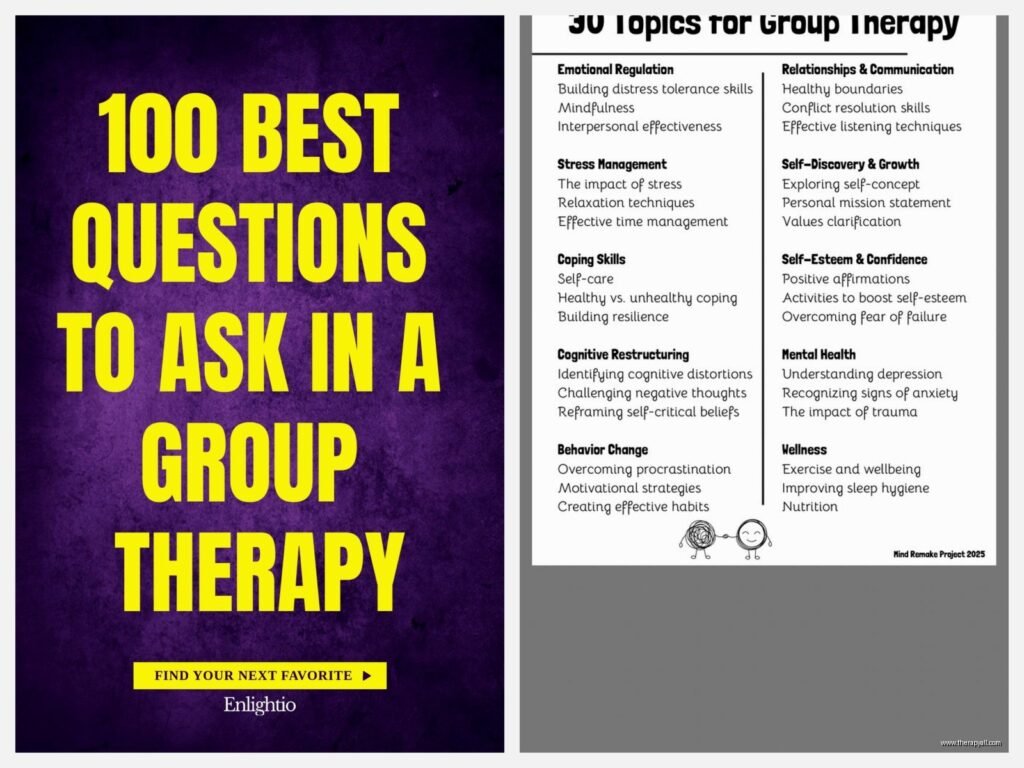
Best Therapeutic Group Topics for Adults: Facilitate Meaningful Sessions
Jun
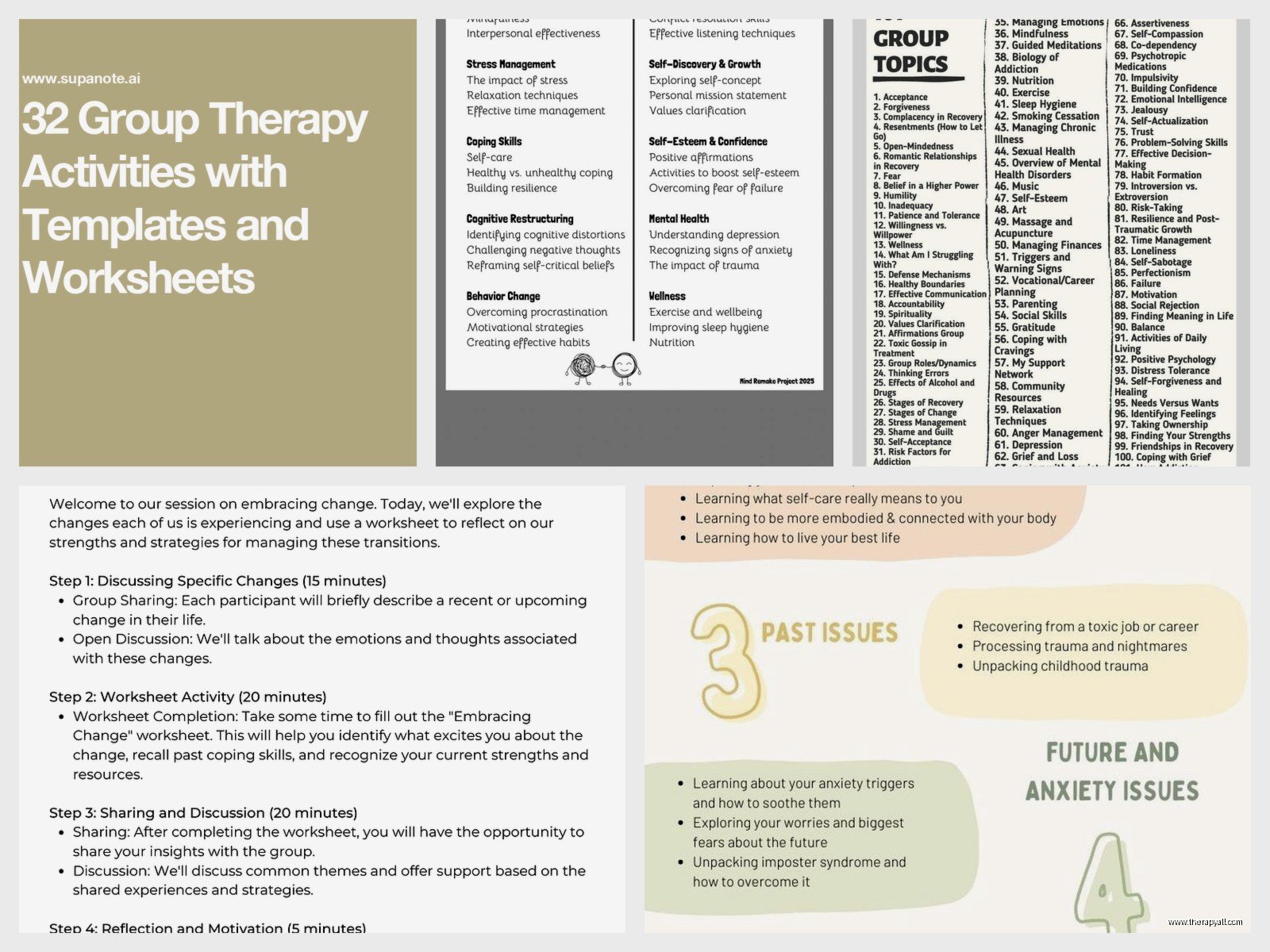
# Best Therapeutic Group Topics for Adults: Facilitate Meaningful Sessions
Group therapy works best when the topic actually matches what participants need, not what sounds good on a curriculum sheet. I’ve seen facilitators choose topics because they read well in a brochure, then watch the group sit there in silence for 45 minutes while everyone checks the clock.
## Emotional Regulation and Coping Skills
Adults need practical tools for managing emotions that don’t involve “just breathe” advice. This topic covers identifying emotional triggers, understanding the physical manifestations of different emotions, and building a personalized toolkit of coping strategies.
You can structure this around the idea that emotional regulation isn’t about suppression—it’s about response flexibility. I remember facilitating a group in 2019 where one participant insisted that “real men don’t need coping skills” and by week three he was teaching the group his color-coded emotion tracking system he’d developed. People want permission to acknowledge that emotions are hard.
The session should include concrete skill-building: progressive muscle relaxation, grounding techniques using the five senses, distress tolerance strategies. Don’t just lecture about these—actually practice them in session. Walk through a 5-4-3-2-1 grounding exercise. Have people identify where they feel anxiety in their bodies.
What annoys me is when facilitators treat emotional regulation like it’s a simple on-off switch. “Just use your coping skills” doesn’t help anyone when they’re in the middle of a panic attack and can’t remember their own name, let alone the acronym you taught them last week.
## Boundaries and Assertiveness
This topic addresses how to set and maintain healthy boundaries in relationships, work environments, and family systems. Most adults know they “should” have boundaries but have no idea what that actually looks like in practice.
Break down the difference between passive, aggressive, and assertive communication. Use role-play scenarios—I know people hate role-playing but it actually works for this. Have group members practice saying “no” without over-explaining or apologizing. The discomfort is part of the learning.
Cover boundary violations that people don’t recognize as violations: emotional dumping from friends, family members who show up unannounced, coworkers who text at midnight. You’d be surprised how many people think boundaries are “mean” or “selfish.”
Include content about recognizing when your own boundaries are too rigid versus too porous. This isn’t about building walls—it’s about having doors that you control. My cat just knocked over my water bottle, hang on… anyway, boundaries work best when they’re flexible enough to adjust based on context and relationship.
## Grief and Loss
Grief isn’t just about death. This topic should expand beyond bereavement to include loss of identity, relationships, jobs, health, and expected futures. Adults often don’t recognize they’re grieving because their loss doesn’t “count” in their mind.
Structure sessions around the non-linear nature of grief. Throw out the five stages model or at least present it as one framework among many, not gospel truth. Talk about ambiguous loss, disenfranchised grief, and complicated grief.
Practical elements include: identifying support systems, managing grief triggers (anniversaries, songs, places), navigating social expectations around grief timelines, and finding meaning without forcing silver linings. Let people be angry. Let them be numb. Let them laugh about something funny their dead mom used to do.
Create space for people to share memories without pressure to “move on” or “find closure”—two concepts that kinda drive me up the wall because they’re not how grief actually works. You don’t close grief like a filing cabinet drawer.
## Self-Esteem and Self-Compassion
Low self-esteem in adults often stems from decades of internalized criticism and comparison. This topic addresses the critical inner voice, perfectionism, and developing a more balanced self-perception.
Start with self-awareness exercises that help people identify their self-talk patterns. Most people don’t realize how cruel they are to themselves until they write it down and see it on paper. Have them track negative self-statements for a week—it’s usually eye-opening.
Self-compassion isn’t the same as self-esteem. Self-esteem is comparative (I’m better than/worse than), while self-compassion is about treating yourself with the same kindness you’d offer a friend. This distinction matters because self-esteem can be fragile and contingent on external validation.
Include Kristin Neff’s three components of self-compassion: self-kindness versus self-judgment, common humanity versus isolation, and mindfulness versus over-identification. Actually practice the self-compassion break exercise in session rather than just describing it.
## Interpersonal Relationships and Communication
Adults need help navigating the complexity of modern relationships: romantic partnerships, friendships, family dynamics, and professional relationships. This topic covers communication styles, conflict resolution, and recognizing unhealthy patterns.
Address common communication barriers: mind-reading expectations, stonewalling, defensiveness, contempt. Use John Gottman’s research on relationship predictors—the Four Horsemen resonate with people because they can immediately recognize these patterns in their own lives.
Practice active listening skills in pairs or triads. Most people think they’re good listeners but they’re actually just waiting for their turn to talk or formulating their response while the other person is still speaking. The exercises can feel awkward but that awkwardness is data.
Cover attachment styles without making it everyone’s entire personality—I’m gonna be honest, the internet has ruined attachment theory by turning it into horoscopes. Yes, your attachment style influences your relationships, but it’s not a fixed destiny and it doesn’t excuse bad behavior.
## Stress Management and Burnout Prevention
Burnout isn’t just being tired—it’s emotional exhaustion, depersonalization, and reduced sense of accomplishment. This topic helps adults identify burnout signs early and develop sustainable stress management practices.
Differentiate between acute stress and chronic stress. The body’s stress response system wasn’t designed for the constant low-grade stress of modern life: emails, notifications, 24-hour news cycles, financial pressure, family obligations.
Practical content includes: time management strategies that actually account for human limitations, the importance of recovery periods (not just rest, but active recovery), identifying energy drains versus energy sources, and permission to do less.
I facilitated a burnout-focused group in summer 2021 and every single participant was shocked when we calculated how many hours they actually had available for tasks versus how many hours of tasks they’d committed to. The math doesn’t math, and that’s not a personal failing.
Include content about systemic factors in burnout—sometimes the problem isn’t your coping skills, it’s your workplace or or… wait, it’s also about recognizing when individual solutions aren’t enough for structural problems.
## Anxiety and Worry Management
Anxiety disorders are the most common mental health condition among adults, but even people without diagnosed disorders struggle with excessive worry. This topic provides tools for managing anxious thoughts and physical anxiety symptoms.
Cover the cognitive model of anxiety: thoughts influence feelings, which influence behaviors. Challenge catastrophic thinking patterns using evidence-based techniques like examining the evidence, considering alternatives, and calculating actual probabilities versus felt probabilities.
Teach the difference between productive problem-solving and unproductive worry. Schedule “worry time” sounds ridiculous but it actually helps contain rumination. Exposure hierarchies for anxiety-provoking situations give people a roadmap instead of just “face your fears.”
Address safety behaviors and avoidance patterns that maintain anxiety. People don’t realize that their coping strategies are sometimes the problem—like checking your phone 50 times to make sure you didn’t send an embarrassing text just increases anxiety about sending texts.
## Life Transitions and Change
Adults face major transitions: career changes, divorce, retirement, empty nest, relocation, health diagnoses. This topic addresses the psychological impact of change and strategies for navigating uncertainty.
Normalize the grief and disorientation that comes with transitions, even positive ones. Getting married, having a baby, getting promoted—these can all trigger identity shifts and loss of the familiar. People feel guilty for struggling with “good” changes.
Use William Bridges’ transition model: endings, neutral zone, new beginnings. The neutral zone is where people get stuck—that uncomfortable in-between space where the old is gone but the new hasn’t solidified. Most people try to rush through this instead of tolerating the ambiguity.
Practical exercises include values clarification (what matters most to you), identifying what you want to carry forward versus what you want to release, and building tolerance for not knowing how things will turn out.
## Trauma and Post-Traumatic Growth
Trauma-informed groups create safety for discussing how past experiences impact current functioning. This isn’t trauma processing therapy—that requires specialized training and individual work—but education about trauma’s effects and coping strategies.
Explain the neurobiology of trauma in accessible terms. The brain’s threat detection system, implicit versus explicit memory, why trauma memories feel different than regular memories. Knowledge reduces shame.
Cover trauma responses beyond fight or flight: freeze, fawn, and the lesser-discussed tend-and-befriend. Help people recognize their automatic responses without judgment. These responses were adaptive at one point, even if they’re not serving you now.
Include content about post-traumatic growth without being toxic-positive about it. Some people do find meaning or strength after trauma, but that doesn’t make the trauma good or necessary. You can acknowledge growth without gratitude for the traumatic event itself.
## Mindfulness and Present-Moment Awareness
Mindfulness has become a buzzword that’s been commercialized to death, but the actual practice has solid research support for reducing anxiety, depression, and emotional reactivity. Strip away the wellness industry nonsense and teach the core concepts.
Mindfulness is paying attention to the present moment without judgment. That’s it. It’s not about clearing your mind or achieving some blissed-out state. Noticing you’re distracted is mindfulness. Noticing you’re judging yourself for being distracted is also mindfulness.
Practice brief mindfulness exercises in session: mindful breathing, body scan, mindful eating with a raisin or chocolate. Keep it short—3 to 5 minutes. Long meditation sessions intimidate beginners and aren’t necessary for benefits.
Address common misconceptions: mindfulness isn’t religious (though it has Buddhist roots), it’s not about relaxation (that might happen but it’s not the goal), and it’s not going to fix everything wrong in your life. It’s a tool, not a cure.
## Meaning, Purpose, and Values
Adults often reach points where they question their life’s direction and purpose. This existential exploration helps people identify what matters most and align their actions with their values.
Use Acceptance and Commitment Therapy (ACT) exercises for values clarification. Values aren’t goals—they’re directions. You can’t “achieve” being a loving parent, but you can take actions aligned with that value every day.
The Bull’s Eye exercise works well in groups: people identify their values in different life domains (relationships, work, health, personal growth) and rate how closely their current actions align with those values. The gaps between values and actions reveal where people feel most stuck.
Include discussion about meaning-making and legacy. What do you want your life to stand for? This sounds heavy but it actually helps people make decisions about how they spend their time and energy right now, not just at the end of life.

ADHD & Neurodiversity
Life Planner Bundle – Life Organizer
Self-Care & Personal Growth
Acceptance And Commitment
Anxiety & Stress
Stress Processing Journal & Reflection Worksheets For Daily Self – Care
Self-Care & Personal Growth
Self – Reflection Guided Journal With Guided Prompts 30
Emotional Wellness
Decision Processing – Thought Processing Journal For Daily Self – Care
Therapist Resources
Physiotherapist Journal PDF Planner Tracker Or Log Book
Self-Care & Personal Growth
Customizable Self – Confidence & Self – Esteem Guided Journal
ADHD & Neurodiversity
ADHD Behavior Tracker PDF Planner Tracker Or Log Book