
Mental Health, Therapy resources
Clinical Counselors – Complete Guide

Aug
What Clinical Counselors Actually Do
Clinical counselors work with individuals, couples, families, and groups to address mental health concerns, behavioral issues, relationship problems, and life transitions. They’re trained to assess, diagnose, and treat mental and emotional disorders using various therapeutic approaches. You’ll find them in private practices, hospitals, community mental health centers, schools, substance abuse facilities, and increasingly in telehealth settings.
I remember back in 2019 sitting in a coffee shop trying to explain to someone what the difference was between a clinical counselor and a therapist and a psychologist, and honestly the conversation went in circles because there’s so much overlap and the terminology varies by state. It’s kinda messy.
The core work involves conducting intake assessments, developing treatment plans, providing individual and group therapy, maintaining detailed clinical documentation, collaborating with other healthcare providers, and staying current with continuing education requirements. Clinical counselors use evidence-based treatment modalities like cognitive-behavioral therapy, dialectical behavior therapy, solution-focused brief therapy, motivational interviewing, and trauma-focused approaches.
Educational Requirements and Licensure
You need a master’s degree to become a clinical counselor. Most programs are in clinical mental health counseling, though some people come through marriage and family therapy programs or clinical psychology programs. The typical path takes about 2-3 years of graduate work, which includes 600-1000 hours of practicum and internship experience depending on your state.
After graduation, there’s a supervised clinical experience period that ranges from 2000 to 4000 hours across different states. During this time you’re working under a licensed supervisor, seeing clients, and documenting everything meticulously. Then you sit for a licensing exam—usually the National Clinical Mental Health Counseling Examination (NCMHCE) or the National Counselor Examination (NCE).
What genuinely annoys me is when people act like the master’s degree is the hard part and then treat the post-grad supervised hours like it’s just a formality. Those 3000 hours of supervised practice are where you actually learn how to do the work, where you figure out what theoretical orientation actually fits you versus what sounded good in a textbook, where you mess up and have to repair with clients and learn humility.
License titles vary wildly by state. You might be an LPC (Licensed Professional Counselor), LMHC (Licensed Mental Health Counselor), LCPC (Licensed Clinical Professional Counselor), or LPCC (Licensed Professional Clinical Counselor). It’s the same essential credential with different acronyms, which confuses everyone including insurance companies.
Clinical Counselors vs Other Mental Health Professionals
The distinction between clinical counselors, psychologists, social workers, and psychiatrists trips people up constantly. Psychiatrists are medical doctors who can prescribe medication. Psychologists typically have doctoral degrees (PhD or PsyD) and often do psychological testing and assessment in addition to therapy. Clinical social workers (LCSWs) have master’s degrees in social work and tend to take a systems-focused approach.

Clinical counselors sit right in that master’s-level therapy provider category alongside LCSWs and LMFTs. The training differs slightly—counseling programs emphasize wellness and development across the lifespan, social work programs focus on social justice and systems, marriage and family therapy programs center relational dynamics. But in practice? We’re all doing pretty similar work once we’re licensed.
I spent probably six months in 2021 writing comparison articles about different types of therapists and honestly by the end I was like, the differences matter way less than finding someone you actually connect with and who has experience with your specific issue. The letters after the name don’t tell you if someone’s gonna be a good fit for you.
Scope of Practice
Clinical counselors can diagnose mental health disorders using the DSM-5-TR. You conduct clinical interviews, administer and interpret assessment tools, develop diagnostic impressions, and create treatment plans based on those diagnoses. This is different from non-clinical counselors who might work in schools or career counseling settings without diagnostic authority.
The scope includes treating depression, anxiety disorders, trauma and PTSD, personality disorders, eating disorders, substance use disorders, relationship issues, grief and loss, and adjustment disorders. You can work with children, adolescents, adults, older adults, couples, and families depending on your training and interest areas.
Some clinical counselors specialize. I’ve known counselors who work exclusively with first responders, or with people going through gender transition, or with women in the perinatal period, or—my cat just knocked over my water bottle, hang on—with individuals recovering from religious trauma. The specialization usually comes after you’ve been practicing for a while and realize what population you’re drawn to.
What you can’t do varies by state, but generally clinical counselors cannot prescribe medication, cannot independently admit patients to hospitals, and may have limitations on certain types of forensic work or custody evaluations that psychologists typically handle.
Treatment Modalities and Theoretical Approaches
Most clinical counselors identify with one or two primary theoretical orientations that guide their work. Cognitive-behavioral therapy remains the most common evidence-based approach, focusing on the relationship between thoughts, feelings, and behaviors. You’re helping clients identify cognitive distortions and develop coping skills.
Psychodynamic approaches explore unconscious patterns and past experiences. Person-centered therapy emphasizes unconditional positive regard and the therapeutic relationship itself as healing. Solution-focused brief therapy concentrates on strengths and future possibilities rather than dwelling on problems.
Dialectical behavior therapy has exploded in popularity over the past decade, particularly for borderline personality disorder and emotion regulation issues. DBT combines cognitive-behavioral techniques with mindfulness and distress tolerance skills. I’ve watched it become almost trendy, which is weird because it’s actually quite structured and intensive.
Trauma-focused approaches like EMDR (Eye Movement Desensitization and Reprocessing), somatic experiencing, and trauma-focused CBT address how traumatic experiences get stored in the body and nervous system. Motivational interviewing works particularly well with ambivalence around change, especially in substance use treatment.
Most experienced counselors end up being integrative or eclectic, pulling techniques from multiple modalities based on what the client needs. The rigid adherence to one single approach is mostly a graduate school thing.
Work Settings and Employment Options
Private practice is what many people picture, but it’s actually not where most clinical counselors start. You need clinical hours and often prefer to build experience before managing the business side of solo practice. Community mental health centers employ tons of clinical counselors, providing services to underserved populations often on Medicaid or sliding scale fees.
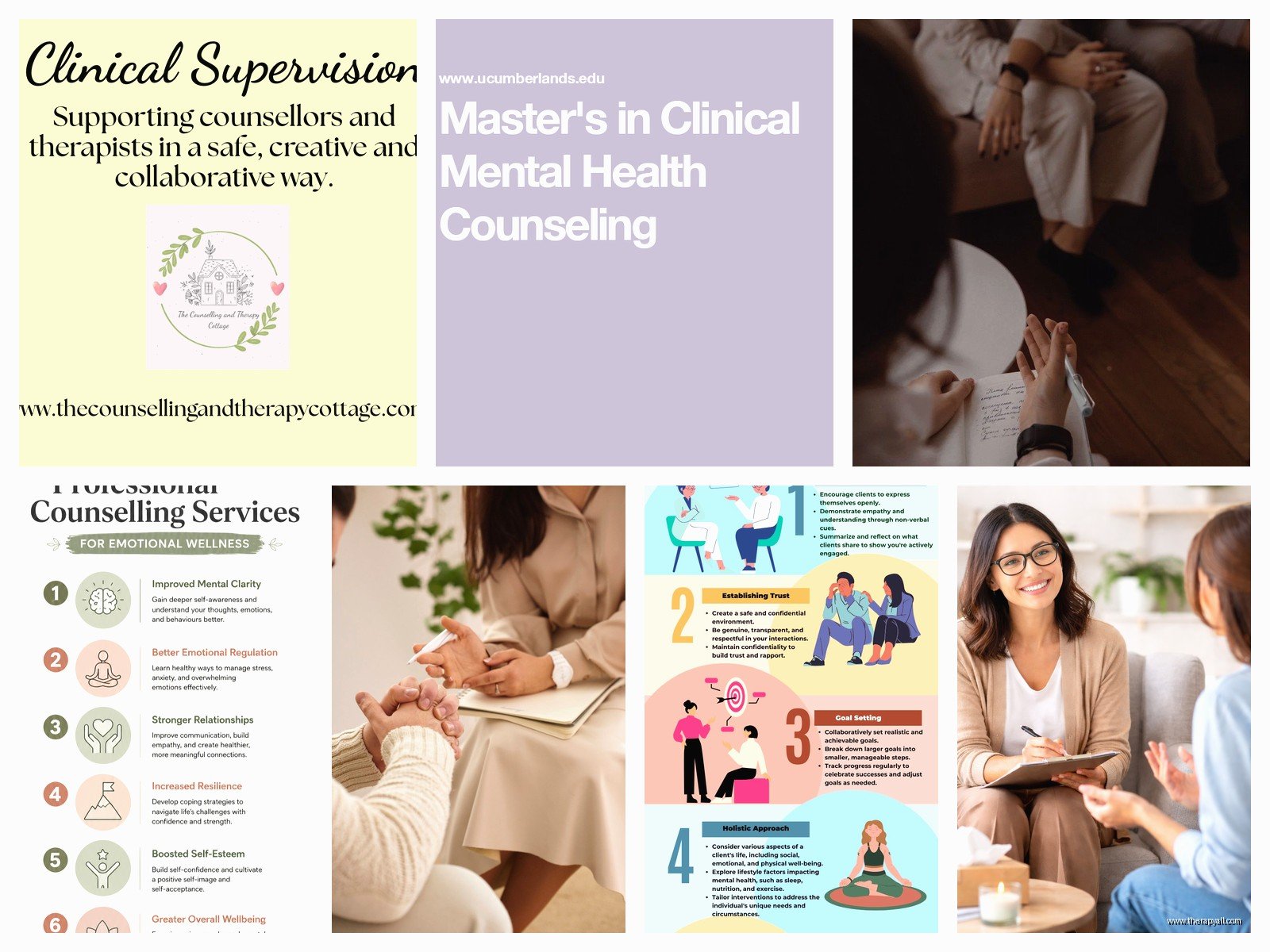
Hospitals and medical centers hire clinical counselors for inpatient psychiatric units, partial hospitalization programs, intensive outpatient programs, and integrated behavioral health in primary care settings. Substance abuse treatment facilities need clinical counselors for individual therapy, group facilitation, and treatment planning.
Schools and universities employ clinical counselors, though this is different from school counselors who focus on academic and career guidance. College counseling centers are dealing with unprecedented demand for mental health services. Correctional facilities, the VA system, employee assistance programs, and crisis intervention centers all employ clinical counselors.
Telehealth has transformed the field. You can now work for platforms like BetterHelp or Talkspace, though the pay structure and caseload expectations are… let’s just say there are strong opinions in the professional community about whether these platforms are good for counselors or clients.
The Business Side of Clinical Counseling
If you go into private practice, you’re running a small business whether you like it or not. That means handling scheduling, billing, insurance credentialing, HIPAA-compliant documentation, marketing, continuing education, liability insurance, taxes, and possibly hiring and supervising other clinicians.
Insurance panels are their own special nightmare. Getting credentialed takes months, the reimbursement rates are often insultingly low, and the administrative burden of authorizations and claims is substantial. Many counselors are moving to cash-pay or out-of-network models, which improves income but limits accessibility for clients who can’t afford $150-250 per session.
Documentation requirements are extensive. You’re writing intake assessments, treatment plans, progress notes for every session, treatment plan reviews, discharge summaries, and potentially letters for clients needing documentation for work or school accommodations. Electronic health record systems help but they’re also clunky and expensive.
The average salary for clinical counselors varies wildly by setting and location. Community mental health might pay $40,000-55,000 for a newly licensed counselor. Hospital settings often pay better, $55,000-75,000. Private practice income depends entirely on how many clients you see, your rates, and your expenses, but experienced counselors in private practice can make $75,000-120,000 or more.
Common Challenges in the Field
Burnout is real and pervasive. You’re holding space for people’s trauma, grief, anxiety, and pain for 6-8 hours a day. Even with good boundaries and self-care, vicarious trauma accumulates. The administrative burden compounds this—you’re not just doing therapy, you’re documenting, dealing with insurance companies, managing crises, and staying on top of continuing education.
Caseload management gets tricky. In community mental health settings, counselors might carry 40-60 active clients, which is honestly too many to provide quality care but that’s what the funding structure demands. In private practice you have more control but then you’re balancing income needs with sustainable caseload numbers.
The emotional labor of the work doesn’t stop when the session ends. You’re thinking about clients between sessions, worrying about the suicidal client, wondering if you’re making progress with the person who’s been stuck for months, processing your own reactions to difficult material.
Imposter syndrome hits hard in this field. You’re dealing with complex human problems that don’t have clear solutions, and there’s always gonna be uncertainty about whether you’re helping or not. The clients who ghost suddenly, the ones who don’t improve despite your best efforts, the moments where you genuinely don’t know what to say—those stick with you.
Continuing Education and Professional Development
Every state requires continuing education to maintain licensure, typically 20-40 hours every two years. You need specific hours in ethics, cultural competency, and sometimes suicide prevention or domestic violence. Beyond meeting requirements, staying current with research and new treatment approaches is essential.
Many counselors pursue additional certifications in specialized areas. You might get certified in EMDR, become a certified clinical trauma professional, get training in perinatal mental health, or become a certified sex therapist. These certifications require additional coursework, supervised practice, and examinations.
Supervision and consultation groups help you process difficult cases and get feedback. Even after you’re fully licensed, having a peer consultation group or regular supervision is valuable. You need somewhere to talk about the work that isn’t your personal therapy or your partner at home.
Professional organizations like the American Counseling Association, American Mental Health Counselors Association, and state-level counseling associations provide resources, advocacy, networking, and continuing education opportunities. Membership isn’t required but it’s useful.
Ethical Considerations and Boundaries
Clinical counselors follow the ACA Code of Ethics, which covers confidentiality, informed consent, boundaries, competence, and professional responsibility. You’re navigating dual relationships, managing boundaries around self-disclosure, maintaining confidentiality while meeting mandatory reporting requirements for child abuse or imminent danger.
The limits of confidentiality get complicated. You must break confidentiality if there’s serious threat of harm to self or others, suspected child or elder abuse, or in some states if you become aware of abuse of a vulnerable adult. Court orders can compel you to release records. Clients need to understand these limits from the beginning.
Boundary issues come up constantly. What do you do when you run into a client at the grocery store? How much do you self-disclose? Can you accept a small gift from a client? Is it okay to look up a client on social media? These questions don’t always have clear answers and you’re making judgment calls based on what serves the therapeutic relationship.
Cultural competence and social justice are increasingly central to ethical practice. You need ongoing education about working with diverse populations, examining your own biases, understanding systemic oppression, and advocating for clients at individual and systemic levels. The field is reckoning with its historically white, Western, individualistic assumptions about mental health.
ADHD & Neurodiversity
Life Planner Bundle – Life Organizer
Self-Care & Personal Growth
Acceptance And Commitment
Anxiety & Stress
Stress Processing Journal & Reflection Worksheets For Daily Self – Care
Self-Care & Personal Growth
Self – Reflection Guided Journal With Guided Prompts 30
Emotional Wellness
Decision Processing – Thought Processing Journal For Daily Self – Care
Therapist Resources
Physiotherapist Journal PDF Planner Tracker Or Log Book
Self-Care & Personal Growth
Customizable Self – Confidence & Self – Esteem Guided Journal
ADHD & Neurodiversity
ADHD Behavior Tracker PDF Planner Tracker Or Log Book