
Mental Health, Therapy resources
Daily Therapy – Everything You Need to Know

Jun
# Daily Therapy – Everything You Need to Know
Daily therapy isn’t what most people think it is. You’re not committing to seeing a therapist seven days a week (which would be expensive and honestly kind of exhausting for everyone involved). It’s more about building a consistent practice of mental health work into your routine, whether that’s through apps, exercises, journaling, or yeah, sometimes actual sessions with a professional.
## 1. What Daily Therapy Actually Means
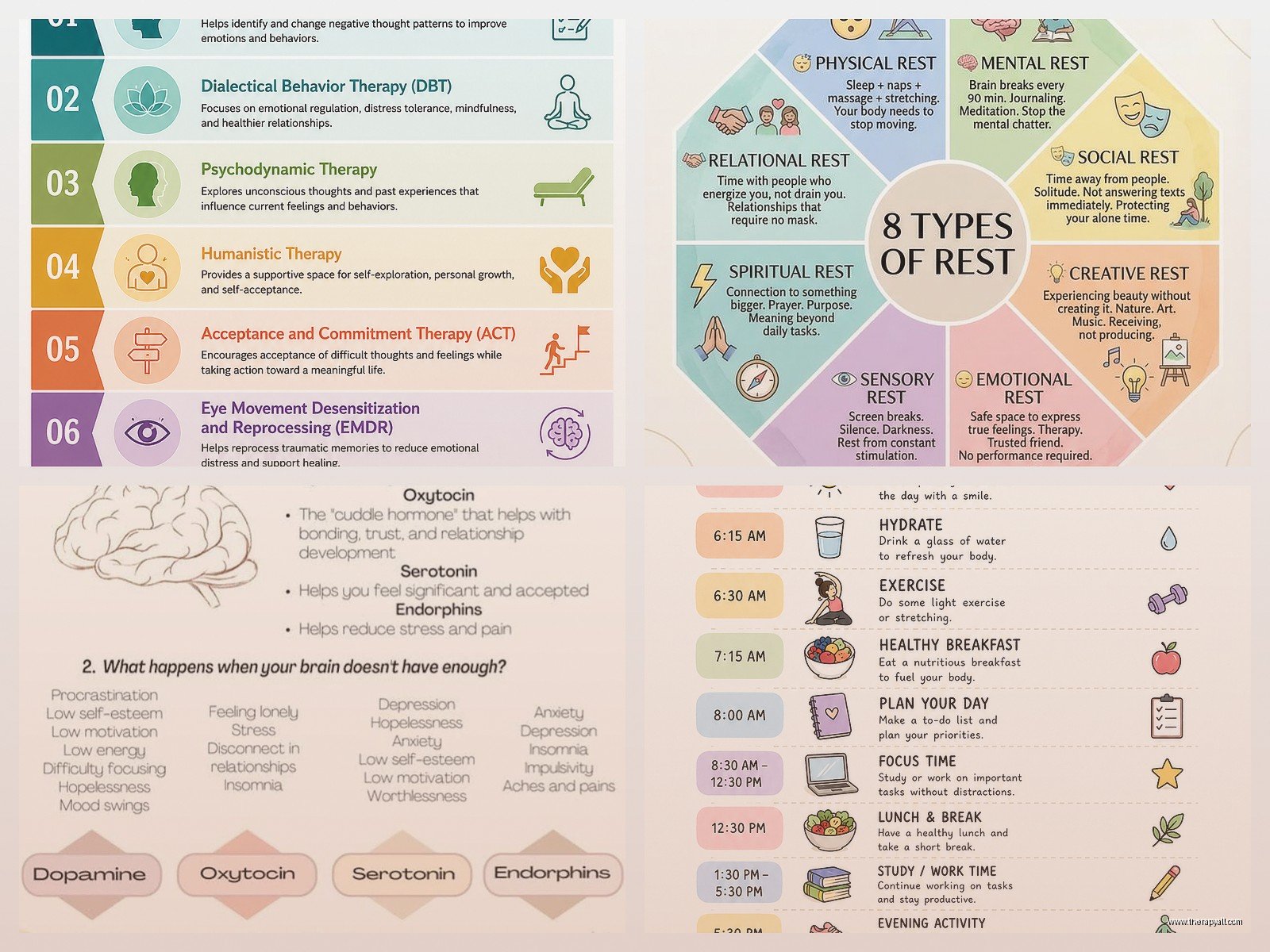
The term gets thrown around to describe everything from therapy apps to self-help routines to literally scheduling daily sessions. Most commonly, people mean some form of structured mental health practice you do every day. This could be 10 minutes of CBT exercises on an app, writing in a specific therapeutic journal format, doing DBT skills practice, or following a guided program.
I remember back in 2021 when I was researching therapy apps for a comparison article and I downloaded like fifteen of them in one weekend. My phone was just screaming at me with notifications to “check in with your feelings” and “complete your daily mood track” and honestly it was the least therapeutic thing ever. But that experience taught me something important: daily therapy only works when you actually want to do it, not when twelve apps are guilt-tripping you.
## 2. The App Landscape
There are dozens of daily therapy apps now. BetterHelp and Talkspace offer messaging with actual therapists, which isn’t quite daily sessions but gives you daily access. Then you’ve got apps like Sanvello, Wysa, Moodfit, and Youper that provide daily exercises, mood tracking, and AI-driven check-ins.
What genuinely annoys me about most of these apps is how they pretend mood tracking alone is therapeutic. You open the app, tap “anxious,” maybe add a note, and then… what? There’s rarely meaningful follow-through or skill-building. It’s just data collection dressed up as therapy. The better apps actually teach you something—like how to challenge a thought or use a grounding technique.
## 3. Structured Programs vs. Free-Form Practice
Some people thrive with a structured daily program. These usually run 6-12 weeks and give you specific exercises each day. They’re based on evidence-based approaches like CBT, ACT, or DBT. You complete module one, then module two, building skills progressively.
Others do better with free-form daily practice where you choose what you need that day. Feeling anxious? Do a grounding exercise. Feeling depressed? Maybe behavioral activation or gratitude work. This requires more self-awareness and knowledge of different techniques, but it’s flexible.
I tend to see people succeed more with structured programs when they’re new to therapy concepts, and free-form works better once you’ve got a toolbox built up and know what actually helps you versus what just sounds nice in theory.
## 4. The Cost Reality
Here’s where it gets tricky. Actual daily therapy sessions with a licensed therapist would run you anywhere from $700 to $2,100+ per week, depending on rates in your area. That’s not realistic for most people, and honestly, most therapists would probably suggest that’s overkill unless you’re in crisis.
Apps range from free (with limited features) to about $60-90 per month for full access. The messaging-based therapy platforms run $260-360 per month typically. Self-directed programs and workbooks might be $20-50 as a one-time purchase.
## 5. What Daily Practice Actually Looks Like
Let’s get practical. A daily therapy routine might include:
– Morning mood check-in (2 minutes)
– One specific exercise or worksheet (10-15 minutes)
– Mindfulness or breathing practice (5-10 minutes)
– Evening reflection or journaling (5-10 minutes)
That’s 22-37 minutes total. Some days you’ll do all of it, some days you’ll do one piece. The consistency matters more than perfection.
You can also batch certain activities. I do thought records whenever I notice I’m spiraling, not on a schedule. But I do gratitude journaling every night because that routine helps me sleep better, which sounds super wellness-blog but actually it just prevents me from lying there catastrophizing about everything.
## 6. Evidence-Based Approaches You Can Do Daily
**CBT (Cognitive Behavioral Therapy):** Daily thought records, behavioral experiments, exposure hierarchies if you’re working on anxiety. You identify negative thoughts, examine evidence, generate alternatives. It’s structured and it works if you actually do it consistently.
**DBT (Dialectical Behavior Therapy):** Skills practice in four areas—mindfulness, distress tolerance, emotion regulation, interpersonal effectiveness. These are concrete skills you can practice daily. TIPP skills for crisis moments, opposite action for emotion regulation, DEAR MAN for communication.
**ACT (Acceptance and Commitment Therapy):** Values clarification exercises, defusion techniques, mindfulness practice. Daily work often involves noticing thoughts without getting hooked by them and taking action aligned with your values even when you feel like crap.
**Behavioral Activation:** Scheduling and completing activities that give you a sense of accomplishment or pleasure. Sounds simple, kinda is, but it’s evidence-based for depression.
## 7. The Accountability Problem
One thing about daily therapy practice—you need some form of accountability or you’ll just stop doing it after week two. Apps provide reminders and streak tracking (which works for some people and stresses out others). Some people do better with a weekly check-in with an actual therapist where you review your daily work.
I’ve found that people who tell someone else about their daily practice—a friend, partner, or online community—tend to stick with it longer. Not because of shame or pressure, but because… I don’t know, actually, or maybe it’s just that saying it out loud makes it feel more real and less like another self-improvement thing you’re gonna abandon.
## 8. When Daily Practice Isn’t Enough
Daily therapy work is supplemental for most people, not replacement-level care. If you’re dealing with severe depression, active suicidal ideation, psychosis, severe trauma, or addiction, you need actual professional treatment. Apps and daily exercises can support that treatment, but they’re not the main event.
There’s this weird narrative in the therapy app world that suggests you can just exercise your way out of mental illness like it’s a weak muscle. That’s not how brain chemistry, trauma, or psychological disorders work. Daily practice helps, sometimes significantly, but it’s not magic.
## 9. Specific Tools Worth Using
**Thought records:** Whether digital or paper, these help you track situations, thoughts, emotions, and evidence. Over time, you start recognizing patterns.
**Mood tracking with context:** Not just “I feel bad” but tracking sleep, exercise, social interaction, and stressors alongside mood. This actually reveals useful information.
**Behavioral activation logs:** Planning activities and rating them for pleasure and accomplishment. Boring but effective for depression.
**Grounding exercises:** 5-4-3-2-1 technique, body scans, breathing exercises. You’ll feel stupid doing them until you’re having a panic attack and they actually work.
**Values exercises:** Identifying what matters to you and whether your daily actions align. This sounds abstract but it helps with motivation and direction.
## 10. The Worksheet Burnout Thing
Summer of 2022 I was writing what felt like seventeen different therapy worksheet roundups and I started actually printing them out and using them myself just to see if they worked. Some did. Most were just… fine. The problem with worksheets is they’re static and your brain gets bored with them.
You’ll need to rotate exercises and approaches. What works this month might feel stale next month. That’s normal. The core principles stay the same (challenging thoughts, behavioral change, mindfulness) but the specific format needs variety or you’ll just go through the motions.
## 11. Building Actual Habits
The research on habit formation is pretty clear—you need a cue, a routine, and a reward. For daily therapy practice:
**Cue:** Tie it to something you already do. Morning coffee, lunch break, before bed.
**Routine:** The actual exercise or practice. Keep it short initially.
**Reward:** This is tricky because the therapeutic benefit isn’t always immediate. Some people use small external rewards (checking off a tracker, allowing themselves something enjoyable afterward). Eventually the reward becomes feeling better, but that takes time.
## 12. The Messaging Therapy Model
BetterHelp, Talkspace, and similar platforms let you message a therapist daily (or close to it). You don’t get daily sessions, but you get daily access. This works well for people who need consistent support but can’t do weekly appointments, or who process better in writing.
The limitations: responses aren’t immediate, the relationship feels different than face-to-face therapy, and some complex issues really do require real-time conversation. But for maintenance, skill reinforcement, and ongoing support, it’s a solid middle ground.
## 13. DIY Daily Therapy Setup
If you want to build your own daily therapy practice without apps:
Get a notebook dedicated to this. Not your regular journal, a specific therapy workbook.
Choose 2-3 core exercises you’ll rotate through. Maybe thought records, behavioral activation, and gratitude.
Set a specific time. I’m gonna be real with you, “whenever I feel like it” doesn’t work for most people.
Track completion somehow. Checkmarks, streak apps, whatever motivates you without creating shame when you miss days.
Review weekly. What helped? What didn’t? Adjust accordingly.
## 14. Group and Community Options
Some people do daily therapy work in online communities or groups. Reddit has various mental health subreddits, there are Discord servers, Facebook groups, and dedicated platforms where people check in daily, share what they’re working on, and support each other.
This adds accountability and reduces isolation, which is huge. My cat literally just knocked over my water bottle while I’m writing this, but honestly the community aspect of mental health work is underrated in most clinical discussions.
## 15. Measuring Progress
You need some way to know if daily therapy is actually helping. Mood tracking over time shows trends. Specific symptom measures (there are validated scales for anxiety, depression, etc.) can be done weekly or monthly. Functional improvements—are you going out more, sleeping better, fighting with your partner less?
Progress isn’t linear, which everyone says but it’s still frustrating when you have a terrible week after three good ones. Daily practice is about building resilience and skills for the long term, not eliminating bad days entirely.
## 16. The Flexibility Factor
Rigid daily therapy routines often fail. Life happens. You get sick, you travel, you have a crisis, you’re just too tired. The goal is consistency over time, not perfection. Missing a day doesn’t erase progress. Missing a week means you start again, not that you failed.
I see this all the time in therapy content—this implicit message that if you’re not doing your mental health work daily you’re somehow not trying hard enough, and that’s just garbage. Some weeks you’ll do daily work, some weeks survival is the work.

ADHD & Neurodiversity
Life Planner Bundle – Life Organizer
Self-Care & Personal Growth
Acceptance And Commitment
Anxiety & Stress
Stress Processing Journal & Reflection Worksheets For Daily Self – Care
Self-Care & Personal Growth
Self – Reflection Guided Journal With Guided Prompts 30
Emotional Wellness
Decision Processing – Thought Processing Journal For Daily Self – Care
Therapist Resources
Physiotherapist Journal PDF Planner Tracker Or Log Book
Self-Care & Personal Growth
Customizable Self – Confidence & Self – Esteem Guided Journal
ADHD & Neurodiversity
ADHD Behavior Tracker PDF Planner Tracker Or Log Book