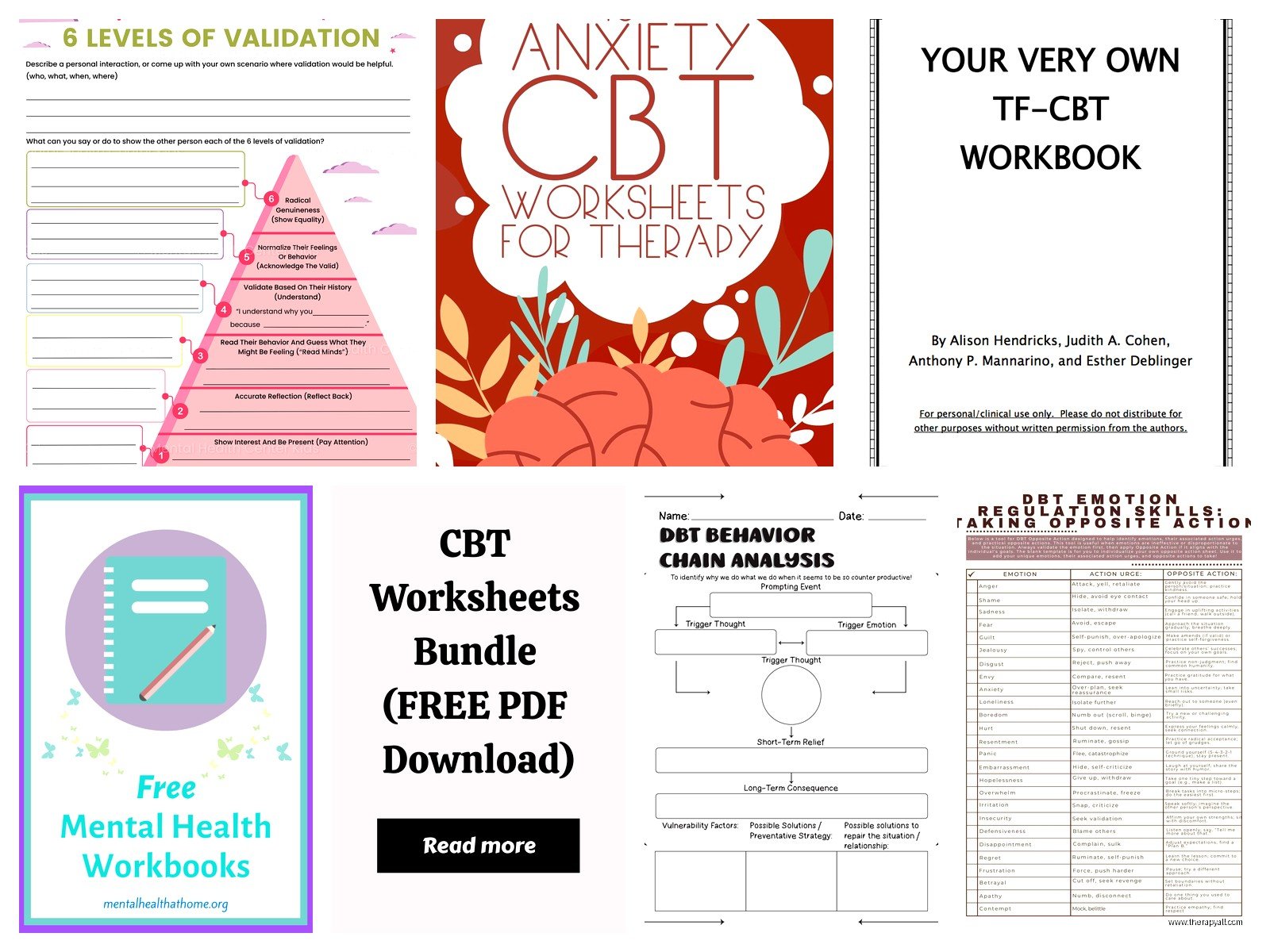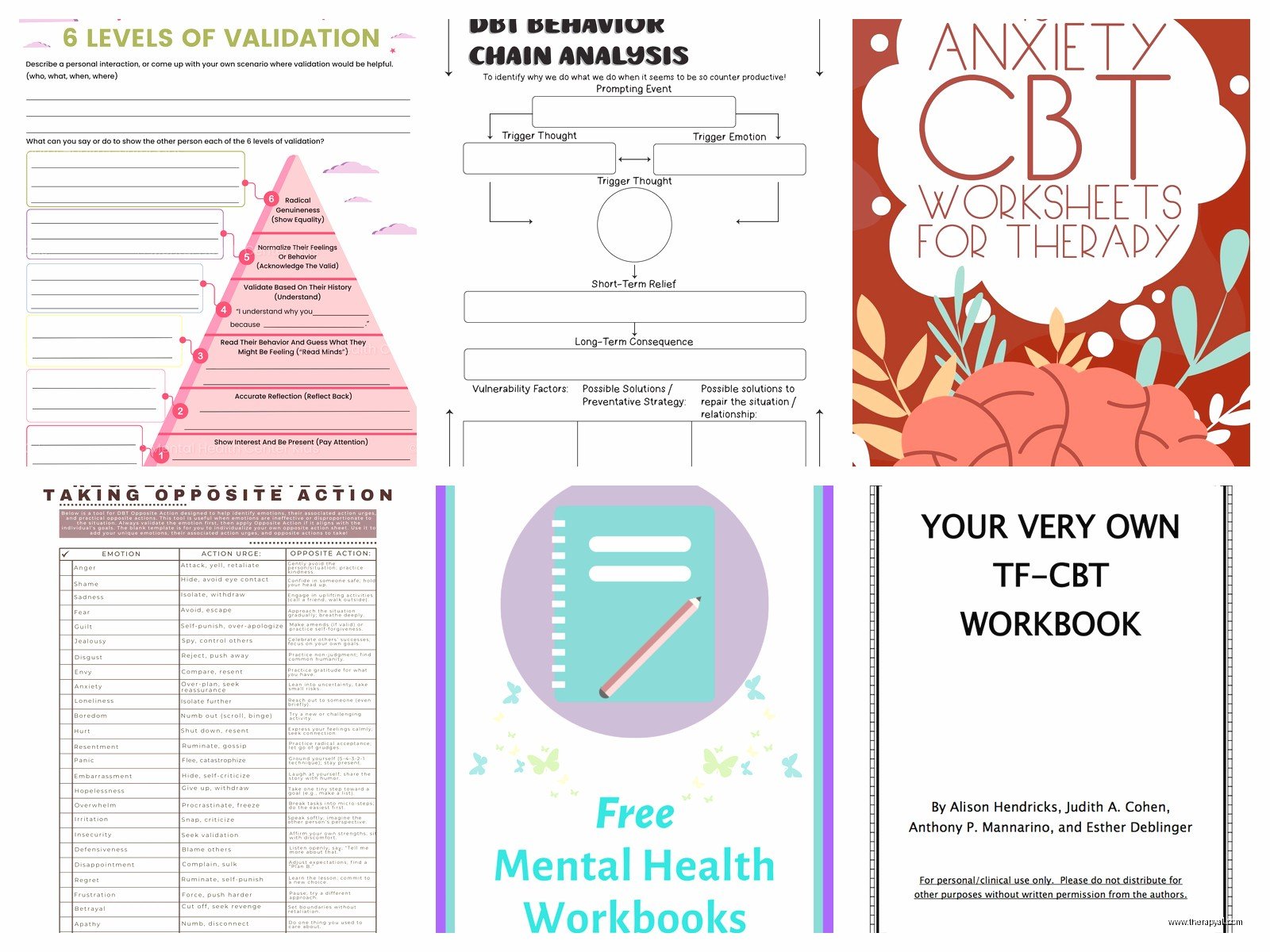
# Understanding DBT Worksheets and Where to Find Them Free
DBT stands for Dialectical Behavior Therapy, developed by Marsha Linehan in the late 1980s specifically for treating borderline personality disorder, though it’s expanded way beyond that now. The therapy combines cognitive-behavioral techniques with mindfulness practices borrowed from Zen Buddhism, which sounds fancy but really just means you’re learning skills to manage overwhelming emotions while also accepting reality as it is.
I remember back in 2019, I was working with a therapist who kept telling me about these worksheet packets she’d printed from some DBT resource site, and I kept putting off actually looking at them because—honestly—worksheets felt like homework, and I was already dealing with enough. But then I actually sat down with one during a particularly rough week and realized they’re not about being graded or doing things “right.” They’re structured thinking tools.
The four main modules in DBT are mindfulness, distress tolerance, emotion regulation, and interpersonal effectiveness. Each module has its own set of skills, and worksheets help you practice those skills outside of therapy sessions. You can read about DBT all day long, but if you’re not actually tracking your emotions or practicing the STOP skill when you’re dysregulated, it’s kinda like reading about swimming without getting in the water.
## The Core Modules and Their Worksheets
Mindfulness Worksheets
Mindfulness in DBT isn’t about achieving some blissed-out state. It’s about observing what’s happening right now without judgment. The “What” skills are observe, describe, and participate. The “How” skills are non-judgmentally, one-mindfully, and effectively.
Common mindfulness worksheets include observation logs where you track what you noticed through your five senses, thought records where you separate facts from interpretations, and wise mind worksheets that help you balance emotion mind and reasonable mind. That last one is crucial because most of us swing between being completely ruled by feelings or trying to logic our way through everything while ignoring how we actually feel.
You’ll find worksheets that walk you through the “observing your breath” exercise with spaces to note what distracted you and how you brought your attention back. Others focus on describing emotions without judgment—writing “I feel angry” instead of “I’m being ridiculous” or “this situation is stupid.”
Distress Tolerance Worksheets
This is the crisis survival stuff. When you’re in acute distress and your usual coping isn’t working, these skills keep you from making things worse. The main techniques are TIPP (Temperature, Intense exercise, Paced breathing, Paired muscle relaxation), self-soothing through the five senses, IMPROVE the moment, and pros and cons.
Worksheets here are pretty action-oriented. You might have a TIPP tracking sheet where you record what you tried and how effective it was. Self-soothing worksheets often have you list specific things for each sense—what music calms you, what textures feel good, what scents ground you. My cat actually ended up on my self-soothing list under “touch” because petting her when I’m overwhelmed does help, even though she’s kind of an asshole about it.
The radical acceptance worksheets are harder to work with because they’re asking you to accept painful reality without trying to change it or pretend it’s not happening. There’s usually space to identify what you’re fighting against, what suffering that fighting is causing, and what accepting (not approving, just accepting) might look like.
Emotion Regulation Worksheets
This module is about understanding and changing emotional responses. You learn to identify what you’re feeling, understand what triggered it, and either reduce the intensity or shift to a different emotion when the current one isn’t helpful.
The ABC PLEASE worksheet is everywhere in DBT resources—it covers Accumulating positive experiences, Building mastery, Coping ahead, and the PLEASE skills (treating Physical iLlness, balanced Eating, avoiding mood-Altering substances, balanced Sleep, and Exercise). It’s basically a daily check-in that helps you build emotional resilience.
Emotion tracking sheets are fundamental here. You record the prompting event, your interpretation, physical sensations, urges, actions, and aftereffects. It sounds like a lot but once you do it a few times, you start seeing patterns. Oh, I always interpret neutral texts from my boss as criticism. Oh, I always get that tight chest feeling before I shut down completely.
Opposite action worksheets guide you through doing the opposite of your emotional urge when the emotion doesn’t fit the facts or isn’t effective. If you’re feeling shame about something that wasn’t actually wrong, the opposite action is to engage with people instead of hiding. If you’re angry but the situation doesn’t warrant it, the opposite action is to gently avoid or be kind instead of attacking.
Interpersonal Effectiveness Worksheets
These teach you how to ask for what you need, say no, and maintain relationships while respecting yourself. The main acronyms are DEAR MAN (for making requests or saying no), GIVE (for maintaining relationships), and FAST (for self-respect).
DEAR MAN stands for Describe, Express, Assert, Reinforce, stay Mindful, Appear confident, Negotiate. Worksheets break down each component with space to plan out a difficult conversation. You write exactly what you’ll say, what you’re asking for, what you can offer in return, how you’ll handle if the person gets defensive or tries to change the subject.
What genuinely annoys me about a lot of free DBT worksheets online is they’ll slap the DEAR MAN acronym on a sheet with blank lines and call it done. That’s not helpful if you don’t already know the skill inside and out. Good worksheets include examples, prompts, and space to practice multiple scenarios.
## Where to Actually Find Free DBT Worksheet PDFs
Official and Clinical Sources
Behavioral Tech, which is Marsha Linehan’s training organization, offers some free resources on their website, though their full worksheet packets are part of paid training materials. The handouts and worksheets from the actual DBT skills training manual are copyrighted, so truly “official” free versions are limited.
Many university counseling centers and hospital-based DBT programs post free client handouts. University of Washington, where DBT was developed, has some materials available. Mental health departments at teaching hospitals often have PDF resources they’ve created based on DBT principles.
GoodTherapy and Psychology Today sometimes host articles with downloadable worksheets, though you gotta check the quality because some are written by people who… well, let’s just say not everyone writing about DBT has actually been trained in it or used it extensively.
Mental Health Organizations and Nonprofits
The National Education Alliance for Borderline Personality Disorder (NEABPD) has resource sections with skill sheets. NAMI chapters sometimes compile local resources including DBT worksheets.
Mental health nonprofits in Canada, the UK, and Australia often have excellent free resources. The Centre for Addiction and Mental Health (CAMH) in Toronto has some solid materials. Mind in the UK has published guides with practical exercises.
I spent basically all of summer 2021 reviewing worksheet collections for a series I was writing, and I started noticing that the international resources were often better designed than American ones—clearer language, less jargon, more white space on the page so they didn’t feel overwhelming to look at.
Therapist Blogs and Educational Sites
Individual therapists who specialize in DBT often share worksheets they’ve created. These can be really good because they’re road-tested with actual clients, but the design quality varies wildly. I’ve downloaded PDFs that were clearly made in Word 2003 with clip art, and others that were beautifully formatted and immediately usable.
DBT Self Help is a popular website run by someone who went through DBT and created resources based on that experience. The worksheets are free and cover all four modules, though they’re explicitly not a replacement for actual therapy.
Therapist Aid has a large collection of free therapy worksheets, including DBT-specific ones. You can filter by technique and presenting problem. The quality is generally good, though some worksheets are simplified versions of the clinical originals.
Reddit and Online Communities
The r/dbtselfhelp subreddit has a resource wiki with links to free PDFs. People share what’s worked for them, and you can ask questions about how to use specific worksheets. The community is generally helpful though you’ll occasionally see someone confidently explaining a skill completely wrong, which is… not ideal.
Facebook groups dedicated to DBT often have files sections with member-uploaded worksheets. These are hit or miss in terms of accuracy and usefulness, but sometimes you find gems that aren’t available anywhere else.
Educational Platforms and Apps
Coursera and other MOOC platforms sometimes include downloadable materials with their psychology courses. If there’s a DBT-related course, the supplementary PDFs are usually free even if you don’t pay for the certificate.
Apps like DBT Coach and DBT Diary Card have companion PDFs you can print. Some content requires purchase, but they typically offer sample worksheets free.
YouTube therapists often link to free worksheet PDFs in their video descriptions. Kati Morton, Dr. Fox, and similar channels have DBT explainer videos with downloadable resources, though I find some of them oversimplify the skills to the point where they’re not as effective.
## What to Look for in Quality DBT Worksheets
The worksheet should clearly state which skill it’s teaching and which module it belongs to. If you’re picking up a random PDF and it just says “emotion worksheet,” that’s not specific enough.
Good worksheets have instructions or prompts, not just blank spaces. “Describe the prompting event” is better than just a line labeled “event.” Even better is “Describe the prompting event—what happened right before the emotion started? Include only observable facts, not interpretations.”
Check that the worksheet matches the actual DBT skill as taught in clinical settings. Some free resources are “DBT-inspired” or “based on DBT principles” which means they’ve taken liberties with the original material. That’s not necessarily bad, but you should know what you’re getting.
The format should be actually usable. I’ve downloaded worksheets that had tiny font, weird margins, or so many questions crammed on one page that there’s no room to write thoughtful answers. If a worksheet stresses you out just looking at it, it’s not gonna be helpful when you’re already dysregulated.
## How to Use DBT Worksheets Effectively
Start with one module and one or two skills within that module. Don’t download 47 different worksheets and try to do them all at once. That’s a recipe for getting overwhelmed and giving up, which I see people do constantly in online communities.
Fill them out when you’re relatively calm first, as practice. If the first time you try to use a distress tolerance worksheet is during a crisis, you’re gonna struggle with it because you’re learning the skill AND managing overwhelming emotions simultaneously.
You don’t have to fill out every single section of a worksheet. If a particular prompt doesn’t apply or isn’t helpful for you, skip it. The worksheets are tools, not tests. There’s no worksheet police gonna show up because you left section 4B blank.
Keep your completed worksheets somewhere you can review them. You’ll start seeing patterns in your triggers, effective strategies, and—wait, I think I’m repeating myself from earlier, but the point stands. The data you collect about yourself is valuable.
Consider using the same worksheet multiple times for the same type of situation. If you struggle with saying no at work, fill out a DEAR MAN worksheet for three different scenarios. You’ll get better at the skill through repetition.
## The Limits of Worksheets
Worksheets alone aren’t therapy. They’re homework between sessions or tools for maintaining skills you learned in actual DBT treatment. If you’re in crisis or dealing with serious mental health symptoms, you need professional support, not just PDFs.
Some skills are harder to learn from worksheets than others. Mindfulness practices often need guided instruction at first. Interpersonal effectiveness skills benefit from role-playing and feedback. You can absolutely start with worksheets, but recognize when you need more structured support.
The worksheet might not match your specific situation perfectly, and that’s okay. Adapt it. Cross out questions that don’t fit and write in your own. The structure is there to help you think through the skill, not to constrain you into someone else’s exact process.