
Mental Health, Therapy resources
Depression Therapist Aid – Complete Guide & Resources

Jul
Depression therapist aid refers to structured tools, worksheets, resources, and techniques that mental health professionals use to support clients working through depressive symptoms. These aren’t magic fixes or replacements for actual therapy—they’re supplementary materials that help clients track mood, challenge cognitive distortions, build behavioral activation plans, and maintain progress between sessions.
I remember back in 2021, I was compiling resources for a big mental health platform and realized how many therapists were just… winging it with Google Docs templates they’d cobbled together. Not because they weren’t skilled, but because finding quality, evidence-based materials that didn’t look like they were designed in 1997 was genuinely hard.
What Actually Counts as Depression Therapist Aid
The term covers a pretty broad range of materials. You’ve got cognitive-behavioral therapy worksheets that help identify automatic negative thoughts. There are behavioral activation schedules where clients plan activities to counter the withdrawal and isolation depression causes. Mood tracking logs, thought records, problem-solving worksheets, safety planning documents for crisis situations.
Some aids are psychoeducational—explaining what depression is, how it affects the brain, why certain symptoms happen. Others are interactive tools clients complete during or between sessions. The best ones are specific enough to be useful but flexible enough that therapists can adapt them to individual client needs.
What annoys me is when people—especially wellness influencers—act like a gratitude journal is “depression therapy.” Nah. That’s not how this works. Clinical depression isn’t fixed by listing three things you’re thankful for every morning, and conflating self-help with actual therapeutic intervention does a disservice to people who need real treatment.
Core Categories of Depression Aids
Cognitive Restructuring Tools
These help clients identify and challenge distorted thinking patterns. The classic thought record has columns for: situation, automatic thought, emotion, evidence for the thought, evidence against the thought, and balanced alternative thought. Sounds simple, but it’s incredibly effective when used consistently.
You might also see cognitive distortion checklists—things like all-or-nothing thinking, overgeneralization, mental filtering, catastrophizing. Clients learn to recognize their patterns. Some therapists use Socratic questioning guides to help clients examine their thoughts more critically without feeling attacked or invalidated.
Behavioral Activation Materials
Depression kills motivation and makes everything feel pointless. Behavioral activation operates on the principle that action precedes motivation, not the other way around. You schedule activities—even tiny ones—and do them regardless of how you feel, which gradually improves mood and energy.
Activity scheduling worksheets let clients plan their week with a mix of necessary tasks, pleasurable activities, and accomplishment-oriented goals. There are also pleasure and mastery logs where you rate activities on how much enjoyment and sense of achievement they provided. This helps identify what actually helps versus what just fills time.
I’ve seen versions that include “values clarification” sections where clients connect activities to their core values, which… okay, it can help with motivation, but sometimes people just need to take a shower and we don’t need to make it a philosophical exercise.
Mood Monitoring Systems
Tracking mood helps identify patterns, triggers, and what interventions actually work. Simple mood logs have clients rate their mood 1-10 at set times daily, along with notes about activities, sleep, medications, or significant events.

More detailed versions track multiple variables: mood, anxiety level, sleep quality, medication adherence, exercise, social contact. Some include space to note automatic thoughts or coping strategies used. The data becomes incredibly valuable for spotting trends—like mood consistently dropping on Sundays, or improving after exercise even when clients don’t feel like it’ll help.
My cat knocked over my coffee onto a stack of printed mood logs last month and I was unreasonably upset about it, which probably says something about my own stress levels but whatever.
Evidence-Based Worksheet Resources
Therapist Aid (the actual website, therapistaid.com) is probably the most well-known resource. They offer hundreds of free worksheets organized by topic and therapeutic approach. The depression section includes CBT thought records, behavioral activation planners, psychoeducation handouts, and relaxation scripts. Quality is generally solid, design is clean, and everything’s available in PDF format.
Psychology Tools has both free and paid resources. Their paid subscription gets you editable versions and access to their full library, which is extensive. The materials are evidence-based and professionally designed. They also offer translations in multiple languages, which is actually useful unlike the… okay, I’m gonna stop before I rant about poorly translated mental health materials.
The Beck Institute provides resources specifically for cognitive therapy, including thought records and activity schedules based on Aaron Beck’s original CBT protocols. These are more academic and less visually polished, but they’re solid clinical tools.
Get.gg (formerly GG Therapy) offers interactive digital worksheets that clients can complete on their phones or computers. Results can be shared with therapists. The platform includes CBT exercises, DBT skills, and depression-specific modules. It’s subscription-based but has a modern interface that some clients prefer over paper worksheets.
Safety Planning and Crisis Resources
For clients with depression severe enough to include suicidal ideation, safety planning documents are essential. The Stanley-Brown Safety Plan is the gold standard—it’s a one-page document clients complete collaboratively with their therapist that includes: warning signs, internal coping strategies, people and social settings that provide distraction, people to ask for help, professionals to contact, and means restriction strategies.
This isn’t a “no-suicide contract” (those don’t work and most ethical guidelines now recommend against them). It’s a practical crisis response plan. You keep copies accessible—in your phone, wallet, bedside table.
Crisis hotline information should be included on most depression resources: 988 Suicide and Crisis Lifeline in the US, Crisis Text Line (text HOME to 741741), local emergency numbers. Some worksheets include a “reasons for living” inventory, though I’ve seen mixed results with this—for some clients it’s grounding, for others it feels invalidating when they’re in crisis.
Psychoeducation Materials
Explaining how depression works helps reduce shame and normalize symptoms. Good psychoeducation handouts cover: common symptoms, the biological basis of depression (neurotransmitter function, brain regions involved), how depression affects thinking and behavior, treatment options, and what to expect from therapy.
Some resources explain the cognitive model—how thoughts, feelings, and behaviors interact. Others cover the difference between sadness and clinical depression, or address common myths like “depression is just weakness” or “antidepressants change your personality.”
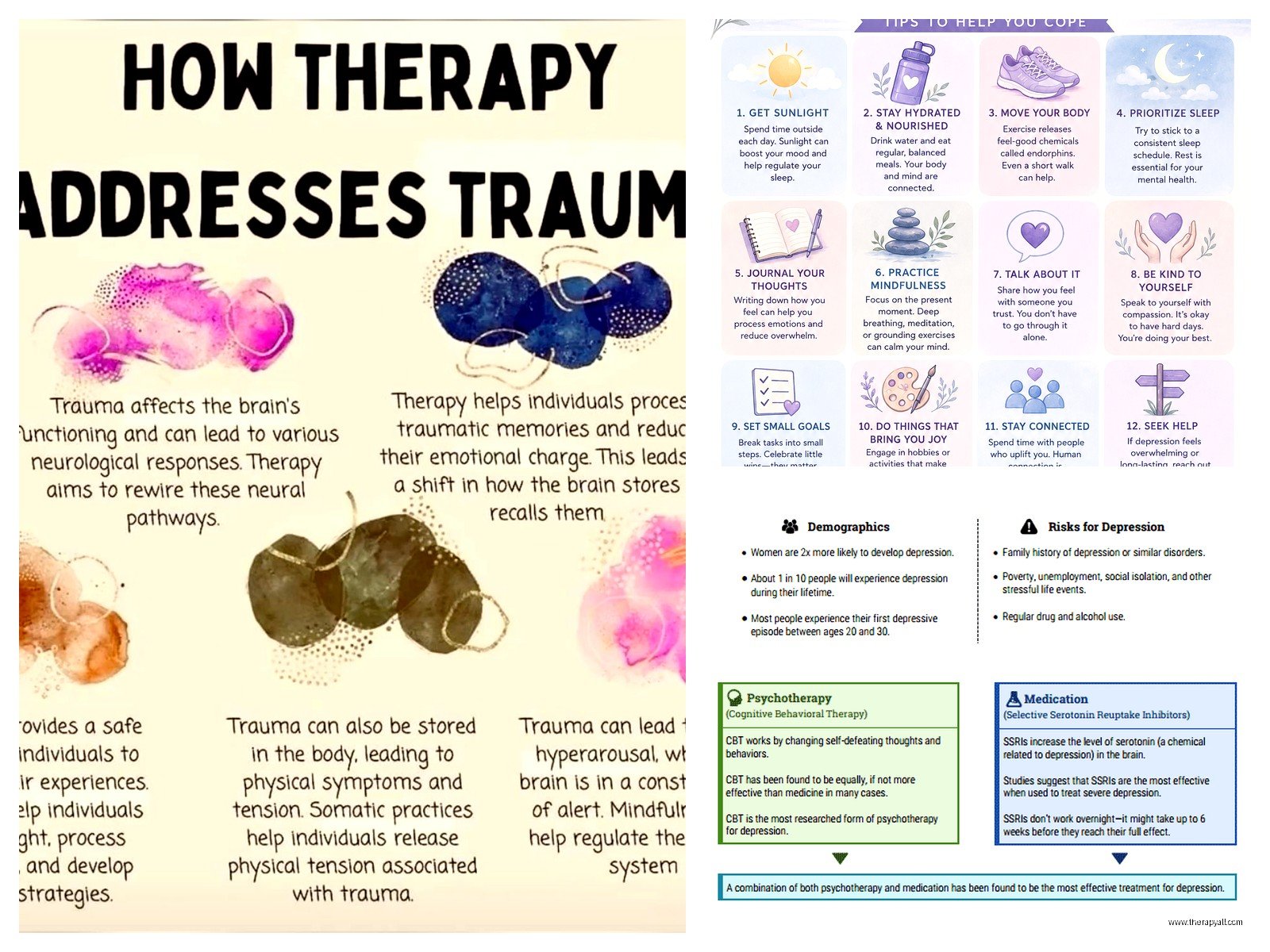
I remember a client in 2019 who kept insisting they didn’t have “real” depression because they could still go to work, and I had to pull up like four different psychoeducation sheets explaining that high-functioning depression is absolutely a thing and—sorry, got distracted. The point is that education reduces self-blame and helps clients understand their treatment rationale.
Specialized Tools for Different Approaches
DBT-Informed Resources
While DBT was developed for borderline personality disorder, many skills help with depression, especially emotional regulation and distress tolerance. TIPP skills (Temperature, Intense exercise, Paced breathing, Paired muscle relaxation) help manage acute emotional distress. PLEASE skills (treat PhysicaL illness, balance Eating, avoid mood-Altering substances, balance Sleep, get Exercise) address basic self-care that depression often disrupts.
Opposite action worksheets help clients act opposite to depressive urges—when depression says isolate, you reach out; when it says stay in bed, you get up. This isn’t toxic positivity, it’s a specific behavioral intervention.
ACT-Based Materials
Acceptance and Commitment Therapy resources focus on psychological flexibility, values clarification, and committed action even in the presence of difficult emotions. You’ll see exercises on cognitive defusion (relating to thoughts differently rather than trying to change them), acceptance of uncomfortable internal experiences, and identifying valued directions.
The Bulls-Eye worksheet helps clients identify their values across life domains and rate how consistently they’re living according to those values. Values cards or lists help clients articulate what matters most to them, which then informs goal-setting.
Interpersonal Therapy Tools
IPT focuses on how relationship patterns and life transitions contribute to depression. Resources might include interpersonal inventory worksheets that map out important relationships and identify conflicts or deficits, role transition exercises for major life changes, or communication skills handouts.
Digital and App-Based Resources
Several apps provide depression-specific tools that function as therapist aids. Moodpath asks daily questions about depressive symptoms and generates reports clients can share with therapists. Sanvello combines mood tracking with CBT and mindfulness exercises. What Works offers a database where you track interventions and their effectiveness.
These aren’t therapy replacements, but they can supplement treatment. The advantage is accessibility—clients have tools available 24/7. The disadvantage is that app quality varies wildly and many lack evidence basis or… honestly, some are just data-harvesting schemes with a mental health veneer, which is deeply unethical but that’s a whole other issue.
Adapting Resources for Different Populations
Standard worksheets often assume a certain reading level, cultural context, and life situation. You need adapted materials for adolescents, older adults, people with cognitive impairments, non-English speakers, and different cultural backgrounds.
Teen-focused resources use age-appropriate language and examples relevant to school, peer relationships, and identity development. Materials for older adults might address grief, retirement transitions, chronic illness, and social isolation specific to aging.
Cultural adaptation means more than translation. It requires understanding how different cultures conceptualize mental health, express distress, and view help-seeking. Some cultures emphasize collective wellbeing over individual feelings, which affects how you frame interventions.
Creating Custom Materials
Sometimes existing resources don’t fit your client’s needs and you gotta make your own. I spent summer 2020 creating customized worksheets for clients with specific phobias around medical settings (hello, pandemic) and realized that sometimes the most effective tools are the scrappy ones you sketch out in session.
When creating custom aids, keep language simple and direct. Include clear instructions. Leave adequate space for writing. Use formatting that’s easy to read—good contrast, reasonable font size, organized layout. Include your contact information if it’s a resource clients keep.
You can combine elements from different approaches. A worksheet might have CBT thought challenging plus a behavioral activation component plus a mindfulness exercise. The goal is functionality, not theoretical purity.
Implementation Strategies
Having resources means nothing if they’re not used effectively. Introduce worksheets collaboratively—explain the rationale, complete the first one together in session, address any concerns. Don’t just hand someone a thought record and expect them to figure it out.
Review completed worksheets in session. This shows you value the work and helps clients process what they learned. It also lets you correct misunderstandings—like when clients catastrophize about their catastrophizing and you have to gently redirect.
Start simple. One mood log is better than five complex worksheets that overwhelm the client. You can always add more tools as clients develop skills and confidence.
Some clients love worksheets and find them grounding. Others find them tedious or anxiety-provoking. That’s fine. These are tools, not requirements. If a client consistently doesn’t complete homework, explore why rather than pushing harder. Maybe they need different resources, or maybe between-session work isn’t appropriate for their current functioning level.
Ethical Considerations
Don’t use worksheets as a substitute for actual therapeutic relationship and clinical judgment. A client in crisis needs immediate intervention, not a safety planning worksheet they complete alone. Resources support therapy; they don’t replace it.
Ensure materials are evidence-based or clearly labeled as experimental. Don’t distribute resources promoting pseudoscience or potentially harmful interventions. Yes, this means being critical of some popular mental health content even when it’s well-intentioned.
Consider accessibility. Can clients with visual impairments use your materials? What about people with limited literacy? Are your digital resources compatible with screen readers? Accessibility isn’t an afterthought; it’s an ethical obligation.
Respect client autonomy. If someone doesn’t want to use a particular tool, explore alternatives rather than insisting. Therapy works best when collaborative, not prescriptive.
ADHD & Neurodiversity
Life Planner Bundle – Life Organizer
Self-Care & Personal Growth
Acceptance And Commitment
Anxiety & Stress
Stress Processing Journal & Reflection Worksheets For Daily Self – Care
Self-Care & Personal Growth
Self – Reflection Guided Journal With Guided Prompts 30
Emotional Wellness
Decision Processing – Thought Processing Journal For Daily Self – Care
Therapist Resources
Physiotherapist Journal PDF Planner Tracker Or Log Book
Self-Care & Personal Growth
Customizable Self – Confidence & Self – Esteem Guided Journal
ADHD & Neurodiversity
ADHD Behavior Tracker PDF Planner Tracker Or Log Book