
Mental Health, Therapy resources
Finding a Good Therapist: A Step-by-Step Guide to the Right Fit

Jul
Know What You’re Actually Looking For
Before you start Googling therapists or scrolling through Psychology Today profiles at 2am, you need to figure out what you’re trying to fix or understand. This sounds obvious but I’ve watched people book consultations with five different therapists and then realize they were looking for a life coach, not a clinician. Or they wanted medication management but kept booking talk therapists.
Write down what’s happening. Not like journaling—I mean literally list the problems. “I can’t sleep,” “I panic in meetings,” “my marriage is falling apart,” “I think about dying sometimes.” Be specific. The more concrete you are, the easier it is to find someone who actually works with that issue.
Different therapists specialize in different things, and this matters way more than people think. Someone who’s great with anxiety might be completely lost when it comes to complex trauma. A couples therapist isn’t automatically good at individual depression work. I remember back in 2019 I was writing these therapist directory guides and kept seeing profiles that claimed to treat literally everything—ADHD, eating disorders, OCD, PTSD, relationship issues, grief, addiction, bipolar disorder. Nobody is good at everything. It annoyed the hell out of me because it made it harder for people to figure out who actually specialized in what they needed.
Understand the Different Types of Therapy
You don’t need to become an expert, but knowing the basics helps you filter. CBT (Cognitive Behavioral Therapy) is super common and focuses on changing thought patterns and behaviors. It’s structured, often shorter-term, works well for anxiety and depression. DBT (Dialectical Behavior Therapy) is for emotion regulation—originally designed for borderline personality disorder but now used for lots of things. Psychodynamic therapy digs into your past and unconscious patterns. EMDR is specifically for trauma processing.
Then there’s stuff like ACT (Acceptance and Commitment Therapy), narrative therapy, somatic therapy, IFS (Internal Family Systems). Some therapists are eclectic and pull from multiple approaches, which can be good or just means they don’t really have a solid foundation in anything, honestly it depends.
I’m not gonna lie, when I first started writing about this stuff I had to keep a cheat sheet because the acronyms all blurred together. My cat knocked over my coffee on it once and I had to rewrite the whole thing.
Figure Out the Practical Stuff First
This is the boring part but it eliminates like 60% of your options immediately, which actually makes the search easier.
Insurance or out-of-pocket? If you’re using insurance, you’re limited to in-network providers. Call your insurance company or check their online directory. Those directories are often outdated though—I’d say half the therapists listed aren’t actually accepting new clients or have moved or don’t take that insurance anymore. You’ll need to verify directly.
Out-of-pocket costs range wildly. In big cities, you’re looking at $150-$300 per session typically. Some therapists offer sliding scale spots, but those fill up fast. If cost is a barrier, look into community mental health centers, university training clinics, or therapists who are newly licensed (they’re often cheaper and honestly sometimes more current on research than people who graduated 20 years ago).
Location matters. In-person or telehealth? Telehealth expanded massively during COVID and a lot of people prefer it now. I do think there’s something different about being in a room with someone, but telehealth is way more accessible if you have transportation issues, live rurally, or just hate commuting.
Schedule availability. If you can only do evenings and the therapist only has Tuesday at 10am, it’s not gonna work. Be realistic about what you can commit to.
Where to Actually Search
Psychology Today’s therapist directory is the most common starting point. You can filter by issue, insurance, location, therapy type, gender, age, whatever. The profiles are self-written though, so take them with a grain of salt—everyone sounds good in their own description.
Your insurance company’s provider directory is another option but like I said, often outdated. Zocdoc and similar platforms list some therapists. There’s also specialized directories like Inclusive Therapists if you’re looking for LGBTQ+ affirming providers or therapists of color.
Word of mouth can be good. Ask your doctor, ask friends (if you’re comfortable), check if your workplace has an EAP (Employee Assistance Program) that can provide referrals.
What to Look for in a Profile or Website
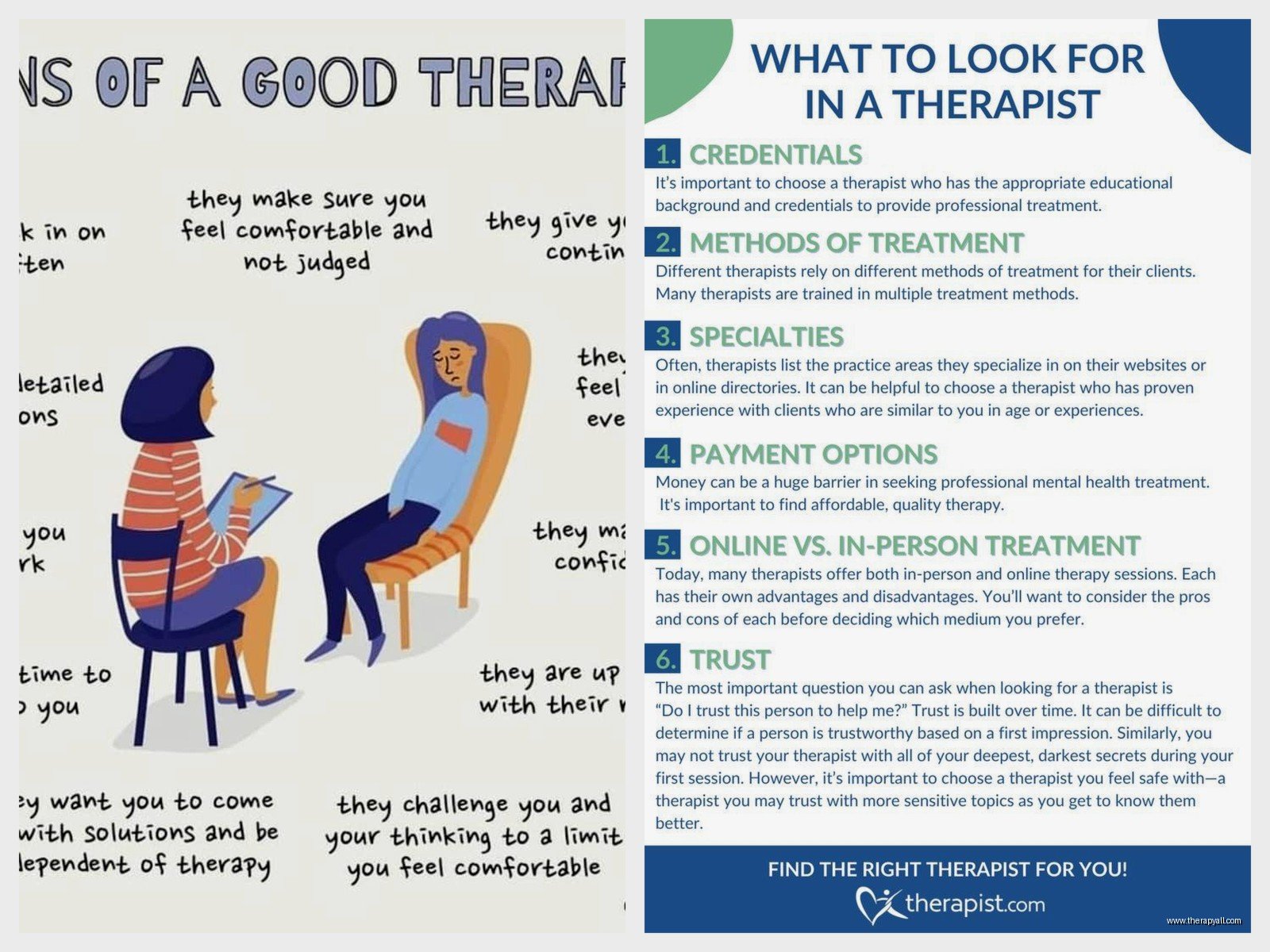
When you’re reading therapist profiles, look for specificity. Do they actually name the issues they work with or is it just vague wellness language? Do they mention specific therapeutic approaches or just say “I create a safe, supportive space”? Everyone creates a safe supportive space, that tells you nothing.
Check their credentials. In the US, you’re mainly looking at: Licensed Clinical Psychologist (PhD or PsyD), Licensed Clinical Social Worker (LCSW), Licensed Professional Counselor (LPC), or Licensed Marriage and Family Therapist (LMFT). All of these can do therapy. Psychiatrists can prescribe medication and sometimes do therapy but usually focus on medication management.
Years of experience matters but isn’t everything. A therapist with 15 years of experience doing the wrong kind of therapy for you isn’t helpful. Sometimes newer therapists are more affordable and more enthusiastic, honestly.
Photos and website vibes—look, this is subjective, but you’re gonna be talking to this person about difficult stuff. If their website feels off to you or their photo gives you weird vibes, trust that. You don’t need to justify it.
The Consultation Call
Most therapists offer a free 15-20 minute phone consultation. Use it. This isn’t a therapy session, it’s an interview. You’re allowed to shop around—actually, you should.
Questions to ask:
- What’s your experience treating [specific issue]?
- What approach do you typically use?
- How long do you usually work with clients?
- What does a typical session look like?
- How do you measure progress?
- What’s your availability?
- What’s your cancellation policy?
- Do you assign homework or between-session work?
But also pay attention to how the conversation feels. Do they listen? Do they answer your questions directly or dodge them? Do you feel talked down to? Do they seem rushed?

I talked to someone once who spent the entire consultation telling me about their own meditation practice and their trip to India and I was like… this is supposed to be about whether you can help me, not your spiritual journey, but okay.
Red Flags to Watch For
Some things should make you walk away immediately:
They guarantee results or promise to “cure” you in a specific timeframe. Therapy doesn’t work like that. Anyone who promises it does is either lying or delusional.
They want to be your friend or blur professional boundaries. Your therapist is not your friend. They can be warm and caring, but the relationship has specific boundaries for a reason.
They talk about themselves too much. Some self-disclosure is fine and can be helpful, but if you’re hearing their life story instead of talking about yours, that’s a problem.
They push a specific agenda—religious, political, whatever—without you asking for that. Unless you specifically sought out faith-based counseling or something similar, therapy should be about your values, not theirs.
They discourage you from taking medication or seeing other providers. Major red flag. A good therapist collaborates with other professionals.
They don’t have clear policies about confidentiality, payment, cancellations. This is basic professionalism.
The First Few Sessions
The first session is usually intake—background information, history, what brought you in. It’s not gonna be deep therapeutic work yet. That’s normal.
Give it 3-4 sessions before you decide if it’s working. The first session can feel awkward. You’re telling your story to a stranger. But by session 3 or 4, you should have a sense of whether you feel heard, whether the therapist seems competent, whether you’re building some kind of rapport.
You’re not looking for a perfect connection or someone you want to hang out with. You’re looking for someone who’s skilled, who you feel comfortable being honest with, and who seems to understand what you need.
When to Switch Therapists
If it’s not working, you can leave. You don’t owe anyone your continued business, including therapists. People get weirdly loyal to therapists who aren’t helping them and I don’t fully understand why—maybe because therapy is so personal, leaving feels like a breakup?
Reasons to switch: You don’t feel heard. You’re not making progress after several months. The therapist seems checked out or distracted. You dread sessions. They’re consistently late or cancel frequently. Your needs have changed and they’re not the right fit anymore.
It’s okay to tell them directly “I don’t think this is the right fit” or you can just… stop scheduling. Some therapists will want an ending session to “process the termination” but you’re not required to do that if you don’t want to.
Special Considerations
If you’re part of a marginalized group, finding a therapist who gets it matters. A white therapist might be great at CBT but completely miss how racism impacts your anxiety. A straight therapist might not understand queer relationship dynamics. You can absolutely ask about a therapist’s experience working with your specific identity or community.
For trauma, make sure the therapist is actually trauma-trained. “I work with trauma” doesn’t mean they know what they’re doing. Ask specifically about their training—EMDR certified, trauma-focused CBT, somatic experiencing, whatever. Trauma work done badly can make things worse.
If you need medication, you’ll probably need both a therapist and a psychiatrist (or psychiatric nurse practitioner). Some people just see a prescriber for med management and don’t do talk therapy, that’s fine too. But the combo is often most effective for things like depression, anxiety disorders, bipolar disorder.
The Money Conversation
Therapy is expensive. It’s worth addressing this directly because the cost prevents a lot of people from accessing care and that’s a systemic problem, not a personal failing.
If you have insurance, understand your benefits before you start. Copay vs coinsurance, deductible, out-of-pocket max, session limits. Call your insurance company and ask specifically about mental health outpatient coverage.
If you’re paying out of pocket, ask about sliding scale before the first session. Some therapists have a few spots reserved for lower-fee clients. It doesn’t hurt to ask.
Community mental health centers and training clinics (attached to universities) are significantly cheaper. You might see a graduate student supervised by a licensed clinician, which is actually fine—they’re often really well-supervised and current on research.
Some therapists offer Good Faith Estimates now (it’s a newer requirement) which gives you an estimate of costs upfront. Ask for this if cost is a concern.
What Therapy Actually Feels Like
Since we’re being practical here: therapy isn’t always comfortable. It’s not supposed to be. You’re talking about hard stuff. You might cry. You might feel worse before you feel better as you start processing things you’ve been avoiding.
But it also shouldn’t feel traumatizing or retraumatizing. There’s a difference between productive discomfort and harm. If you feel worse and worse over months with no relief or new coping skills, something’s wrong.
Good therapy should give you tools. New ways of thinking, specific strategies, skills you can use outside of sessions. If you’re just venting every week with no forward movement, that’s expensive friendship, not therapy.
Progress isn’t linear. Some weeks will feel like breakthroughs. Some weeks you’ll feel like you’re back at square one. That’s normal. But over months, you should see some kind of overall trend toward improvement—less intense symptoms, better coping, more insight, whatever your goals were.
Therapy Modalities for Specific Issues
I’m gonna break down what tends to work for common issues, based on research and also just what I’ve seen work:
Anxiety disorders: CBT is the gold standard, especially exposure therapy for phobias and OCD. ACT is good too. Medication plus therapy often works better than either alone.
Depression: CBT, behavioral activation (getting you doing things again), interpersonal therapy, sometimes psychodynamic. Medication is often helpful.
Trauma/PTSD: EMDR, trauma-focused CBT, somatic therapies, prolonged exposure therapy. Regular talk therapy without trauma-specific training can actually make trauma worse, so this is one where specialization really matters.
Relationship issues: Gottman method, Emotionally Focused Therapy (EFT), or Imago therapy for couples. Make sure you see an actual couples therapist, not just someone who occasionally sees couples.
Personality disorders: DBT for borderline personality disorder specifically. Schema therapy, mentalization-based treatment. This is complex work and you want someone experienced.
Eating disorders: FBT for adolescents, CBT-E (enhanced CBT for eating disorders), DBT. Often needs a team approach with a dietitian and medical monitoring.
Online Therapy Platforms
BetterHelp, Talkspace, these subscription-based platforms—they’re controversial. They’re more accessible and affordable than traditional therapy, which is good. But the therapists are often overworked and underpaid, you might not get the same person consistently, and the quality is really variable.
They can be a starting point if you have no other access, but they’re not equivalent to regular therapy. If you have insurance or can afford traditional therapy, that’s usually better. If you use these platforms, you still need to vet your therapist and switch if it’s not working.
ADHD & Neurodiversity
Life Planner Bundle – Life Organizer
Self-Care & Personal Growth
Acceptance And Commitment
Anxiety & Stress
Stress Processing Journal & Reflection Worksheets For Daily Self – Care
Self-Care & Personal Growth
Self – Reflection Guided Journal With Guided Prompts 30
Emotional Wellness
Decision Processing – Thought Processing Journal For Daily Self – Care
Therapist Resources
Physiotherapist Journal PDF Planner Tracker Or Log Book
Self-Care & Personal Growth
Customizable Self – Confidence & Self – Esteem Guided Journal
ADHD & Neurodiversity
ADHD Behavior Tracker PDF Planner Tracker Or Log Book