# Free CBT Worksheets PDF: Printable Cognitive Behavioral Therapy Tools
Cognitive Behavioral Therapy worksheets are structured tools that help you identify, examine, and change thought patterns. They’re basically paper-based interventions that bridge the gap between therapy sessions, giving you something concrete to work with when you’re sitting alone at 2 AM spiraling about something you said in 2014.
The core principle behind CBT worksheets is externalizing internal processes. When thoughts stay in your head, they loop and distort. Writing them down forces specificity, which is half the battle. I remember back in 2019, I was compiling resources for a mental health platform and testing every worksheet I could find—must’ve printed like forty different versions of thought records—and I started filling them out myself just to see what worked. Turns out I had this whole pattern of catastrophizing about deadlines that I’d never noticed because it just felt like “normal work stress.”
## The Thought Record: Your Basic CBT Foundation
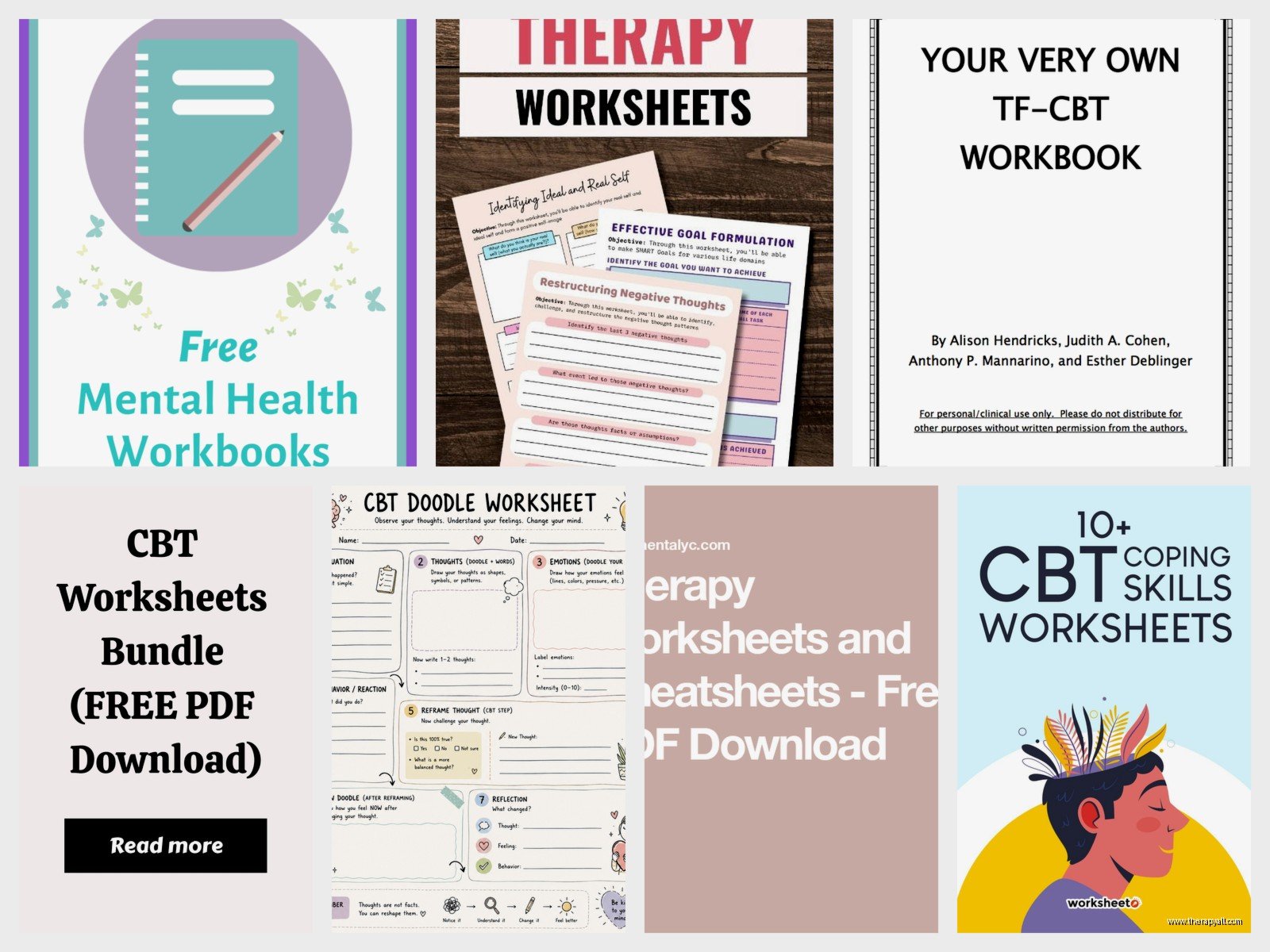
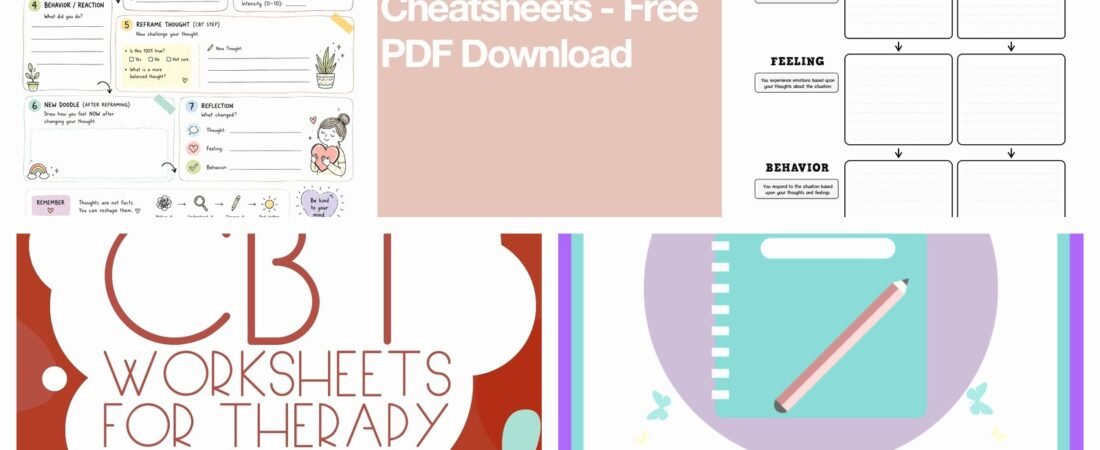
The thought record is the most fundamental CBT worksheet. It typically has columns for: situation, automatic thought, emotion, evidence for the thought, evidence against the thought, and alternative thought. Some versions add intensity ratings or physical sensations.
You fill it out when you notice a strong emotional reaction. Let’s say you sent an email to your boss and they haven’t responded in three hours. The situation column gets “sent email at 9 AM, no response by noon.” Automatic thought might be “they’re angry with me” or “I’m going to get fired.” Emotion could be anxiety, rated 8/10. Then you actually have to find evidence, which is where people either love or hate this tool.
Evidence for the thought forces you to list concrete facts, not feelings. “They haven’t responded” is a fact. “They seemed short with me yesterday” might be a fact. “They definitely think I’m incompetent” is not a fact, that’s an interpretation. This distinction trips people up constantly.
Evidence against requires you to consider alternatives. Maybe they’re in meetings. Maybe they’re dealing with their own crisis. Maybe they respond to emails in batches at end of day. You know, all those rational explanations your brain conveniently forgets when you’re anxious.
The alternative thought isn’t forced positivity. It’s not “everything is wonderful and my boss loves me.” It’s something like “I don’t have enough information yet to know why they haven’t responded, and there are several non-catastrophic explanations.”
## Cognitive Distortion Checklists
These worksheets list common thinking errors with definitions and space to identify your own examples. The typical ones include all-or-nothing thinking, overgeneralization, mental filter, disqualifying the positive, jumping to conclusions, magnification or minimization, emotional reasoning, should statements, labeling, and personalization.
What annoys me about most cognitive distortion lists is they’re presented like you’re gonna have this lightbulb moment where you go “oh wow, I do that thing with the name!” Nah. In reality, you’ll read the list, think none of them apply to you, then three days later catch yourself mid-spiral and realize you’re doing like four of them simultaneously.
I give clients these worksheets with instructions to just keep it nearby for a week and check off distortions as they notice them in real time. Not as homework to complete, just as a reference tool. The awareness comes gradually, not in some dramatic revelation.
All-or-nothing thinking is probably the most common one I see in the worksheets people send me. It’s the “I ate one cookie so my whole diet is ruined” or “I was awkward in that conversation so I’m terrible at socializing” pattern. Once you start spotting it, you see it everywhere—which is kinda the point but also can get exhausting.
## Behavioral Activation Logs
These track activities and mood ratings. You list what you did, when you did it, and rate your mood before and after. The goal is identifying which activities actually improve your mood versus which ones you think should improve your mood.
Behavioral activation is based on the idea that depression and anxiety often lead to avoidance, which temporarily reduces distress but long-term makes everything worse. The worksheet helps you test this out with data instead of assumptions.
You might discover that scrolling social media for an hour drops your mood by three points, but you keep doing it because it feels like rest. Or that talking to your friend raises your mood even when you don’t feel like reaching out. The worksheet doesn’t judge, it just records patterns.
Most behavioral activation logs have columns for time, activity, mood rating (0-10), and notes. Some include a column for energy level or whether the activity was goal-directed versus avoidant. The more detailed versions let you track patterns like social versus solitary activities, physical versus sedentary, obligatory versus chosen.
I usually recommend people fill these out for at least a week before looking for patterns, because one or two days isn’t enough data. You need to see the activity repeated multiple times across different contexts.
## Core Belief Worksheets
These dig deeper than automatic thoughts to identify underlying beliefs about yourself, others, and the world. They’re structured to help you trace patterns from specific situations up to broader themes.
A typical core belief worksheet might have you list several recent situations where you felt strong emotions, identify the automatic thoughts in each, then look for common themes. If your automatic thoughts in different situations are “I’m not good enough,” “I’ll mess this up,” and “nobody respects me,” the core belief might be something like “I am inadequate” or “I am unworthy.”
The worksheet then usually has sections for examining evidence for and against the core belief, exploring where it came from (family messages, past experiences, cultural influences), and developing a more balanced belief. This isn’t about positive affirmations. It’s about accuracy.
Core belief work is deeper than thought records and honestly can be overwhelming to do alone. I generally think these worksheets work best with therapist guidance, or at minimum after you’ve gotten comfortable with the more surface-level cognitive work. Jumping straight to core beliefs when you’re still learning to identify automatic thoughts is like trying to renovate the foundation before you’ve figured out which rooms need work.
## Exposure Hierarchy Worksheets
For anxiety specifically, exposure hierarchies help you create a ranked list of feared situations and plan gradual exposure. You list situations that trigger anxiety, rate them from 0-100 based on how much distress they’d cause, then work through them systematically from least to most distressing.
The worksheet typically has columns for the feared situation, distress rating, exposure plan, actual distress experienced, and what you learned. Let’s say you have social anxiety. Your hierarchy might include things like “make eye contact with cashier” (30), “ask a stranger for directions” (50), “attend small gathering” (70), “give presentation at work” (95).
You don’t just think about these situations. You actually do them, starting with the lower-rated ones. The worksheet helps you track that your predicted distress is usually higher than actual distress, and that distress decreases with repeated exposure.
My cat just knocked over my water bottle and I’m gonna have to deal with that in a second but—the key thing about exposure hierarchies is they need to be specific enough to actually do. “Be less socially anxious” isn’t an item. “Initiate conversation with coworker in break room” is an item.
## Activity Scheduling Worksheets
These are weekly planners where you schedule specific activities in advance, particularly when you’re dealing with depression or avoidance. They look like regular planners but with specific prompts for activities that matter: self-care, social connection, achievement-oriented tasks, pleasure activities.
Depression tells you that nothing will help and you should just stay in bed. Activity scheduling is basically saying “we’re gonna test that hypothesis with an experiment.” You schedule activities even when you don’t feel like doing them, then track what actually happens.
The worksheet usually has you plan activities for each day, ideally with a mix of necessary tasks and meaningful or enjoyable ones. Then you check off what you completed and note your mood. Over time, you see that doing things (even when you don’t want to) generally improves mood more than avoiding things.
This sounds simple but it’s one of the most practically useful worksheets for depression. It addresses the motivation problem directly—you don’t wait until you feel motivated, you schedule it and do it anyway, and motivation often follows action.
## Problem-Solving Worksheets
These provide a structured approach to tackling specific problems. The typical format includes: define the problem clearly, brainstorm all possible solutions without judging them, evaluate pros and cons of each solution, choose one to implement, create an action plan, and review results.
What I notice is people often skip the “define the problem clearly” step and jump straight to solutions, which is why they end up solving the wrong problem. The worksheet forces you to articulate exactly what the problem is before you try to fix it.
The brainstorming section usually says “list all possible solutions, even unrealistic ones.” This is because sometimes the unrealistic solution contains a kernel of something useful, or gets you unstuck from binary thinking. If your problem is “I hate my job,” solutions might range from “quit immediately” to “set boundaries with boss” to “change careers” to “win lottery and never work again.” You’re not committing to anything yet, just generating options.
Then the pros/cons evaluation helps you think through consequences instead of just going with your gut reaction or whatever you’ve been ruminating about. Sometimes the solution you’ve been fixated on has significant cons you weren’t considering. Or a solution you dismissed quickly actually has more pros than you realized.
## Values Clarification Worksheets
These help identify what actually matters to you, which is important because CBT isn’t just about reducing negative thoughts—it’s about moving toward meaningful life. Values worksheets typically have you rate importance of different life domains (relationships, work, health, personal growth, leisure, spirituality, etc.) and identify specific values within each.
Then there’s usually space to assess how well your current behavior aligns with stated values, which can be uncomfortable. You might rate family relationships as extremely important but realize you haven’t called your sister in two months. The gap between values and behavior becomes visible.
The worksheet then helps you identify small specific actions that would move you closer to living according to your values. Not huge life overhauls, just concrete next steps. If you value health but haven’t exercised in months, the action might be “walk around the block three times this week” not “become a marathon runner.”
I find that people sometimes confuse values with goals or with what they think they should value. The worksheet usually includes prompts to help distinguish—values are ongoing directions, goals are specific destinations. And your values are yours, not your parents’ or society’s expectations, though untangling that is its own process.
## Safety Behavior Tracking
For anxiety disorders, safety behaviors are the subtle things you do to feel safer that actually maintain the anxiety. These worksheets help identify and experiment with dropping safety behaviors during exposure.
Safety behaviors might include things like rehearsing what you’ll say before social interactions, gripping the steering wheel extra tight while driving, checking your phone constantly to avoid conversation, wearing certain clothing to hide perceived flaws. They’re not obvious avoidance—they’re the little things you do while facing the feared situation.
The problem is safety behaviors prevent you from learning that the feared outcome probably won’t happen, or that you could handle it if it did. If you only get through the presentation because you rehearsed fifty times and gripped note cards, you don’t learn that you could actually handle it with less preparation.
The worksheet has you list feared situations, identify what safety behaviors you use, predict what would happen without them, then gradually test dropping them. This is advanced exposure work and generally needs therapist support, but the worksheet structure helps make implicit behaviors explicit.
## Worry Time Logs
These are for people with generalized anxiety who worry chronically. The idea is you schedule a specific 15-30 minute “worry time” each day, and when worries pop up throughout the day, you write them down to address during worry time.
The worksheet has space to log worries as they occur, note the time, and mark whether you actually worried about it during worry time. What usually happens is either you forget what you were worried about by worry time, or it seems less urgent when you sit down to formally worry about it.
This technique works because it interrupts the constant worry cycle without trying to suppress worries entirely (which backfires). You’re not saying “don’t worry,” you’re saying “worry later, in this designated time slot.”
During actual worry time, you can use the worksheet to work through worries systematically—what am I worried about, what’s the worst that could happen, how likely is that really, what could I do if it happened. Or sometimes you just sit there and realize you don’t actually want to spend 30 minutes worrying about whether you sounded weird in that email.
## Sleep Logs and CBT-I Worksheets
CBT for insomnia has specific worksheets for tracking sleep patterns, identifying sleep-interfering behaviors, and implementing sleep restriction. The basic sleep log tracks what time you got in bed, when you fell asleep (estimated), how many times you woke up, when you woke up for the day, and how you feel.
After tracking for a week or two, patterns emerge. Maybe you’re spending nine hours in bed but only sleeping six hours, and you’re more tired on days when you try to “catch up” on sleep. The worksheet helps calculate sleep efficiency (time asleep divided by time in bed) and determine optimal sleep window.
Then there are worksheets for stimulus control instructions—the rules about only using bed for sleep, getting up if you can’t sleep within 20 minutes, keeping consistent wake time. And worksheets for identifying and changing sleep-interfering thoughts, because of course anxiety about not sleeping makes it harder to sleep.
I tested these on myself during a particularly bad insomnia phase in 2021 and the sleep restriction part is brutal but it works. You’re basically sleep-deprived for a week or two while you consolidate your sleep window, and every cell in your body is screaming that this is counterintuitive, but then suddenly you’re sleeping through the night.
## Gratitude and Positive Data Logs
These worksheets have you record positive experiences, things you’re grateful for, or evidence of your competence. They’re meant to counteract the negative mental filter that makes you overlook positive information.
I’m slightly skeptical of these because they can veer into toxic positivity territory if not framed carefully. The point isn’t pretending everything is great. It’s noticing that your brain might be filtering out neutral or positive data that doesn’t match your negative beliefs.
The worksheet typically has you note three things daily—could be as simple as “had a good conversation with coworker” or “finished that task I was avoiding” or “the weather was nice.” Not life-changing moments, just data points your anxious or depressed brain might otherwise dismiss.
What makes this different from generic gratitude journaling is it’s tied to specific cognitive patterns you’re working on. If your core belief is “I’m incompetent,” you’re specifically tracking evidence of competence. If you overgeneralize negative events, you’re tracking positive events to balance the data set.
The worksheet works best when you’re already doing other CBT work. By itself, it can feel forced or invalidating, like you’re just papering over real problems with forced positivity. Combined with thought records and behavioral activation, it’s part of training your brain to process information more accurately.
## Where to Find Free CBT Worksheets
Most major therapy organizations offer free downloadable worksheets. Psychology Tools has an extensive collection, both free and paid. Therapist Aid is probably the most popular free resource—their worksheets are clean, well-designed, and cover most standard CBT interventions.
The Association for Behavioral and Cognitive Therapies has resources. Individual therapists and counseling centers often post free worksheets on their websites. Some are better designed than others, and you’ll find a lot of repetition since everyone’s working from the same core CBT principles.
What bugs me is how many CBT worksheet collections are just badly formatted PDFs that clearly haven’t been user-tested. Like tiny text, confusing layouts, or spaces that are way too small to actually write in. If I’m having a panic attack, I’m not gonna squint at your 8-point font to figure out which column is for what.
When you’re looking for worksheets, check that they’re actually from legitimate sources—there’s a lot of wellness blog garbage out there that slaps “CBT” on generic journaling prompts. Real CBT worksheets are based on specific techniques with research behind them, not just “write down your feelings.”
## Using Worksheets Effectively
Worksheets work best when you use them consistently, not just once when you’re in crisis. The goal is building new thinking habits, which requires repetition. Filling out one thought record when you’re having a panic attack is better than nothing, but doing them regularly for a few weeks is when patterns become visible.
You don’t need to use every worksheet. Pick ones that match what you’re working on. If you’re dealing with depression and avoidance, behavioral activation logs and activity scheduling are most relevant. If you’re managing panic disorder, maybe thought records and exposure hierarchies. Trying to do everything at once just becomes overwhelming.
Keep worksheets accessible. I know someone who kept thought records on her phone notes instead of printing them, because she was never gonna remember to carry paper worksheets around. The format matters less than actually using them.
Don’t expect worksheets to feel natural immediately. They’re awkward at first—most people feel like they’re just going through motions or writing what they think they should write. That’s normal. The process becomes more automatic with practice.
If you’re doing CBT worksheets without a therapist, be aware of your limits. Some interventions, especially exposure work and core belief exploration, can bring up intense emotions. If you’re consistently feeling worse after using worksheets, that’s information—maybe you need professional guidance, or maybe you need different tools right now.
Worksheets are tools, not magic. They work through the unglamorous process of repeatedly practicing new thinking patterns until they become somewhat automatic. You’re essentially debugging your thought processes, which requires actually examining the code line by line, not just wishing it worked differently.