
Mental Health, Therapy resources
Free Therapist App – Complete Guide & Resources

Jul
Free therapist apps have flooded the market over the last five years, and honestly, it’s kinda overwhelming. I remember in 2021 when I was writing a comparison piece for a mental health platform and had to download like fourteen apps in one weekend just to test their intake processes. My phone storage was screaming at me. But the reality is that these apps have become legitimate tools for people who can’t access traditional therapy—whether that’s due to cost, location, waitlists, or just plain scheduling impossibility.
The term “free therapist app” is misleading, and this genuinely annoys me every time I see it plastered across app store descriptions. Most of these apps aren’t actually free in the way you think. They’re either freemium models where you get basic features but pay for anything useful, or they offer a limited trial period before hitting you with a subscription. True free therapy apps—where you get actual therapeutic support without eventually paying—are rare. But they do exist, and knowing which ones deliver actual value versus which ones are just glorified mood journals with a chat function is important.
What Actually Counts as a Free Therapist App
You need to understand what you’re actually getting. Some apps connect you with licensed therapists through text, video, or audio. Others use AI-driven chatbots that simulate therapeutic conversation. Then there are apps that provide therapeutic tools—worksheets, exercises, guided meditations, CBT modules—but no actual human therapist.
Apps like BetterHelp and Talkspace dominate the “online therapy” conversation, but they’re not free. They charge between $60 and $100+ per week depending on your plan. What they do offer sometimes is financial aid or sliding scale options, but you have to apply and qualify. I’ve had readers email me saying they got approved for reduced rates, so it’s worth trying if you’re interested in those platforms but can’t afford full price.
The truly free options usually fall into a few categories: nonprofit-funded apps, apps offering limited free sessions, peer support platforms, and therapeutic tool apps with no paywall. Each has different strengths and massive limitations.
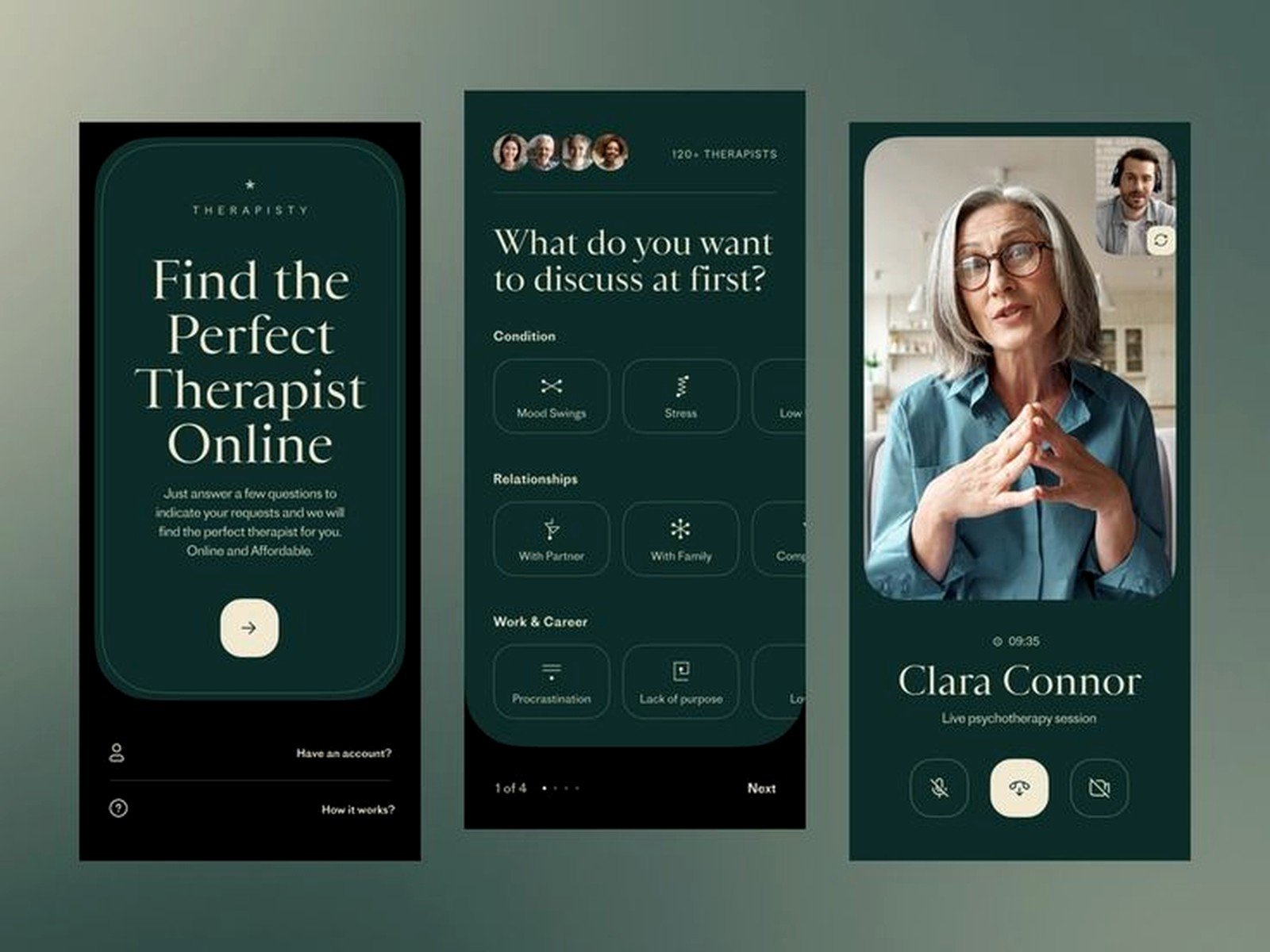
Apps That Offer Free Sessions with Real Therapists
These are the unicorns. Not many exist, and the ones that do often have catches.
7 Cups is probably the most well-known. It offers free emotional support through trained listeners—not licensed therapists, which is a crucial distinction. You can chat anonymously with volunteers who’ve completed training courses on active listening. If you want to talk to an actual licensed therapist, that costs money. But the listener service is genuinely free and available 24/7. I tested it myself back in 2020 just to see what the experience was like, and I was matched with someone within two minutes. The conversation was… fine. Not therapy, but better than nothing if you’re in crisis mode at 2 a.m. and just need someone to listen.
Open Path Collective isn’t an app exactly—it’s a network—but they have a platform that connects you with therapists who charge between $30 and $80 per session. There’s a one-time membership fee of $65, but after that, the sessions are significantly cheaper than standard rates. Some therapists in their network offer a limited number of pro bono sessions. You have to ask directly.
BetterHelp’s Financial Aid is something people don’t talk about enough. If you apply and demonstrate financial need, they sometimes approve you for free or heavily discounted therapy. It’s not advertised prominently because, well, they’re a business. But the option exists.
AI Chatbot Therapy Apps
This is where things get weird. AI therapy bots have exploded in popularity, and the ethical debates around them are intense. But for people who have zero access to human therapists, they can serve a purpose.
Woebot is the big name here. It’s a chatbot that uses CBT principles to guide you through mood tracking, thought challenging, and behavioral activation. It’s completely free, no subscription, no trial period that ends. I actually used Woebot for about three weeks in summer 2022 when I was writing a piece on digital mental health tools, and I was surprised by how not-annoying it was. The conversational style is a little cutesy, but the CBT framework is solid. It asks you to identify cognitive distortions, offers reframes, and sends little check-ins. It’s not therapy. It’s like… a very persistent, slightly chirpy CBT workbook that texts you.
Wysa is similar—AI-driven, CBT-based, free with optional paid coaching. The free version gives you access to exercises, mood tracking, and the chatbot. The paid version connects you with a human coach. Wysa is particularly useful if you like the idea of practicing CBT techniques but don’t want to commit to scheduling or talking to a person yet.
Here’s the thing about AI therapy bots: they can’t handle crisis situations, they can’t diagnose, and they can’t replace human connection. If you’re in acute distress, they’re gonna refer you to a crisis line. But for maintenance-level support, psychoeducation, or practicing specific skills, they’re surprisingly useful.
Apps That Provide Therapeutic Tools for Free
These don’t connect you with therapists, but they give you access to evidence-based exercises and resources.
MindShift CBT is developed by Anxiety Canada, a nonprofit, and it’s entirely free. No ads, no upsells, just a solid CBT app focused on anxiety. It includes thought journals, exposure tools, and relaxation exercises. I recommend this one constantly because it doesn’t try to trick you into a subscription. It just works.
PTSD Coach is created by the U.S. Department of Veterans Affairs, so it’s free and evidence-based. It’s designed for people with PTSD but useful for anyone dealing with trauma symptoms. It includes education about PTSD, self-assessment tools, and symptom management techniques. The interface is a little clunky—government-funded apps aren’t known for sleek design—but the content is solid.
Sanvello has a free version that includes mood tracking, guided journeys, and coping tools. The premium version adds coaching and therapy options, but you can use the core features indefinitely without paying. I find their “health scores” feature kind of gimmicky, but the mood tracking is decent.

Peer Support and Community Apps
If what you need is connection rather than clinical intervention, peer support apps can be valuable.
TalkLife is a peer support network where people share struggles and support each other. It’s moderated to keep things safe, and it’s completely free. The community aspect can be really helpful if you feel isolated. The downside is that you’re getting support from other people who are also struggling, not from professionals. That can be powerful, but it can also be messy.
Wisdo connects you with peers who’ve been through similar experiences. It’s like a mental health social network. Free to use, and it focuses on shared experience rather than clinical advice. My cat knocked over my coffee while I was testing this app last year and I ended up posting about it in a “daily frustrations” thread and got like fifteen supportive responses, which was oddly comforting.
Apps Offering Free Trials Worth Exploiting
Okay, so these aren’t permanently free, but if you’re strategic, you can get value out of trial periods.
Headspace offers a free trial, and while it’s primarily a meditation app, it has a significant mental health section with courses on anxiety, stress, and sleep. If you’re gonna use a trial, actually use it intensively—download the content you need, complete the courses, and cancel before you’re charged.
Calm does the same thing. Their sleep stories and anxiety relief sessions are genuinely helpful, and you can access a lot in a week-long trial.
The trick with trials is setting a phone reminder to cancel. I cannot tell you how many times I’ve heard from people who forgot to cancel and got charged $70 for an app they used once.
What to Look for in a Free Therapy App
Not all free apps are created equal, and some are actually harmful. You want to check a few things before downloading.
Privacy policies matter. Some apps sell your data. I know, I know, everything sells your data these days, but mental health data is particularly sensitive. Read the privacy policy. If it says they share information with third parties for marketing, maybe skip it. Apps like Woebot and MindShift have stronger privacy protections because they’re nonprofit or research-backed.
Evidence-based approaches. If an app claims to cure your depression with color therapy or crystal frequencies, run. Look for apps that explicitly mention CBT, DBT, ACT, or other established therapeutic modalities. If the app’s website doesn’t mention any psychological framework, that’s a red flag.
Crisis resources. Any legitimate mental health app should have clear crisis resources—links to suicide hotlines, crisis text lines, emergency services. If an app promises to help with serious mental health issues but has no crisis protocol, that’s dangerous.
Limitations You Need to Accept
Free therapy apps are not the same as therapy. I feel like I’m stating the obvious, but people sometimes expect app-based support to replace in-person treatment, and that’s not realistic.
Apps can’t diagnose you. They can’t prescribe medication. They can’t navigate complex trauma or severe mental illness the way a trained clinician can. They’re supplemental tools, not replacements.
If you’re in crisis, an app is not appropriate. Call 988 (the Suicide and Crisis Lifeline in the U.S.) or go to an emergency room. Apps are for maintenance, skill-building, and support between therapy sessions or when therapy isn’t accessible yet.
How to Maximize Free Resources
If you’re using free apps because you can’t afford therapy, you can combine resources to create a more comprehensive support system.
Use a CBT app like MindShift or Woebot for skill-building. Join a peer support community like TalkLife for connection. Track your mood consistently so you can identify patterns. If you eventually do access therapy, you’ll have months of data to share with your therapist, which actually makes treatment more efficient.
Check if your insurance offers an EAP (Employee Assistance Program). Many jobs provide 3-6 free therapy sessions per year through EAPs, and people just don’t know about them. Call your HR department and ask.
Look into training clinics. Universities with psychology or counseling programs often run clinics where graduate students provide therapy under supervision at very low cost or free. The quality is usually good because students are being closely monitored and are up-to-date on current research.
Apps to Avoid
Some apps are just cash grabs with a mental health sticker slapped on.
Anything that promises quick fixes—”cure your anxiety in 10 days!”—is lying to you. Mental health doesn’t work that way. Apps that rely heavily on affirmations without any behavioral or cognitive component are basically expensive wallpaper.
Apps that require tons of personal information upfront but have vague privacy policies should be avoided. If you’re inputting detailed mental health history and the app’s privacy policy says they share data with “partners,” that’s a problem.
Be skeptical of apps with only five-star reviews. That usually means the reviews are fake or incentivized. Look for apps with a range of ratings and read the critical reviews to see what problems people actually encountered.
The Reality of Free Mental Health Support
The mental health care system is broken, and free apps exist partly because there’s a massive gap between need and access. They’re Band-Aids, not solutions. But Band-Aids have value when you’re bleeding.
I’ve seen people use free apps as a bridge to therapy—they build insight and vocabulary through app-based tools, which makes them better prepared when they finally get into a therapist’s office. I’ve also seen people use apps long-term as their only form of support, which is less ideal but sometimes the only option.
If you’re using a free therapy app, you’re not settling or doing mental health “wrong.” You’re working with what’s available. The goal should be to eventually access more comprehensive care if you need it, but in the meantime, these tools can genuinely help. Just go in with realistic expectations and a clear sense of what you actually need versus what the app can provide.
ADHD & Neurodiversity
Life Planner Bundle – Life Organizer
Self-Care & Personal Growth
Acceptance And Commitment
Anxiety & Stress
Stress Processing Journal & Reflection Worksheets For Daily Self – Care
Self-Care & Personal Growth
Self – Reflection Guided Journal With Guided Prompts 30
Emotional Wellness
Decision Processing – Thought Processing Journal For Daily Self – Care
Therapist Resources
Physiotherapist Journal PDF Planner Tracker Or Log Book
Self-Care & Personal Growth
Customizable Self – Confidence & Self – Esteem Guided Journal
ADHD & Neurodiversity
ADHD Behavior Tracker PDF Planner Tracker Or Log Book