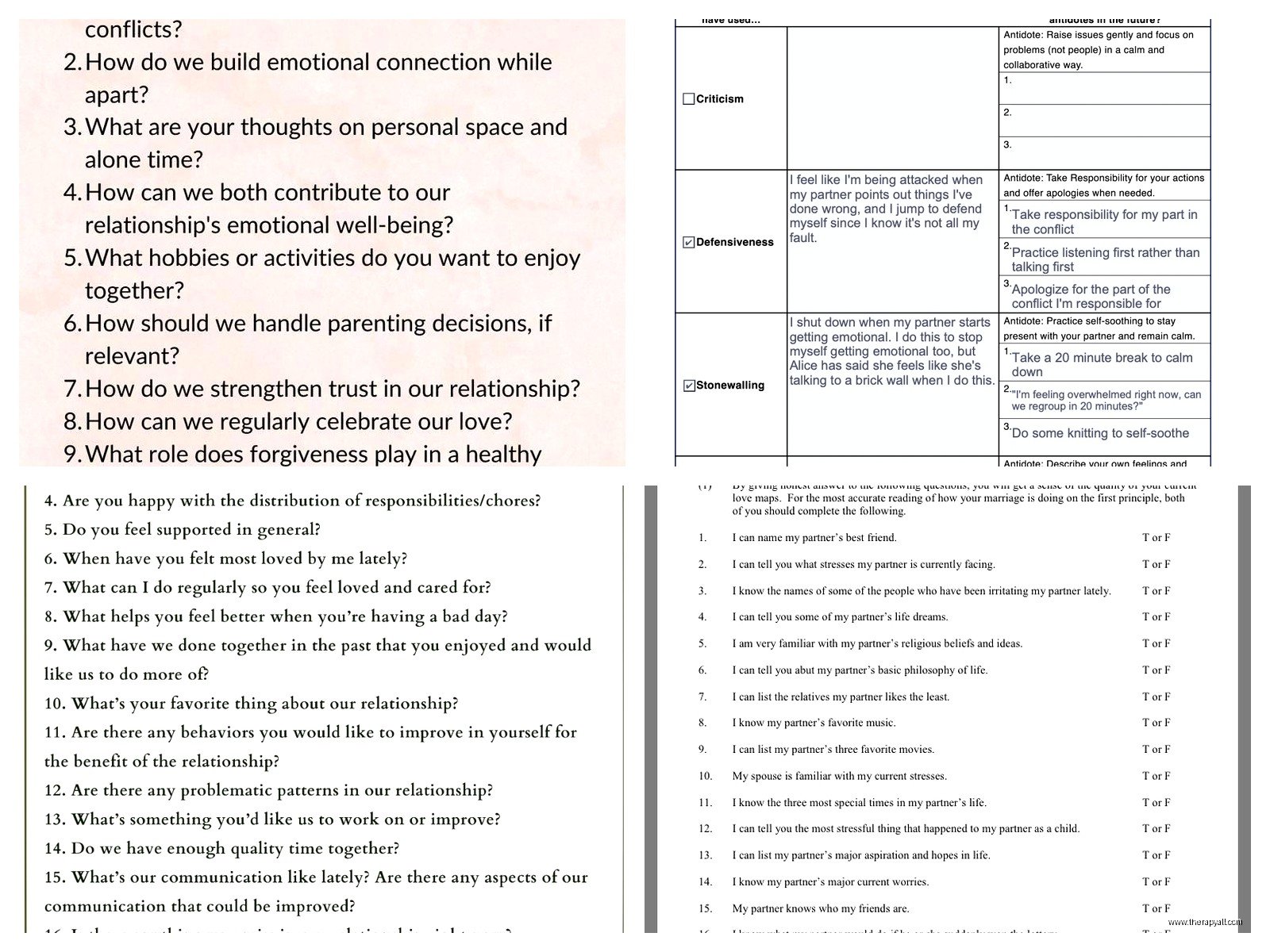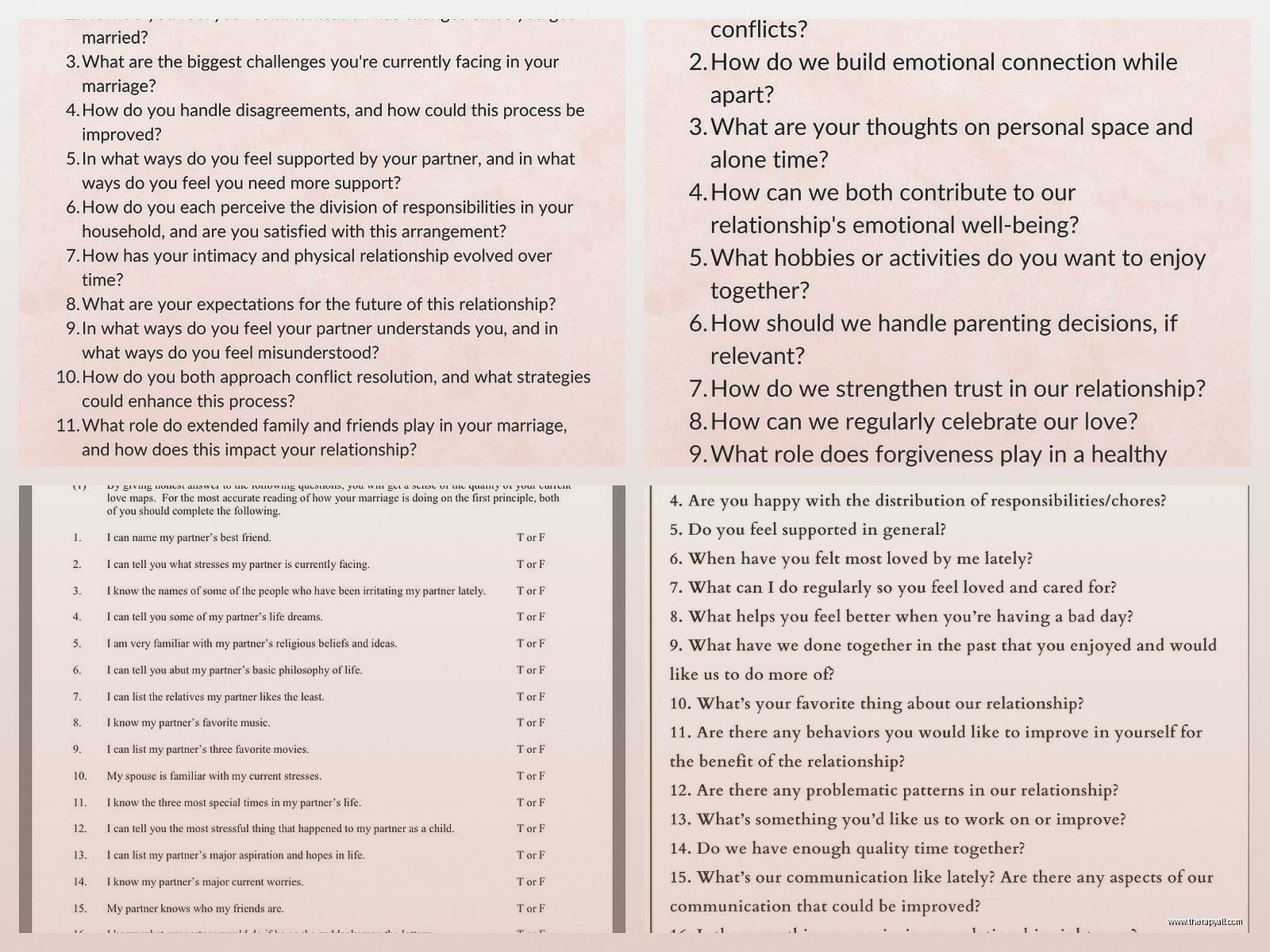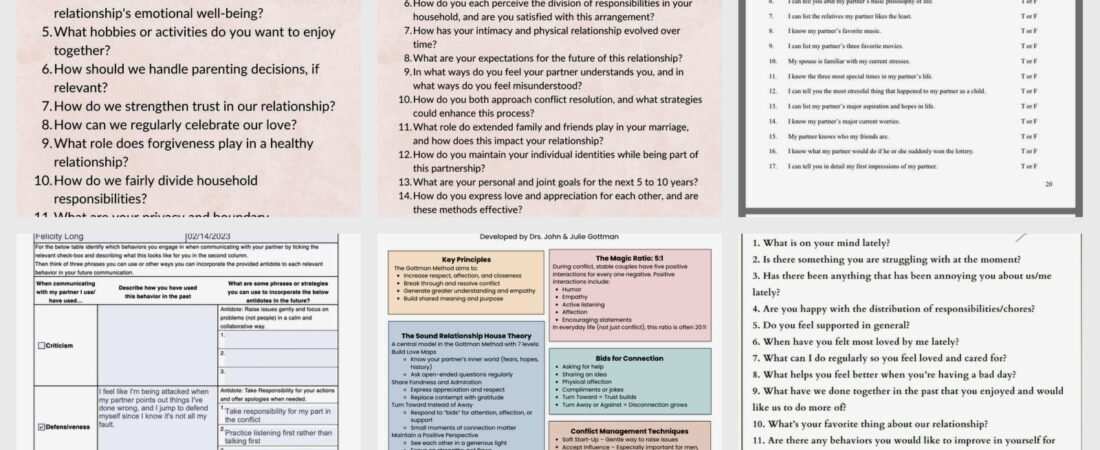
Marriage counseling worksheets are structured tools that help couples work through communication breakdowns, resentment patterns, and emotional distance without having to wait until the next therapy session to do something productive. They’re not magic—they’re frameworks that force you to slow down and actually articulate what’s going wrong instead of just cycling through the same fight for the third time this month.
Why Worksheets Actually Work When Talking Doesn’t
You know how sometimes you’re trying to explain to your partner why you felt hurt and it just spirals into them getting defensive and then you’re both mad about completely different things? Worksheets interrupt that pattern by giving both people a template to follow. I remember back in 2019 working with a couple where every session devolved into who did more dishes, and I finally just handed them a feelings wheel worksheet—not even a fancy one, just the basic color-coded emotion chart—and watching them realize they were both just saying “annoyed” when they actually meant “invisible” or “taken for granted.” That’s what these tools do. They create a container.
The structure matters more than people think. When you’re writing responses in designated boxes or following numbered prompts, there’s less room for the conversation to get hijacked by old grievances or defensive reactions. You’re both working on the same page, literally.
Communication Pattern Mapping Worksheets
These worksheets track how conflicts typically unfold in your relationship. You’ll usually see columns for trigger, your reaction, partner’s reaction, escalation point, and resolution (if any). The goal is pattern recognition, not blame assignment, though that’s easier said than done when you’re filling it out.
One version I’ve seen used effectively asks each person to map the last three arguments using the same template, then compare notes. What usually happens—and this genuinely surprises most couples—is that you’re not even fighting about what you think you’re fighting about. He thinks the fight starts when she brings up his mother; she thinks it starts when he dismisses her feelings two sentences earlier. Both are kinda right, but neither sees the full loop.
The annoying thing about a lot of these worksheets is they’re designed by people who’ve clearly never been in a real fight with someone they live with. They’ll have prompts like “describe your partner’s perspective with compassion” when you’re still furious about the thing that happened yesterday, and it just feels performative. The better versions acknowledge that you might be filling this out while still mad and build that into the process.
How to Use Pattern Worksheets Without Making Things Worse
Fill them out separately first. Don’t sit across from each other with one worksheet trying to agree on what happened—that becomes another fight. Each person completes their version, then you compare. The differences in perception are actually the useful part.
Look for your own patterns first before pointing out your partner’s. If you notice you shut down every time money comes up, or you always bring up past issues when you’re cornered in a current argument, name that. It’s harder to stay defensive when someone’s already acknowledged their part.
Emotional Needs Inventory Worksheets
These ask both partners to identify and rank their emotional needs—things like appreciation, autonomy, physical affection, quality time, feeling heard, sexual intimacy, shared goals. Then you compare lists. The disconnect is usually eye-opening.
I worked with this tool a lot in 2021 and 2022, probably wrote about it for at least four different platforms, and started using a simplified version myself because I realized I was terrible at actually saying what I needed instead of just hoping someone would figure it out. My cat does a better job of communicating her needs than I did in my twenties, honestly.
The worksheet typically has you rate each need on a scale (how important it is to you, how satisfied you currently feel in that area) and then identify specific behaviors that would meet that need. Not vague stuff like “be more present”—actual behaviors like “put your phone away during dinner” or “ask me about my day before talking about yours.”
The Gap Between Knowing and Doing
Here’s where it gets tricky. You can both complete this worksheet, have a perfectly civil conversation about your needs, genuinely understand each other better, and then… nothing changes. Because understanding isn’t the same as behavior change, and behavior change requires sustained effort, which is exhausting when you’re already depleted.
The worksheets that actually lead somewhere include an action-planning component. Not just identifying needs but committing to one or two specific changes this week. Not twelve things. One or two. And then you check in.
Conflict Resolution Scripts and Templates
These provide literal sentence starters for difficult conversations. Things like “When you ___, I feel ___ because ___” or “What I need from you is ___” or “I’m willing to ___ if you’re willing to ___.”
They feel incredibly awkward at first. You’re gonna feel like you’re reading from a manual, because you are. But they work for the same reason worksheets work—they slow down the reactive part of your brain and engage the part that can actually think.
I’ve seen versions that lay out entire conversation roadmaps: Start with something you appreciate, then name the issue, then express your feeling, then make a specific request, then invite their perspective. Follow the steps. Don’t skip around. The rigidity is the point.
Some couples keep these scripts visible during hard conversations—like actually taped to the table or pulled up on a phone. It’s a visual reminder that you’re trying to communicate differently, not just have the same fight with slightly different words.
When Scripts Feel Too Mechanical
The common complaint is that it feels inauthentic to follow a script when you’re upset. And yeah, it does. But you know what else is inauthentic? Pretending you’re fine when you’re not, or attacking your partner’s character when you’re really hurt about something specific, or shutting down completely because you don’t know how to express what’s wrong. Scripts are training wheels. You’re not gonna need them forever, but they help you build new neural pathways for communication.
Appreciation and Positivity Ratio Worksheets
The Gottman research suggests you need five positive interactions for every negative one to maintain relationship satisfaction. These worksheets help you track that ratio and intentionally increase positive moments.
One format has you list appreciations daily—small things your partner did that you noticed and valued. Another version has both partners write what they appreciate about the other, then exchange lists. Sounds simple, almost too simple, but when you’re in a negative cycle, you literally stop noticing positive things. Your brain is primed to collect evidence of wrongdoing.
I remember this couple I worked with—no, wait, this was actually something I read in a case study, but the point stands—where they started keeping a shared note on their phones of small appreciations. Just one sentence a day. “Thanks for making coffee” or “I liked when you laughed at that dumb joke.” After three weeks they had this document of evidence that they didn’t actually hate each other, which sounds obvious but wasn’t obvious to them in the moment.
The Positivity Worksheet I Actually Found Annoying
There’s this one worksheet that went viral in therapy content circles a few years ago that has you list fifty things you love about your partner. Fifty. And people share these elaborate versions on Pinterest with calligraphy and little illustrations, and it just feels like performance. Like you’re creating content for an audience instead of actually doing the work. Three genuine appreciations are worth more than fifty forced ones. Quality over quantity, and also most people genuinely can’t think of fifty distinct things when they’re in a rough patch, so it just becomes another task they feel like they’re failing at.
Intimacy Rebuilding Worksheets
These address both emotional and physical intimacy, though they’re usually separate worksheets because those are different skills. Emotional intimacy worksheets often use question prompts—deep conversation starters that go beyond “how was your day.” Things like “What’s a fear you haven’t told me about?” or “When did you feel most connected to me in the past year?”
Physical intimacy worksheets are more varied. Some focus on non-sexual touch—asking couples to identify which types of touch feel connecting (holding hands, back rubs, sitting close) versus obligatory or uncomfortable. Others address sexual intimacy more directly, with yes/no/maybe lists for different activities, or scales for rating desire and satisfaction.
The intimacy worksheets require more vulnerability than the communication ones, which means they’re harder to complete honestly. You have to be willing to say “I don’t actually like when you do this thing you think I like” or “I want more of this but I’ve been afraid to ask.” That’s exposing.
Timing Matters With Intimacy Work
Don’t pull out an intimacy worksheet right after a fight. Don’t use it as a segue into initiating sex. Don’t complete it when you’re exhausted or one person is already checked out for the night. These need space and relative calm. Some couples schedule time for them, which sounds unromantic but is actually more respectful than springing heavy questions on someone while they’re trying to unwind.
Trust Repair Worksheets
These are specifically for couples dealing with betrayal—infidelity, financial deception, broken promises, violated boundaries. They’re more intensive than general communication worksheets because trust repair requires sustained accountability and transparency, not just better talking.
One common format has the person who broke trust write out specific actions they’re taking to rebuild it, with timelines and checkpoints. The other person writes out what they need to feel safe again—not punishments, but actual needs like “I need you to share your location” or “I need you to go to individual therapy” or “I need us to have a weekly check-in where I can ask questions without you getting defensive.”
Then there’s usually a section for the hurt partner to track their healing process, because trust repair isn’t linear. You might feel okay for three weeks and then get hit with a wave of anger or anxiety. The worksheet helps you see patterns in your healing, not just feel like you’re randomly falling apart.
I find these ones the hardest to write about, honestly, because the stakes are so high and there’s no guaranteed outcome. You can do everything right and still decide you can’t move forward, or… actually, I was gonna say something else but I lost my train of thought.
What Trust Worksheets Can’t Do
They can’t make someone trustworthy if they’re not willing to change. They can’t speed up your healing timeline. They can’t guarantee you’ll feel the same way about your partner again. They’re tools for people who are both committed to repair, not magic fixes for relationships where one person is still being shady or the other person has already emotionally left.
Value Alignment and Goal-Setting Worksheets
These help couples identify whether they’re actually working toward the same future or just coexisting. You each list your top values (family, career growth, adventure, stability, creativity, whatever) and your goals for the next year, five years, ten years. Then compare.
Sometimes couples discover they’re more aligned than they thought—they just never articulated it. Other times they realize they have fundamentally different visions, which is painful information but useful. Better to know now than five years from now when you’re even more entrenched.
The worksheet usually includes questions about how you’ll handle conflicts between goals, who’s willing to compromise on what, what’s non-negotiable. It forces conversations that are easy to avoid when you’re just getting through the week.
Implementation: How to Actually Use These Things
Most couples download worksheets with good intentions and then they sit in a folder doing nothing. Implementation requires agreement on when and how you’ll use them. Weekly? After conflicts? Monthly check-ins? You need a plan.
Some therapists assign worksheets as homework between sessions, which creates external accountability. If you’re working on your own, you have to create your own structure. Maybe Sunday mornings with coffee. Maybe Tuesday evenings after the kids are asleep. Specific time, specific place, phones put away.
Don’t try to do five worksheets in one sitting. You’ll burn out or it’ll feel like a chore. Pick one tool that addresses your most pressing issue and stick with it for a few weeks. Communication problems? Start there. Feeling disconnected? Emotional needs inventory. Recovering from betrayal? Trust repair worksheets.
And here’s the thing nobody wants to hear: worksheets work best alongside actual therapy, not as a replacement for it. They’re tools, not treatment. If you’re in a crisis or dealing with serious issues like abuse, addiction, or severe mental health problems, you need professional help, not a PDF.
Finding Quality Worksheets
There’s a ton of garbage out there. Generic templates that could apply to any relationship issue ever, or overly simplistic ones that treat complex problems like they can be solved with three fill-in-the-blank questions. Look for worksheets created by actual licensed therapists, preferably ones who cite their theoretical approach or research base.
Gottman Institute has solid resources. So does The Couples Institute, Emotionally Focused Therapy websites, and some individual therapist sites. Academic databases sometimes have free worksheets from evidence-based programs. Avoid the ones that are just list articles repackaged as printables or that promise to “save your marriage in 10 minutes.”
You want worksheets that make you think, not ones that just make you feel productive. If you’re completing something and it’s not surfacing anything new or uncomfortable, it’s probably too surface-level to matter.