
Mental Health, Therapy resources
Self-Care Worksheets: Build a Sustainable Self-Care Routine

Jun
# Self-Care Worksheets: Build a Sustainable Self-Care Routine
Self-care worksheets exist because most people approach self-care like they’re cramming for a final exam—they panic, do everything at once for three days, burn out, and then feel guilty for months. I remember sitting across from a client in 2019 who showed me her self-care plan, and it was literally a two-page Google Doc listing forty-seven different activities she was gonna do weekly. Bubble baths, journaling, yoga, meditation, nature walks, cooking elaborate meals, calling friends, reading, face masks—the list kept going. I had to tell her that her self-care routine was causing her more stress than her actual job.
That’s the fundamental problem worksheets are designed to address. They force you to slow down and identify what actually works for your life, your schedule, your energy levels, and your actual problems. Not what looks good on Instagram.
## What Self-Care Worksheets Actually Do
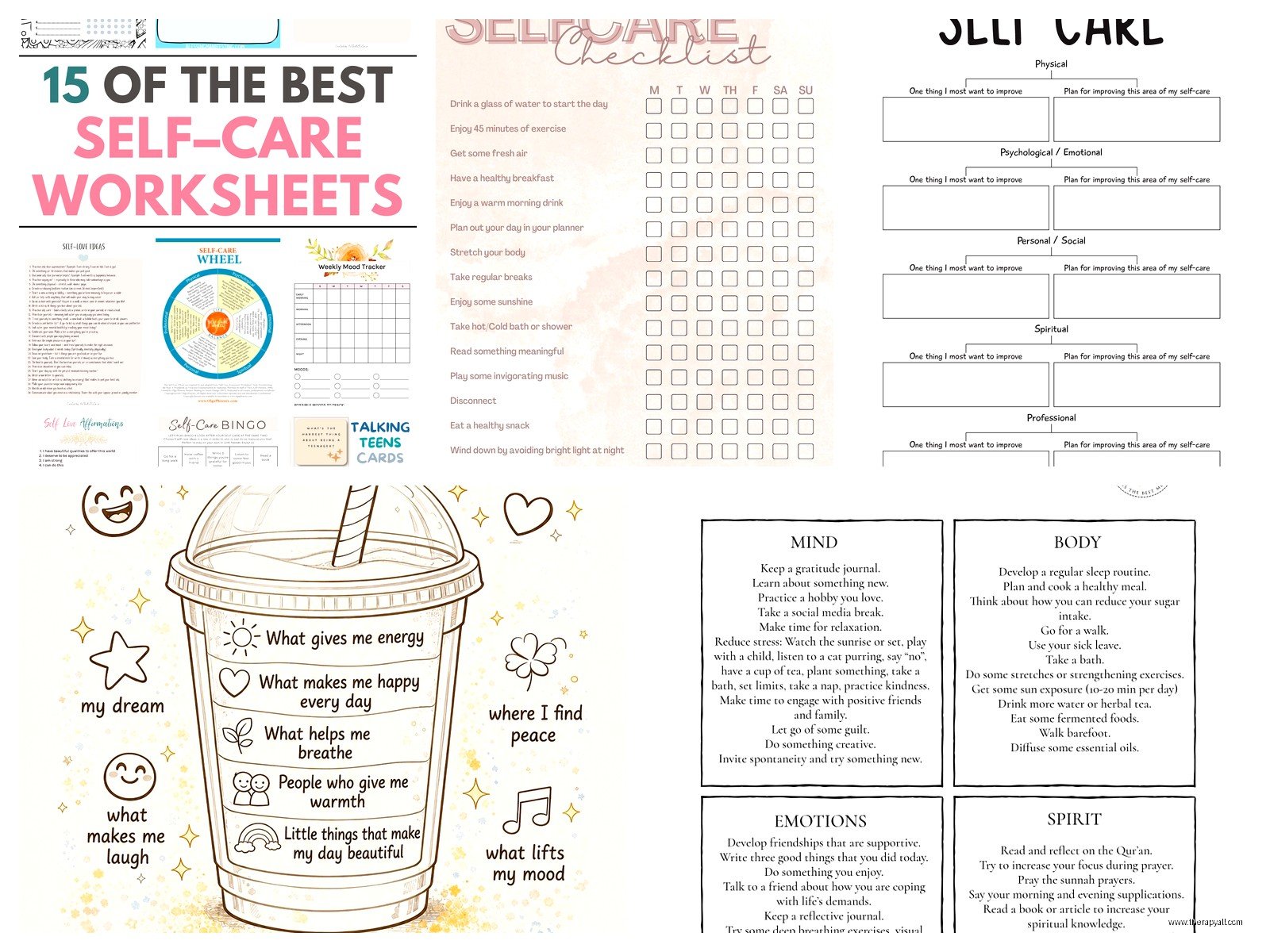
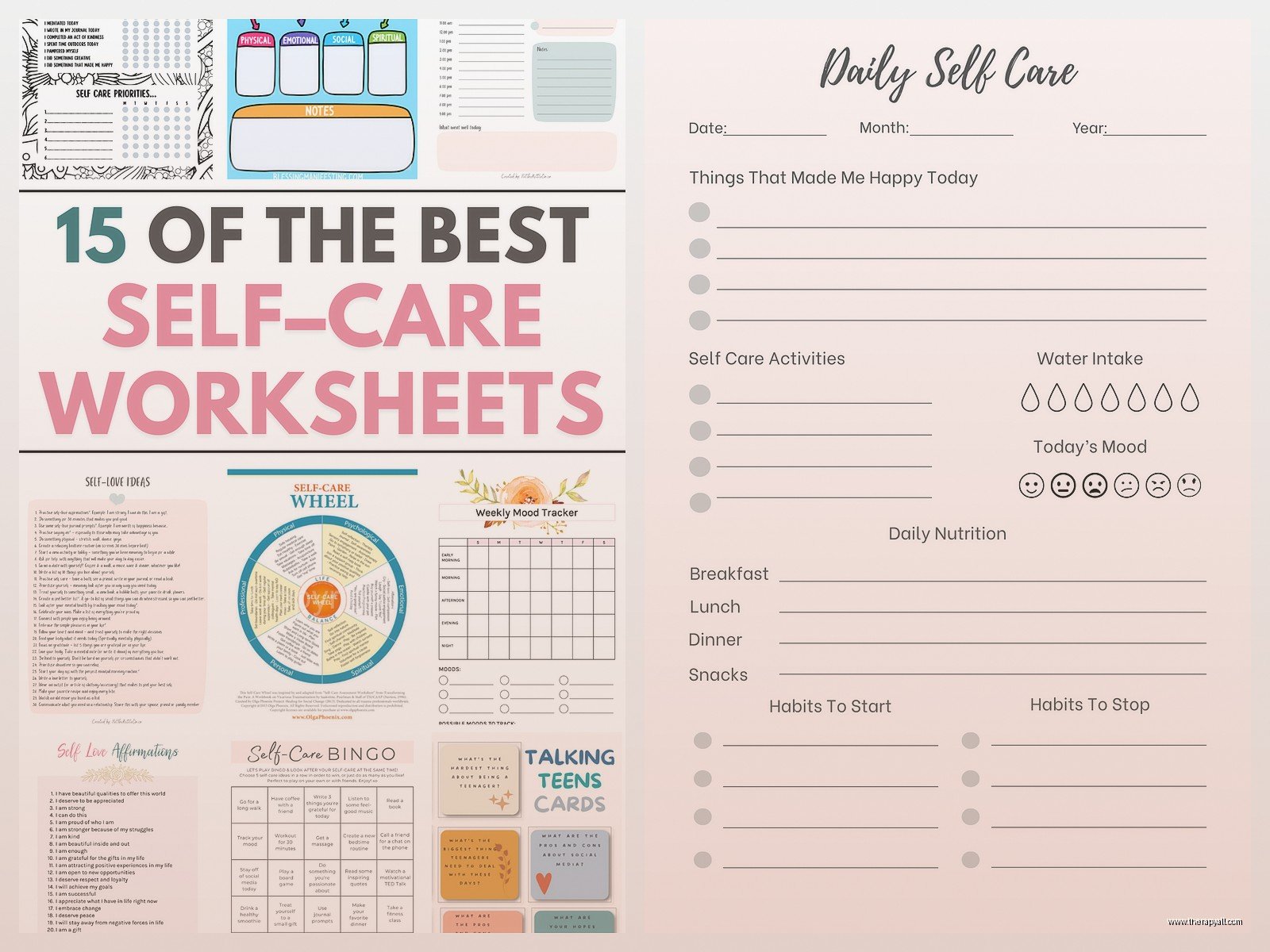
A self-care worksheet is a structured document that walks you through the process of identifying, planning, and tracking self-care activities. They typically include sections for different domains of self-care—physical, emotional, social, spiritual, professional—and ask you to evaluate your current habits, identify gaps, and create actionable plans.
The good ones make you confront the difference between what you think you should be doing and what you’re actually willing to do. I’ve seen worksheets that ask you to rate your current self-care in various areas on a scale of 1-10, then identify one specific action for areas scoring below 5. That’s useful. The ones that just give you a blank weekly calendar and tell you to “schedule self-care” are basically useless because they assume you already know what to schedule and how to make it stick.
## Why Traditional Self-Care Advice Fails
Here’s what genuinely annoys me: the wellness industry has convinced people that self-care means buying things or blocking out huge chunks of time. Bath bombs, expensive candles, weekend retreats, hour-long meditation sessions. For someone working two jobs with kids, that advice is not just unhelpful—it’s insulting.
Real self-care often looks like drinking water, saying no to one thing, or sleeping an extra thirty minutes. Worksheets help you see that. They break down the mythology and make you list what’s actually accessible to you right now, today, with the resources and time you currently have.
The other thing traditional advice gets wrong is the assumption that self-care is always pleasant. Sometimes self-care is going to the dentist, setting a boundary with your mother, or deleting someone’s number. Worksheets that include sections on “necessary but unpleasant self-care tasks” are the ones I actually recommend because they acknowledge reality.
## Components of Effective Self-Care Worksheets
The best worksheets I’ve encountered include several key sections. First, a self-assessment that covers multiple life domains. You need to know where you’re actually struggling before you can fix anything. Questions like “When did you last have a full meal while sitting down?” or “How many hours of sleep did you average this week?” give you concrete data.
Second, a values clarification section. This part asks what actually matters to you, not what you think should matter. If you hate exercise but love dancing in your kitchen, the worksheet should help you see that kitchen dancing counts as physical self-care. You don’t have to join a gym just because everyone else did in January.
Third—and this is where most worksheets fall apart—a realistic scheduling component. Not a color-coded dream calendar, but a section that asks: “What are you actually willing to do three times this week?” I worked with someone once who realized her only consistent self-care window was her 15-minute commute, so we built her entire routine around that. Podcasts, audiobooks, breathing exercises, phone calls to friends. Done. That’s it, and it worked.
Fourth, a troubleshooting section. What gets in the way? Is it time, energy, guilt, other people, lack of ideas? You need to name the obstacles specifically. “I don’t have time” isn’t specific enough. “My partner expects me to handle bedtime every night and that’s my only free hour” is specific and solvable.
## The Five Domains Model
Most comprehensive worksheets divide self-care into five domains, though some use seven or eight. The standard five are physical, emotional, social, spiritual, and professional. Each domain requires different types of activities and serves different needs.
Physical self-care covers the basics everyone forgets when they’re stressed: sleep, food, movement, medical care, hygiene. Worksheets in this category ask you to track these fundamentals and identify which one you’re most likely to skip. For me it’s always sleep—I’ll stay up too late writing and then wonder why I feel terrible. The worksheet makes you write down your actual bedtime for the week, and then you can’t lie to yourself about it anymore.
Emotional self-care includes therapy, journaling, creative outlets, processing feelings, and activities that help you regulate your nervous system. This is where people often list things like “bubble baths” but then never actually take them because they haven’t addressed why they feel guilty relaxing. Better worksheets ask, “What makes you feel emotionally safe?” or “What helps you process difficult emotions?” Those questions get to actual needs.
Social self-care is about connection, but also about boundaries. It’s not just “see friends more”—it’s also “stop answering work emails at 10 PM” or “leave the family group chat on mute.” I find that people either completely neglect this domain or they over-function in it and never rest. Worksheets help you see the balance, or lack of it, and— wait, actually the boundary piece reminds me that I need to text my sister back, she sent me something about Thanksgiving three days ago.
Spiritual self-care doesn’t have to mean religion. It’s about meaning, purpose, connection to something larger than yourself. Nature, art, music, meditation, prayer, activism, whatever gives you that sense of grounding. The worksheets I like ask “What makes you feel connected to something beyond your daily tasks?” rather than assuming everyone wants to meditate.
Professional self-care is the domain people forget exists. It includes things like taking your lunch break, using your PTO, maintaining boundaries with colleagues, pursuing professional development that actually interests you, and organizing your workspace. Burnout happens when this domain gets completely ignored.
## Building a Baseline Routine
Once you’ve assessed all the domains, you need to establish a baseline—the bare minimum routine that keeps you functional. This is not your aspirational routine. This is the version for when you’re sick, stressed, depressed, or overwhelmed.
I usually recommend three baseline activities, one per day, that take under 10 minutes each. That’s it. For example: drink a glass of water when you wake up, take three deep breaths before lunch, send one text to a friend. When you’re in survival mode, that’s enough. You’re not gonna do a full morning routine with journaling and yoga when you can barely get out of bed.
Worksheets that help you establish this baseline are invaluable because they prevent the all-or-nothing thinking that destroys self-care routines. You know the cycle—you miss one day of your elaborate routine, feel like a failure, and abandon the whole thing. A baseline prevents that. You can always do the baseline, even on your worst day.
## Tracking Without Obsessing
The tracking component of self-care worksheets is tricky. You need enough tracking to stay accountable and notice patterns, but not so much that tracking becomes another stressful task.
Simple check-boxes work better than detailed journals for most people. Did you do the thing? Yes or no. That’s sufficient data. Some worksheets ask you to rate how you felt afterward on a 1-5 scale, which can be useful for identifying which activities actually help versus which ones you just think should help.
I spent most of summer 2021 testing different worksheet formats for a project, and I found that people abandoned anything requiring more than 30 seconds to complete. Daily tracking works if it’s literally just checking three boxes. Weekly reflection works if it’s answering three questions. Monthly deep-dives can be longer, but you need those quick daily touchpoints to build the habit.
## Common Worksheet Pitfalls
A lot of worksheets are designed by people who don’t understand how behavior change actually works. They’ll have you create this elaborate plan with zero built-in flexibility, no accountability structure, and no strategy for handling obstacles.
The worst ones treat self-care like a project with a completion date. “30-Day Self-Care Challenge!” Nah. Self-care doesn’t end. It’s not a challenge you win. It’s maintenance, like brushing your teeth. You don’t do a 30-day tooth-brushing challenge and then stop. Worksheets framed as challenges set people up to quit once the challenge ends.
Another pitfall is worksheets that don’t account for mental health conditions. If you have depression, “take a walk every day” might not be accessible some weeks. Good worksheets include modifications and acknowledge that self-care looks different depending on your current mental state. They might have a “depression-friendly version” of each activity or ask you to identify what you can do when you’re at 30% capacity versus 70% capacity.
## Customizing for Your Life
Generic worksheets are a starting point, but you’re gonna need to customize them. A worksheet designed for a college student won’t work for a parent of three. One designed for someone with a 9-to-5 office job won’t work for someone with rotating shifts.
The customization process involves taking a template and crossing out what doesn’t apply, adding your specific obstacles, and adjusting the time frames. Maybe weekly planning doesn’t work for you but monthly planning does. Maybe you need to track specific symptoms alongside self-care activities to see what actually helps your anxiety versus what just feels productive.
I’ve worked with clients who turned worksheets into phone reminders, wall charts, shared Google docs with accountability partners, or voice memos they record for themselves. The format matters less than whether you’ll actually use it.
## Maintenance and Adjustment
Your self-care routine will need to change as your life changes. Worksheets aren’t one-and-done. You should revisit them every few months, or whenever something major shifts—new job, relationship change, move, health issue, whatever.
The maintenance worksheets I find most useful ask: “What’s working? What’s not working? What’s changed in your life? What needs to be added or removed?” Four questions, done quarterly, keeps your routine relevant.
People often abandon self-care routines not because they’re lazy but because the routine no longer fits their life and they don’t know they’re allowed to change it. My cat knocked over my coffee while I was writing this and it kinda reminded me of how chaotic life gets—you can’t stick to a rigid plan when reality keeps interrupting. You need a flexible framework instead.
## Integration with Other Mental Health Tools
Self-care worksheets work best when integrated with other tools you’re already using. If you’re in therapy, bring the worksheet to sessions. If you use a mood tracking app, reference that data when filling out self-care assessments. If you take medication, note how self-care activities interact with medication effects.
The integration piece is something I had to learn myself after years of keeping everything separate. Your self-care routine affects your therapy progress, your therapy insights should inform your self-care choices, your medication might make certain activities easier or harder, and your mood patterns reveal which self-care activities actually move the needle.
## When Worksheets Aren’t Enough
Sometimes worksheets reveal that you need more support than self-care can provide. If you’re filling out a self-care assessment and every domain is scoring 2 out of 10, that’s not a self-care problem—that’s a “you might need professional help” problem.
Worksheets should include some kind of indicator for when to seek additional support. Questions like “Do you feel hopeless about your ability to care for yourself?” or “Have you stopped doing things you used to enjoy for more than two weeks?” can flag when self-care alone isn’t sufficient.
I’ve seen people use worksheets as a way to avoid getting help they actually need, convincing themselves that if they just find the right bubble bath or morning routine, their depression will lift. The worksheet should clarify whether self-care is appropriate for what you’re dealing with or whether you need therapy, medication, medical intervention, or other professional support.
## Making It Actually Sustainable
Sustainability comes from building habits, not relying on motivation. Worksheets help you identify specific triggers and times for self-care activities so they become automatic. “After I brush my teeth, I’ll do my breathing exercises” works better than “I’ll do breathing exercises when I remember.”
The sustainability section of a good worksheet asks you to link new self-care habits to existing routines, identify your personal barriers, plan for obstacles, and build in accountability. It acknowledges that you will skip days, life will get chaotic, and motivation will disappear. The routine has to work anyway.
ADHD & Neurodiversity
Life Planner Bundle – Life Organizer
Self-Care & Personal Growth
Acceptance And Commitment
Anxiety & Stress
Stress Processing Journal & Reflection Worksheets For Daily Self – Care
Self-Care & Personal Growth
Self – Reflection Guided Journal With Guided Prompts 30
Emotional Wellness
Decision Processing – Thought Processing Journal For Daily Self – Care
Therapist Resources
Physiotherapist Journal PDF Planner Tracker Or Log Book
Self-Care & Personal Growth
Customizable Self – Confidence & Self – Esteem Guided Journal
ADHD & Neurodiversity
ADHD Behavior Tracker PDF Planner Tracker Or Log Book