
Mental Health, Therapy resources
The Best Therapy Journals to Support Your Mental Health Journey

Jul
Therapy journals are structured notebooks designed to help you track moods, process emotions, and work through specific mental health goals between sessions or as part of a self-directed practice. They’re different from regular journals because they include prompts, frameworks, and exercises rooted in therapeutic approaches like CBT, DBT, or mindfulness practices.
I started actually using therapy journals myself back in 2021 when I was writing what felt like endless roundups of mental health tools and realized I’d never consistently tried one for more than a week. That changed when I picked up a CBT-focused journal during a particularly overwhelming month and found that having the structure made it easier to sit down and actually do the work instead of staring at blank pages wondering what I was supposed to write about.
The Five Minute Journal
This one focuses on gratitude and positive psychology rather than deep emotional processing. Each day has morning and evening prompts: three things you’re grateful for, three things that would make today great, a daily affirmation, three amazing things that happened, and how you could have made the day better.
You spend about five minutes total, which is the appeal. It’s not gonna replace therapy or help you work through trauma, but it does create a habit of noticing positive moments and setting intentions. The research on gratitude practices shows they can improve mood and overall wellbeing when done consistently, though the effect size is modest.
The physical journal has decent paper quality and a clean layout. There’s also an app version if you prefer digital tracking. I found it worked best when I did it right after waking up and right before bed, otherwise I’d forget the evening portion entirely.
The CBT Thought Record Journal
Several publishers make versions of this, but they all follow the same basic cognitive behavioral therapy framework. You identify a situation that triggered difficult emotions, note your automatic thoughts, examine the evidence for and against those thoughts, and develop more balanced perspectives.
This is actual therapeutic homework in journal form. When I was working with clients who struggled with negative thought patterns, I’d recommend these constantly because having the columns already laid out makes the process less overwhelming than trying to remember the steps on your own.
The best versions include examples of cognitive distortions (like catastrophizing, black-and-white thinking, or mind reading) with explanations. Some people find the structured format too rigid, and honestly if you’re not familiar with CBT principles it can feel kinda mechanical at first. But that structure is exactly what makes it effective for interrupting rumination patterns.
The Dialectical Behavior Therapy Diary Card
DBT diary cards are daily tracking sheets where you rate the intensity of emotions, track target behaviors (both ones you want to reduce and skills you want to practice), and note whether you used specific DBT skills like distress tolerance or emotion regulation techniques.
Most DBT journals include weekly diary cards plus space for chain analysis (breaking down exactly what happened before, during, and after a problematic behavior) and skill practice logs. This is probably the most clinical-feeling option on this list because it’s literally what therapists use in standard DBT treatment.

I remember one client kept mixing up the distress tolerance skills and would write “radical acceptance” when she meant “TIPP” and we’d have to—anyway, the point is that these journals work best when you’re either in DBT therapy or have learned the skills elsewhere. Jumping in without that background means you’ll be constantly flipping to the reference sections to figure out what “opposite action” or “checking the facts” actually means.
The Anxiety and Worry Workbook
This isn’t technically just a journal but combines psychoeducation about anxiety with writing exercises. You learn about the anxiety cycle, how avoidance maintains fear, and exposure hierarchy principles while also completing worksheets about your specific worries.
The exercises include worry time scheduling (setting aside 15 minutes to worry intentionally rather than throughout the day), exposure planning, and tracking anxiety levels in different situations. Some versions include sections on physical symptoms and relaxation techniques, though I find those less useful than the cognitive and behavioral components.
What annoyed me about most anxiety journals is they lean way too hard into the “just breathe” advice without addressing the thought patterns and avoidance behaviors that actually maintain anxiety disorders. This workbook format does better by including actual evidence-based interventions.
Bullet Journal Method for Mental Health
This isn’t a specific product but a customizable system where you create your own trackers, collections, and spreads. People use it to monitor mood, sleep, medications, therapy goals, and triggers using whatever format works for them.
The advantage is complete flexibility. You can track exactly what matters to you and change the system as your needs evolve. The disadvantage is you have to figure out what to track and how to structure it, which requires more mental energy upfront.
I’ve seen some incredibly sophisticated bullet journal mental health spreads online with color-coded mood trackers and elaborate layouts, but honestly a simple list of daily check-ins works just as well. You don’t need artistic skills or fancy supplies. A basic notebook and pen are fine.
The Positivity Journal
Similar to the Five Minute Journal but with more varied prompts. Each day includes questions like “What made you smile today?” or “What challenge did you overcome?” or “Who are you grateful for and why?”
The prompts rotate so you’re not answering the same questions every single day, which helps prevent the practice from feeling stale. Some versions include weekly reflection pages and monthly goal-setting sections.
This works well for people who find completely unstructured journaling intimidating but don’t need the clinical structure of CBT or DBT formats. It’s more about building awareness and noticing patterns than doing formal therapeutic work.
The Mind Journal
This one combines elements from different therapeutic approaches. It includes mood tracking, gratitude prompts, CBT thought records, mindfulness exercises, and goal-setting pages all in one journal.
The variety means you can use different sections depending on what you need each day. Having a rough week with intrusive thoughts? Use the CBT pages. Feeling disconnected? Try the mindfulness prompts. Want to track patterns over time? Use the mood tracker.
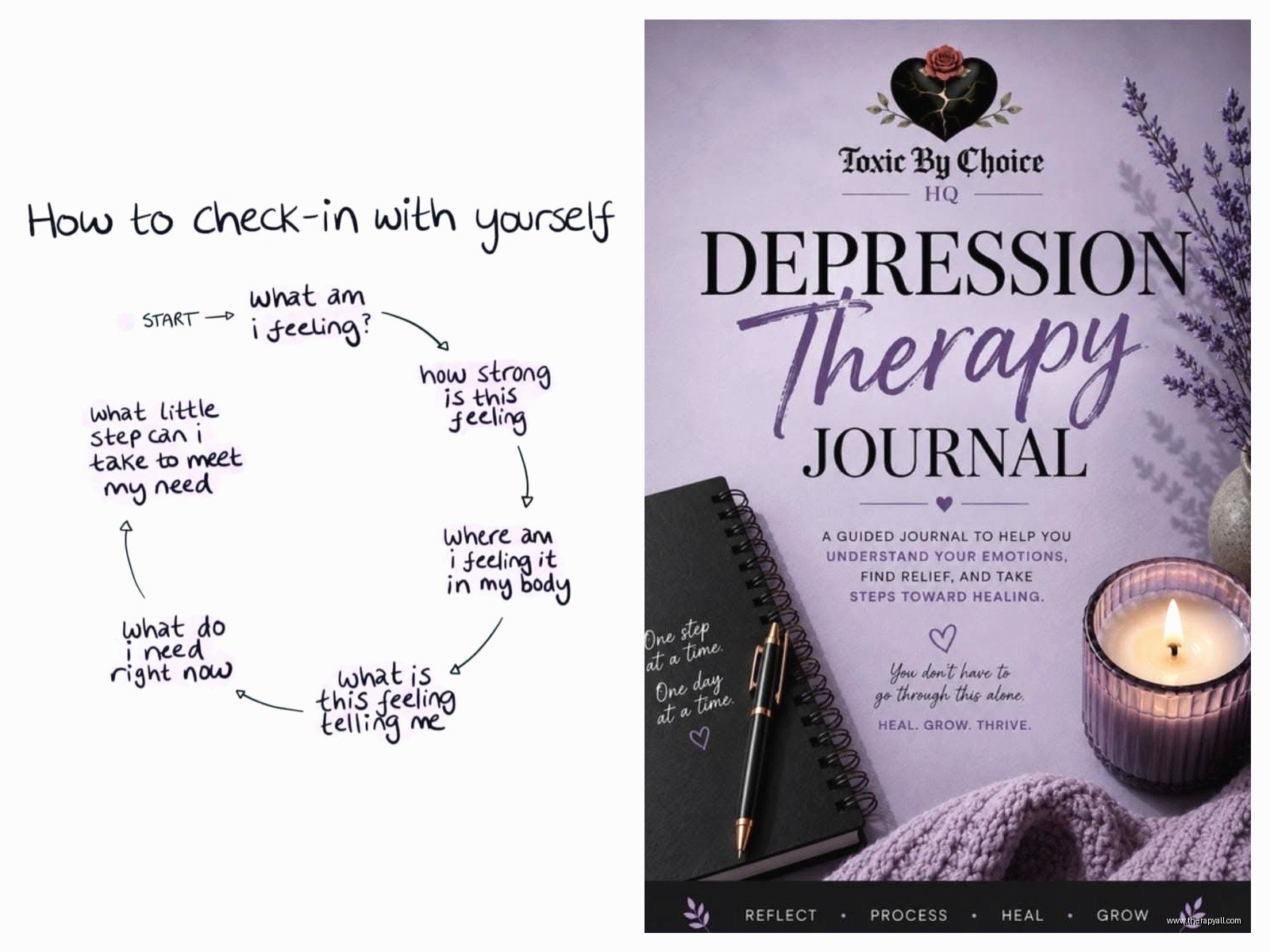
The downside is it can feel scattered if you prefer going deep with one approach rather than sampling multiple techniques. And some people find having too many options actually makes it harder to develop a consistent practice because you’re constantly deciding which section to use.
The Self-Care Journal
These focus on tracking self-care activities across different domains: physical (sleep, exercise, nutrition), emotional (therapy, journaling, creative activities), social (connecting with friends, setting boundaries), and sometimes spiritual or occupational categories.
You check off activities or rate how well you did in each area, which helps identify patterns. Like maybe you notice you always skip social self-care when you’re stressed, or your sleep falls apart before your mood crashes.
My cat knocked over my coffee onto one of these journals once and the pages stuck together, which was actually fine because I’d stopped using it anyway. The issue with self-care journals is they can feel like just another obligation, another list of things you’re not doing well enough. They work better when you approach them as data collection rather than performance evaluation.
The Trauma Recovery Journal
These are specifically designed for people working through trauma, usually incorporating elements of trauma-focused CBT, grounding techniques, and safety planning. They include prompts about triggers, coping strategies, and processing difficult memories at a manageable pace.
This is not something to just pick up casually. Trauma work should happen with professional support, and these journals are meant as supplements to therapy, not replacements. They typically include warnings about pacing yourself and resources for crisis support.
The better versions include psychoeducation about trauma responses, explanations of why certain symptoms occur, and validation that recovery isn’t linear. They avoid the toxic positivity that sometimes shows up in general mental health content—no “everything happens for a reason” nonsense.
Digital Options and Apps
Several apps function as therapy journals: Daylio for mood tracking, Sanvello for CBT exercises, Reflectly for guided prompts. The advantage is portability, reminder notifications, and data visualization showing trends over time.
The disadvantage is screen time and privacy concerns. Some people also find the physical act of writing by hand more beneficial for processing emotions, though the research on this is mixed. There’s some evidence that handwriting engages different cognitive processes than typing, but whether that translates to better therapeutic outcomes isn’t clear.
I use a combination honestly—digital mood tracking because I’ll actually remember to do it when my phone reminds me, but physical journaling for deeper processing work because I get distracted by notifications when I try to do it on my phone or computer.
What Actually Matters in a Therapy Journal
The format matters less than consistency and actually using it. A fancy journal you never open doesn’t help anyone. A cheap notebook with simple prompts you use daily will be more effective than an elaborate system you abandon after two weeks.
Consider what therapeutic approach resonates with you. If you’re working with a therapist, ask what they recommend. If you’re self-directed, think about whether you need structure (CBT/DBT formats) or flexibility (bullet journal or varied prompts).
Time commitment is real. Some journals require 5 minutes, others need 20-30 minutes for thorough completion. Be honest about what you’ll actually maintain. Starting with shorter exercises and building up works better than—wait, I was gonna say something about New Year’s resolutions but that’s not quite the right comparison.
Privacy matters too. If you live with others, consider whether you need a journal with a closure strap or prefer digital with password protection. Therapy journals often contain vulnerable material, and knowing it’s secure makes it easier to be honest.
Price ranges from $10 for basic journals to $30+ for comprehensive workbooks. More expensive doesn’t mean more effective. I’ve seen people make significant progress with $3 composition notebooks using prompts they found online.
Common Misconceptions That Drive Me Crazy
The idea that journaling alone can treat serious mental health conditions is harmful. Therapy journals are tools, not treatments. They work best alongside professional support, medication when appropriate, and other evidence-based interventions.
Also the assumption that you have to journal every single day or you’ve failed. Gaps are normal. Life gets busy, you forget, sometimes you just don’t feel like it. The goal is general consistency over time, not perfect adherence.
And please, the wellness industry needs to stop acting like gratitude journaling cures depression. It can be a helpful practice for some people as part of a broader treatment plan, but it’s not a substitute for actual mental healthcare.
Choosing What Works for Your Situation
If you experience anxiety, look for journals with exposure planning and worry tracking. For depression, mood monitoring and behavioral activation prompts help. If you’re working on emotional regulation, DBT diaries make sense. For general mental wellness and self-awareness, simpler gratitude or reflection journals work fine.
You can also use different journals for different purposes or switch between them as your needs change. I’ve rotated through probably a dozen different formats over the years depending on what I was dealing with at the time.
Try one for at least three weeks before deciding it doesn’t work. The first week usually feels awkward regardless of format. By week three you’ll have a better sense of whether it’s actually helpful or just not the right fit for you.
ADHD & Neurodiversity
Life Planner Bundle – Life Organizer
Self-Care & Personal Growth
Acceptance And Commitment
Anxiety & Stress
Stress Processing Journal & Reflection Worksheets For Daily Self – Care
Self-Care & Personal Growth
Self – Reflection Guided Journal With Guided Prompts 30
Emotional Wellness
Decision Processing – Thought Processing Journal For Daily Self – Care
Therapist Resources
Physiotherapist Journal PDF Planner Tracker Or Log Book
Self-Care & Personal Growth
Customizable Self – Confidence & Self – Esteem Guided Journal
ADHD & Neurodiversity
ADHD Behavior Tracker PDF Planner Tracker Or Log Book