
Mental Health, Therapy resources
Therapeutic Help – Complete Guide

Aug
What Therapeutic Help Actually Means
Therapeutic help is any structured support designed to improve your mental health, emotional functioning, or behavioral patterns through evidence-based methods. It includes everything from sitting in a therapist’s office once a week to using digital mental health apps to participating in group therapy sessions at a community center.
I remember back in 2019 when I was working on a massive content project for a therapy directory site, and I kept getting emails from people asking if their life coach counted as “therapeutic help.” That’s when I realized how blurry these lines are for most people. The short answer is that therapeutic help typically involves trained professionals using established psychological frameworks, whereas coaching is more future-focused and doesn’t address clinical mental health conditions.
The core distinction is that therapeutic help addresses dysfunction, distress, or diagnosable conditions. You’re working with someone who has clinical training—usually a psychologist, psychiatrist, licensed clinical social worker, or licensed professional counselor. They’re using methods that have research backing them up.
Types of Therapeutic Help You Can Access
Individual therapy is the most common form. You meet one-on-one with a therapist, usually for 45-60 minutes, and work through whatever you’re dealing with. This could be anxiety, depression, trauma, relationship issues, grief, or just general life stress that’s become unmanageable.
Group therapy puts you in a room with other people facing similar challenges. A therapist facilitates, but you’re learning from each other’s experiences too. It’s cheaper than individual therapy and honestly kinda powerful when you realize you’re not the only person who feels completely broken sometimes.
Couples therapy or family therapy brings relationship dynamics into focus. You’re not just working on yourself—you’re addressing patterns between people. The therapist helps everyone communicate better and understand the systems they’re stuck in.
Psychiatric care involves medication management. Psychiatrists are medical doctors who can prescribe medication for mental health conditions. You might see them alongside a therapist, or just for med checks if that’s all you need.
Intensive outpatient programs (IOPs) and partial hospitalization programs (PHPs) are step-down options from inpatient care. You’re getting multiple hours of therapy per day, several days a week, but you go home at night. These are for people who need more than weekly therapy but don’t require 24-hour supervision.
Inpatient or residential treatment means you’re staying at a facility. This is for acute crises—when you’re a danger to yourself or others, or when your symptoms are so severe you can’t function in daily life.
Online therapy platforms exploded during COVID and they’re still around. You can text, video chat, or phone call with licensed therapists. The quality varies wildly, which genuinely annoys me because some platforms clearly prioritize growth over actually matching people with appropriate providers.
How to Know When You Need Therapeutic Help
You don’t have to be in crisis to seek therapy. That’s a misconception that keeps so many people suffering longer than necessary. If something in your life is causing persistent distress, affecting your relationships, impacting your work, or making daily tasks feel overwhelming—that’s enough.
Some specific signs include: sleeping too much or too little for weeks on end, losing interest in things you used to enjoy, feeling hopeless or worthless most days, having intrusive thoughts you can’t control, using substances to cope more than you’d like to admit, experiencing panic attacks, avoiding situations because of anxiety, or noticing your relationships are repeatedly falling apart in similar ways.
Physical symptoms count too. Chronic headaches, stomach issues, muscle tension, or fatigue that doctors can’t find a medical cause for—these can be manifestations of mental health struggles.
I think about this client I saw years ago during my practicum who came in saying she just needed “tips for stress management” and within three sessions we were unpacking childhood trauma she didn’t even realize was affecting her. Sometimes you don’t know what you need help with until you start talking.
Different Therapy Approaches Explained
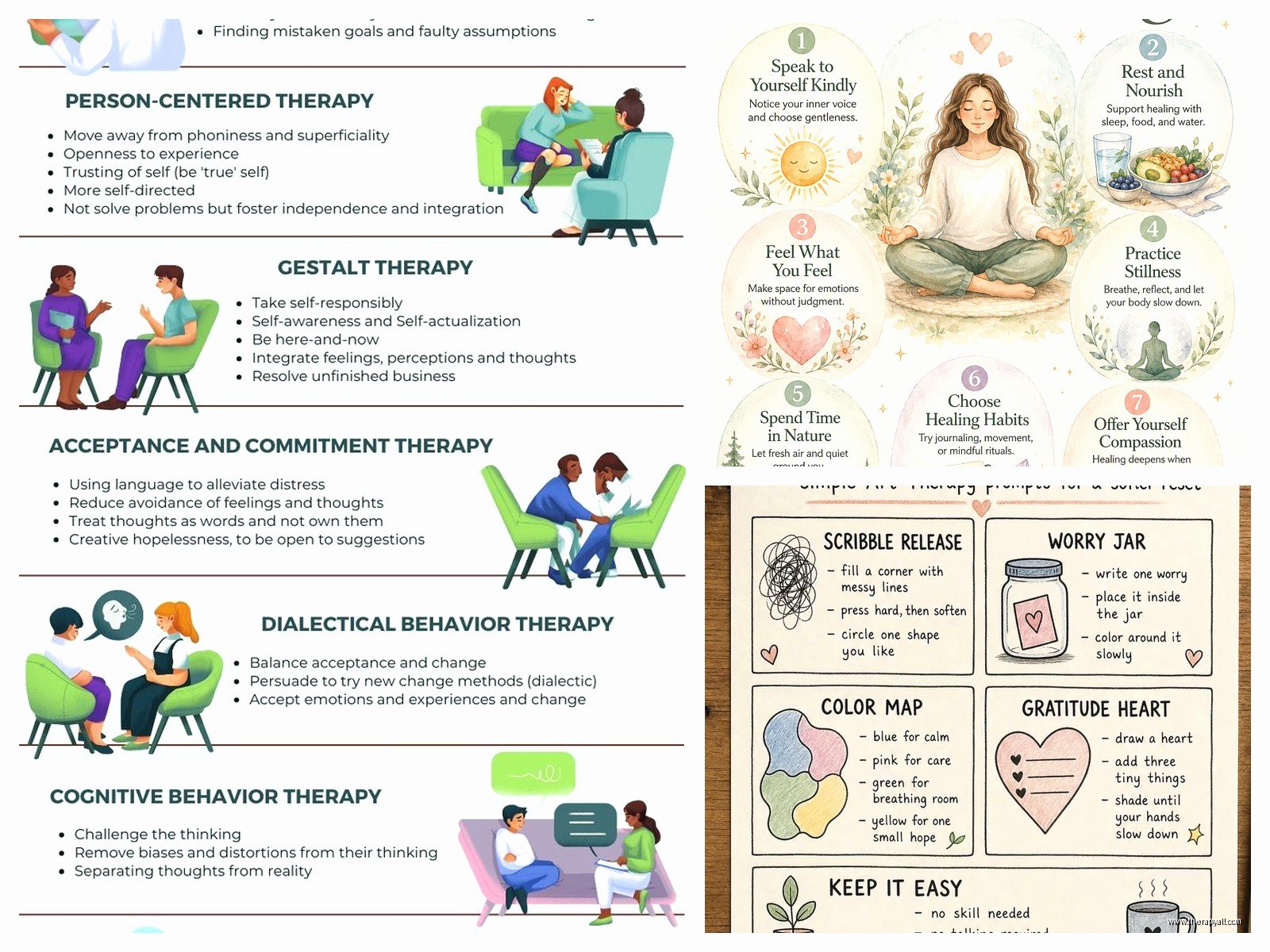
Cognitive Behavioral Therapy (CBT) focuses on the connection between thoughts, feelings, and behaviors. You learn to identify unhelpful thought patterns and replace them with more balanced ones. It’s structured, often includes homework, and works really well for anxiety and depression.
Dialectical Behavior Therapy (DBT) was originally developed for borderline personality disorder but now gets used for emotion regulation issues broadly. It teaches mindfulness, distress tolerance, emotion regulation, and interpersonal effectiveness. There’s usually a skills group component plus individual therapy.
Psychodynamic therapy digs into unconscious patterns and how your past shapes your present. It’s less structured than CBT—you might spend sessions exploring dreams, childhood memories, or recurring relationship patterns. This approach takes longer but can create deep shifts.
EMDR (Eye Movement Desensitization and Reprocessing) is specifically for trauma. You recall traumatic memories while doing bilateral stimulation—usually following the therapist’s finger back and forth with your eyes. It sounds weird, I know, but the research supporting it is solid.
Acceptance and Commitment Therapy (ACT) helps you accept difficult thoughts and feelings rather than fighting them, while committing to actions aligned with your values. It’s less about symptom reduction and more about living meaningfully even with discomfort.
Narrative therapy views you as separate from your problems and helps you rewrite the stories you tell about yourself. It’s collaborative and emphasizes your strengths and resources.
Solution-Focused Brief Therapy is super short-term and looks at what’s already working in your life rather than dwelling on problems. You might only need 3-5 sessions.
My cat just knocked over my water bottle and now there’s water everywhere, hold on—okay, anyway, the approach matters less than you’d think for many issues. The relationship with your therapist (what we call the therapeutic alliance) is actually the biggest predictor of good outcomes.
How to Find a Therapist
Start with your insurance provider’s directory if you have insurance. Call the number on your card and ask for a list of in-network mental health providers. This limits your out-of-pocket costs significantly.
Psychology Today has a therapist finder tool where you can filter by location, specialty, insurance, and approach. Therapists create profiles explaining their style and what they treat. I probably recommended this tool a thousand times when I was writing FAQ content for mental health sites, and it’s still the most user-friendly option.

Ask your primary care doctor for referrals. They often know reputable therapists in the area and can make the referral official if your insurance requires it.
University counseling centers offer low-cost therapy if you’re a student. Community mental health centers provide sliding scale fees based on income for anyone.
Employee Assistance Programs (EAPs) through your job usually offer 3-8 free therapy sessions. It’s confidential and you don’t need to tell your employer what you’re going for.
Open Path Collective is a nonprofit where therapists offer sessions for $30-$80. You pay a one-time membership fee and then get access to reduced rates.
When you contact a therapist, you’ll usually have a brief phone consultation first. Ask about their experience with your specific issue, their approach, their availability, and their fees. You’re interviewing them as much as they’re screening you.
What Actually Happens in Therapy
The first session is an intake. You’ll fill out paperwork about your history, current symptoms, medications, and what brought you to therapy. The therapist asks a lot of questions—about your childhood, relationships, work, substance use, trauma history, suicidal thoughts. It can feel invasive, but they’re gathering information to understand you and assess risk.
You’ll collaborate on goals. What do you want to be different? How will you know therapy is working? These don’t have to be perfectly articulated—they can evolve as you go.
Regular sessions follow. You talk about what’s going on, the therapist might teach you skills or offer different perspectives, and sometimes you just need someone to witness your pain without trying to fix it. Therapy isn’t always comfortable. You might cry, feel angry, or want to quit when things get hard.
Homework between sessions is common in some approaches. You might track your moods, practice relaxation techniques, or try new behaviors and report back on how it went.
Progress isn’t linear. You’ll have good weeks and terrible weeks. Sometimes you’ll feel worse before you feel better because you’re actually dealing with stuff you’ve been avoiding.
Cost and Insurance Realities
Therapy is expensive. Without insurance, individual sessions typically run $100-$250 per session depending on location and the therapist’s credentials. In major cities, it’s often higher.
If you have insurance, check whether you have mental health coverage and what your copay is. Some plans require you to meet a deductible first. PPO plans usually let you see any licensed therapist, while HMO plans restrict you to their network.
Many therapists don’t take insurance because the reimbursement rates are low and the administrative burden is high. They might provide you with a superbill—an itemized receipt you can submit to your insurance for out-of-network reimbursement. You pay upfront and get partially reimbursed later.
Sliding scale means the therapist adjusts their fee based on your income. You’ll need to provide proof of income usually. Not all therapists offer this, but many do for a limited number of clients.
Medicare and Medicaid cover mental health services, but finding providers who accept them can be challenging because the reimbursement rates are even lower than private insurance.
When Therapy Isn’t Working
Sometimes you’re seeing a therapist and it’s just…not helping. Maybe you don’t feel heard, or they keep giving you advice that doesn’t fit your life, or you’re not clicking.
It’s okay to switch therapists. You don’t need a dramatic reason. “This isn’t the right fit” is enough. Some therapists will even help you find someone better suited to your needs.
Give it a few sessions before deciding though. The first couple sessions can feel awkward because you’re building trust with a stranger. But if you’re several months in and seeing no progress, something needs to change.
Sometimes the approach is wrong for you. If you’re doing CBT and it feels too surface-level, maybe you need something deeper like psychodynamic therapy. If your therapist is super passive and you want more direction, look for someone who does a more structured approach.
You can also need a higher level of care than weekly therapy. If you’re in crisis or your symptoms are severe, talk to your therapist about whether you need more intensive treatment or medication evaluation.
Alternatives and Supplements to Traditional Therapy
Support groups are free or low-cost and focus on specific issues—grief, addiction, chronic illness, LGBTQ+ concerns. They’re peer-led usually, though some have professional facilitators. NAMI, SMART Recovery, and GriefShare are examples.
Mental health apps like Headspace, Calm, or Sanvello can supplement therapy but shouldn’t replace it if you’re dealing with significant symptoms. They’re useful for daily skill practice.
Books and workbooks—bibliotherapy is a real thing. “Feeling Good” by David Burns for depression, “The Body Keeps the Score” for trauma, “The Dialectical Behavior Therapy Skills Workbook” if you’re learning DBT. I was gonna say something about how I read like fifteen therapy workbooks in summer 2021 when I was writing comparison posts and actually started using the exercises myself, which felt kinda meta.
Peer support specialists are people with lived experience of mental health challenges who are trained to support others. They’re not therapists but they offer unique understanding.
Crisis lines like 988 (the Suicide and Crisis Lifeline) are for immediate support. They’re free, confidential, and available 24/7.
Medication without therapy is an option some people choose, especially if their symptoms are primarily biological or if they’ve already done therapy and just need maintenance support.
Special Considerations
Finding a therapist who understands your specific identity matters. If you’re BIPOC, LGBTQ+, neurodivergent, or part of any marginalized group, you might want someone who gets those experiences without you having to educate them. Directories let you filter for this.
Trauma-informed care means the therapist understands how trauma affects people and won’t inadvertently retraumatize you. Not all therapists are trained in this, which is honestly frustrating because trauma is so common.
Teens and kids need therapists specifically trained in working with younger people. Play therapy, art therapy, or family-based approaches might be more effective than talk therapy.
Teletherapy expanded access but it’s not ideal for everyone. Some people need the physical boundary of leaving home and going to an office. Technical issues can disrupt sessions. And if you’re in crisis, a therapist on a screen can’t intervene the same way.
Confidentiality has limits. Therapists must break confidentiality if you’re an imminent danger to yourself or others, if there’s child or elder abuse, or if they’re subpoenaed by a court. Otherwise, what you say stays private.
ADHD & Neurodiversity
Life Planner Bundle – Life Organizer
Self-Care & Personal Growth
Acceptance And Commitment
Anxiety & Stress
Stress Processing Journal & Reflection Worksheets For Daily Self – Care
Self-Care & Personal Growth
Self – Reflection Guided Journal With Guided Prompts 30
Emotional Wellness
Decision Processing – Thought Processing Journal For Daily Self – Care
Therapist Resources
Physiotherapist Journal PDF Planner Tracker Or Log Book
Self-Care & Personal Growth
Customizable Self – Confidence & Self – Esteem Guided Journal
ADHD & Neurodiversity
ADHD Behavior Tracker PDF Planner Tracker Or Log Book