# Therapist Forms Guide
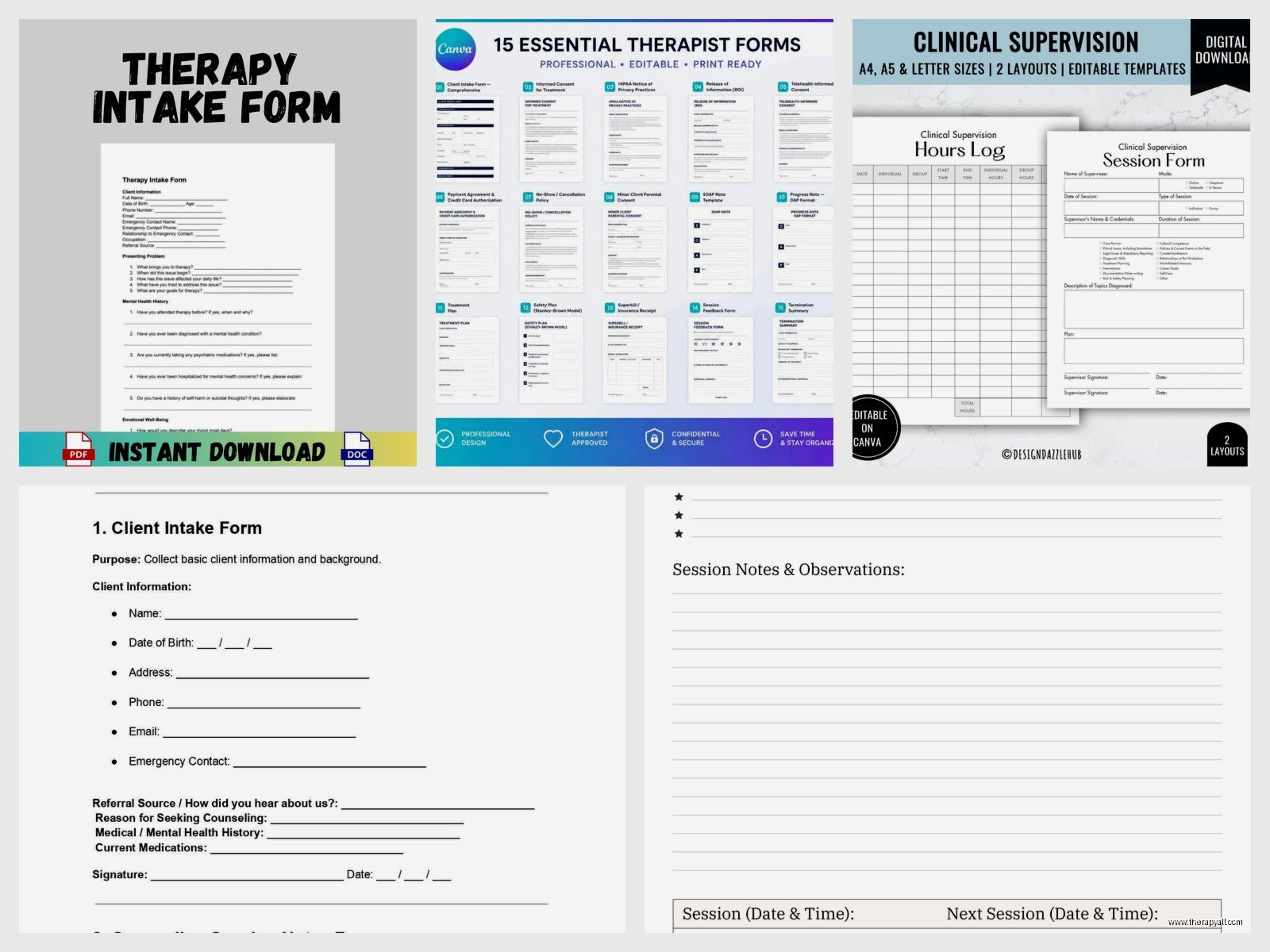
Therapist forms are the administrative backbone of any practice, whether you’re running a solo office or managing a group clinic. They range from intake paperwork to consent forms, assessment tools, treatment plans, progress notes, termination summaries, and everything in between.
I remember back in 2019, I was helping a friend set up her private practice and we spent an entire Saturday afternoon just organizing her forms into categories. She had downloaded like forty different templates from various websites and half of them were duplicates with slightly different wording. It was chaos. That experience taught me that you don’t need every form that exists — you need the right forms for your specific practice model.
## Essential Intake Forms
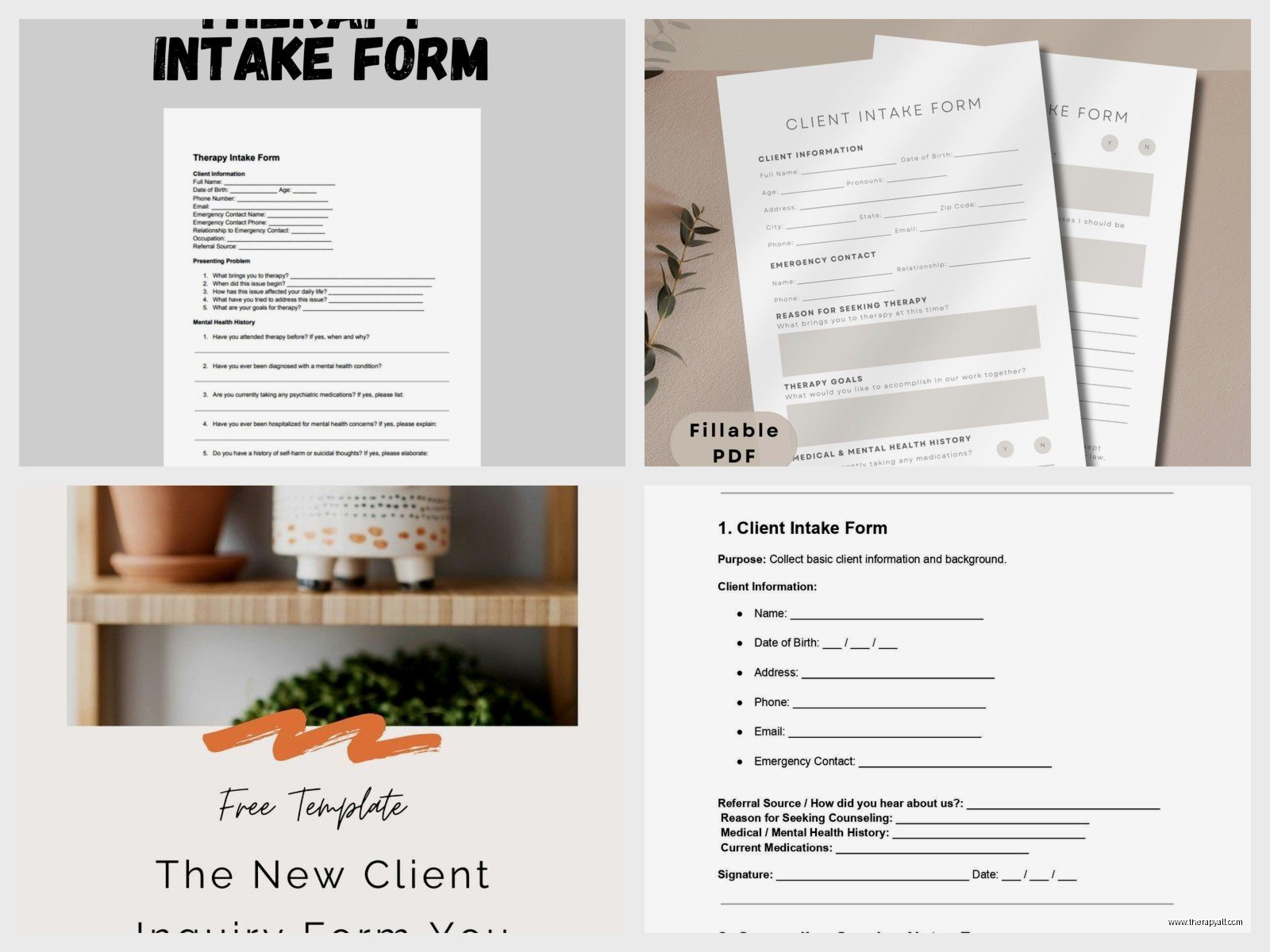
Intake forms are what clients fill out before or during their first session. The basic intake packet typically includes a demographic information sheet, medical history, mental health history, current symptoms checklist, and emergency contact information.
Your demographic form should capture name, date of birth, address, phone number, email, preferred pronouns, occupation, insurance information if applicable, and how they heard about your practice. I always tell people to add a question about preferred contact method because some clients genuinely hate phone calls and will ignore your voicemails forever.
The mental health history section needs to cover previous therapy experiences, psychiatric hospitalizations, medication history, substance use history, family mental health history, and current prescribing providers. You want this detailed enough to be clinically useful but not so overwhelming that clients give up halfway through.
Medical history matters more than some therapists realize. You need to know about major medical conditions, current medications, recent surgeries, chronic pain, sleep issues, and dietary restrictions if you ever plan to discuss nutrition or holistic approaches. One thing that genuinely annoyed me for years was intake forms that had a tiny box for “list all medications” — people are on like twelve medications sometimes and they’re gonna need more space than that.
## Consent and Agreement Forms
Informed consent is legally required and ethically essential. Your consent form needs to explain the nature of therapy, your theoretical orientation, session frequency and length, fee structure, cancellation policy, confidentiality and its limits, record-keeping practices, emergency procedures, and termination process.
The limits of confidentiality section has to be crystal clear: mandated reporting of child abuse, elder abuse, dependent adult abuse, danger to self, danger to others, and court orders. Some states have additional requirements. You also need to address how you handle couples or family therapy situations where confidentiality gets complicated.
I’ve seen consent forms that are three pages long and ones that are twelve pages long. There’s no perfect length but you want it comprehensive without being incomprehensible. Legal jargon is sometimes unavoidable but try to keep most of it in plain language.
Your financial agreement should be a separate form or a distinct section. Cover your session fees, sliding scale policies if applicable, payment methods accepted, when payment is due, late cancellation fees, insurance billing procedures, and what happens with unpaid balances. Also include your policy on phone calls, emails, and crisis contact between sessions because clients will absolutely text you at 11 PM if you don’t set boundaries.
HIPAA authorization forms are required if you’re a covered entity. The Notice of Privacy Practices explains how you use and disclose protected health information. Clients need to sign acknowledging they received this notice.
## Assessment Tools and Screening Forms
Standardized assessment tools help you gather baseline data and track progress over time. Common screening instruments include the PHQ-9 for depression, GAD-7 for anxiety, PCL-5 for PTSD, and the OQ-45 for overall functioning.
You can also use symptom-specific assessments like eating disorder screenings, substance use assessments, trauma histories, or relationship satisfaction scales depending on your specialty areas. I kinda rotate through different assessments depending on what the client’s presenting concerns are rather than giving everyone the same battery.
Some assessments require training or certification to administer and interpret. Don’t just download the Beck Depression Inventory and start using it without understanding the scoring and what the results actually mean. Also, many standardized instruments are copyrighted and you need to purchase them legally.
Self-report questionnaires are useful but remember they’re just one data point. Clients sometimes minimize symptoms, exaggerate symptoms, or misunderstand questions. Always combine assessment results with your clinical interview and observations.
## Treatment Planning Documents
Treatment plans are required by most insurance companies and many licensing boards. A solid treatment plan includes the client’s diagnosis, measurable goals, specific objectives, interventions you’ll use, timeline for goal achievement, and criteria for measuring progress.
Goals need to be specific and measurable. “Feel better” is not a goal. “Reduce panic attacks from 5 per week to 1 per week within 8 weeks” is a goal. “Improve communication with partner as evidenced by completing 3 consecutive weeks of homework assignments” is a goal.
You should review and update treatment plans regularly, typically every 3-6 months or when there are significant changes in the client’s situation. I usually build treatment plan reviews into my regular sessions rather than making it this separate formal thing, but documentation needs to show you’re actually doing it.
Some therapists hate treatment plans because they feel rigid or because they don’t fit with certain theoretical orientations. I get it, but they serve an important purpose for accountability and measuring outcomes. My cat knocked over my coffee while I was writing a treatment plan last week and I honestly wasn’t even that upset because it gave me an excuse to start fresh with better wording.
## Progress Notes and Session Documentation
Progress notes document what happened in each session. The format varies widely — SOAP notes, DAP notes, BIRP notes, narrative notes. SOAP stands for Subjective, Objective, Assessment, Plan. DAP is Data, Assessment, Plan. BIRP is Behavior, Intervention, Response, Plan.
Your progress notes need to include date and time of session, duration, who was present, presenting concerns, interventions used, client’s response, homework assigned, risk assessment, and plan for next session. Notes should be completed within 24-48 hours of the session while everything’s still fresh.
The eternal question is how detailed to make your notes. Too detailed and you’re spending an hour on documentation for a 50-minute session. Too sparse and you can’t remember what you talked about three months later. You also have to assume that clients, insurance companies, lawyers, or courts might read your notes someday, so don’t write anything you wouldn’t want them to see.
I usually aim for notes that capture the essential clinical information without including every single detail of the conversation. You don’t need to transcribe the session. You need to document enough that you could defend your treatment decisions and pick up where you left off in the next session.
## Release of Information Forms
Release of Information (ROI) forms authorize you to share client information with other providers, family members, schools, lawyers, or whoever the client wants you to communicate with. Each ROI should specify exactly what information can be shared, with whom, for what purpose, and for how long the authorization is valid.
You need a separate ROI for each person or organization. You can’t have one blanket ROI that covers everyone. Well, technically you could write it that way but it’s not best practice and it doesn’t protect the client’s privacy adequately.
ROIs should be specific about what you’re allowed to share. “All treatment records” is different from “dates of service and diagnosis only” which is different from “verbal updates on treatment progress.” Get clear authorization for the level of detail you’re being asked to share.
Clients can revoke an ROI at any time. They don’t need a reason. You should document when an ROI is revoked and stop sharing information immediately.
## Termination and Discharge Forms
Termination paperwork documents the end of the therapeutic relationship. This includes a termination summary that covers the dates of treatment, presenting problems, interventions used, progress made, current status, reason for termination, and recommendations for future care if needed.
You should also have clients sign a termination agreement acknowledging that treatment has ended, they understand they can return if needed, they have referrals to other providers if appropriate, and they know how to access their records.
Unplanned terminations happen — clients ghost, move away without notice, or just stop showing up. You still need to document the termination in your records even if you never hear from them again. Most ethics codes require you to make reasonable efforts to ensure appropriate termination, which usually means sending a letter to their last known address.
## Specialized Forms for Different Modalities
Couples therapy requires specific consent forms addressing confidentiality, individual sessions, what happens if the couple separates, and your policies around secrets. I always make couples explicitly agree to my no-secrets policy upfront because otherwise you end up in impossible ethical situations.
Group therapy needs informed consent that covers group confidentiality, what happens if someone violates confidentiality, policies around socializing outside group, and procedures for joining or leaving the group. You also need screening forms to determine if someone’s appropriate for the group.
Teletherapy requires additional consent covering technology requirements, privacy concerns, what happens if the connection drops, emergency procedures when you’re not in the same location, and jurisdictional issues if the client is in a different state. This became a huge thing during COVID and now it’s just standard practice.
Child and adolescent therapy needs consent from parents or guardians plus assent from the minor. You also need to clarify what information you’ll share with parents, which varies depending on the child’s age and state laws. Confidentiality with minors is complicated and your forms need to spell out your approach clearly.
## Digital vs. Paper Forms
Electronic forms through your EHR system are convenient but you need to ensure HIPAA compliance, encrypted transmission, secure storage, and backup systems. Some clients prefer paper forms, especially older adults or people who don’t have reliable internet access.
E-signature platforms like DocuSign or SimplePractice’s built-in signing features work well for remote intake. Just make sure whatever platform you use is HIPAA-compliant and gives you a clear audit trail showing when forms were sent, opened, and signed.
Paper forms need secure storage in locked filing cabinets with limited access. You still need a system for organizing them so you can find what you need quickly. Scanning paper forms into your EHR creates a digital backup but adds extra work.
## Where to Get Forms
You can purchase form templates from professional organizations like APA, ACA, NASW, or AAMFT. These are usually well-vetted and legally sound. You can also find free templates online but verify they meet your state’s requirements and fit your practice model.
Some EHR systems include customizable form templates. This is super convenient because the forms integrate directly with your client records. Popular EHR platforms like SimplePractice, TherapyNotes, and ICANotes all offer form libraries.
Hiring a lawyer who specializes in mental health practices to review your forms is worth the investment, especially for your consent and financial agreement documents. State laws vary and you want to make sure you’re compliant with your specific jurisdiction.
## Form Management Systems
However you store your forms, you need a clear organizational system. I recommend folders or tags for: Blank Templates, Completed Intake Forms, Active Client Forms, Closed Client Forms, and Administrative Forms.
You also need a retention policy. Most states require keeping records for a minimum number of years after termination (often 7 years for adults, longer for minors). Your policy should specify how long you keep different types of records and how you dispose of them securely when the retention period ends.
Version control matters when you update forms. Date each version and keep old versions in an archive folder so you know which version a client signed. I learned this the hard way when I updated my cancellation policy and then couldn’t remember which clients had signed which version and it turned into this whole thing.
Regular form audits help you catch outdated information, missing signatures, or forms that need updating based on law changes. I try to review all my forms annually, usually at the end of the year when things are slower, but honestly sometimes it’s been like 18 months because life gets busy.