
Mental Health, Therapy resources
Therapist Offices – Complete Guide & Resources

Jul
Therapist offices are more complicated than people think. You can’t just rent a room, throw in a couch, and call it good—though I’ve definitely seen colleagues try. The space where therapy happens matters, and not in some abstract “energy of the room” way, but in concrete, practical ways that affect whether clients show up, whether they feel safe enough to talk, and whether you as a therapist can actually do your job without losing your mind.
I remember walking into my first shared office space in 2017 and realizing the walls were so thin I could hear the life coach next door doing some kind of motivational yelling session. My client that day kept glancing at the wall, and I kept pretending it wasn’t happening, which made everything worse. That’s when I learned that soundproofing isn’t optional—it’s the difference between a functional therapy space and an expensive liability.
Location and Accessibility Requirements
Location determines who can actually access your services. You need to think about public transportation routes, parking availability, and whether your building has an elevator. I’ve worked in a second-floor walkup before, and the number of clients who couldn’t make it up the stairs was a problem I didn’t anticipate. Older adults, people with mobility issues, parents with strollers—suddenly you’ve excluded a chunk of potential clients just because you didn’t think about stairs.
The neighborhood matters too, but not in the way people assume. You don’t need a fancy medical district address. What you need is somewhere clients feel comfortable going regularly. That means adequate lighting in parking areas, clear signage, and ideally not directly next to a bar or anywhere that might make clients feel exposed when entering or leaving.
ADA compliance isn’t just a legal checkbox. You need wide enough doorways for wheelchairs, accessible bathrooms, and clear pathways. If you’re leasing, check whether the building already meets these standards or if you’re gonna be responsible for modifications. Landlords love to be vague about this until you’re already locked into a lease.
Privacy and Soundproofing
This is where most therapist offices fail, and it drives me absolutely crazy how many articles gloss over the technical details. You need actual soundproofing, not just thick curtains and a white noise machine—though those help too. Sound transmission class (STC) ratings matter. Standard interior walls have an STC of about 33, which means you can clearly hear conversations. You want walls with an STC of at least 50 for a therapy office.
Adding soundproofing isn’t cheap. You’re looking at acoustic panels, sometimes double drywall with Green Glue in between, solid core doors instead of hollow ones, and weather stripping around door frames. If you’re in a shared suite, you might need to negotiate with the landlord about modifications or find a corner unit where you only share one wall.
White noise machines go outside your door, not inside your office. I see this mistake constantly. The machine creates ambient sound in the hallway so people waiting can’t hear what’s happening in your session. Inside the office, you want it as quiet as possible so you can actually hear your client.
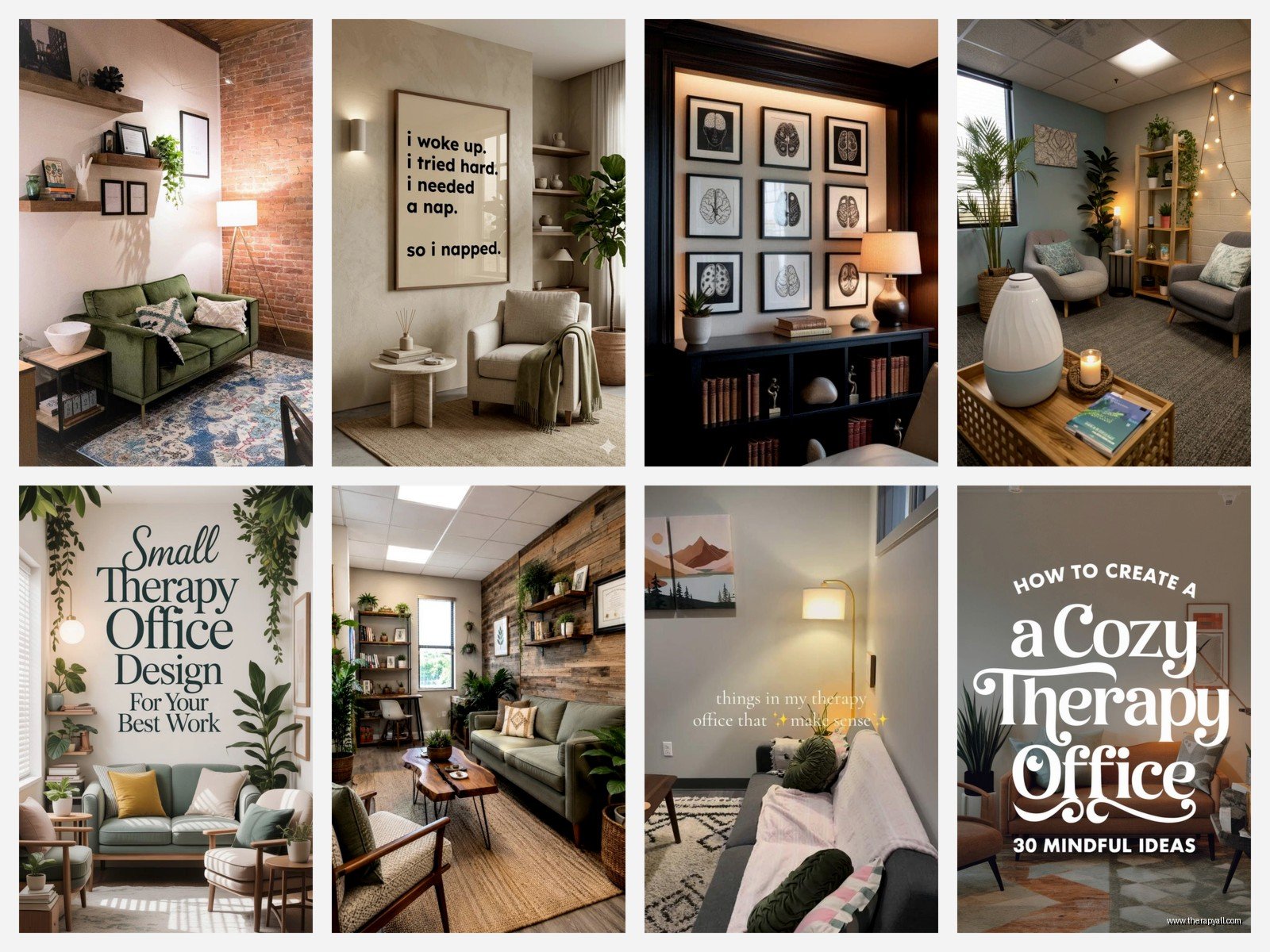
Windows are tricky. You want natural light because fluorescent lighting is depressing and makes everyone look terrible, but windows can compromise privacy. Frosted film, cellular shades, or strategic furniture placement can help. Ground floor offices need extra attention—you don’t want people walking by able to see directly in.
Waiting Room Considerations
The waiting room needs to accommodate the fact that sometimes sessions run over and clients overlap. You need enough seating that people aren’t awkwardly standing, but not so much that it feels like a doctor’s office. Separate exits are ideal so clients leaving don’t have to walk past clients arriving, but that’s a luxury most of us don’t have.
What you put in the waiting room matters less than you think. Magazines get outdated immediately and nobody reads them anyway. A water dispenser or coffee maker is nice. The key thing is making sure clients aren’t stuck staring at each other. Seating arrangements that allow people to look at their phones without making eye contact with strangers is actually what people want.
If you share a waiting room with other therapists, you need a system for knowing when your client has arrived. Some offices use apps, some use a simple text system, some still do the old-fashioned thing where you walk out and get them. Whatever you choose, make it clear to clients so they’re not sitting there wondering if you forgot about them.
Office Layout and Furniture
The therapy room itself needs more thought than just “comfortable seating.” You need at least two seating options because not everyone wants to sit on a couch. Some people prefer chairs with arms, some want distance, some want to sit closer. I keep three different seating options and let clients choose where they sit—it actually tells you something about them.
Your chair matters too. You’re sitting in it for 6-8 hours a day. Get something ergonomic that doesn’t squeak when you shift your weight. I learned this the hard way after developing back problems from a cheap office chair I thought looked nice. Function over aesthetics here.
Tissue boxes need to be within easy reach but not so obvious that they’re like a weird shrine to crying. I keep mine on a side table between the seating areas. Some therapists keep multiple boxes around, which honestly feels like overkill to me, but whatever works.
Clocks should be visible to you but not prominently displayed to clients. You need to track time without being obvious about it. I use a small clock on my desk that I can glance at naturally. Wall clocks make clients hyperaware of time passing, which isn’t helpful.
Lighting needs to be adjustable. Overhead fluorescents are terrible. Table lamps or floor lamps with warm bulbs create a better atmosphere. You want enough light to see clearly but not so bright it feels like an interrogation room. Dimmer switches are worth the investment.

Storage and Organization
You need secure storage for client files, even if you’re mostly digital. Locked file cabinets aren’t optional—they’re HIPAA requirements. If you’re keeping any paper records, assessments, or intake forms, they need to be in a locked cabinet when you’re not actively using them.
Your desk or workspace should be positioned so clients can’t see your computer screen. This seems obvious, but I’ve been in offices where the therapist’s desk faces the client seating and you can see everything. That’s a privacy violation waiting to happen.
Supply storage for things like extra tissues, pens, assessment forms, and whatever therapeutic tools you use needs to be accessible to you but not cluttering the space. I use a small cabinet that looks like furniture but holds all my working materials. My cat knocked over my entire assessment binder last week and I’m still finding papers under the couch at home, which reminded me why I keep my office supplies contained.
Technology and Equipment
Internet connection needs to be reliable if you’re doing any telehealth or need to access electronic health records during sessions. Ethernet is better than WiFi for stability. Have a backup plan for when technology fails—and it will fail.
If you’re doing telehealth from your office, you need decent lighting for video, a good webcam, and a background that doesn’t look chaotic. Virtual backgrounds are kinda tacky in therapy settings. Just position your camera so there’s a clean wall or bookshelf behind you.
Phone system considerations matter more than people think. You need a way to take calls when you’re in session without disrupting the session. Voicemail that goes to a HIPAA-compliant system, or a service that handles calls for you during session times. Clients calling and hearing your phone ring inside the office is unprofessional.
Charging stations for your devices should be discreet. Nothing says “I’m not fully present” like your phone dying mid-session and you scrambling to plug it in. Keep chargers accessible but not visible.
Compliance and Legal Requirements
HIPAA compliance affects your office setup more than you might realize. You need to ensure conversations can’t be overheard, records are secure, and any technology you use meets HIPAA standards. This includes your WiFi network—it needs to be password protected and separate from any public network in the building.
Fire safety codes, occupancy limits, and building codes vary by location. Check with your local regulations before signing a lease. Some areas have specific requirements for healthcare offices that are different from general office spaces.
Insurance and liability coverage should include your office space. Make sure your malpractice insurance knows where you’re practicing and that the space meets their requirements. Some policies have specific clauses about home offices versus commercial spaces.
Accessibility isn’t just about physical access—it includes things like service animals, which means you can’t have a “no pets” policy that would exclude them. You also need to consider accommodations for clients with different sensory needs or disabilities.
Shared Office Spaces vs. Solo Spaces
Shared office spaces or suite arrangements can reduce costs but come with complications. You’re sharing waiting rooms, bathrooms, sometimes reception services. The benefit is lower rent and shared amenities. The downside is less control over the environment and potential conflicts with suite-mates who have different standards for noise, cleanliness, or professionalism.
Solo spaces give you complete control but cost more. You’re responsible for everything—cleaning, maintenance, all utilities, and you can’t split costs with anyone. For new therapists, shared spaces usually make more financial sense. Once you’re established with a full caseload, solo spaces become more viable.
Co-working spaces designed for therapists are becoming more common. These provide private therapy rooms with shared waiting areas and administrative support. They handle a lot of the logistical headaches, but you’re paying a premium for that convenience. Whether it’s worth it depends on your practice size and how much you value not dealing with landlord issues.
Home Office Considerations
Home offices are legally and ethically complicated. Some states restrict or prohibit seeing clients in your home. Others allow it with specific requirements—separate entrance, dedicated space that’s not used for personal purposes, and clear boundaries.
The practical issues with home offices include maintaining professional boundaries, managing family or roommate schedules around client appointments, and ensuring privacy. If you have kids or pets, you need a plan for keeping them out of the therapy space during sessions. Barking dogs or children’s voices in the background aren’t professional.
Zoning laws might prohibit running a business from residential property. Check local regulations before investing in setting up a home office. Some homeowners associations also have restrictions. Getting caught operating without proper permits or in violation of zoning laws can result in fines and force you to relocate your practice.
Tax implications exist for home offices. You can potentially deduct a portion of your housing costs, but it needs to be a dedicated space used exclusively for business. The IRS has specific requirements, and it’s worth consulting with an accountant who understands private practice.
Lease Negotiations and Costs
Commercial leases are different from residential leases. They’re negotiable in ways residential leases often aren’t. You can negotiate things like build-out allowances for modifications, rent escalation clauses, and what’s included in your rent versus what you pay separately.
Triple net leases mean you pay base rent plus your share of property taxes, insurance, and maintenance costs. These costs can add up significantly and aren’t always clear upfront. Make sure you understand what you’re actually going to pay monthly, not just the base rent number.
Length of lease matters. Shorter leases give you flexibility if your practice doesn’t work out in that location or if you outgrow the space. Longer leases often come with better rates and more stability. For new practices, I generally recommend starting with a shorter lease or negotiating an early termination clause.
Build-out and modification clauses determine what you can change about the space. If you need to add soundproofing or modify layouts, make sure your lease allows it and clarify who pays for what. Some landlords will contribute to improvements, especially if you’re signing a longer lease.
Maintenance and Upkeep
Regular cleaning is non-negotiable. Whether you do it yourself or hire a service, the space needs to be consistently clean. Dusty surfaces, dirty bathrooms, or cluttered waiting rooms send a message about your professionalism.
Climate control needs to work reliably. There’s nothing worse than trying to do therapy in a room that’s too hot or too cold. Make sure you understand who’s responsible for HVAC maintenance and repairs—you or the landlord—and what the response time is when something breaks.
Regular maintenance checks for things like smoke detectors, emergency lighting, and door locks keep you compliant with safety codes and prevent bigger problems. Create a schedule and actually stick to it. It’s boring administrative work, but it matters.
Supplies need regular restocking—tissues, hand sanitizer, cleaning supplies, office basics. Running out of tissues mid-session is awkward. Keep backup supplies and check stock weekly. This sounds stupidly simple but it’s one of those things that’s easy to let slide until you need something and don’t have it.
ADHD & Neurodiversity
Life Planner Bundle – Life Organizer
Self-Care & Personal Growth
Acceptance And Commitment
Anxiety & Stress
Stress Processing Journal & Reflection Worksheets For Daily Self – Care
Self-Care & Personal Growth
Self – Reflection Guided Journal With Guided Prompts 30
Emotional Wellness
Decision Processing – Thought Processing Journal For Daily Self – Care
Therapist Resources
Physiotherapist Journal PDF Planner Tracker Or Log Book
Self-Care & Personal Growth
Customizable Self – Confidence & Self – Esteem Guided Journal
ADHD & Neurodiversity
ADHD Behavior Tracker PDF Planner Tracker Or Log Book