
Mental Health, Therapy resources
Therapy Documents – Everything You Need to Know

Jul
Therapy documents are the administrative backbone of mental health practice, and if you’ve ever been in therapy—or worked in the field—you know they’re everywhere. Intake forms, treatment plans, progress notes, consent forms, termination summaries. I remember sitting in a supervision meeting back in 2019 and watching a newly licensed therapist panic because she couldn’t find a client’s signed consent form and the audit was in two days. That’s when it really hit me how much these pieces of paper (or PDFs, let’s be real) actually matter.
You’re gonna encounter therapy documents whether you’re a client, a therapist, or someone researching the field. They serve legal, clinical, and ethical functions, and honestly, the sheer volume can be overwhelming if you don’t know what each one does.
Intake and Assessment Documents
The intake packet is usually your first encounter with therapy paperwork. This is the stack of forms you fill out before your first session—or sometimes during it, if the practice is running behind. It typically includes demographic information, emergency contacts, insurance details, medical history, and a symptom checklist.
I’ve seen intake forms that are three pages and ones that are twenty-seven. The longer ones drive me up the wall because half the questions are redundant or worded in ways that confuse clients. There’s this one form I encountered while consulting for a group practice that asked the same question about substance use four different times in four different sections. Just ask it once, clearly, and move on.
Assessment tools are often bundled with intake documents. These might include standardized measures like the PHQ-9 for depression, GAD-7 for anxiety, or the PCL-5 for PTSD symptoms. These aren’t just bureaucratic checkboxes—they establish a baseline that therapists use to track progress over time. When I was writing assessment guides in 2021, I started actually taking these screeners myself just to see what the client experience felt like, and some of them are… kinda poorly designed from a user perspective.
Consent Forms and HIPAA Notices
Consent forms explain what you’re agreeing to when you start therapy. This covers confidentiality limits, fees, cancellation policies, record-keeping practices, and how the therapist handles emergencies. You sign these before treatment begins, and legally, the therapist can’t proceed without your informed consent.
The HIPAA Notice of Privacy Practices is a separate beast. It’s federally mandated and explains how your health information can be used and disclosed. Most clients skim it or skip it entirely, which I get—it’s written in dense legal language. But it actually contains important information about your rights, like how to request your records or file a complaint.
One thing that genuinely bugs me: practices that bury important information in consent forms. I’ve seen 12-page consent documents where the cancellation fee policy is on page 9 in 8-point font. That’s not informed consent, that’s just covering your ass legally while hoping clients don’t actually read it.
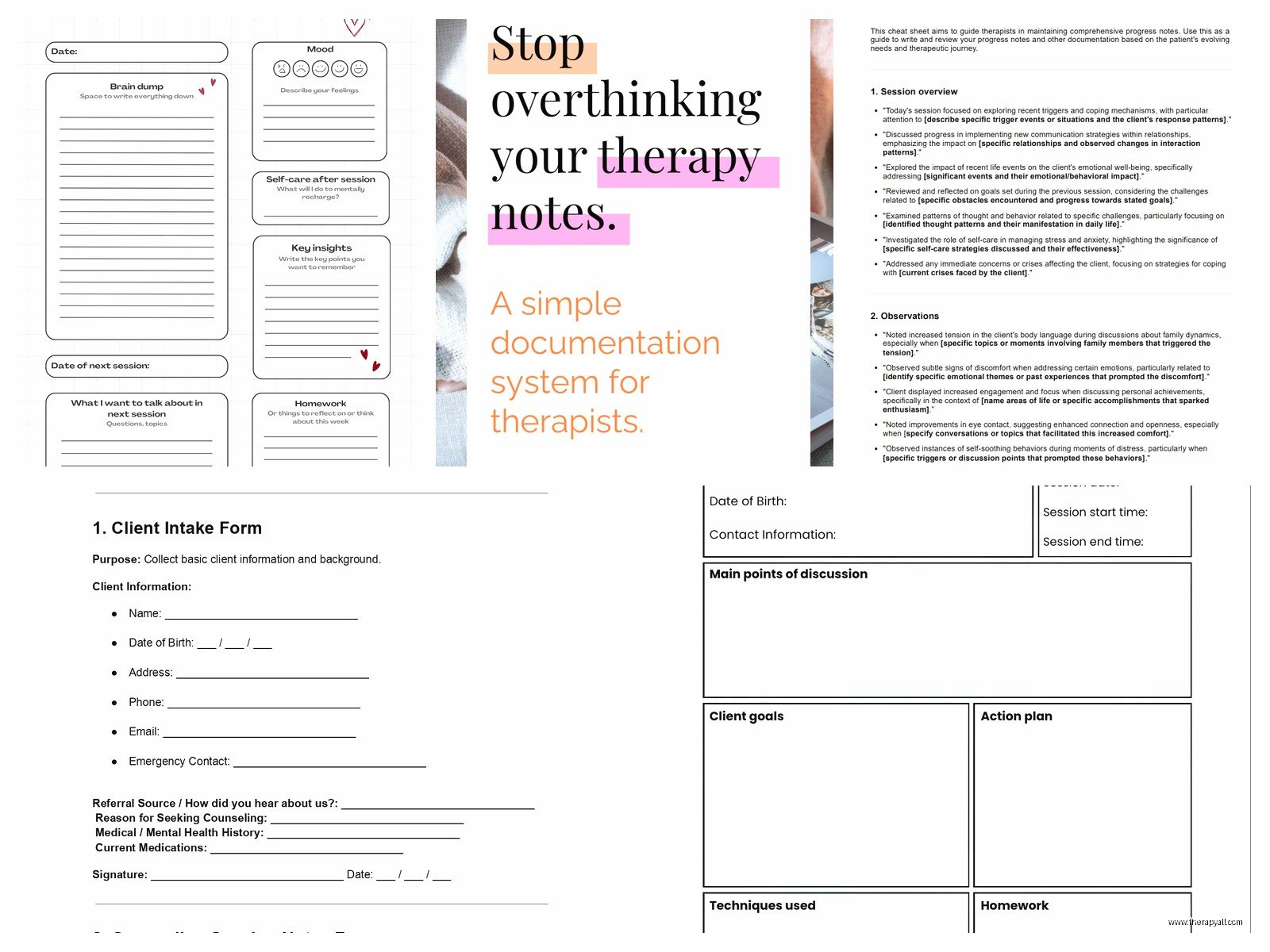
Treatment Plans
Treatment plans are the roadmap for therapy. They outline your diagnosis (if applicable), treatment goals, interventions the therapist will use, and how progress will be measured. Insurance companies often require these, and they typically need to be updated every few months or when there’s a significant change in treatment.
A good treatment plan is specific. Instead of “Client will feel less anxious,” it should say something like “Client will reduce panic attack frequency from 4-5 times per week to 1-2 times per week within 8 weeks, as measured by self-report and symptom tracking.” The measurable part is crucial for demonstrating medical necessity to insurance—and also for actually knowing if therapy is working.
You might not see your treatment plan unless you ask for it. Some therapists review it collaboratively with clients, others file it away and only pull it out for insurance audits or… wait, I was gonna say something else but my cat just knocked over my water bottle and I need to remember where I was going with this. Right—some therapists treat treatment plans as purely administrative documents, which misses the point of having them be collaborative.
Progress Notes and Session Documentation
Progress notes document what happens in each session. These are clinical records that typically aren’t shared with clients unless requested, though laws vary by state. The most common format is SOAP notes: Subjective (what the client reports), Objective (what the therapist observes), Assessment (clinical impressions), and Plan (what’s next).
Other formats include DAP notes (Data, Assessment, Plan) and narrative notes. The format matters less than the content—good progress notes capture relevant clinical information without unnecessary detail. They need to be thorough enough to justify treatment but not so detailed that they violate the client’s privacy if subpoenaed.
I spent summer 2022 writing documentation templates for a telehealth platform, and I learned that most therapists hate writing notes. They’re time-consuming, they’re not billable, and there’s always this tension between writing enough to be clinically useful and not writing so much that you’re spending 20 minutes on notes after a 50-minute session.
What Goes in Progress Notes
Progress notes should include the date and duration of the session, the client’s presenting concerns that day, interventions used, the client’s response to those interventions, risk assessment (especially suicide or harm risk), and the plan for next session. They should connect back to the treatment plan goals.
What shouldn’t go in progress notes: excessive detail about trauma narratives, information that isn’t clinically relevant, or your personal opinions about the client. I’ve seen notes that read like diary entries, and that’s not what these are for. They’re legal documents that could end up in court, reviewed by insurance auditors, or requested by the client themselves.
Release of Information Forms
ROI forms allow therapists to share information with other providers or parties. Maybe you want your therapist to coordinate care with your psychiatrist, or you need documentation sent to your disability lawyer. You can’t just call and ask the therapist to send records—there needs to be a signed release on file.
These forms specify exactly what information can be shared, with whom, for what purpose, and for how long the authorization is valid. You can revoke them at any time. The specificity is important because a blanket “share everything with everyone” release isn’t ethically sound.

Common misconception that drives me nuts: people thinking therapists can share information with family members without authorization. Unless you’ve signed a release or there’s an immediate safety concern, your therapist can’t even confirm you’re a client. I’ve had to explain this to concerned parents, partners, and friends more times than I can count.
Termination and Discharge Summaries
When therapy ends—whether planned or not—therapists typically write a termination summary. This documents the reason for termination, progress made toward treatment goals, the client’s current status, and recommendations for future care if needed.
These summaries matter because they become part of your permanent record. If you return to therapy later or see a different provider who requests records, the termination summary gives them a snapshot of where you were when treatment ended. They should be factual and professional, not judgmental, even if the termination wasn’t ideal.
Insurance and Billing Documents
If you’re using insurance, there’s a whole additional layer of documentation. Superbills (detailed invoices), prior authorization forms, and claims documentation all fall into this category. The superbill includes diagnosis codes, procedure codes (CPT codes), dates of service, and fees.
Insurance companies can request documentation to verify medical necessity. This might mean submitting treatment plans, progress notes, or assessment results. The level of detail they require varies wildly by insurance company and plan type. Some want quarterly updates, others only audit if there’s a red flag.
You have the right to know what your therapist is submitting to insurance. If you’re concerned about privacy, you can always pay out-of-pocket to avoid having a diagnosis and treatment details in your insurance record.
Client Rights and Access to Records
You have the legal right to access your therapy records in most states, with some exceptions. Therapists can withhold records if they believe access would cause substantial harm, but this is rare and usually requires documentation of that reasoning.
The process for requesting records varies. Some practices charge a fee for copying, though there are limits on how much they can charge under HIPAA. You might receive a summary instead of the complete file, or certain process notes (the therapist’s personal observations) might be excluded.
When you request records, expect it to take a few weeks. Therapists have 30 days under federal law, though some states require faster turnaround. If you’re switching therapists, having your records transferred can make the transition smoother since the new therapist won’t be starting from scratch.
Electronic Health Records and Digital Documentation
Most practices now use EHR systems instead of paper files. These platforms handle everything from scheduling to billing to clinical documentation. Popular ones include SimplePractice, TherapyNotes, and ICANotes. They’re supposed to make documentation easier, but the learning curve can be steep and some are more user-friendly than others.
EHR systems need to be HIPAA-compliant, which means encrypted storage, secure access controls, and audit trails showing who accessed what records and when. If your therapist is emailing you documents, they should be using encrypted email or a secure portal, not just regular Gmail.
The shift to digital has made record-keeping more standardized but also more vulnerable to data breaches. I think about this every time I read about another healthcare hack—there’s something unsettling about knowing that thousands of therapy records could potentially be compromised if a platform’s security fails.
Documentation for Specific Populations
Certain populations require specialized documentation. Minors need parental consent forms, though the age at which teens can consent to their own mental health treatment varies by state. Couples therapy requires consent from both partners and clear documentation about who the client is—the couple as a unit or the individuals.
Court-ordered therapy comes with its own documentation requirements. There’s usually a court order specifying what needs to be reported back, and the therapist needs to be crystal clear with the client about confidentiality limits. These cases require extra careful documentation because the records are more likely to end up in legal proceedings.
How Long Records Are Kept
Retention requirements vary by state and professional licensing board. Most require keeping records for at least 5-7 years after the last date of service, with longer periods for minors (often until they reach a certain age plus several years). Some therapists keep records longer just to be safe.
When records are destroyed, it should be done securely—shredding paper files or using certified electronic destruction for digital records. You can request a copy of your records before they’re destroyed if you want them for your personal files, though most people don’t think to do this.
Common Documentation Mistakes
Therapists make documentation errors all the time. Waiting too long to write notes and forgetting details. Copy-pasting previous notes and forgetting to update them. Using abbreviations that aren’t standard. Documenting things that aren’t clinically necessary. Not documenting things that are legally required, like safety assessments.
From the client side, common mistakes include not reading consent forms before signing, not asking for clarification when something’s confusing, and not knowing you can request your records or ask questions about how information is being documented.
The whole documentation system in therapy is kinda a mess if we’re being honest—it’s built on layers of legal requirements, insurance demands, ethical guidelines, and clinical best practices that don’t always align perfectly. But understanding what each document does and why it exists gives you more control over your own information and treatment process.
ADHD & Neurodiversity
Life Planner Bundle – Life Organizer
Self-Care & Personal Growth
Acceptance And Commitment
Anxiety & Stress
Stress Processing Journal & Reflection Worksheets For Daily Self – Care
Self-Care & Personal Growth
Self – Reflection Guided Journal With Guided Prompts 30
Emotional Wellness
Decision Processing – Thought Processing Journal For Daily Self – Care
Therapist Resources
Physiotherapist Journal PDF Planner Tracker Or Log Book
Self-Care & Personal Growth
Customizable Self – Confidence & Self – Esteem Guided Journal
ADHD & Neurodiversity
ADHD Behavior Tracker PDF Planner Tracker Or Log Book