# Understanding Therapy Templates
Therapy templates are pre-formatted documents designed to streamline clinical practice, client engagement, and administrative tasks in therapeutic settings. They range from intake forms and treatment plans to worksheets, session notes, and psychoeducational handouts.
I remember back in 2019, my colleague shared a folder with maybe 200 templates she’d collected over the years, and honestly half of them were just terrible—cluttered layouts, questions that made no clinical sense, or these overly cutesy fonts that made serious trauma assessments look like birthday invitations. That’s when I realized not all templates are created equal, and knowing how to evaluate them matters as much as having access to them.
## Types of Therapy Templates
### Clinical Documentation Templates
These cover the paperwork side of therapy that nobody talks about in grad school but takes up roughly 30% of your actual working hours. Intake forms collect baseline client information—demographics, presenting concerns, medical history, current medications, previous treatment. You’re gonna want these standardized because you need consistent data across clients for treatment planning and insurance requirements.
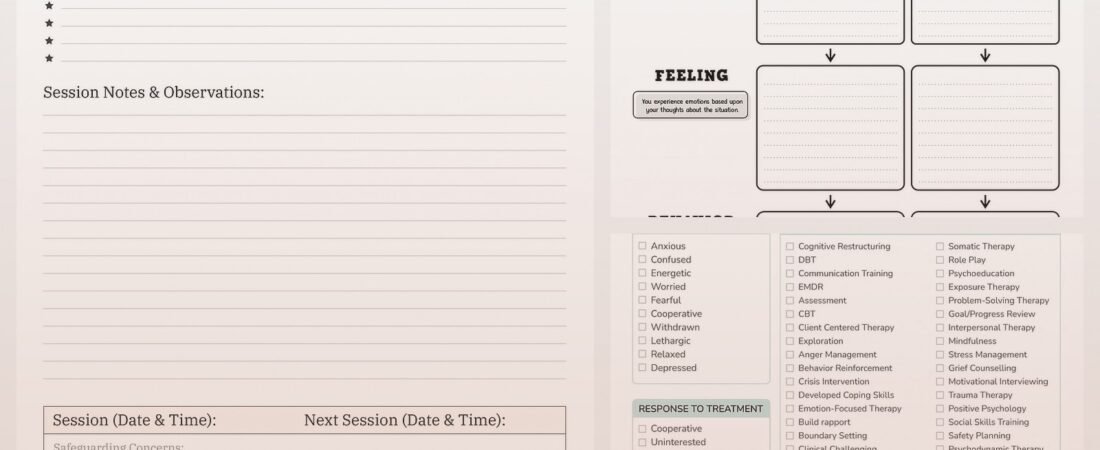
Progress notes document each session. SOAP notes (Subjective, Objective, Assessment, Plan) and DAP notes (Data, Assessment, Plan) are the most common formats. Some therapists use narrative notes, though insurance companies increasingly demand structured formats. Treatment plans outline goals, objectives, interventions, and timelines. Discharge summaries wrap up the therapeutic relationship with outcomes and recommendations.
The thing that genuinely drives me up the wall is when templates ask for information nobody will ever use. I’ve seen intake forms with 15 questions about childhood pets and zero questions about current support systems. Like, what are we doing here?
### Therapeutic Worksheets and Activities
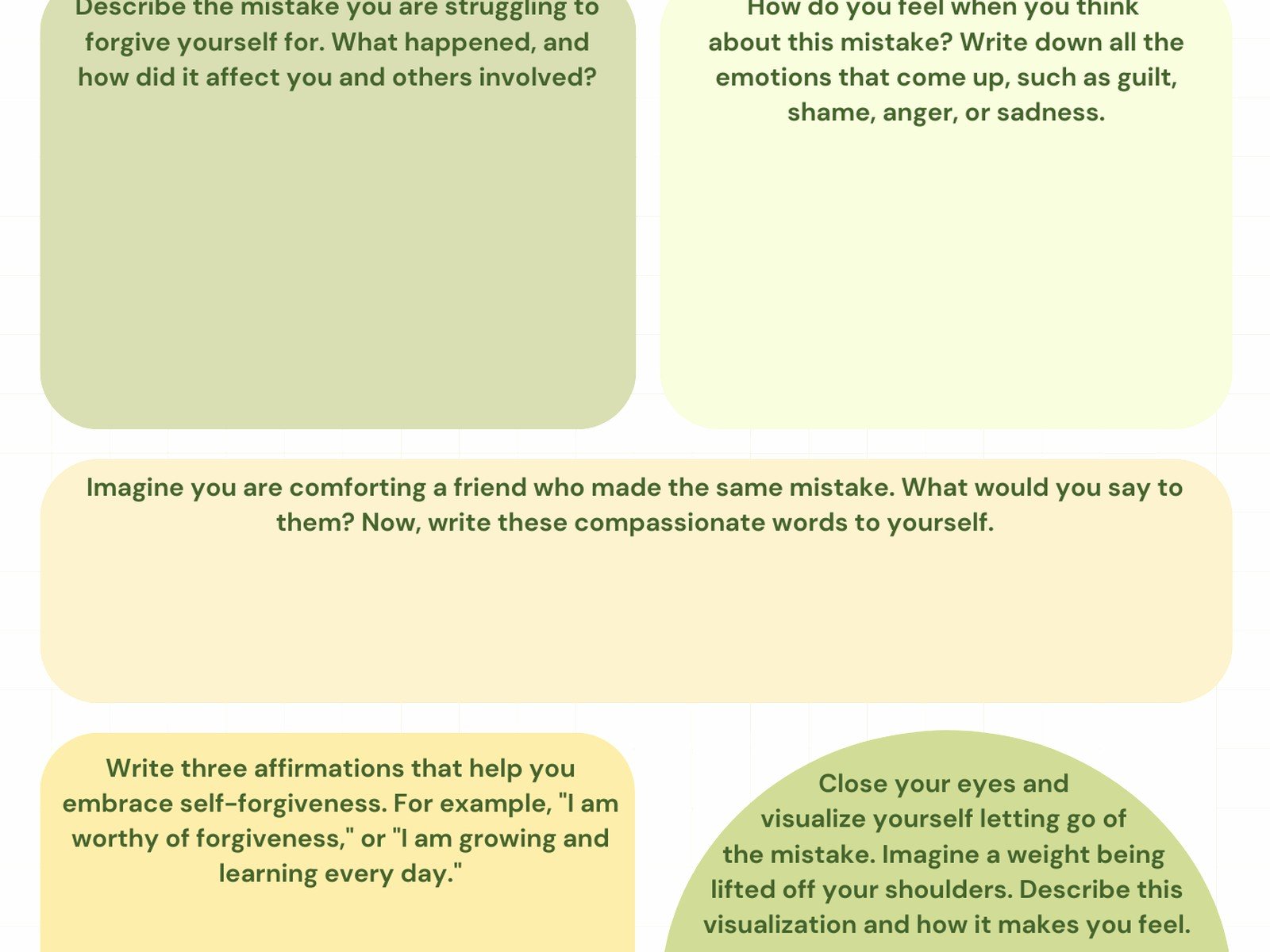
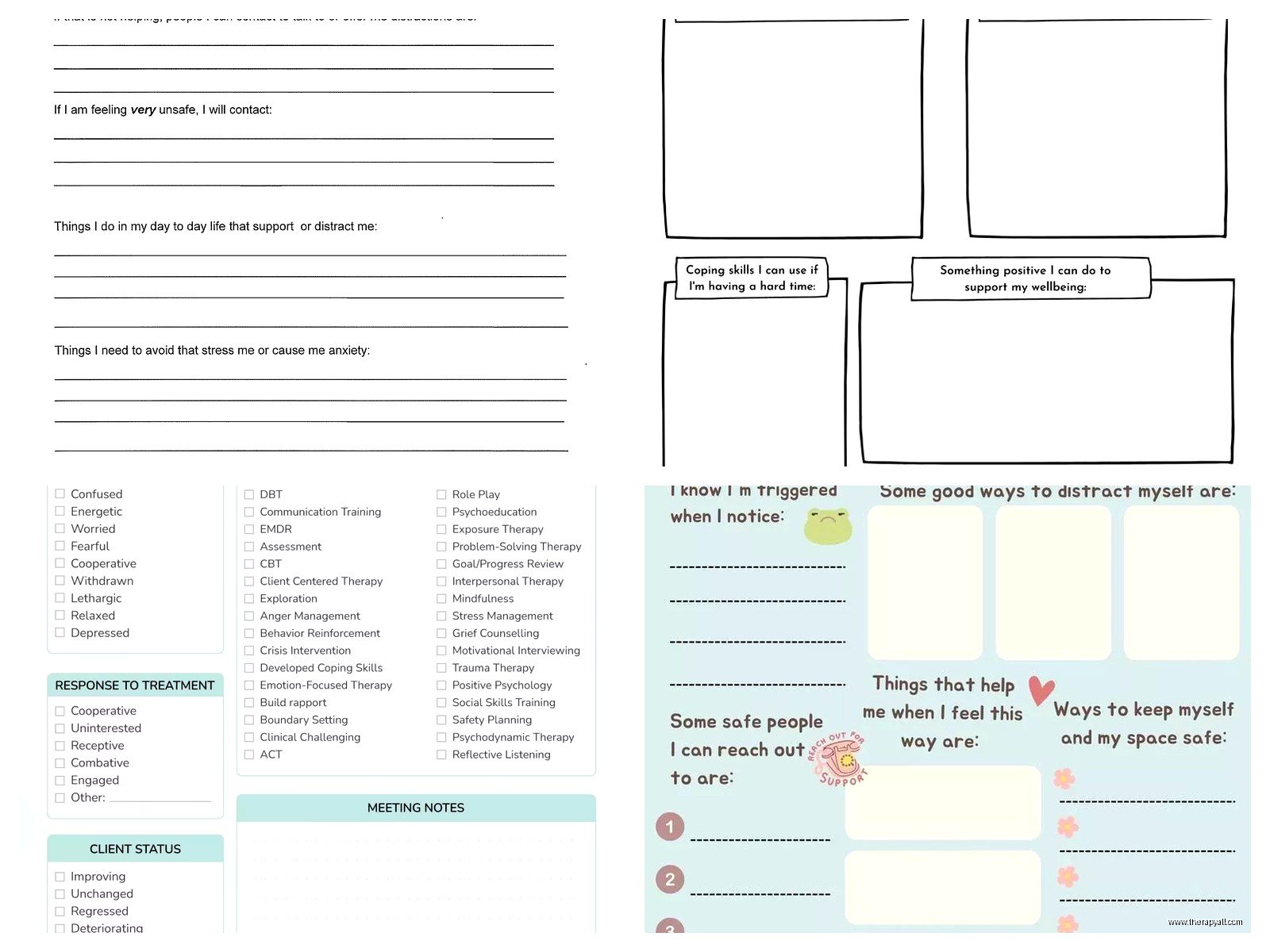
These are client-facing tools used during or between sessions. Thought records help clients track automatic thoughts, emotions, and evidence for CBT work. Mood logs track emotional patterns over time. Coping skills inventories list strategies clients can reference during distress.
Values clarification worksheets help clients identify what matters most to them—particularly useful in ACT (Acceptance and Commitment Therapy). Behavioral activation schedules structure activity planning for depression treatment. Exposure hierarchies rank anxiety-provoking situations from least to most distressing for systematic desensitization work.
Communication templates include “I” statements, conflict resolution guides, and boundary-setting scripts. Grief worksheets might include memory preservation activities or letter-writing prompts. Mindfulness logs track practice frequency and observations.
### Assessment Templates
Screening tools and formal assessments often come in template form. The PHQ-9 for depression, GAD-7 for anxiety, PCL-5 for PTSD—these standardized measures provide numerical scores that track symptom severity over time. You need the exact wording and scoring instructions, so templates ensure consistency.
Risk assessment templates guide suicide and homicide risk evaluation. Safety planning templates (Stanley-Brown is the most researched) help clients identify warning signs, coping strategies, and crisis resources. Some practices use biopsychosocial assessment templates that organize information across biological, psychological, and social domains.
### Psychoeducational Handouts
These explain mental health concepts, diagnoses, or treatment approaches. A handout on the fight-flight-freeze response, how SSRI medications work, or the cycle of anxiety. Sleep hygiene recommendations. Grounding techniques. The cognitive triangle showing connections between thoughts, feelings, and behaviors.
I spent summer 2021 writing handout after handout for a mental health platform, and I started actually using them myself when my own anxiety spiked that fall—which felt weird but also kinda validating that they actually worked.
### Administrative Templates
The behind-the-scenes stuff includes appointment reminder messages, cancellation policies, informed consent documents, HIPAA authorization forms, fee agreements, and good faith estimates (required since 2022). Billing templates, superbills for out-of-network reimbursement, and sliding scale assessment forms.
Client termination letters, referral request forms, records release authorizations. Email templates for common scenarios—confirming appointments, responding to crisis situations, communicating boundaries around after-hours contact.
## Where to Find Therapy Templates
### Publisher and Training Organization Resources
Major therapy publishers like PESI, Guilford Press, and New Harbinger offer template libraries, often bundled with training materials or sold separately. Beck Institute provides CBT-specific resources. The Gottman Institute has couples therapy templates. DBT-specific resources come from Behavioral Tech or Linehan’s treatment manuals.
Professional organizations sometimes offer member resources. APA, NASW, ACA, and AMFT provide sample forms and documentation templates. State licensing boards occasionally publish required forms or documentation standards.
### Digital Platforms and Software
Practice management systems like SimplePractice, TherapyNotes, and TheraNest include built-in templates for notes, treatment plans, and billing. Some integrate assessment scoring automatically. Electronic health record (EHR) systems come with HIPAA-compliant templates.
Therapy-specific content platforms like Therapist Aid, Psychology Tools, and Positive Psychology have hundreds of free and paid worksheets. Teachers Pay Teachers has therapy resources, though quality varies wildly—I’ve seen some that are just… Word Art from 2003 slapped onto generic advice.
### Creating Your Own
Sometimes you gotta build what you need. I use Google Docs or Word for most custom templates because they’re accessible and easy to modify. Canva works for more visually designed handouts, though my cat walked across my keyboard once and somehow published a half-finished grounding techniques poster to my public profile, which was mortifying.
When creating templates, consider what information you consistently need. Look at your last ten intake sessions or progress notes—what questions do you always ask? What information do you always document? Build from patterns in your actual practice.
## Customizing Templates for Your Practice
Generic templates need adaptation for your theoretical orientation, population, and setting. A CBT therapist needs different worksheets than a psychodynamic therapist. Templates for children require different language and visuals than adult templates. Inpatient documentation differs from outpatient.
Cultural adaptation matters enormously. English-only templates exclude non-English speakers. Examples that assume nuclear families, home ownership, or certain cultural norms alienate clients from different backgrounds. I try to… well, I started really paying attention to this after working with a translator who pointed out how many assumptions were baked into my “standard” questions about family structure.
Accessibility considerations include font size (minimum 12pt, preferably larger), simple language (aim for 6th-8th grade reading level), and high contrast for visual clarity. Some clients need Spanish or other language versions. Screen reader compatibility matters for digital formats.
## Legal and Ethical Considerations
Templates must comply with HIPAA requirements for protected health information. Informed consent templates should cover confidentiality limits, including mandated reporting, duty to warn, and records requests. Documentation templates need to meet state licensing board requirements—which vary significantly.
Insurance companies have specific documentation requirements for reimbursement. Medical necessity must be evident. Treatment plans need measurable goals. Progress notes should connect interventions to the treatment plan. Missing these elements can lead to denied claims or recoupment demands.
Copyright issues come up with worksheets and assessments. You can’t just photocopy someone’s published workbook. Standardized assessments often require purchasing rights or licensing agreements. Fair use allows limited copying for educational purposes, but systematic reproduction crosses that line.
## Digital vs. Paper Templates
Paper templates are familiar, don’t require technology access, and some clients prefer writing by hand. They’re immediately accessible and don’t depend on internet connectivity. But they require physical storage, are harder to search, and create challenges for data analysis.
Digital templates integrate with practice management systems, enable automatic scoring for assessments, and facilitate data tracking across time. They’re searchable and don’t require physical storage space. Backup systems protect against loss. But they require technological literacy from both therapist and client, exclude clients without device access, and create potential security vulnerabilities if not properly encrypted.
Hybrid approaches work well—paper forms scanned into digital records, digital templates printed for clients without technology access, or fillable PDFs that work both ways.
## Common Template Mistakes
Overly complicated forms overwhelm clients and reduce completion rates. An intake form shouldn’t be 20 pages. I’ve seen treatment plan templates with so many required fields that therapists just start copying and pasting generic text to get through them, which defeats the entire purpose.
Vague or leading questions produce useless data. “How do you feel about your childhood?” is too broad. “Did your parents cause your problems?” assumes causation. Questions should be specific enough to guide responses but open enough to capture individual experiences.
Missing cultural sensitivity shows up in assumed family structures, binary gender options, or examples that only reflect majority experiences. Templates should include options like “chosen family,” diverse gender identities, and varied cultural practices.
Inconsistent terminology confuses clients. If you call it “homework” in session but “between-session practice” on the worksheet, clients might not connect them. Pick terms and stick with them across all templates.
## Template Organization Systems
You need a system or you’ll waste hours searching for that one worksheet you used six months ago. Folder structures might organize by category (intake, assessment, treatment modality), by population (children, couples, trauma), or by alphabetical filing.
Naming conventions matter more than you’d think. “Thought Record v3 FINAL final actually final.docx” helps nobody. Use consistent naming like “CBT_ThoughtRecord_Adult.docx” or “Intake_Demographics_2024.pdf” with dates for version control.
Version control prevents using outdated forms with old contact information or superseded policies. Date templates and archive old versions rather than deleting them—you might need to reference what a client filled out two years ago using that version.
Cloud storage with services like Google Drive, Dropbox, or OneDrive enables access from multiple locations and automatic backup. Just ensure BAAs (Business Associate Agreements) are in place for HIPAA compliance and that files containing PHI are properly encrypted.
## Evaluating Template Quality
Effective templates have clear, specific questions that gather necessary information without redundancy. Layout should be clean with adequate white space. Instructions should be simple and unambiguous. The reading level should match your client population.
Clinical soundness means templates align with evidence-based practices and current research. A depression worksheet based on outdated theories doesn’t serve clients well. Assessment templates should use validated measures with established psychometric properties when possible.
Practical usability includes appropriate length—long enough to be useful but short enough that people actually complete them. Forms should have logical flow, moving from less to more sensitive topics. Digital versions need to work across different devices and platforms.
## Templates for Specific Modalities
CBT templates focus on thought-feeling-behavior connections with thought records, behavioral experiments, exposure hierarchies, and activity scheduling. DBT adds diary cards, chain analyses for behavioral patterns, and distress tolerance skill sheets.
EMDR templates include target sequence plans and session processing logs. Narrative therapy uses externalization maps and re-authoring worksheets. Solution-focused templates emphasize scaling questions and exception-finding exercises.
Couples therapy templates cover relationship assessments, communication patterns, conflict styles, and intimacy inventories. Family therapy might use genograms, family rules identification, or structural mapping templates.
## Using Templates Effectively
Templates guide rather than replace clinical judgment. They provide structure but shouldn’t constrain therapeutic responsiveness. If a client needs to talk about something not on your template, you follow the client’s needs.
Explaining why you’re using a template increases buy-in. “This worksheet helps track patterns we might not notice session-to-session” makes more sense than just handing someone a form. Collaborative completion often works better than homework—filling it out together in session as a conversation starter.
Follow-up matters because templates without integration into treatment become busywork. If you assign a mood log, review it next session. If you complete a safety plan, refer back to it when discussing crisis management. Templates should inform ongoing treatment, not just fill files.