
Mental Health, Therapy resources
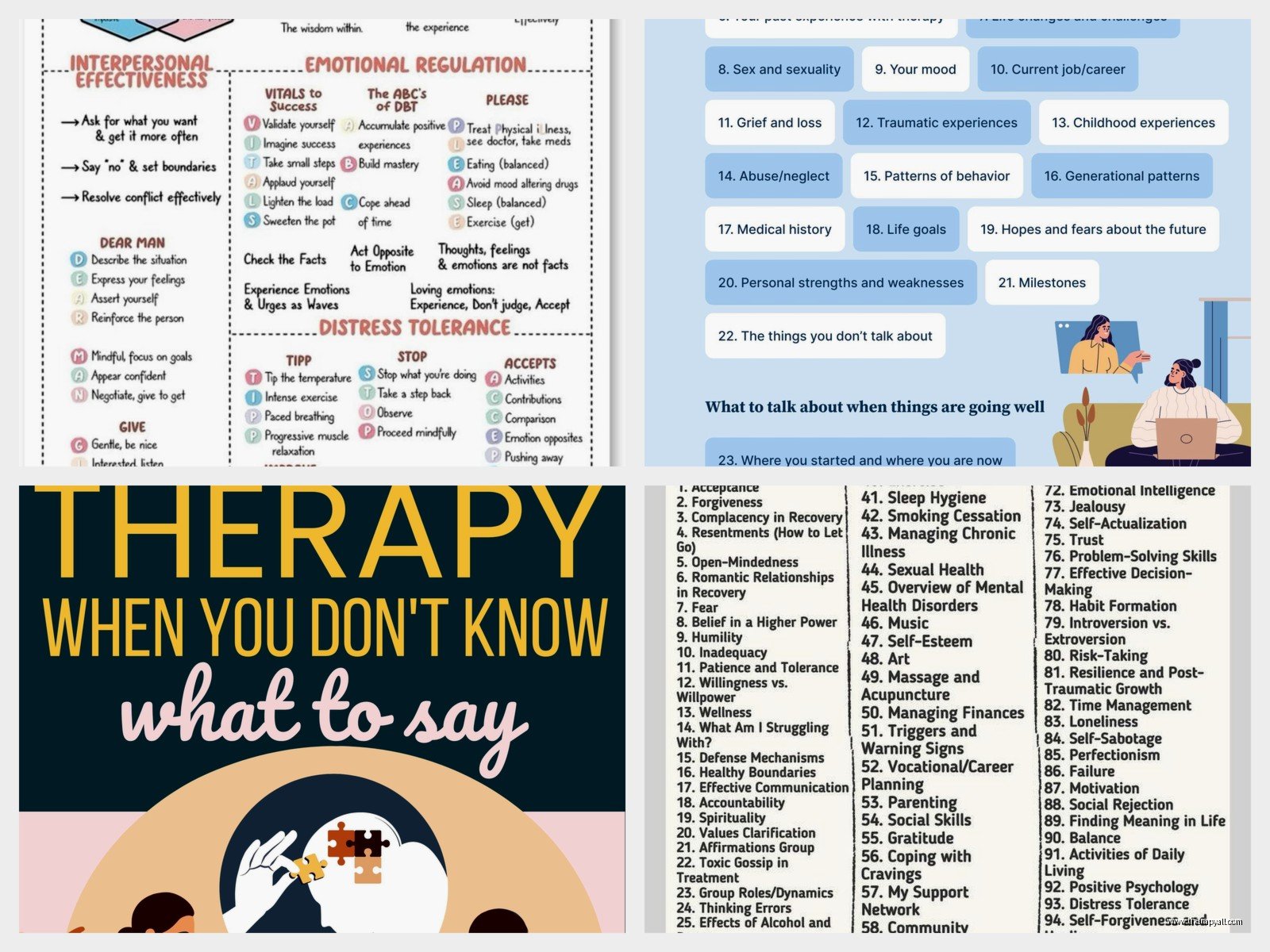
Therapy Topics – Everything You Need to Know

Jun
# 1. Common Mental Health Issues Discussed in Therapy
Depression and anxiety are the big ones. If you walk into any therapist’s office, these are probably the top two reasons people show up. Depression isn’t just feeling sad—it’s that persistent heaviness that makes everything feel pointless, getting out of bed becomes a negotiation with yourself, and you lose interest in things that used to light you up. Anxiety is the constant hum of worry, the what-ifs that spiral, physical symptoms like chest tightness or nausea that make you think something’s medically wrong when it’s actually your nervous system stuck in overdrive.
Trauma comes up constantly. PTSD, childhood trauma, complex trauma from ongoing situations—this is where therapy really earns its keep. You’re working through experiences that fundamentally changed how you see yourself and the world. It’s not about “getting over it” which is a phrase that genuinely annoys me because it oversimplifies something incredibly complex and makes people feel like they’re failing if they can’t just move on.
Relationship issues take up huge chunks of therapy time. Arguments with partners, family dynamics that are toxic or just confusing, friendships that drain you, codependency patterns. Sometimes people come in thinking they have an individual problem and it turns out half of it is about how they relate to others.
# 2. Different Types of Therapy Modalities
Cognitive Behavioral Therapy (CBT) is everywhere. It’s the one insurance companies love because it’s structured and time-limited. You’re looking at the connection between thoughts, feelings, and behaviors—changing thought patterns to shift how you feel and act. I remember when a client kept confusing CBT and DBT and I had to literally draw out the differences on the back of a receipt because I didn’t have paper handy that day.
Dialectical Behavior Therapy (DBT) was originally designed for borderline personality disorder but now it’s used for emotional regulation issues across the board. You get skills training in mindfulness, distress tolerance, emotion regulation, and interpersonal effectiveness. It’s more structured than CBT in some ways, with actual homework and skills practice.
Psychodynamic therapy digs into unconscious patterns and how your past shapes your present. It’s longer-term, less structured, more about exploring than fixing specific symptoms. Some people love it, some people find it too abstract.
EMDR (Eye Movement Desensitization and Reprocessing) is for trauma processing. You’re recalling traumatic memories while doing bilateral stimulation—usually eye movements but sometimes tapping or sounds. It sounds weird, it kinda looks weird when you’re doing it, but the research backs it up for PTSD.
Acceptance and Commitment Therapy (ACT) focuses on psychological flexibility, accepting what’s out of your control and committing to actions aligned with your values. It’s less about symptom reduction and more about building a meaningful life even when difficult feelings show up.
# 3. What Actually Happens in a First Therapy Session
Intake sessions are mostly information gathering. Your therapist is gonna ask about what brought you in, your history, current symptoms, medications, substance use, family background, previous therapy experiences. It can feel like a job interview except you’re talking about your darkest moments instead of your resume.
You’ll discuss goals even though you might not know exactly what you want yet. That’s fine. “I just want to feel better” is a starting point. The therapist will help you narrow it down to something more specific over time.
Paperwork is unavoidable. Consent forms, privacy policies, emergency contact information, insurance stuff if applicable. My cat knocked over my coffee mug right onto a stack of intake forms once and I had to reprint like fifteen pages.
The therapist will explain their approach, what you can expect from sessions, confidentiality and its limits. They’re assessing whether they’re a good fit for your needs or if they should refer you elsewhere.
# 4. Coping Skills and Techniques Therapists Teach
Grounding techniques for anxiety and panic—the 5-4-3-2-1 method where you identify five things you see, four you can touch, three you hear, two you smell, one you taste. It pulls you back to the present when you’re spiraling. Also breathing exercises, though honestly some people hate being told to “just breathe” when they’re in crisis, so therapists usually frame it differently.
Cognitive restructuring is about challenging distorted thoughts. You learn to identify cognitive distortions like all-or-nothing thinking, catastrophizing, mind reading. Then you examine evidence for and against the thought, generate alternative perspectives. It sounds simple but it takes practice.
Behavioral activation for depression—scheduling activities even when you don’t feel like it, especially things that used to bring pleasure or give you a sense of accomplishment. You’re not waiting to feel motivated; you’re acting first and letting the feelings follow.
Emotion regulation skills include things like opposite action (acting opposite to your emotional urge when the emotion doesn’t fit the facts), self-soothing with the five senses, TIPP skills (Temperature, Intense exercise, Paced breathing, Paired muscle relaxation) for crisis moments.
# 5. How to Choose the Right Therapist
Credentials matter but they’re not everything. Psychologists have PhDs or PsyDs, licensed clinical social workers have MSWs, licensed professional counselors have master’s degrees in counseling. Marriage and family therapists specialize in relational issues. The letters after their name tell you their training path but not necessarily whether you’ll click with them.
Specialization is important. You want someone who has experience with what you’re dealing with. If you have OCD, you need someone trained in ERP (Exposure and Response Prevention), not just general anxiety treatment. If you’re working through sexual trauma, you want… wait, I was gonna say something else but I got distracted thinking about how many therapists list “anxiety” as a specialty when that’s so broad it’s almost meaningless.
The therapeutic relationship is the biggest predictor of outcomes. Research shows it matters more than the specific modality in many cases. You need to feel safe, understood, and like your therapist genuinely cares about your progress.
Practical considerations: cost, insurance coverage, location, whether they offer telehealth, session availability. You can find the perfect therapist on paper but if they only have Tuesday at 2pm available and you work, it’s not gonna work.
# 6. Common Misconceptions About Therapy
Therapy isn’t just venting to someone who nods sympathetically. That’s a friendship or maybe a really expensive conversation. Actual therapy involves assessment, treatment planning, specific interventions, skill building, and working toward measurable change.
You don’t have to be in crisis to go to therapy. This idea that you need to be “bad enough” keeps so many people from getting help earlier when problems are more manageable. Therapy can be preventative, growth-oriented, or just support during a difficult transition.
Therapists don’t have all the answers and they shouldn’t pretend to. They’re guides with training and tools, not gurus with secret wisdom about how you should live your life. The best therapists help you find your own answers rather than imposing theirs.
Going to therapy doesn’t mean you’re weak or broken. It means you’re addressing something that’s affecting your quality of life. We don’t think twice about going to a doctor for physical health issues, but mental health still carries this weird stigma.
# 7. Topics Related to Specific Life Stages
Childhood therapy topics include behavioral issues, family conflicts, school struggles, developmental trauma, anxiety separation. Play therapy is common because kids process through play rather than just talking. Parents are usually involved in the treatment in some capacity.
Teen therapy deals with identity formation, peer pressure, academic stress, family conflict, emerging mental health issues, substance experimentation, social media impacts. Teens are trying to figure out who they are while their brains are still developing, which is… a lot.
Adult therapy covers career stress, relationship issues, life transitions, parenting challenges, identity questions, grief and loss, managing chronic mental health conditions. Summer 2022 I was writing like three different articles a week about adult anxiety and I started actually using some of the techniques myself because the irony of being stressed while writing about stress management wasn’t lost on me.
Older adult therapy involves grief and loss, health issues, retirement adjustment, caregiver stress, end-of-life concerns, loneliness and isolation. Also dealing with ageism and feeling invisible in a youth-focused culture.
# 8. Sensitive Topics That Come Up in Therapy
Suicide and self-harm require immediate attention and safety planning. Therapists are mandated reporters in certain situations, so confidentiality has limits when someone is at risk of harming themselves or others. Safety planning involves identifying warning signs, coping strategies, support people, and crisis resources.
Substance abuse and addiction often co-occur with other mental health issues. Some therapists specialize in addiction, others will refer out or work collaboratively with addiction specialists. You’re looking at underlying causes, triggers, harm reduction or abstinence depending on the approach.
Sexual issues including sexual dysfunction, sexual identity questions, past sexual trauma, intimacy problems in relationships. A lot of therapists aren’t comfortable or trained in this area, so finding a sex-positive therapist with specific training matters.
Eating disorders need specialized treatment because they’re medically dangerous and psychologically complex. You typically need a team approach—therapist, dietitian, medical doctor—and therapists who don’t specialize in eating disorders can sometimes make things worse by not understanding the complexity.
# 9. How Therapy Addresses Behavior Patterns
Identifying patterns is foundational work. You’re looking at recurring themes in relationships, repeated situations that cause distress, behavioral loops that keep you stuck. Sometimes you don’t see your own patterns until someone points them out, which can be uncomfortable but necessary.
Understanding origins helps but isn’t always required for change. Sometimes knowing why you developed a pattern (childhood experiences, learned behaviors, trauma responses) gives context and reduces self-blame. Other times you can change behavior without fully understanding its origin.
Interrupting automatic responses takes conscious effort. You’re building awareness of your triggers, creating space between stimulus and response, choosing different actions even when old patterns feel automatic. This is hard work and it doesn’t happen overnight.
Building new patterns requires repetition and patience. Your brain has well-worn neural pathways for old behaviors. Creating new pathways means practicing new responses consistently until they become more automatic than the old ones.
# 10. The Role of Homework and Between-Session Work
Therapy homework extends the work beyond the weekly hour. You might track moods, practice specific skills, complete thought records, do exposure exercises, journal, read psychoeducational materials. The people who do homework between sessions typically progress faster.
Not everyone does their homework and that’s useful information too. Maybe the homework doesn’t fit your learning style, maybe you’re overwhelmed, maybe you’re ambivalent about change. Your therapist should adjust based on what’s actually doable for you.
Apps and tools can support therapy work. Mood tracking apps, meditation apps, CBT thought record apps—there are tons of options. Some are evidence-based, some are just… there’s so much garbage in the mental health app space that claims to be therapeutic but is basically just a journaling app with calming colors.
Self-help books and workbooks can supplement therapy. Your therapist might recommend specific resources that align with what you’re working on. Reading about concepts between sessions can deepen your understanding and give you more to work with in session.

ADHD & Neurodiversity
Life Planner Bundle – Life Organizer
Self-Care & Personal Growth
Acceptance And Commitment
Anxiety & Stress
Stress Processing Journal & Reflection Worksheets For Daily Self – Care
Self-Care & Personal Growth
Self – Reflection Guided Journal With Guided Prompts 30
Emotional Wellness
Decision Processing – Thought Processing Journal For Daily Self – Care
Therapist Resources
Physiotherapist Journal PDF Planner Tracker Or Log Book
Self-Care & Personal Growth
Customizable Self – Confidence & Self – Esteem Guided Journal
ADHD & Neurodiversity
ADHD Behavior Tracker PDF Planner Tracker Or Log Book