
Mental Health, Therapy resources
Managing Emotions Worksheets: Practical Tools for Emotional Regulation

Jun
What These Worksheets Actually Do
Managing emotions worksheets are structured paper or digital tools designed to help you identify, process, and regulate emotional responses in real time or after the fact. They’re not magic. They’re systematized prompts that force your brain to slow down and examine what’s happening instead of just reacting on autopilot. The core function is to create a gap between stimulus and response, which is where most emotional regulation happens.
I remember back in 2019, a client brought in this crumpled worksheet from some online therapy forum that was so poorly designed I couldn’t even figure out what emotion it was asking her to track. The boxes were labeled with things like “feeling intensity” and “bodily sensations” but there was no clear sequence, no instruction on when to fill it out, and honestly it just made her more anxious trying to complete it. That’s when I started actually paying attention to how these tools are constructed because a bad worksheet can do more harm than good.
You use these worksheets when you notice you’re having a strong emotional reaction and you need to understand it better, or when you’re trying to build awareness of patterns over time. Some people fill them out in the moment. Others do it retrospectively, like journaling but with more structure. The key is consistency, not perfection.
Core Components That Show Up In Most Worksheets
Most emotion management worksheets include some version of these elements, though they go by different names depending on whether they’re coming from a CBT framework, DBT, or just general psychoeducation materials.
Emotion Identification
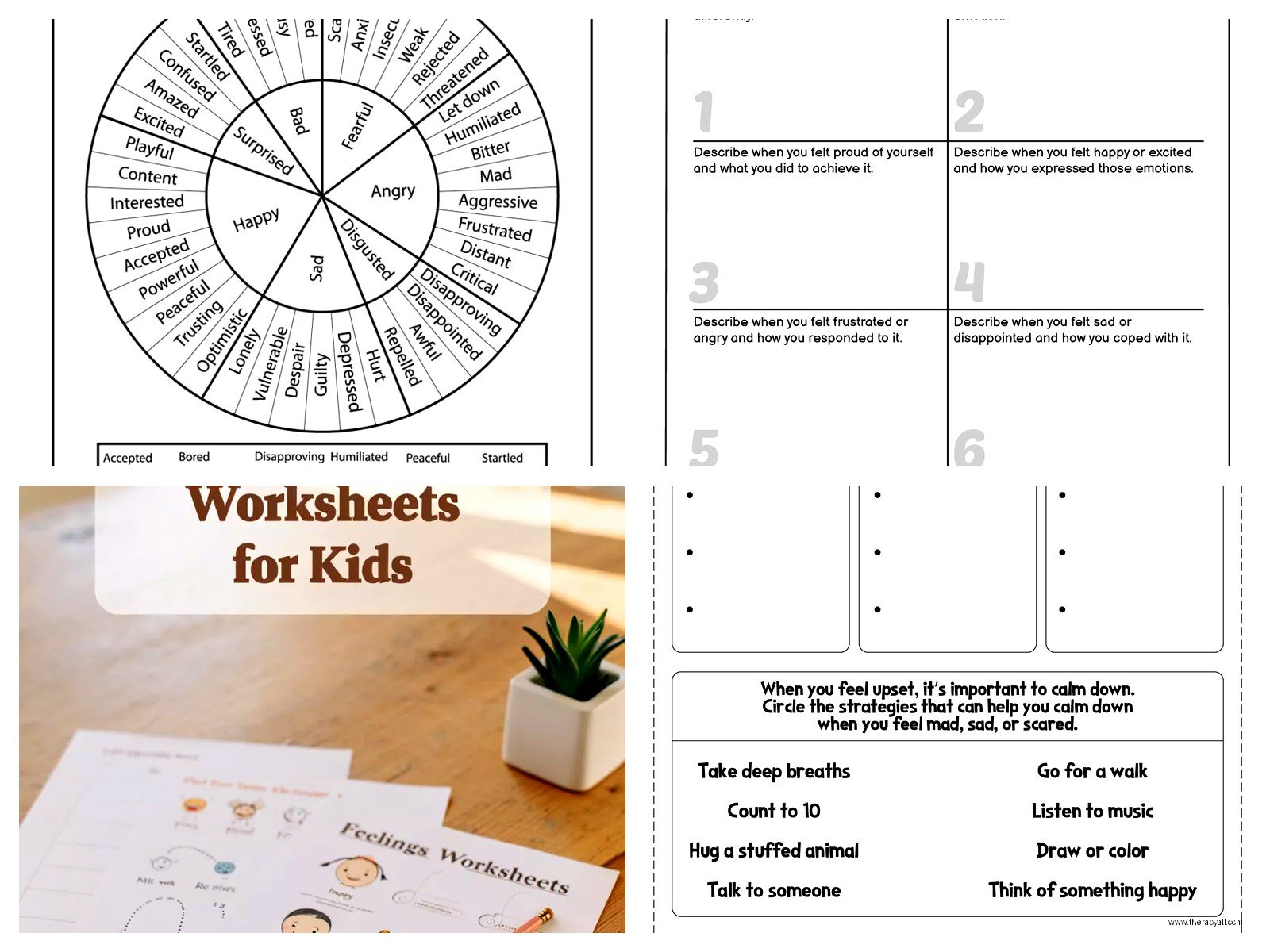
This section asks you to name what you’re feeling. Sounds simple, but it’s where most people get stuck because we’re taught maybe six emotion words as kids and then expected to navigate a whole spectrum of human experience with “mad,” “sad,” and “fine.” Good worksheets include emotion wheels or lists with granular options. You might think you’re angry, but the worksheet helps you narrow it down to resentful, betrayed, or frustrated, which are different things requiring different responses.
I’ve seen worksheets that just have a blank line that says “I feel ____” and honestly that annoys me so much. If someone already had robust emotional vocabulary, they probably wouldn’t need the worksheet. Give people options. Give them categories. Make it multiple choice if you have to.

Trigger or Situation Description
This is where you write what happened right before the emotion showed up. The instruction is usually something like “Describe the situation objectively, like a camera would record it.” No interpretations, no mind-reading, just facts. This is harder than it sounds because our brains automatically blend observation with interpretation.
Instead of “My partner ignored me,” the worksheet pushes you toward “My partner looked at their phone when I was talking.” See the difference? One is a factual observation, the other is already an interpretation loaded with emotional meaning. This distinction is kinda the whole point of cognitive behavioral approaches.
Thought Recording
What were you thinking when the emotion hit? This section captures the automatic thoughts, the internal narrative, the stories your brain tells about what’s happening. These are usually distorted in predictable ways, catastrophizing or black-and-white thinking or personalizing things that aren’t about you.
You write down the actual thought, not what you wish you’d thought or what sounds reasonable in retrospect. “They hate me” or “I always mess everything up” or “This is gonna be a disaster.” The raw, immediate stuff.
Physical Sensations
Where do you feel this emotion in your body? Tight chest, clenched jaw, stomach churning, heat in your face, heaviness in your limbs. This section builds somatic awareness, which is critical because a lot of people are completely disconnected from their bodies until they’re in full panic mode.
Tracking physical sensations also helps you catch emotions earlier, before they escalate. You start noticing “oh, my shoulders are up by my ears, that means I’m getting stressed” instead of only realizing you’re stressed when you’re yelling at someone in traffic.
Intensity Rating
Most worksheets ask you to rate the emotion on a scale, usually 0-10 or 1-100. This gives you data over time and also helps you calibrate your responses. A level 3 annoyance doesn’t need the same intervention as a level 9 rage. You can track whether certain situations consistently hit you at a 7 or whether your baseline anxiety is creeping up over weeks.
The number itself is subjective and that’s fine. It’s more about tracking your internal experience consistently than achieving some objective measurement.
Different Worksheet Types For Different Goals
Not all emotion worksheets are trying to do the same thing, which is something I wish more people understood before they just Google “feelings worksheet” and print whatever comes up first.
Thought Records or CBT Logs
These follow the cognitive model: situation triggers thought triggers emotion triggers behavior. You fill out each column to see the chain of causation. Then there’s usually a section for “alternative thought” or “evidence for and against” where you challenge the automatic thought and see if the emotion shifts.
I spent summer 2021 creating like a dozen variations of these for different platforms and I actually started using them myself when I noticed I was having this repetitive spiral about work deadlines. Turns out seeing my own catastrophic thoughts written down made them look kinda ridiculous, which was the point I guess.
Emotion Regulation Logs
These are more DBT-flavored. They include sections for identifying the emotion, the prompting event, your vulnerability factors (tired, hungry, already stressed), what you did in response, and whether it was effective. The goal is to build awareness of what regulation strategies actually work for you versus what you do out of habit.
Did snapping at your coworker make you feel better or worse? Did going for a walk actually help or did you just ruminate while moving? You track the outcome, not just the action.
Emotion Tracking Charts
Simple grids where you log emotions throughout the day or week, sometimes with intensity ratings, sometimes just checkmarks. These are good for pattern recognition. You might notice you’re always anxious on Sunday nights or that your mood tanks every time you scroll social media for more than 20 minutes. The data makes the pattern visible instead of just a vague sense that “I’m always stressed.”
Opposite Action Worksheets
These guide you through the DBT skill of acting opposite to your emotional urge. Feeling angry and want to lash out? The worksheet walks you through gently avoiding instead. Feeling depressed and want to isolate? It prompts you to reach out to someone. There’s usually a section to identify the urge, name why acting on it would be problematic, and plan the opposite action in specific behavioral terms.
How To Actually Use These Without Making It Another Thing You Feel Guilty About
The biggest mistake people make is trying to fill out worksheets perfectly or using them for every single emotional experience, which is exhausting and also defeats the purpose. These are tools for learning, not permanent life requirements.
Start with one worksheet type and use it for one specific situation that keeps coming up. Not “all my emotions” but “my anxiety before work meetings” or “fights with my sister.” Narrow focus, repeated practice. That’s how you build the skill until it becomes automatic and you don’t need the paper anymore.
Fill it out as soon as possible after the event, while details are fresh. If you wait three days, you’re gonna reconstruct the memory instead of recording the actual experience. Within a few hours is ideal. Same day is workable. Next week is useless.
You don’t need to do the whole worksheet every time if that feels overwhelming. Sometimes just writing down the emotion and the trigger is enough. Sometimes you focus only on the physical sensations. Use the structure that helps, ignore the parts that don’t. I know that’s not what the worksheet designers want to hear, but this is real life and compliance is already hard enough.
When To Do It In The Moment Versus Retrospectively
Some emotions are too intense to worksheet through while they’re happening. If you’re in acute panic or rage, you need immediate regulation strategies first—breathing, movement, distraction—and then you can fill out the worksheet when you’re at like a 4 instead of a 9. Trying to analyze your thoughts while you’re hyperventilating is not gonna work.
But for moderate emotions, doing it in the moment can be incredibly grounding because the act of writing and categorizing itself creates distance from the emotion. You shift from “I am furious” to “I am a person observing fury,” which is a different neurological state.
Common Problems People Run Into
The worksheets assume a level of self-awareness that not everyone has at the starting point. If you genuinely can’t tell what you’re feeling or you go blank when trying to identify thoughts, the worksheet just becomes a frustrating reminder that you don’t know yourself very well. That’s where working with a therapist helps because they can walk you through it the first several times until the process clicks.
Some people use worksheets to ruminate instead of regulate. They fill out the same situation seven different times, going over and over the details, which just reinforces the distress instead of processing it. If you’re doing that, you need a different tool or you need to limit yourself to one worksheet per situation and then move on.
There’s also this thing where people perform the worksheet, writing what sounds good or what they think they should write instead of what’s actually true. “I felt disappointed” when they actually felt enraged. “I thought maybe I was overreacting” when they actually thought “this person is a terrible human being.” The worksheet only works if you’re honest, which requires a level of safety and privacy. Don’t fill these out if someone’s gonna read them and judge you for your thoughts, or at least don’t fill them out honestly, which defeats… the whole thing, so actually just don’t use them in that situation.
Digital Versus Paper
Paper worksheets have the advantage of being tactile and not requiring a charged device. Writing by hand also seems to help some people process better, something about the motor movement and the slower pace. You can keep them in a binder and flip back through to see patterns over months.
Digital versions, whether PDFs you fill out or apps with structured prompts, are searchable and easier to organize. Some apps will generate graphs of your emotion patterns automatically. You’re more likely to have your phone with you than a paper worksheet when something happens. But there’s also something about the phone that makes it harder to focus—notifications, the temptation to switch apps, the associative link with stress if your phone is where work emails live.
My cat just knocked over my water bottle and I lost my train of thought, but honestly use whichever format you’ll actually use consistently. That’s the only metric that matters.
What These Worksheets Can’t Do
They can’t fix systemic problems. If you’re in an abusive relationship or a toxic work environment or dealing with ongoing discrimination, no amount of thought challenging is gonna make those emotions inappropriate. Sometimes your anger or fear or sadness is the correct response to a genuinely bad situation, and the worksheet might help you understand that clarity rather than talk yourself out of valid feelings.
They also can’t replace therapy for complex trauma or severe mental illness. Worksheets are skills-building tools, not treatment. If you’re struggling with suicidal thoughts or dissociation or severe depression, you need professional support, not a PDF.
And they don’t work if you’re not ready to examine your patterns. Some people aren’t at that stage yet, and that’s not a moral failing, it’s just where they are in the process. Forcing yourself to use tools before you’re ready usually just creates more shame.
Where To Find Decent Ones
Therapist Aid has a huge free library organized by topic and therapeutic approach. The worksheets are clearly designed, usually one page, with actual instructions included. DBT Tools has emotion regulation specific materials. Psychology Tools has both free and paid options, and their paid worksheets are honestly worth it if you’re using them regularly because the design is clean and the prompts are well-calibrated.
Avoid the ones that are just walls of text or that use therapy jargon without defining it. If you need a graduate degree to understand the instructions, it’s not a good worksheet for self-use. Also skip anything that’s overly precious or decorated with inspirational quotes—you need function, not aesthetic.
You can also create your own once you understand the basic structure. A lot of my clients end up doing this after using standard worksheets for a while, tailoring the prompts to their specific patterns and triggers. That’s actually the goal, to internalize the process enough that you don’t need the external structure anymore, or you only need a simplified version that you designed yourself.
ADHD & Neurodiversity
Life Planner Bundle – Life Organizer
Self-Care & Personal Growth
Acceptance And Commitment
Anxiety & Stress
Stress Processing Journal & Reflection Worksheets For Daily Self – Care
Self-Care & Personal Growth
Self – Reflection Guided Journal With Guided Prompts 30
Emotional Wellness
Decision Processing – Thought Processing Journal For Daily Self – Care
Therapist Resources
Physiotherapist Journal PDF Planner Tracker Or Log Book
Self-Care & Personal Growth
Customizable Self – Confidence & Self – Esteem Guided Journal
ADHD & Neurodiversity
ADHD Behavior Tracker PDF Planner Tracker Or Log Book