
Mental Health, Therapy resources
Mental Health Check-In Worksheet: Rate and Reflect on Your Wellbeing

Jun
# Mental Health Check-In Worksheet: Rate and Reflect on Your Wellbeing
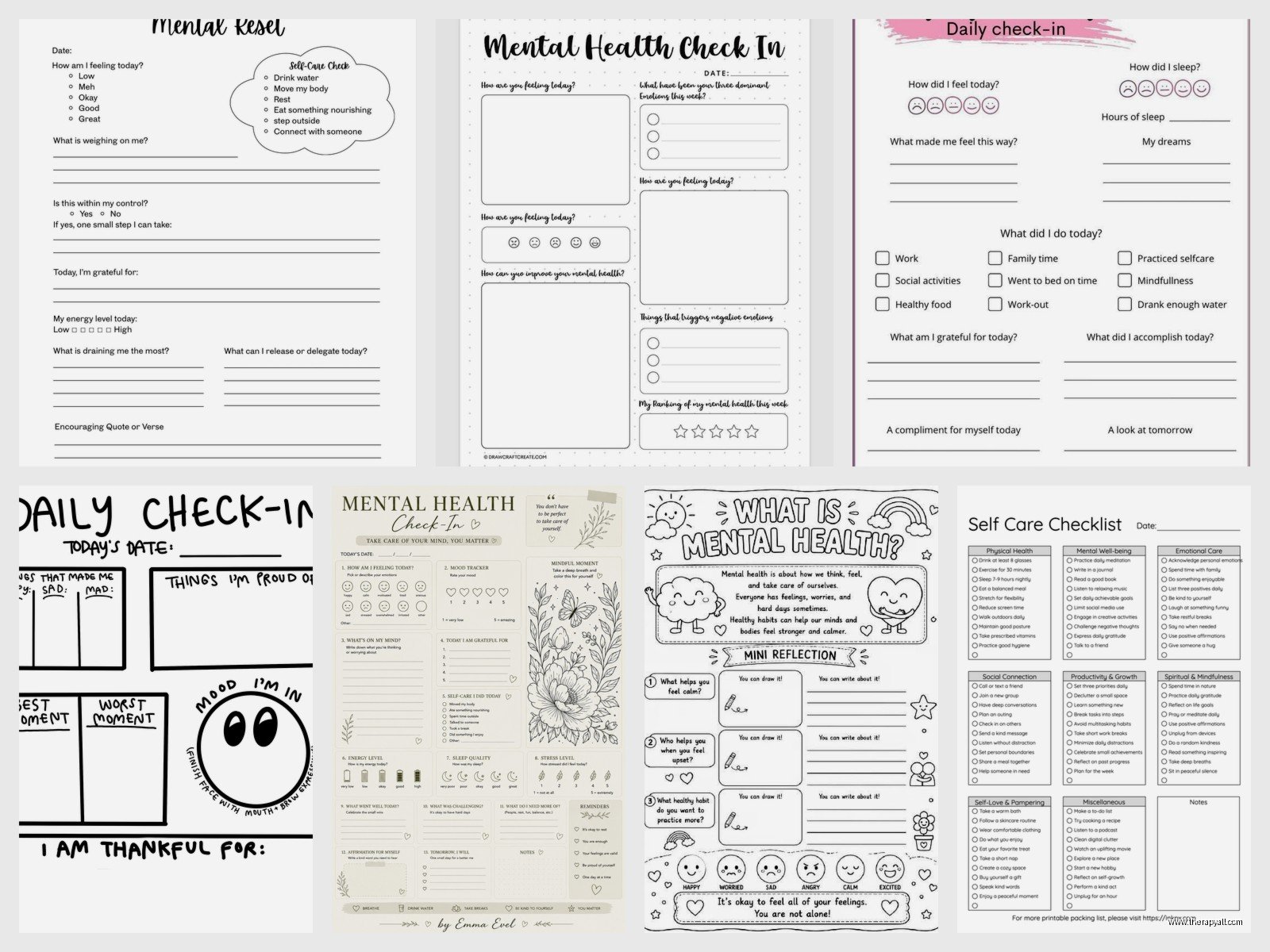
Mental health check-in worksheets are structured self-assessment tools that help you track emotional, physical, and psychological patterns over time. They typically include rating scales for various wellbeing indicators, reflection prompts, and space to note triggers or patterns. The core function is to create a snapshot of your mental state at a given moment so you can identify trends, communicate more effectively with therapists, or just recognize when you’re sliding into a rough patch before it becomes a crisis.
I remember back in 2019, I was working with a client who kept saying she was “fine” in sessions but her body language screamed otherwise. I handed her a basic check-in worksheet—nothing fancy, just a 1-10 scale for mood, energy, sleep quality, and anxiety levels—and she filled it out right there. Her scores were all 3s and 4s. She looked at her own ratings and said “oh, I guess I’m not fine.” That worksheet did more in five minutes than I’d managed in three sessions of gentle probing.
## The Basic Structure You’ll See
Most mental health check-in worksheets follow a pretty standard format. You’ve got rating scales, usually 1-10 or 1-5, covering the main domains of wellbeing. Mood is always there. Sleep quality shows up in basically every version. Energy levels, stress, anxiety, and physical symptoms are common inclusions.
The rating portion is followed by reflection questions. These might ask what contributed to your current state, what helped or hurt during the week, or what you need more or less of. Some worksheets include a section for gratitude or wins, though honestly that can feel forced when you’re in a genuinely bad place and the worksheet is asking you to list three things you’re grateful for like that’s gonna fix the fact that you haven’t slept properly in nine days.
There’s usually space for notes—free writing about specific incidents, triggers you noticed, coping strategies you tried, or just whatever’s on your mind. This unstructured section is where people often write the most useful stuff because they’re not constrained by someone else’s idea of what matters.
## Why Rating Scales Actually Work
The numerical rating system isn’t just about quantifying feelings for the sake of it. It forces specificity. When you tell yourself or your therapist “I’m stressed,” that could mean anything from “I have a busy week ahead” to “I’m having panic attacks in the Target parking lot.” But when you rate your stress as an 8 out of 10, and last week it was a 5, you’ve got concrete evidence that something shifted.
I’ve written probably hundreds of these worksheets for different platforms, and the pushback I always get is “but feelings aren’t numbers.” Yeah, I know. But the alternative is vague language that means different things to different people, and that makes it nearly impossible to track changes over time. You need some kind of consistent measurement, even if it’s imperfect.
The rating also helps with alexithymia—difficulty identifying and describing emotions. Some people genuinely don’t know if they’re feeling anxious or angry or just tired. A structured rating system with clear categories gives them a framework to start sorting through the internal mess.
## Reflection Prompts That Don’t Suck
The quality of a check-in worksheet depends heavily on the reflection questions. Bad prompts are either too vague (“How are you feeling?”) or too prescriptive (“List five positive affirmations”). Good prompts help you make connections without telling you what those connections should be.
Questions like “What situations made your mood worse this week?” or “When did you feel most like yourself?” give you direction without demanding a particular type of answer. You might notice that your mood tanks every time you check work email after 8pm, or that you felt best during the 20 minutes you spent repotting plants. Those observations are data.
One thing that genuinely irritates me is when worksheets include prompts like “What can you do to improve your self-care?” when the person is already burnt out and overwhelmed. It just adds another task to the mental load. Better to ask “What got in the way of taking care of yourself?” because that identifies barriers rather than creating guilt about not doing enough.
## Using It to Track Patterns Over Time
The real value comes from doing these check-ins regularly and reviewing them over weeks or months. You start seeing patterns you wouldn’t notice day-to-day. Maybe your sleep quality drops every time you have a conflict with your sister. Maybe your anxiety spikes on Sunday evenings. Maybe your energy is consistently higher on days when you exercise, even though in the moment exercise feels like the last thing you wanna do.
I started using these worksheets myself in summer 2021 when I was going through a particularly weird depressive episode and couldn’t figure out what was triggering it. Turned out my mood ratings consistently dropped about three days after eating dairy, which… I wasn’t expecting that connection at all, but once I saw the pattern over eight weeks of data, it was pretty clear.
The tracking function also helps in therapy. Instead of trying to remember how your week went, you can look at your ratings and notes. Your therapist can spot patterns you might miss. And if you’re trying a new medication or therapy approach, you’ve got baseline data to compare against.
## The Physical Symptoms Section
Most comprehensive check-in worksheets include a section for physical symptoms—headaches, muscle tension, stomach issues, fatigue, pain. This is crucial because mental and physical health aren’t separate systems, they’re constantly influencing each other.
Anxiety shows up as chest tightness, racing heart, shallow breathing. Depression manifests as fatigue, body aches, changes in appetite. Stress causes tension headaches, digestive problems, jaw clenching. When you track these physical markers alongside emotional ones, you get a fuller picture of your wellbeing.
You might notice that your anxiety rating is only a 5, but you’ve got tension headaches, poor sleep, and stomach issues—your body is telling you that your stress level is higher than you consciously recognize. Or you might see that your mood improved but you’re still exhausted, which suggests you need rest even though you’re feeling emotionally better.
## Sleep and Energy Tracking
Sleep quality and energy levels get their own ratings on most worksheets because they’re both indicators and influencers of mental health. Poor sleep makes everything worse—mood, anxiety, ability to cope with stress, emotional regulation. But mental health issues also disrupt sleep, so you end up in these feedback loops.
When you track sleep over time, you can identify what helps and what hurts. Maybe you sleep better on days you don’t drink coffee after 2pm. Maybe your sleep quality drops when you scroll social media before bed. Maybe you sleep worse during certain times of your cycle. This information lets you make targeted changes instead of just generally trying to “sleep better.”
Energy tracking works similarly. You might notice that your energy crashes after certain activities, or that specific routines boost your stamina. I had a client who discovered through tracking that her energy was highest in the morning but she was scheduling all her difficult tasks for afternoon when she was already depleted. Just rearranging her day based on her actual energy patterns made a significant difference.
## Trigger and Coping Strategy Logs
Many check-in worksheets include space to note what triggered difficult emotions and what coping strategies you used. This creates a personalized database of what works for you specifically, not just what works in general according to some article.
You learn that going for a walk actually does help your anxiety, or that it doesn’t and you need different strategies. You might discover that calling a friend helps when you’re sad but makes anxiety worse because socializing takes energy you don’t have. Or that journaling helps you process anger but not fear—these distinctions matter because not all coping strategies work for all emotions or all people.
The trigger log helps you anticipate and prepare. If you know that family dinners consistently spike your stress, you can plan coping strategies in advance or set boundaries about attendance. If work presentations always tank your mood for two days afterward, you can build in recovery time instead of scheduling back-to-back stressful events.
## How Often to Actually Do These
The standard recommendation is weekly check-ins for most people. That’s frequent enough to catch patterns but not so often that it becomes burdensome. Daily check-ins work if you’re in crisis, going through a major transition, or trying to identify specific triggers. Monthly is too infrequent—you’ll forget too much detail and miss the week-to-week fluctuations.
Some people do better with structured timing—every Sunday evening, same time. Others prefer checking in when they notice their mood shifting or when something significant happens. The key is consistency enough to generate useful data without turning it into another source of stress.
My cat just knocked over my water bottle and I’m gonna have to deal with that in a second, but the point is—the “right” frequency is whatever you’ll actually maintain. A perfectly designed daily check-in that you do twice and then abandon is less useful than a simple weekly version you stick with.
## When Check-Ins Reveal Concerning Patterns
Sometimes you’ll fill out a check-in worksheet and realize your ratings are consistently low, or getting worse, or that you’re having thoughts about self-harm or suicide. The worksheet itself isn’t treatment—it’s a tool for awareness and communication.
If your check-ins are showing persistent depression symptoms, increasing anxiety, or concerning thoughts, that’s information you need to act on. Share the worksheets with your therapist if you have one. Use them as evidence to seek help if you don’t. Or, if you’re already in treatment, they demonstrate whether your current approach is working.
The worksheet can also show you when you’re improving, which is easy to miss when you’re in the middle of recovery. You might still feel bad but your ratings are trending upward. You might not feel dramatically better but your sleep improved and your anxiety dropped two points. That’s progress even if it doesn’t feel like a victory.
## Customizing for Your Specific Needs
The standardized worksheets are a starting point, but you can and should modify them. If you’re tracking ADHD symptoms, add ratings for focus, impulsivity, and executive function. If you’re managing chronic pain, include pain levels and how they interact with mood. If you’re in eating disorder recovery, track relationship with food and body image.
You might add categories that matter to your life—relationship satisfaction, creative output, social connection, time in nature, whatever factors influence your wellbeing. Or remove sections that don’t apply or feel performative. I’ve seen worksheets with gratitude sections that just make people feel worse when they can’t think of anything or it feels forced, so just… skip that part if it’s not helping.
The goal is useful self-knowledge, not completing the worksheet “correctly” or I don’t know, winning at self-reflection or something.
## Digital vs. Paper Tracking
You can do check-ins on apps, spreadsheets, printable PDFs, or just a notebook. Each format has advantages. Apps can create automatic graphs and send reminders. Spreadsheets let you sort and analyze data easily. Paper doesn’t require screens or batteries and some people process better when writing by hand.
I’m kinda old school about this—I think paper works better for the actual reflection part because there’s something about handwriting that engages your brain differently. But digital is better for reviewing patterns over time because you can see graphs and trends without manually creating them.
Some people use a hybrid system—fill out a paper worksheet, then transfer key ratings to a spreadsheet for tracking. That’s probably more work than necessary but if it works for you, it works.
## What These Worksheets Can’t Do
Check-in worksheets don’t diagnose mental health conditions, they don’t replace therapy, and they don’t fix problems by themselves. They’re assessment and tracking tools. The awareness they create is valuable, but awareness alone doesn’t change patterns—you still need to act on the information.
They also can’t capture everything. Numerical ratings smooth out the complexity and nuance of human experience. You might rate your mood as a 6, but that doesn’t tell you whether it’s a peaceful 6 or an anxious 6 or a numb 6. The reflection sections help add context, but there’s always more to the story than any worksheet can contain.
And sometimes you’ll fill one out and learn absolutely nothing new, which is fine. Not every check-in produces insights—some weeks you just document that yeah, you’re still managing okay or still struggling with the same stuff.

ADHD & Neurodiversity
Life Planner Bundle – Life Organizer
Self-Care & Personal Growth
Acceptance And Commitment
Anxiety & Stress
Stress Processing Journal & Reflection Worksheets For Daily Self – Care
Self-Care & Personal Growth
Self – Reflection Guided Journal With Guided Prompts 30
Emotional Wellness
Decision Processing – Thought Processing Journal For Daily Self – Care
Therapist Resources
Physiotherapist Journal PDF Planner Tracker Or Log Book
Self-Care & Personal Growth
Customizable Self – Confidence & Self – Esteem Guided Journal
ADHD & Neurodiversity
ADHD Behavior Tracker PDF Planner Tracker Or Log Book