
Mental Health, Therapy resources
Mental Health Printables: Free Resources for Clients and Therapists

Jun
# Understanding Mental Health Printables
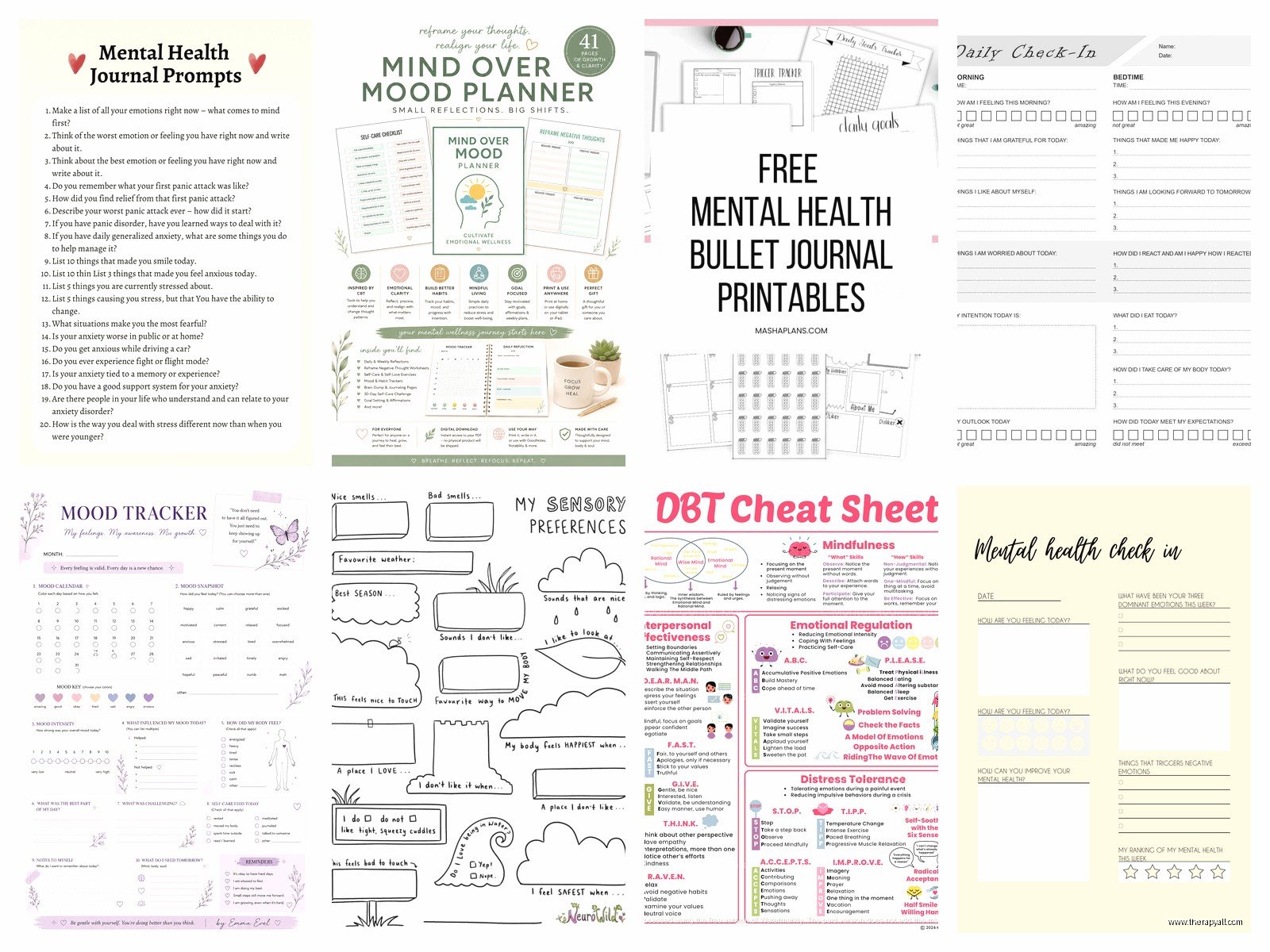
Mental health printables are downloadable PDF worksheets, trackers, and guided exercises designed for therapeutic use. They cover anxiety management, depression tracking, boundary setting, CBT thought records, DBT skills practice, self-care planning, and emotional regulation. You can find them on therapy blogs, mental health platforms, educational sites, and individual practitioner websites.
I started creating printables back in 2019 when I was running group workshops and needed something participants could actually take home instead of just nodding along for 90 minutes and then forgetting everything by Tuesday. The first one I made was this janky mood tracker that looked like a color-by-numbers page, but people actually used it. That surprised me.
## Why Printables Work in Therapy Settings
The tactile element matters more than most digital tools acknowledge. Writing by hand activates different neural pathways than typing. When you’re tracking panic symptoms or writing out cognitive distortions, the physical act of putting pen to paper creates a different kind of processing. I’ve watched clients who zone out during talk therapy suddenly become engaged when I slide a worksheet across the table.
Printables also create structure for people who feel overwhelmed by open-ended therapeutic questions. “How are you feeling?” is paralyzing for some clients. A feelings wheel printable with 72 specific emotion words gives them a framework. They can point. They can circle. They don’t have to generate language from scratch when their brain is already maxed out.
## Common Types of Mental Health Printables
**Mood and symptom trackers** let you monitor patterns over weeks or months. These usually include daily rating scales, symptom checklists, and space for notes about triggers or helpful interventions. The good ones have enough structure to be useful but enough white space that they don’t feel like homework from a particularly sadistic teacher.
**CBT thought records** walk you through identifying automatic thoughts, examining evidence, and generating balanced alternatives. The classic three-column or five-column formats. I gotta say, the seven-column versions are overkill—nobody’s filling out seven columns when they’re actively spiraling.
**DBT skills worksheets** cover the four modules: mindfulness, distress tolerance, emotion regulation, and interpersonal effectiveness. TIPP skills, STOP skills, DEAR MAN, GIVE FAST—all those acronyms that sound like you’re learning a new language. Which you kind of are.
**Anxiety management tools** include grounding exercise guides, worry postponement logs, exposure hierarchy planners, and progressive muscle relaxation scripts. The 5-4-3-2-1 grounding technique shows up on approximately 600,000 printables and honestly it’s earned that ubiquity because it works.
**Boundary setting worksheets** help you identify your limits, practice saying no, and recognize when boundaries are being violated. These have gotten really popular in the last few years as “boundaries” became a mainstream term instead of just therapy jargon.
**Self-care planning tools** are where things get kinda mushy and I’ll be honest, this is where my annoyance kicks in. So many self-care printables are just… bubble bath clipart and “treat yourself” nonsense. Real self-care is taking your medication, going to the dentist, and having hard conversations. Not buying a candle. The printables that actually help are the ones that break self-care into categories—physical, emotional, social, practical—and make you think about what you’re actually neglecting.
## What Makes a Printable Actually Useful
Design matters but not in the way most creators think. You don’t need watercolor florals and hand-lettered fonts. You need clear labels, adequate writing space, and logical flow. I remember downloading this boundary-setting worksheet last year that had decorative borders taking up literally 40% of the page and three tiny lines for writing. Who is that helping?
The best printables are boring-looking. Clean sans-serif fonts. Black and white or minimal color so they print well. Headers that tell you exactly what to do in each section. No ambiguity.
Instructions should be on the printable itself, not in a separate document you’re supposed to read first. People don’t read instructions. They just start filling things out and then get confused and frustrated. If your worksheet requires three paragraphs of explanation to use, it’s not well-designed.
Accessibility gets ignored constantly. Tiny fonts, low contrast, dense paragraphs—all barriers for people with visual processing issues or reading difficulties. The irony of creating mental health resources that exclude people with cognitive differences is… well, it’s there.
## Free vs Paid Printables
Most quality printables are free because therapists and mental health educators understand that paywalling basic coping tools is kinda gross. You’ll find free resources on university counseling center websites, non-profit mental health organizations, government health departments, and individual practitioners who just want to help.
Paid printable packs exist and some are worth it. Usually these are comprehensive bundles—like 50 DBT worksheets or a complete 12-week therapy workbook. The good paid resources offer something beyond what you’d find free: original exercises, therapeutic programs with progression, or specialized tools for specific populations.
Etsy has become a weird marketplace for therapy printables and the quality is all over the place. You’ll find legitimately helpful resources next to stuff that’s just motivational quotes on cardstock. My cat knocked over my coffee onto a stack of printables I was reviewing last month and honestly the coffee stains improved some of them.
## Using Printables as a Client
If your therapist hasn’t offered printables but you think they’d help, just ask. Most therapists have a folder of worksheets they pull from. Some are precious about which ones they assign and when, treating them like they’re dispensing controlled substances. Others will just hand you a stack and say try whatever seems relevant.
You can also find and use printables independently. Track your moods, practice thought challenging, plan your coping strategies. The worksheet police aren’t gonna show up because you’re doing CBT homework without a licensed supervisor.
That said, some therapeutic techniques need guidance. Exposure hierarchies for specific phobias, trauma processing worksheets, complex DBT skills—these work better with professional support. A printable can supplement therapy but it’s not the same as therapy.
## Using Printables as a Therapist
I’ve built entire sessions around a single worksheet. Not because I was unprepared (okay, sometimes because I was unprepared) but because a good printable facilitates discussion in ways that open-ended conversation sometimes doesn’t.
Assign them as between-session work but don’t be weird about it if clients don’t complete them. Life happens. Depression happens. Executive dysfunction happens. The printable is a tool, not a test they can fail.
Customize them. Most PDFs are editable or at least you can write notes in margins before printing. Cross out sections that don’t apply. Add prompts that fit your client’s specific situation. Make it collaborative instead of just handing over a generic form.
Keep a organized system because you will accumulate hundreds of these things. I have folders by category, by therapeutic modality, by population… and I still sometimes spend 10 minutes hunting for that one worksheet about values clarification that I know I downloaded somewhere.
## Where to Find Quality Free Printables
**Therapist Aid** is the gold standard. Clean design, evidence-based content, organized by category and therapeutic approach. They have both free and paid membership options but the free library is extensive.
**Psychology Tools** offers CBT resources, many free, some requiring subscription. Very clinical, very practical.
**DBT Self Help** has comprehensive DBT worksheets and handouts based on Marsha Linehan’s work. No fluff.
**University counseling centers** often post their resources publicly. UCLA, Michigan, Cornell—their counseling websites have downloadable handouts on everything from test anxiety to relationship skills.
**SAMHSA** (Substance Abuse and Mental Health Services Administration) provides free resources including worksheets for substance use, trauma, and serious mental illness.
**Individual therapist websites and blogs** can be treasure troves or total wastes of time. You gotta evaluate each one. Does this person have actual credentials? Is the information evidence-based or just their personal opinions? Is the worksheet actually useful or just pretty?
## Red Flags in Mental Health Printables
Avoid anything that promises to “cure” or “fix” mental health conditions. Worksheets are tools for managing symptoms and building skills, not magic bullets.
Be skeptical of printables heavy on toxic positivity. “Just think happy thoughts!” is not a coping strategy. It’s a dismissal of genuine struggle dressed up in cute fonts.
Watch for printables that oversimplify complex issues. A one-page worksheet can’t address severe trauma, suicidal ideation, or active psychosis. These conditions need professional intervention, not a PDF.
Check sources. If a printable cites research or therapeutic approaches, those should be real. I’ve seen “CBT worksheets” that have nothing to do with actual cognitive behavioral therapy, just someone slapping a recognized term on their random musings about mindset.
## Printables for Specific Populations
Kids and teens need different formats than adults. More visual elements, simpler language, shorter activities. The best child-focused printables use characters, scenarios, and concrete examples rather than abstract concepts.
Older adults might need larger fonts, more white space, and references that match their life experience. A printable about work stress that assumes you’re in a corporate office doesn’t help someone who’s retired or worked in trades their whole life.
Culturally adapted printables acknowledge different values, family structures, and communication styles. A boundaries worksheet that assumes individualistic Western norms doesn’t translate well to collectivist cultures where family enmeshment is expected and valued.
## Digital vs Paper Printables
Some people use printables digitally—filling them out on tablets or computers. That works fine if you’re comfortable with technology and have the devices. The benefit is you can save multiple versions, easily make copies, and not deal with paper clutter.
But there’s something about paper. The physical object you can touch, the permanence of ink, the ability to stick it on your fridge or carry it in your pocket. I personally prefer paper for anything I’m using during a crisis moment because screens add cognitive load when your brain is already struggling, or maybe that’s just me getting old and—anyway, both formats have value.
## Creating Your Own Printables
If existing resources don’t meet your needs, make your own. It’s not that complicated. Open a document, create clear sections, add prompts or scales or tracking elements, save as PDF.
Keep it simple. You don’t need graphic design skills. You need clarity and functionality.
Test it yourself first. Fill out your own worksheet. Does it make sense? Is there enough space? Are the instructions clear? Does it actually help you think through the issue?
If you’re a therapist creating printables for your practice, consider sharing them publicly. The mental health community benefits from resource sharing. Just make sure you’re not violating any copyright or using proprietary therapeutic materials without permission.
## Printables and Evidence-Based Practice
Not all printables are created equal in terms of research backing. CBT and DBT worksheets often have strong evidence bases because they’re based on manualized treatments with decades of research. Random self-care checklists someone made last Tuesday have zero empirical support.
That doesn’t mean non-evidence-based printables are useless. A gratitude journal isn’t a researched intervention but if it helps you notice positive things, great. Just don’t expect it to treat clinical depression.
Know the difference between therapeutic tools and general wellness activities. Both have value but they’re not interchangeable.
## Integration with Other Therapeutic Tools
Printables work well alongside apps, books, therapy sessions, and support groups. They’re one piece of a larger support system, not a standalone solution.
Some people use printables to prepare for therapy sessions—tracking symptoms or identifying patterns to discuss. Others use them to practice skills learned in session. Both approaches work.
The key is finding what actually helps you rather than accumulating printables you never use because they seemed helpful when you downloaded them at 2am but then just lived in a folder on your desktop forever taking up space and making you feel guilty about not using them.

ADHD & Neurodiversity
Life Planner Bundle – Life Organizer
Self-Care & Personal Growth
Acceptance And Commitment
Anxiety & Stress
Stress Processing Journal & Reflection Worksheets For Daily Self – Care
Self-Care & Personal Growth
Self – Reflection Guided Journal With Guided Prompts 30
Emotional Wellness
Decision Processing – Thought Processing Journal For Daily Self – Care
Therapist Resources
Physiotherapist Journal PDF Planner Tracker Or Log Book
Self-Care & Personal Growth
Customizable Self – Confidence & Self – Esteem Guided Journal
ADHD & Neurodiversity
ADHD Behavior Tracker PDF Planner Tracker Or Log Book