
Mental Health, Therapy resources
Therapy Lessons – Everything You Need to Know

Jul
Therapy lessons are the actual takeaways you get from working with a therapist—not the vague “self-care is important” stuff you see on Instagram, but the real skills, frameworks, and shifts in thinking that stick with you after sessions end. I’ve spent years writing about mental health tools and I gotta say, the gap between what people think therapy teaches and what it actually teaches is huge.
Most people walk into their first therapy appointment expecting some kind of magic formula or a list of steps to fix their problems. What they don’t realize is that therapy lessons are less about receiving answers and more about learning how to ask better questions. You learn to notice patterns in your behavior, identify triggers before they derail your whole week, and build actual coping mechanisms instead of just white-knuckling through hard moments.
The Core Skills You Actually Learn in Therapy
Emotional regulation is probably the biggest one. This is your ability to manage intense feelings without either stuffing them down or letting them control your actions. I remember back in 2021 when I was interviewing therapists for a series on DBT skills, and one of them told me that most adults have the emotional regulation capacity of a teenager because nobody ever taught them otherwise. That stuck with me because it’s true—we expect people to just know how to handle anger, anxiety, or sadness, but it’s a skill you have to practice.
You learn distress tolerance techniques, which is basically how to survive a crisis moment without making it worse. This includes things like the TIPP skill (Temperature, Intense exercise, Paced breathing, Paired muscle relaxation), grounding exercises, and radical acceptance. These aren’t feel-good mantras. They’re concrete actions you take when your nervous system is freaking out.
Cognitive restructuring comes up a lot, especially in CBT. You learn to catch automatic negative thoughts and examine them instead of accepting them as truth. For example, if you think “I’m terrible at my job” every time you make a small mistake, therapy teaches you to pause and look at the evidence. What actually happened? Is this thought accurate or is it your anxiety talking? It sounds simple but it takes months of practice to make it automatic.
Interpersonal Effectiveness and Boundary Setting
This is where a lot of people see the biggest real-world changes. Therapy teaches you how to communicate what you need without being aggressive or passive. The DEAR MAN skill from DBT is one I’ve written about probably fifty times because it’s that useful—Describe the situation, Express your feelings, Assert what you want, Reinforce why it matters, stay Mindful, Appear confident, and Negotiate if needed.
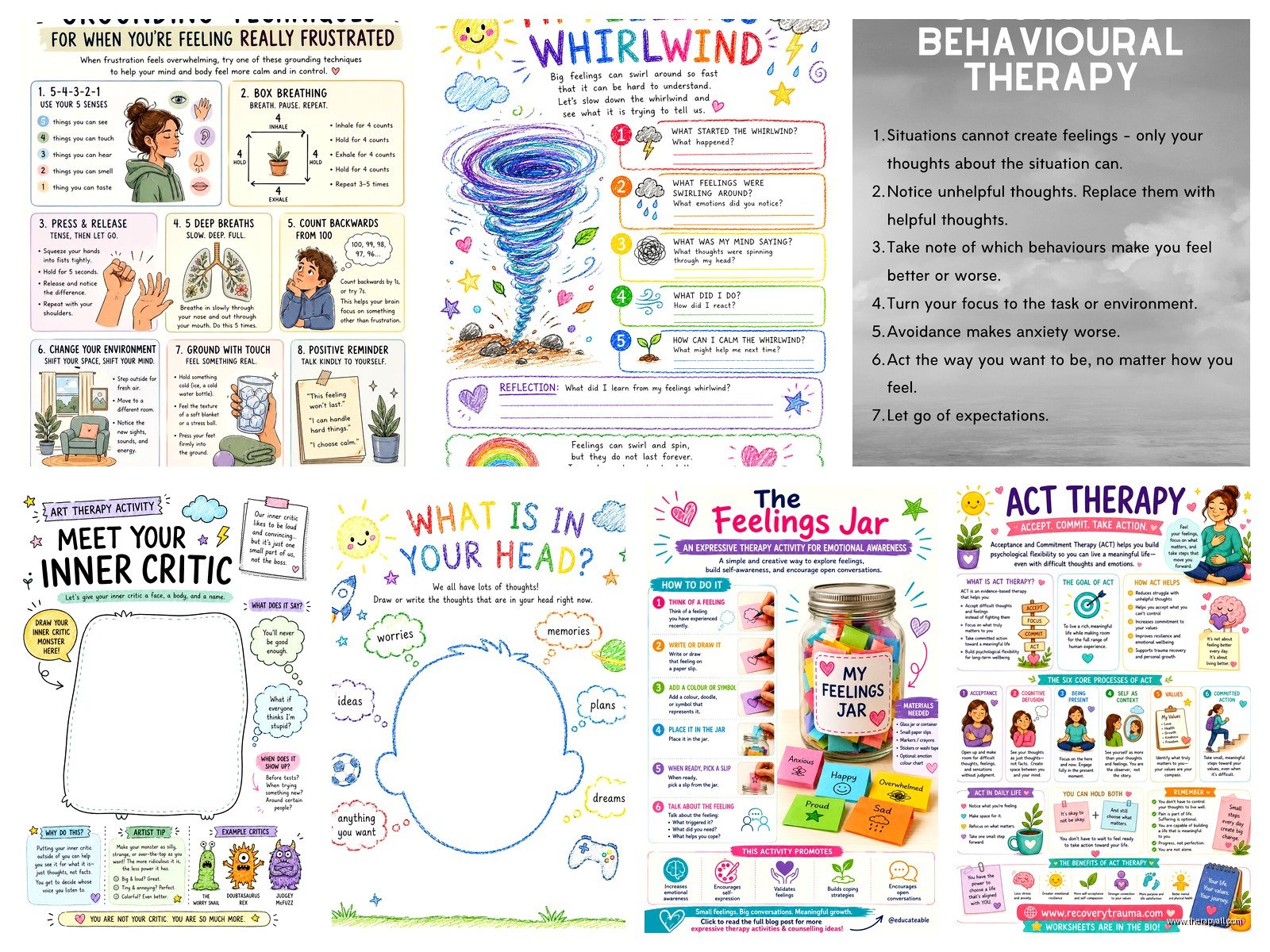
Setting boundaries is another major lesson. You learn that boundaries aren’t mean or selfish, they’re just information about what you’re willing to do or accept. I’ve seen so many people struggle with this because they think saying no makes them a bad person, or they’ve been taught that their needs don’t matter as much as keeping the peace.
You also learn how to recognize unhealthy relationship patterns. Maybe you always date people who need “fixing” or you have a habit of overfunctioning in friendships where the other person takes and takes. Therapy helps you see these patterns and understand where they come from—usually childhood stuff or past relationships that taught you warped lessons about what love or friendship should look like.
Understanding Your Attachment Style
This is one area where therapy content online drives me absolutely nuts because everyone’s suddenly an expert on attachment theory after reading one Instagram carousel. Attachment styles (secure, anxious, avoidant, disorganized) describe how you relate to others in close relationships based on early experiences with caregivers.
In therapy, you don’t just get labeled with a style and call it a day. You learn how your attachment shows up in your actual life. Maybe you’re anxious-attached and you spiral when your partner doesn’t text back quickly, or you’re avoidant and you pull away the second someone gets too close. The lesson isn’t just identifying it—it’s learning how to work with it and slowly shift toward more secure patterns.
You learn that attachment isn’t fixed. You can have different attachment styles with different people, and you can change your patterns with conscious effort and practice. This takes time though, like… a lot of time, because you’re essentially rewiring responses that were built in childhood.
Trauma Processing Techniques
If you’re working through trauma, therapy teaches specific processing methods. EMDR (Eye Movement Desensitization and Reprocessing) uses bilateral stimulation while you recall traumatic memories to help your brain reprocess them. It sounds weird and honestly it kinda is, but the research backs it up.
Somatic experiencing focuses on body sensations and releasing stored trauma from your nervous system. You learn to notice where you hold tension, what physical sensations accompany certain emotions, and how to complete the stress response cycle that might have gotten interrupted during the traumatic event.
Narrative therapy helps you rewrite the story you tell yourself about what happened. This doesn’t mean pretending trauma didn’t occur or wasn’t that bad—it means shifting from “this terrible thing happened and it ruined me” to “this terrible thing happened and here’s how I survived it and what I learned.”
Identifying and Challenging Defense Mechanisms
Defense mechanisms are the unconscious strategies your mind uses to protect you from uncomfortable feelings. Denial, projection, rationalization, intellectualization—these aren’t character flaws, they’re protective responses. But they can also keep you stuck.
In therapy you learn to recognize when you’re using these mechanisms. Maybe you intellectualize everything to avoid feeling it, or you project your own insecurities onto other people. I spent probably six months in my own therapy just noticing how often I used humor to deflect from anything serious, and once you see it you can’t unsee it.
The lesson here is that defense mechanisms served a purpose at some point, probably when you were younger and had fewer resources. Now you can develop healthier coping strategies, but you have to first acknowledge what you’re actually doing and why.

Practical Tools for Daily Life
Therapy gives you actual homework, or at least it should. Thought records where you track situations, thoughts, emotions, and behaviors to spot patterns. Behavioral activation when you’re depressed and need structure to get moving again. Exposure hierarchies for anxiety where you gradually face feared situations instead of avoiding them forever.
You learn sleep hygiene, which sounds boring but matters more than people think—consistent wake times, limiting screen time before bed, creating a wind-down routine. You learn how to structure your day when executive function is shot, breaking tasks into tiny steps and using external reminders because your brain isn’t reliable right now.
Mindfulness practices come up a lot, though not in the commercialized “download this app and find your zen” way. Real mindfulness in therapy is about present-moment awareness without judgment. You practice noticing thoughts without getting caught up in them, observing emotions without immediately reacting, and staying grounded in your body when your mind wants to spiral.
The Meta-Lesson: Learning How to Learn About Yourself
The biggest therapy lesson is probably learning how to be curious about yourself instead of judgmental. You develop this observer stance where you can notice your patterns, reactions, and thoughts without immediately labeling them as good or bad. This is harder than it sounds because most of us are incredibly harsh self-critics.
You learn that insight alone doesn’t create change—you have to actually practice new behaviors and sit with the discomfort that comes with breaking old patterns. I remember a client once told me they kept waiting to “feel ready” to try new coping skills, and their therapist had to explain that you don’t feel ready first, you do the thing and then maybe eventually it feels less impossible.
Therapy teaches you that progress isn’t linear. You’ll have good weeks and terrible weeks, and the terrible weeks don’t erase your progress. You’re building skills that will be there when you need them, even if you don’t use them perfectly every time.
What Therapy Doesn’t Teach (But People Expect It To)
Therapy won’t tell you what to do with your life. A good therapist won’t say “leave your partner” or “quit your job”—they’ll help you figure out what you actually want and what’s getting in the way of pursuing it. This frustrates people who want clear directives, but therapy is about building your own decision-making capacity, not outsourcing it.
It won’t fix everything. Some things therapy can’t change—chronic illness, systemic oppression, actual material problems like poverty or housing instability. Therapy can help you cope with these realities and advocate for yourself, but it’s not a substitute for real-world resources and support.
It won’t make you happy all the time. The goal isn’t constant happiness, it’s building resilience and the ability to handle life’s inevitable difficulties without falling apart or making everything worse.
How Long It Takes to Really Learn This Stuff
People always want a timeline and honestly it varies so much. Some skills you can start using within weeks—basic grounding techniques, thought records, simple boundary statements. Deeper work like changing attachment patterns or processing complex trauma can take years.
I’ve written probably hundreds of articles about therapy tools and techniques, and the thing nobody wants to hear is that reading about a skill and actually implementing it in your life are completely different. You can understand cognitive restructuring intellectually and still struggle to catch your negative thoughts in real time. You need repetition and practice and usually some accountability from a therapist to make it stick.
Most people need at least 12-16 sessions to see meaningful change, though this depends on what you’re working on. Short-term focused therapy for a specific issue might be shorter, while complex trauma or personality patterns might need years of consistent work. My cat just knocked over my water bottle, hang on—okay, where was I.
Finding the Right Therapeutic Approach
Different therapy modalities teach different lessons. CBT focuses on thoughts and behaviors, DBT adds emotion regulation and distress tolerance, psychodynamic therapy explores unconscious patterns and past experiences, ACT teaches psychological flexibility and values-based action. You’re not gonna learn the same things in each approach.
The therapeutic relationship matters more than the specific modality though. Research consistently shows that the quality of the therapist-client relationship is one of the strongest predictors of positive outcomes. You need someone you trust, who gets you, and who can challenge you without making you feel judged.
Some people need to try a few therapists before finding the right fit, and that’s normal. It doesn’t mean therapy doesn’t work, it means you haven’t found your person yet. This is another thing that annoys me about therapy content online—people act like if therapy didn’t work the first time, it’s useless, when really they might have just had a bad match or the wrong approach for their needs.
Integrating Lessons Into Real Life
The hardest part isn’t learning the skills in session, it’s using them when you’re actually triggered or overwhelmed or in the middle of a conflict. You have to practice these skills when you’re calm so they’re accessible when you’re not. This is why therapists assign homework and encourage between-session practice.
You learn to create your own mental health toolkit—the specific strategies that work for you personally. Maybe progressive muscle relaxation helps you but breathing exercises make you more anxious. Maybe you need to move your body when you’re upset, or maybe you need to journal, or talk to someone, or just sit with the feeling until it passes.
Eventually the goal is for these lessons to become automatic, or at least more automatic than they were before. You start catching yourself in old patterns and choosing different responses. You notice when you’re sliding into unhealthy behaviors and you course-correct faster. This is what “doing the work” actually means—not just attending sessions, but actively applying what you learn until it becomes part of how you operate in the world.
ADHD & Neurodiversity
Life Planner Bundle – Life Organizer
Self-Care & Personal Growth
Acceptance And Commitment
Anxiety & Stress
Stress Processing Journal & Reflection Worksheets For Daily Self – Care
Self-Care & Personal Growth
Self – Reflection Guided Journal With Guided Prompts 30
Emotional Wellness
Decision Processing – Thought Processing Journal For Daily Self – Care
Therapist Resources
Physiotherapist Journal PDF Planner Tracker Or Log Book
Self-Care & Personal Growth
Customizable Self – Confidence & Self – Esteem Guided Journal
ADHD & Neurodiversity
ADHD Behavior Tracker PDF Planner Tracker Or Log Book