
Mental Health, Therapy resources
ABC Worksheet in Therapy: A Step-by-Step CBT Exercise
Jun
What the ABC Worksheet Actually Is
The ABC worksheet is a cognitive behavioral therapy tool that breaks down emotional reactions into three parts: the Activating event, your Beliefs about it, and the Consequences that follow. It’s basically a map of how your brain gets from something happening to you feeling terrible or anxious or whatever emotion shows up.
I remember sitting in a supervision session back in 2019 and my supervisor kept emphasizing that clients almost always skip B and jump straight from A to C. They’ll say “my boss emailed me and now I’m panicking” without any awareness of the interpretation layer in between. That’s the whole point of this worksheet—making that invisible middle step visible.
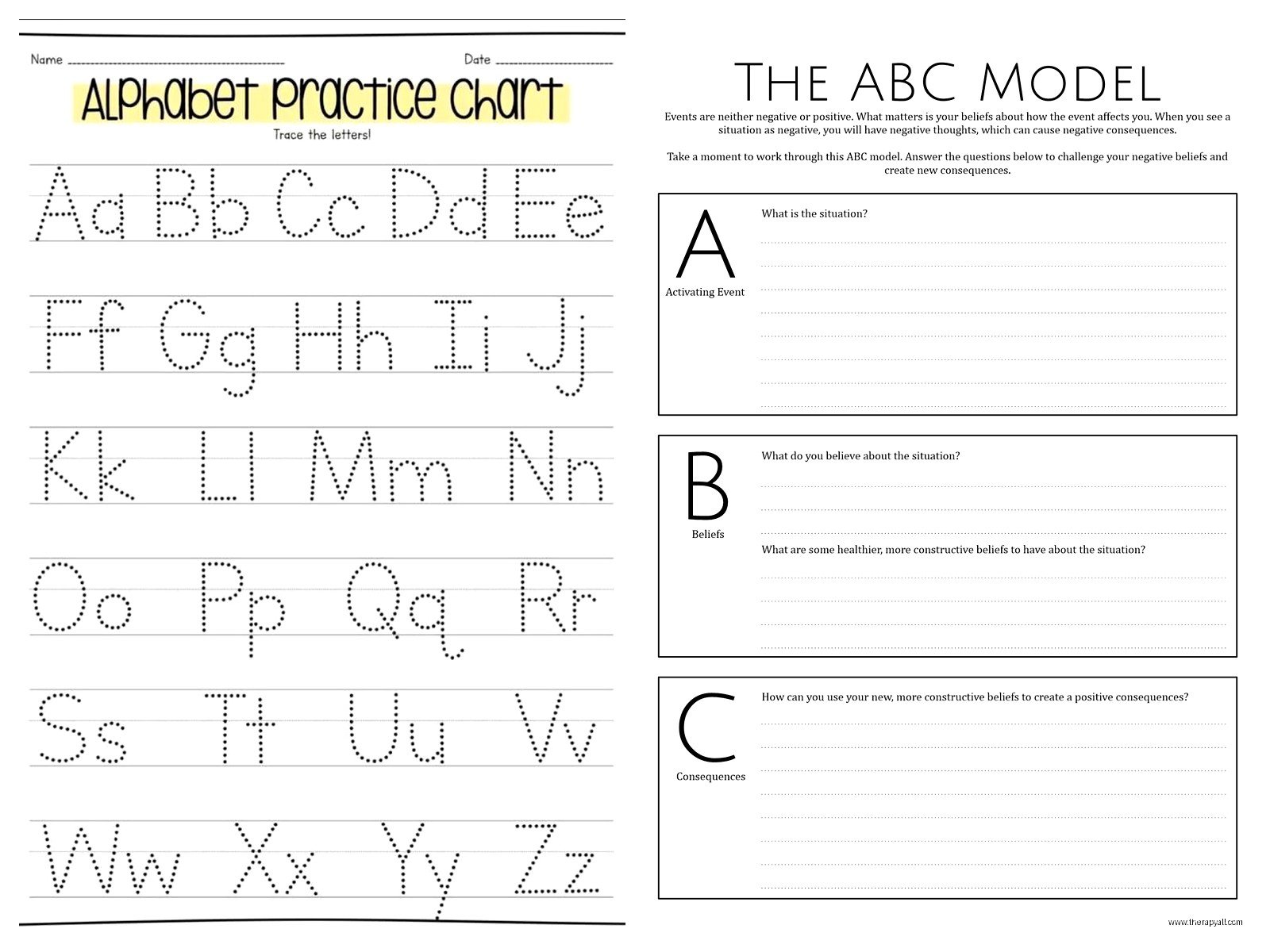
The format is simple. You draw three columns or boxes. First column is A for Activating Event—what actually happened in objective, factual terms. Second column is B for Beliefs—what you told yourself about the event, your interpretation, your thoughts. Third column is C for Consequences—the emotional and behavioral results of those beliefs.
What genuinely annoyed me when I started writing about CBT tools is how many therapists and mental health websites present the ABC model like it’s self-explanatory. They’ll just throw up a template and assume people understand the difference between an event and a belief about an event, which—spoiler—most people absolutely do not get at first.
Breaking Down Each Column
The A Column: Activating Event
This should be facts only. What would a camera capture? What could multiple witnesses agree on? You‘re not writing “my friend was rude to me” because that’s already an interpretation. You write “my friend didn’t reply to my text for three hours” or “my friend said ‘I’m busy’ when I asked to meet up.”
I find that people really struggle with keeping this objective. They wanna put their feelings and interpretations right here in column A, which defeats the entire purpose. The activating event is just the trigger, the thing that set off the chain reaction.
Sometimes the activating event is internal too—a physical sensation, a memory that popped up, a random thought. It doesn’t have to be external. If you suddenly remembered an embarrassing moment from high school and that triggered a whole spiral, the memory is your A.
The B Column: Beliefs
This is where the actual work happens. These are your automatic thoughts, interpretations, assumptions, and core beliefs about the activating event. This column answers “what did I tell myself about what happened?”
Common beliefs include things like “they hate me,” “I’m going to fail,” “this is proof I’m incompetent,” “everyone thinks I’m stupid,” “this always happens to me,” or “I can’t handle this.” These thoughts usually happen so fast you don’t even notice them, which is why the worksheet forces you to slow down and identify them.
Albert Ellis, who developed this model (well, he called it the ABC model of REBT but CBT borrowed it heavily), distinguished between rational and irrational beliefs. Irrational beliefs tend to be extreme, absolutist, and not based on evidence. They use words like always, never, must, should, can’t, everyone, no one.
You’re looking for thoughts that are distorted—catastrophizing, mind reading, fortune telling, black-and-white thinking, overgeneralization. My cat just knocked over my water bottle and honestly the interruption kinda proves the point about how random activating events can be.
The C Column: Consequences
The consequences are both emotional and behavioral. How did you feel as a result of belief B? What did you do or not do?
Emotional consequences: anxious, depressed, angry, ashamed, guilty, hopeless, irritable, scared. Be specific. “Bad” isn’t an emotion. “Sad” is better but “devastated” or “disappointed” or “lonely” is more useful.
Behavioral consequences: avoided the situation, snapped at someone, drank alcohol, scrolled social media for two hours, canceled plans, sent an angry text, stayed in bed, called in sick, overate, didn’t eat, worked obsessively to distract yourself. Whatever you actually did in response to the belief.
The key insight of the ABC model is that A doesn’t directly cause C. Your beliefs about A cause C. Two people can experience the same activating event and have completely different consequences because their beliefs differ.
How to Actually Use the Worksheet
You can fill this out in real time when you’re upset, or you can do it retroactively. I usually recommend people start by filling it out after the fact, when they’re calmer, because trying to analyze your thoughts while you’re in the middle of a panic attack or crying is gonna be tough.
Pick a specific recent situation where you had a strong emotional reaction. Not “my job stresses me out” but “yesterday at 2pm my manager asked to talk to me and I felt sick to my stomach.”
Write down the activating event in column A. Remember, facts only. If you’re writing a whole paragraph, you’re probably including beliefs. Keep it to one or two sentences.
Then move to column B and ask yourself what you were thinking. What did that event mean to you? What were you afraid would happen? What were you telling yourself about yourself, others, or the situation? Write down every thought you can remember, even if they seem contradictory or irrational. This isn’t about being logical yet—it’s about capturing what actually went through your mind.
Finally, column C. What emotions showed up and how intense were they on a scale of 0-100? What did you do behaviorally?
Some versions of the ABC worksheet add a D and E—D for Disputing the irrational beliefs and E for new Effect or new emotional consequence after disputing. But we’ll get to that.
Common Examples People Work Through
Example one: A is “I texted my partner ‘how’s your day’ at noon and didn’t get a response until 6pm.” B is “they’re mad at me, I did something wrong, they’re losing interest, this relationship is falling apart, I’m too needy.” C is anxiety at 80/100, sadness at 60/100, and behaviorally you checked your phone obsessively and when they finally texted back you were cold and defensive.

Example two: A is “I gave a presentation at work and one person in the back row was looking at their phone.” B is “my presentation is boring, I’m bad at public speaking, everyone thinks I’m incompetent, I shouldn’t have volunteered for this, I’m going to get fired—wait, no, that’s catastrophizing but I definitely thought it.” C is shame at 70/100, anxiety at 85/100, and behaviorally you rushed through the rest of the slides and avoided eye contact with everyone.
Example three: A is “I woke up with a headache.” B is “this is going to ruin my whole day, I can’t function with a headache, I always get sick at the worst times, my body is failing me, I’m going to fall behind on everything.” C is frustration at 75/100, hopelessness at 60/100, and behaviorally you canceled your morning plans and stayed in bed scrolling your phone feeling sorry for yourself.
You see how the belief layer changes everything? The activating event in example three is just a headache, which is uncomfortable but not inherently catastrophic. The beliefs transform it into evidence of total dysfunction.
The Part Most Worksheets Skip
After you fill out ABC, you’re supposed to examine your beliefs and challenge them. This is where D comes in—Disputing or Debating the irrational belief.
You ask yourself questions like: What’s the evidence for this thought? What’s the evidence against it? Is there another way to interpret this situation? What would I tell a friend who had this thought? What’s the worst that could realistically happen? What’s the best that could happen? What’s most likely to happen?
The goal isn’t to replace negative thoughts with fake positive ones. You’re not trying to go from “I’m going to fail this test” to “I’m definitely going to ace it!” You’re aiming for something more realistic and balanced, like “I studied adequately, I might not get a perfect score but I’ll probably pass, and if I don’t pass this one test it doesn’t mean I’m a failure as a person.”
Then E is the new Effect—after disputing the irrational belief, what’s your new emotional response? Usually the emotion doesn’t disappear but it decreases in intensity. Anxiety might go from 85/100 to 40/100. That’s still anxious, but it’s manageable.
Why This Actually Works
The ABC worksheet works because it interrupts automatic processing. Most of the time your brain is running on autopilot, going from trigger to thought to feeling to behavior without any conscious awareness. This tool forces you to slow down and observe the process.
It also externalizes your thoughts, getting them out of your head and onto paper where you can examine them more objectively. A thought swirling around in your mind feels like absolute truth. That same thought written down on a worksheet often looks kinda ridiculous.
I remember in summer 2021 I was writing so many CBT worksheet explainers that I started using them myself just to see if they actually helped, and honestly the ABC format was one of the few that I kept coming back to. Most worksheets feel like homework. This one felt like detective work.
The model also validates your emotions while showing you that they’re not inevitable. You’re not trying to talk yourself out of feeling upset. You’re just recognizing that the feeling came from a thought, and thoughts can be examined and sometimes changed.
Limitations and Frustrations
The ABC worksheet isn’t magic. It doesn’t work for everyone and it doesn’t work for every situation. Some emotions aren’t based on thoughts at all—they’re based on hormones, blood sugar, lack of sleep, chronic pain, or neurochemical imbalances. You can’t cognitive-restructure your way out of clinical depression, at least not without other interventions.
Also, sometimes your beliefs are actually accurate. If your activating event is “my boss told me I’m on a performance improvement plan” and your belief is “I might lose my job,” that’s not irrational. That’s a reasonable assessment of reality. The worksheet can still help you separate facts from catastrophizing, but it’s not gonna make the situation less serious.
Some people find the ABC format too rigid or analytical. If you’re already in your head too much, adding more cognitive analysis might not be helpful. You might need somatic or experiential interventions instead.
And honestly the whole rational-irrational dichotomy bothers me sometimes because it implies that if you just think correctly you’ll feel better, which can feel invalidating when you’re dealing with legitimate trauma or oppression or ongoing stressors. Your beliefs about discrimination you’re actually experiencing aren’t irrational just because they’re negative.
Practical Tips for Filling It Out
Start with situations that have moderate emotional intensity, not your most traumatic memories or biggest triggers. You’re learning the tool, so practice on a 5/10 or 6/10 situation before you tackle the 10/10 ones.
Be honest. Don’t write down the thoughts you think you should have. Write the actual thoughts, even if they’re mean or illogical or embarrassing. The worksheet only works if you’re real about what’s happening in your brain.
If you can’t identify your beliefs, ask yourself “what would this event mean about me if it were true?” or “what am I afraid this means?” That usually gets to the core belief faster.
You can fill out multiple ABC worksheets for the same activating event if you had several different belief chains. Sometimes one event triggers multiple thought spirals.
Keep your completed worksheets and look for patterns over time. You might notice the same core beliefs showing up again and again across different situations. That’s useful information for deeper therapeutic work.
ADHD & Neurodiversity
Life Planner Bundle – Life Organizer
Self-Care & Personal Growth
Acceptance And Commitment
Anxiety & Stress
Stress Processing Journal & Reflection Worksheets For Daily Self – Care
Self-Care & Personal Growth
Self – Reflection Guided Journal With Guided Prompts 30
Emotional Wellness
Decision Processing – Thought Processing Journal For Daily Self – Care
Therapist Resources
Physiotherapist Journal PDF Planner Tracker Or Log Book
Self-Care & Personal Growth
Customizable Self – Confidence & Self – Esteem Guided Journal
ADHD & Neurodiversity
ADHD Behavior Tracker PDF Planner Tracker Or Log Book