
Mental Health, Therapy resources
Applied Behavior Analysis Worksheets: ABA Tools for Practitioners

Jun
Applied Behavior Analysis worksheets function as structured documentation and intervention tools that help practitioners track behaviors, design interventions, and measure progress in clients across developmental stages. Most ABA worksheets fall into several functional categories: data collection sheets, behavior tracking logs, functional behavior assessment forms, skill acquisition programs, and reinforcement schedules.
Core Data Collection Tools
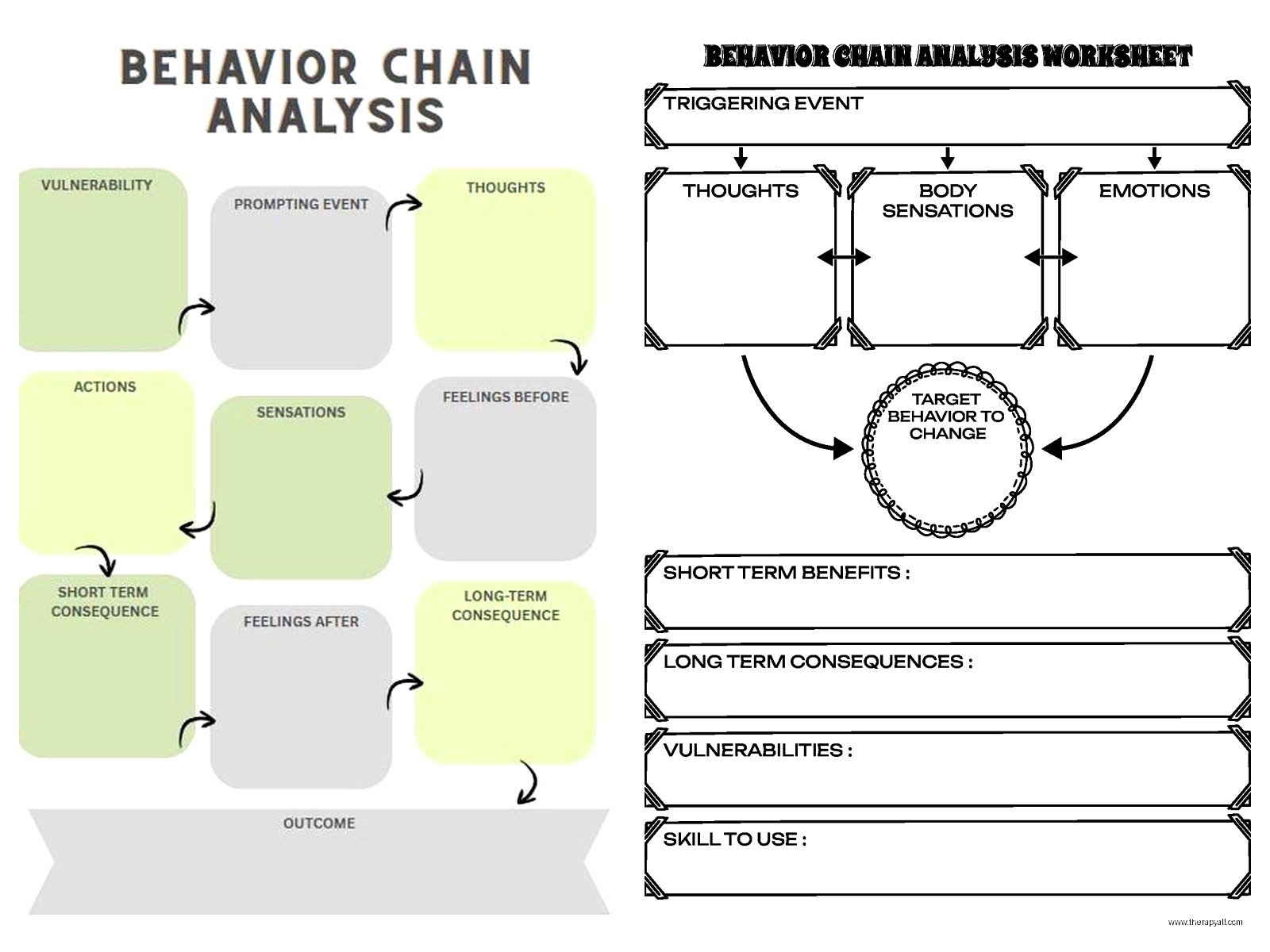
The ABC data sheet remains the foundation of behavioral observation. You’re recording Antecedent (what happened before), Behavior (what the client did), and Consequence (what happened after). I remember sitting in a clinic in 2019 watching a newer therapist try to use a generic ABC sheet for a kid who was having like seventeen different behaviors per session, and the poor form just couldn’t handle it—she was writing in margins, drawing arrows, basically creating a crime scene investigation board on one page.
Frequency counting sheets track how many times a specific behavior occurs within a time period. These work well for discrete behaviors with clear starts and stops. Duration recording sheets measure how long a behavior lasts, which you’d use for tantrums, task engagement, or stereotypic behaviors. Interval recording divides observation periods into chunks—partial interval if the behavior happened at all during that interval, whole interval if it occurred the entire time, momentary time sampling if you’re checking at specific moments.
Latency recording measures the time between an instruction and the start of the behavior. This matters when you’re working on compliance or response time.
Functional Behavior Assessment Worksheets
FBA forms guide you through the process of determining why a behavior is happening. The function typically falls into four categories: attention-seeking, escape/avoidance, access to tangibles, or automatic/sensory reinforcement.
Scatterplot analysis sheets help identify patterns across time. You mark when behaviors occur throughout the day, and patterns emerge—maybe all the hitting happens right before lunch, or the screaming clusters around transition times. I’ve used these for years and they still surprise me sometimes. You think you know when something’s gonna happen and then the data shows you’re completely wrong about the trigger.
The Motivation Assessment Scale (MAS) is a questionnaire format that rates different scenarios to narrow down behavioral function. The Questions About Behavioral Function (QABF) does something similar but with different question structures.
Setting event checklists help identify broader contextual factors—did the client sleep poorly, skip breakfast, have a medication change, experience something stressful at home. One thing that genuinely annoyed me for years was how many FBA templates completely ignored medical and physiological factors, like we’re just gonna pretend that ear infections and constipation don’t affect behavior?
Skill Acquisition and Task Analysis Forms
Task analysis worksheets break complex skills into teachable steps. You’re essentially creating a recipe for a behavior. Getting dressed might break into 15+ steps depending on the client’s level. Making a sandwich. Brushing teeth. Crossing the street safely.
Discrete trial training (DTT) data sheets track performance across repeated teaching trials. You typically have columns for the date, the specific target, the type of prompt used (full physical, partial physical, gestural, verbal, independent), and whether the response was correct. Some sheets include fields for reinforcement delivered and inter-trial interval.
Chaining data sheets document whether you’re using forward chaining (teaching first step first, then adding steps) or backward chaining (teaching last step first, working backward). My cat knocked over my coffee onto a backward chaining sheet last month and I had to recreate two weeks of data from memory, which was not ideal.
Natural environment teaching (NET) forms are less structured than DTT sheets since you’re capturing learning opportunities as they naturally occur. These usually have space for the activity context, the target being addressed, and how the client responded.
Prompt Hierarchy Documentation
Prompt tracking sheets help you systematically fade assistance. You need to record what level of prompting the client needed for each trial—most-to-least or least-to-most prompting strategies require careful documentation so you know when to fade support.
The goal is independence, so you’re looking for trends toward less intrusive prompts over time. If someone’s stuck at the same prompt level for weeks, something in your teaching procedure needs adjustment.
Reinforcement and Token Economy Systems
Token board templates provide visual systems where clients earn tokens (checkmarks, stickers, stars) for target behaviors, then exchange accumulated tokens for backup reinforcers. The worksheet version helps you design and track these systems.
Reinforcer assessment forms help identify what actually motivates a specific client. Preference assessments might be multiple stimulus without replacement (MSWO), paired stimulus, or free operant observation formats. You present items or activities and document choices to rank preferences. I’ve seen practitioners waste so much time using reinforcers that the client doesn’t actually care about because nobody did a proper assessment.
Reinforcement schedule worksheets help you plan and document whether you’re using continuous reinforcement (every occurrence), fixed ratio (every X occurrences), variable ratio (average of X occurrences), fixed interval (first occurrence after X time), or variable interval schedules.
Behavior Intervention Plan Templates
BIP worksheets structure your intervention design. They typically include sections for operational definitions of target behaviors, baseline data, functional assessment results, replacement behaviors you’re teaching, antecedent strategies, consequence strategies, and crisis procedures if applicable.
The operational definition section is critical—you need concrete, observable, measurable language. “Aggression” means nothing. “Hits others with open or closed hand making contact with any body part” means something you can actually measure and that multiple observers can identify consistently.
Replacement behavior sections identify functionally equivalent alternative behaviors. If a kid screams to escape demands, you’re teaching them to request a break using words or a picture card. The replacement behavior needs to serve the same function but in a socially appropriate way.
Antecedent Intervention Checklists
These help you modify environments and routines to prevent problem behaviors before they start. Environmental modifications might include reducing noise, adjusting lighting, or changing seating arrangements. Curricular modifications might mean adjusting task difficulty or providing more frequent breaks.
Visual schedule templates, choice boards, and first-then boards all function as antecedent interventions that increase predictability and control for the client.
Progress Monitoring and Graphing Tools
Graph paper templates designed for behavioral data help visualize trends. Line graphs work for most continuous data. Bar graphs compare across conditions or time periods. Cumulative records show total occurrences over time.
You’re looking for trends, variability, and level changes. Is the behavior increasing, decreasing, or staying flat? How much does it bounce around day to day? Did it shift when you introduced the intervention?
Probe data sheets document periodic checks on maintained skills rather than constant measurement. You might teach a skill intensively, then probe it weekly or monthly to ensure it’s sticking.
Generalization data forms track whether skills transfer across settings, people, and materials. A skill isn’t really acquired if it only happens in the therapy room with one specific therapist using one specific set of materials.
Session Notes and Communication Logs
Session summary sheets provide structure for documenting what happened during a therapy session—targets addressed, client performance, behavioral incidents, modifications made, parent communication.
Parent-therapist communication logs create consistency between home and clinical settings. You’re documenting what strategies parents are implementing, what questions they have, what they’re observing at home.
Some of these logs include sections for homework assignments or home practice activities, with spaces for parents to note how implementation went.
Practical Implementation Considerations
Digital versus paper worksheets each have advantages. Paper forms work when you’re on the floor with a client and can’t juggle a tablet. Digital forms allow easier data analysis and graphing. I kinda bounce between both depending on the setting and the specific client needs, though I’ll be honest, I lose paper sheets way more often than I should.
The best worksheet is the one that actually gets used consistently. I’ve seen elaborate data collection systems that were so complicated nobody filled them out accurately. Simple beats comprehensive if comprehensive means inconsistent data.
Interobserver agreement (IOA) forms help establish reliability. You and another observer independently collect data on the same behavior during the same observation period, then calculate agreement percentage. You want 80% or higher agreement, and—wait, this is something that doesn’t make it into enough ABA resources—you need to do IOA regularly, not just once at the beginning and then never again.
Customization and Adaptation
Pre-made templates need modification for individual clients. A worksheet designed for classroom behavior won’t work perfectly for in-home parent training. One designed for early learners won’t fit adolescent social skills groups.
You’re adding relevant target behaviors, adjusting time intervals, including or removing prompt levels based on your teaching procedures, modifying reinforcement schedules to match your system.
Some practitioners create master templates they modify repeatedly. Others build from scratch each time. There’s no wrong approach as long as your data collection matches your intervention needs and allows for meaningful analysis.
Laminating frequently-used sheets and using dry-erase markers extends their life in clinical settings where you’re running multiple clients through similar programs.
Common Worksheet Categories by Client Age and Setting
Early intervention worksheets emphasize developmental milestones, play skills, communication targets, and parent coaching elements. You’re often tracking imitation, joint attention, receptive language, and basic self-help skills.
School-age worksheets incorporate academic behaviors, peer interaction, classroom routines, and independence in school settings. These might include homework completion tracking, participation measures, and social skills targets.
Adolescent and adult worksheets focus more on vocational skills, community access, social relationships, and independent living competencies. You’re documenting job coaching data, money management, time management, and complex social scenarios.
Home-based program sheets need parent-friendly language and reasonable data collection expectations. You can’t ask parents to take frequency data on seventeen behaviors while managing dinner and homework and bedtime routines.
Clinical setting worksheets can be more detailed since you have dedicated observation time and typically better controlled environments for measurement.
ADHD & Neurodiversity
Life Planner Bundle – Life Organizer
Self-Care & Personal Growth
Acceptance And Commitment
Anxiety & Stress
Stress Processing Journal & Reflection Worksheets For Daily Self – Care
Self-Care & Personal Growth
Self – Reflection Guided Journal With Guided Prompts 30
Emotional Wellness
Decision Processing – Thought Processing Journal For Daily Self – Care
Therapist Resources
Physiotherapist Journal PDF Planner Tracker Or Log Book
Self-Care & Personal Growth
Customizable Self – Confidence & Self – Esteem Guided Journal
ADHD & Neurodiversity
ADHD Behavior Tracker PDF Planner Tracker Or Log Book