
Mental Health, Therapy resources
Anger Worksheets for Teens: Helping Adolescents Manage Emotions

Jun
Why Anger Worksheets Actually Matter for Teens
Anger worksheets for teens exist because adolescents are walking contradiction machines who need concrete tools to deal with emotions they don’t fully understand yet. Their prefrontal cortex is still under construction, so asking them to “just calm down” is like asking someone to build IKEA furniture without the instructions. The worksheets provide that instruction manual, though obviously some are better than others.
I remember sitting with a 15-year-old client in 2019 who kept insisting he didn’t have anger problems, he just had “stupid people problems.” We spent probably twenty minutes going in circles until I pulled out this ridiculously simple anger iceberg worksheet—you know, the one where anger is the tip and all the actual feelings are underneath—and he just stared at it for like thirty seconds before saying “oh.” That’s when I realized these tools work not because they’re sophisticated but because they externalize what’s happening internally.
The human brain during adolescence is rewiring itself constantly. Emotional regulation skills that might come naturally to adults have to be actively taught and practiced with teens. You can’t just tell a teenager to identify their triggers and expect them to know what that means. They need structured activities that break down the process.
Core Components of Effective Anger Worksheets
A good anger worksheet for teens needs to do several things simultaneously. First, it has to acknowledge that anger itself isn’t the problem. This is where so many therapeutic resources get it wrong and it drives me absolutely nuts—they treat anger like this evil emotion that needs to be eliminated. Anger is information. It tells you when boundaries are crossed, when something matters to you, when you feel threatened or disrespected.
The worksheet should help teens identify the physical sensations that accompany anger. Things like increased heart rate, muscle tension, heat in the face or chest, clenched fists. Most adolescents experience these symptoms but don’t connect them to emotional states until someone explicitly asks them to pay attention. I use worksheets that have body maps where teens can color or mark where they feel anger physically, and you’d be surprised how many of them have never thought about this before.
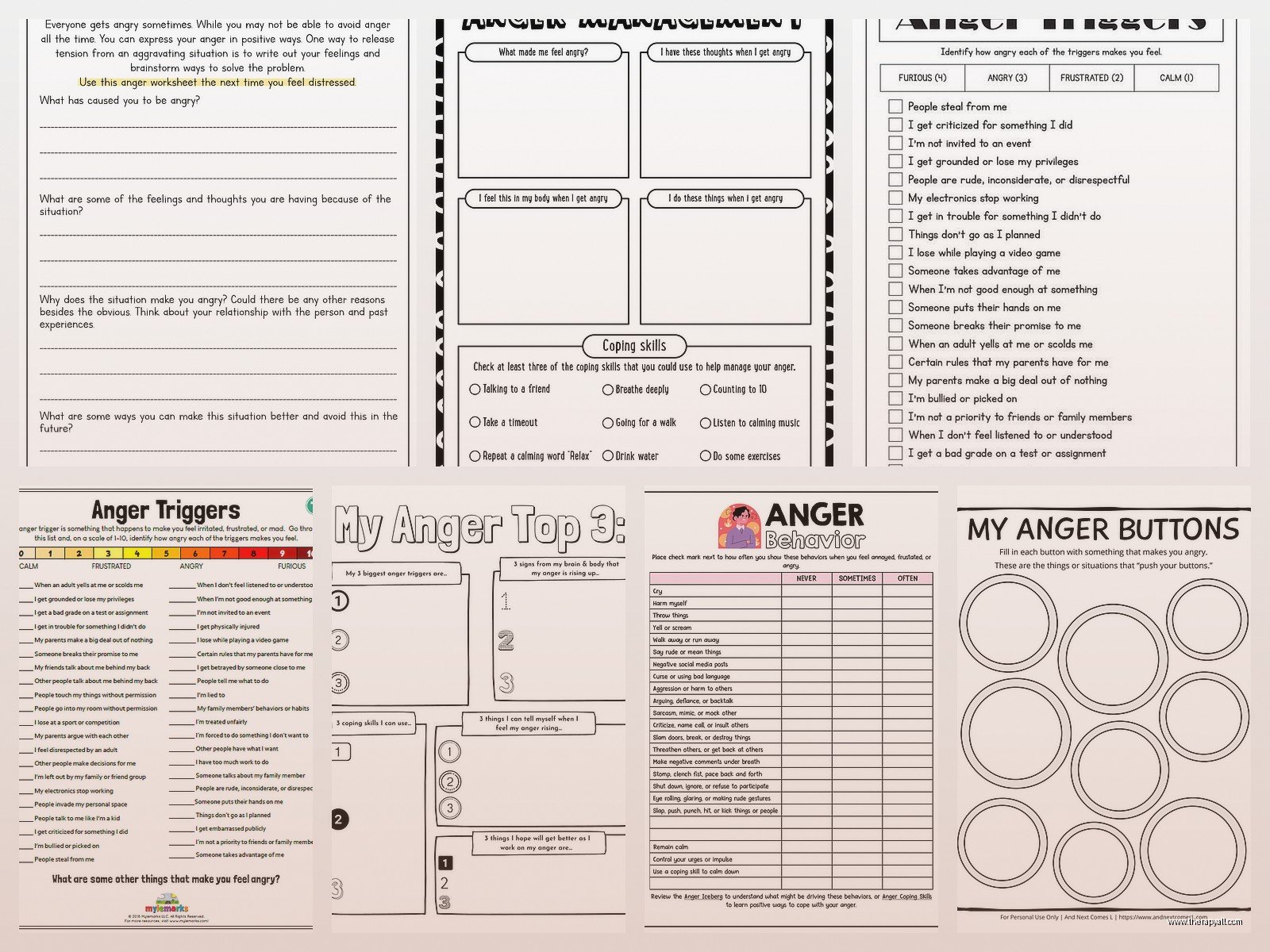
Trigger identification comes next. This needs to be specific, not vague. “What makes you angry?” is too broad. Better questions include: “Describe the last three times you felt angry this week” or “Which situations at school consistently irritate you?” The specificity matters because generic answers lead to generic solutions.
Then there’s the thought-feeling-behavior triangle, which I literally drew on a coffee shop napkin once when a client’s mom asked me to explain why her son kept getting suspended for fighting. The worksheet version asks teens to identify: What thought preceded the anger? What did the anger feel like? What action did you take? This sequence helps them see the gap between stimulus and response where choice actually exists.
Cognitive Restructuring Elements
Teens think in absolutes. “Everyone hates me.” “This always happens.” “I never get what I want.” Anger worksheets need to challenge these cognitive distortions without being preachy about it. The good ones include sections where adolescents write down their angry thought, then examine evidence for and against it.
I’m gonna be honest, when I first started using these worksheets around 2017 or so, I thought they were too simplistic. Like, just asking someone to list evidence against their belief would magically change their mind? But repetition is the thing. Doing this exercise once accomplishes nothing. Doing it fifteen times over three months starts creating new neural pathways.
The worksheet might ask: “When you thought ‘My teacher is trying to ruin my life,’ what evidence supports this? What evidence contradicts it?” Most teens can eventually see that Mrs. Johnson giving them a C on a paper isn’t actually a personal vendetta, it’s just disappointing and feels unfair.
Coping Strategy Sections
This is where worksheets either become useful or turn into that generic “take deep breaths!” garbage that makes teens roll their eyes. You need variety. Some adolescents will respond to physical outlets like exercise or punching a pillow. Others need cognitive strategies like counting backwards or using specific phrases. Some need social support and talking it through.
Effective worksheets let teens build their own menu of coping strategies. There might be a list of twenty options, and they circle or highlight the five that actually seem doable for them. Then there’s usually a section for practice tracking—did you use the strategy? Did it help? What would you modify next time?
My cat knocked over my coffee onto a stack of printed worksheets last month and honestly the ruined ones were probably gonna end up in recycling anyway because they were from this one website that just lists “meditation” and “yoga” as if every angry 14-year-old boy is gonna suddenly take up yoga. You need realistic options.
Types of Anger Worksheets That Actually Work
Anger Logs and Tracking Sheets
These are straightforward documentation tools. The teen records each anger incident including date, time, situation, intensity level (usually rated 1-10), physical symptoms, thoughts, and what they did. Over time, patterns emerge. Maybe anger spikes every Tuesday in fourth period. Maybe it’s worse when they’re hungry or haven’t slept well. Maybe certain people are consistent triggers.
The tracking sheet shouldn’t be complicated. Teens won’t fill out a two-page detailed analysis every time they get mad. It needs to be quick—five minutes maximum. Some worksheets use apps or digital formats now, which works better for some adolescents who are on their phones constantly anyway.
Anger Thermometer Worksheets
This visual tool shows anger as a scale from 0 to 10, with different intervention strategies marked at different levels. At level 2-3, maybe you just need to take a break. At level 6-7, you might need to remove yourself from the situation entirely. At level 9-10, you need crisis intervention strategies.
The worksheet helps teens identify where they are on the scale in the moment, which creates that crucial pause between feeling and reacting. I’ve seen these work particularly well with kids who struggle with emotional granularity—they only have “fine” and “furious” as options until you show them there’s a whole spectrum.

Situation-Thought-Feeling-Behavior Worksheets
These break down specific incidents into components. Situation: “My brother went into my room without asking.” Thought: “He has no respect for me and my parents let him get away with everything.” Feeling: “Angry, disrespected, helpless.” Behavior: “Yelled at him and slammed my door.”
Then there’s usually a second section: alternative thoughts and alternative behaviors. What else could you think about this situation? What else could you do? This isn’t about toxic positivity or pretending you’re not mad—it’s about expanding options.
Communication Skills Worksheets
Anger often comes out sideways because teens don’t know how to express it directly. These worksheets teach “I statements” and assertive communication. Instead of “You’re such a jerk,” the worksheet guides them toward “I feel angry when you borrow my stuff without asking because it makes me feel like you don’t respect my belongings.”
Does every teenager suddenly become a perfect communicator after filling out these worksheets? Nah. But it plants seeds. I worked with this 16-year-old girl who used to just explode at her parents, and after maybe two months of practicing with worksheets, she managed to say “I’m really angry right now and I need space before we talk about this” which was like… massive progress.
How to Actually Use These Worksheets
Here’s what doesn’t work: handing a teenager a worksheet and saying “fill this out.” They won’t. Or they’ll write one-word answers that tell you nothing. Or they’ll lose it immediately.
The worksheet needs context and support. Ideally, you’re sitting with the teen—whether you’re a therapist, counselor, parent, or teacher—and working through it together initially. You model it first. “Let me tell you about a time I got angry this week and we’ll fill this out about my experience.” That makes it less confrontational and more collaborative.
For therapy settings, I usually introduce a new worksheet type, complete one together during session, then assign it as homework. The following session, we review what they noticed. Did they use it? What was hard about it? What surprised them? The worksheet itself isn’t the intervention—the conversation around the worksheet is where the actual work happens.
Parents using these at home should expect resistance initially. Teens are kinda designed to resist parent-led emotional exercises. Framing matters. Instead of “we need to work on your anger problem,” try “I found this thing that helps people understand their feelings better, want to check it out with me?” And then actually do it together, not as a punishment but as a skill-building activity.
Frequency and Consistency
One worksheet one time equals zero behavior change. These tools require repetition. I usually recommend daily anger logs for at least two weeks to establish baseline patterns, then weekly check-ins after that. The more intensive worksheets—like the situation-thought-feeling-behavior breakdowns—might happen after specific incidents or once a week to process the most significant anger episode.
Some teens benefit from having a physical binder or folder where all their completed worksheets live. Others prefer digital files. The format matters less than the routine of actually using them and reviewing them periodically to notice progress.
Common Obstacles and Misconceptions
The biggest misconception is that anger worksheets are punishment. They’re not detention. They’re not something you assign because a teen “was bad.” That framing guarantees failure. These are skill-building tools, like practicing free throws or learning scales on a piano. Nobody’s mad at you for not knowing how to regulate intense emotions yet—we’re just giving you the practice structure to learn.
Another issue is expecting immediate results. Adolescent brains are still developing executive function skills. The gap between knowing what to do and actually doing it in a heated moment is enormous. A teen might perfectly understand their anger triggers and have a list of coping strategies and still punch a locker when someone insults them. That’s not worksheet failure, that’s normal human development. Progress is incremental.
Some teens will weaponize the language from worksheets. I’ve had kids tell their parents “you’re triggering me” as a manipulation tactic, or claim “I’m practicing my coping strategies” while actually just avoiding accountability. You gotta watch for this and address it directly—learning emotional regulation doesn’t mean avoiding consequences for harmful behavior.
When Worksheets Aren’t Enough
If a teen’s anger includes violence toward people or animals, property destruction beyond minor incidents, or is accompanied by other concerning symptoms like substance use or suicidal thoughts, worksheets alone won’t cut it. That level of dysregulation needs professional assessment and probably more intensive intervention—maybe DBT skills groups, maybe medication evaluation, maybe family therapy.
The worksheets work for garden-variety adolescent anger—the frustration, the outbursts, the door slamming, the attitude. They help teens who are fundamentally okay but struggling with emotional intensity that outpaces their regulatory capacity. They’re not designed for trauma-related anger or anger that’s symptomatic of underlying mental health conditions.
Customization and Adaptation
Not every worksheet works for every teen. Some adolescents are highly verbal and do great with writing exercises. Others need more visual or kinesthetic approaches. I’ve modified worksheets to include drawing components, used digital versions with teens who hate writing by hand, created simplified versions for younger teens or those with learning differences.
Cultural considerations matter too. Some worksheet language assumes certain family structures or social norms that don’t apply universally. A good clinician or parent adapts the tool to fit the teen’s actual life context. If a worksheet example talks about “asking your parents for help” but the teen’s parents are absent or unsafe, that needs modification.
Age also affects utility. A 13-year-old needs different complexity than an 18-year-old. The younger teens often need more structure, simpler language, more frequent check-ins—or wait, maybe it’s the opposite sometimes because some 13-year-olds are more emotionally aware than some 17-year-olds. Individual assessment matters more than age cutoffs.
You can find free anger worksheets online from therapy websites, or purchase more comprehensive workbooks designed specifically for adolescent anger management. The quality varies wildly. Look for worksheets created by actual mental health professionals rather than generic content mills. Check if they’re evidence-based or just someone’s random ideas about anger. Make sure the language is age-appropriate without being condescending because teens can smell condescension from a mile away and will immediately disengage.
ADHD & Neurodiversity
Life Planner Bundle – Life Organizer
Self-Care & Personal Growth
Acceptance And Commitment
Anxiety & Stress
Stress Processing Journal & Reflection Worksheets For Daily Self – Care
Self-Care & Personal Growth
Self – Reflection Guided Journal With Guided Prompts 30
Emotional Wellness
Decision Processing – Thought Processing Journal For Daily Self – Care
Therapist Resources
Physiotherapist Journal PDF Planner Tracker Or Log Book
Self-Care & Personal Growth
Customizable Self – Confidence & Self – Esteem Guided Journal
ADHD & Neurodiversity
ADHD Behavior Tracker PDF Planner Tracker Or Log Book