
Mental Health, Therapy resources
Coping Skills Worksheets for Teens: Practical Tools for Adolescents

Jun
What Actually Makes a Coping Skills Worksheet Work for Teens
Coping skills worksheets for teens aren’t magical documents that fix emotional dysregulation overnight. They’re structured paper-based or digital tools designed to help adolescents identify triggers, practice specific techniques, and track what actually helps when they’re stressed, anxious, or overwhelmed. The format matters more than most people think because teens will absolutely ignore anything that looks like homework from 1997.
I remember sitting with a 16-year-old client in summer 2019 who looked at a traditional thought record worksheet and said “this looks like a tax form.” She wasn’t wrong. That moment made me rethink how I was presenting these tools because if the barrier to entry is visual disgust, you’ve already lost the battle. The best worksheets I’ve seen since then use clean design, minimal text blocks, and sometimes even interactive elements if they’re digital.
The core purpose is giving teens a concrete method to externalize what’s happening internally. Most adolescents struggle with abstract emotional processing, and worksheets create a framework that says “put this feeling here, that thought there, now look at the pattern.” You’re basically building scaffolding for their developing prefrontal cortex to grab onto when everything feels chaotic.
Common Categories You’ll Find
Emotion identification worksheets are usually the starting point. These ask teens to name what they’re feeling, rate intensity on a scale, and sometimes identify where they feel it physically in their body. The body-mapping component is actually really effective for kids who are disconnected from physical sensations or who somaticize anxiety. I use variations of these constantly because so many teens will say “I’m fine” when they’re clearly not fine, and having boxes to fill in somehow makes honesty easier.
Trigger tracking sheets help adolescents recognize patterns in what sets off their stress response. These typically include columns for the situation, the emotion that came up, physical reactions, and what they did in response. Over time, you start seeing recurring themes like “every Sunday night before school” or “when Mom asks about grades” and then you have something concrete to work with in therapy or just in their own self-awareness.
Distress tolerance worksheets focus on skills for getting through a crisis moment without making it worse. These pull heavily from DBT and include things like the TIPP skills—temperature, intense exercise, paced breathing, paired muscle relaxation. The worksheets usually break down each technique step-by-step because telling a panicking teenager to “just breathe” is useless, but a worksheet that says “breathe in for 4, hold for 4, out for 6” gives them a formula to follow.

Cognitive restructuring worksheets are basically thought records adapted for younger brains. They walk through identifying negative automatic thoughts, examining evidence for and against those thoughts, and generating alternative perspectives. What really annoys me is when these worksheets use language like “rational response” because no 14-year-old talks like that, and if the language feels alien, they won’t use it. Better versions use prompts like “what would you tell a friend who had this thought?” which actually works.
Grounding and Mindfulness Tools
The 5-4-3-2-1 technique shows up on approximately one million worksheets and for good reason—it works. You identify 5 things you can see, 4 things you can touch, 3 things you can hear, 2 things you can smell, 1 thing you can taste. It’s a sensory grounding exercise that pulls you out of rumination or panic and back into the present moment. The worksheet version usually has blank spaces for teens to fill in during calm moments so they have a reference point when they’re actually distressed.
Mindfulness check-in sheets ask questions about present-moment awareness without all the spiritual baggage that sometimes comes with mindfulness teaching. Simple prompts like “what do you notice about your breathing right now?” or “what sounds are in the room?” These work best when they’re short—like genuinely short, not the six-page mindfulness journals I’ve seen that defeat the entire purpose.
Problem-Solving and Planning Worksheets
These break down overwhelming situations into manageable steps. The typical format is: define the problem clearly, brainstorm possible solutions without judging them, evaluate pros and cons of each option, choose one, make a specific plan, and review how it went. Teens actually respond well to this structure because it takes the emotional charge out of decision-making and makes it feel more like a puzzle to solve.
Safety planning worksheets are critical for teens dealing with suicidal ideation or self-harm urges. These aren’t fluffy coping tools—they’re structured documents that list warning signs, internal coping strategies, people and social settings that provide distraction, people to ask for help, professionals to contact, and means restriction steps. I keep multiple versions of these because different teens need different levels of detail, and some need more space for specific triggers or safe people.
Communication and Relationship Skills
Assertiveness worksheets teach the difference between passive, aggressive, and assertive communication through scenarios and practice scripts. A lot of teen anxiety stems from not knowing how to say no or ask for what they need, and these worksheets provide literal language they can use. The ones I like include fill-in-the-blank templates like “I feel _____ when _____ because _____. I need _____.” It sounds formulaic because it is, but that’s kinda the point when you’re building a skill from scratch.
Boundary-setting tools help teens identify their limits and practice enforcing them. These usually include reflection questions about values, comfort levels in different relationships, and specific situations where boundaries get crossed. My cat knocked over my coffee on one of these worksheets last week and honestly the coffee stain made it look more authentic, like it had been actually used instead of just printed off pristine from a therapy website.
Activity Scheduling and Behavioral Activation
Mood and activity logs track what teens do throughout the day alongside their emotional state. The goal is identifying which activities improve mood and which make it worse, then intentionally scheduling more of the helpful ones. This is straight from behavioral activation for depression, and it works because depression tells you nothing will help, but data showing that yesterday you felt 20% better after shooting hoops with friends is hard to argue with.
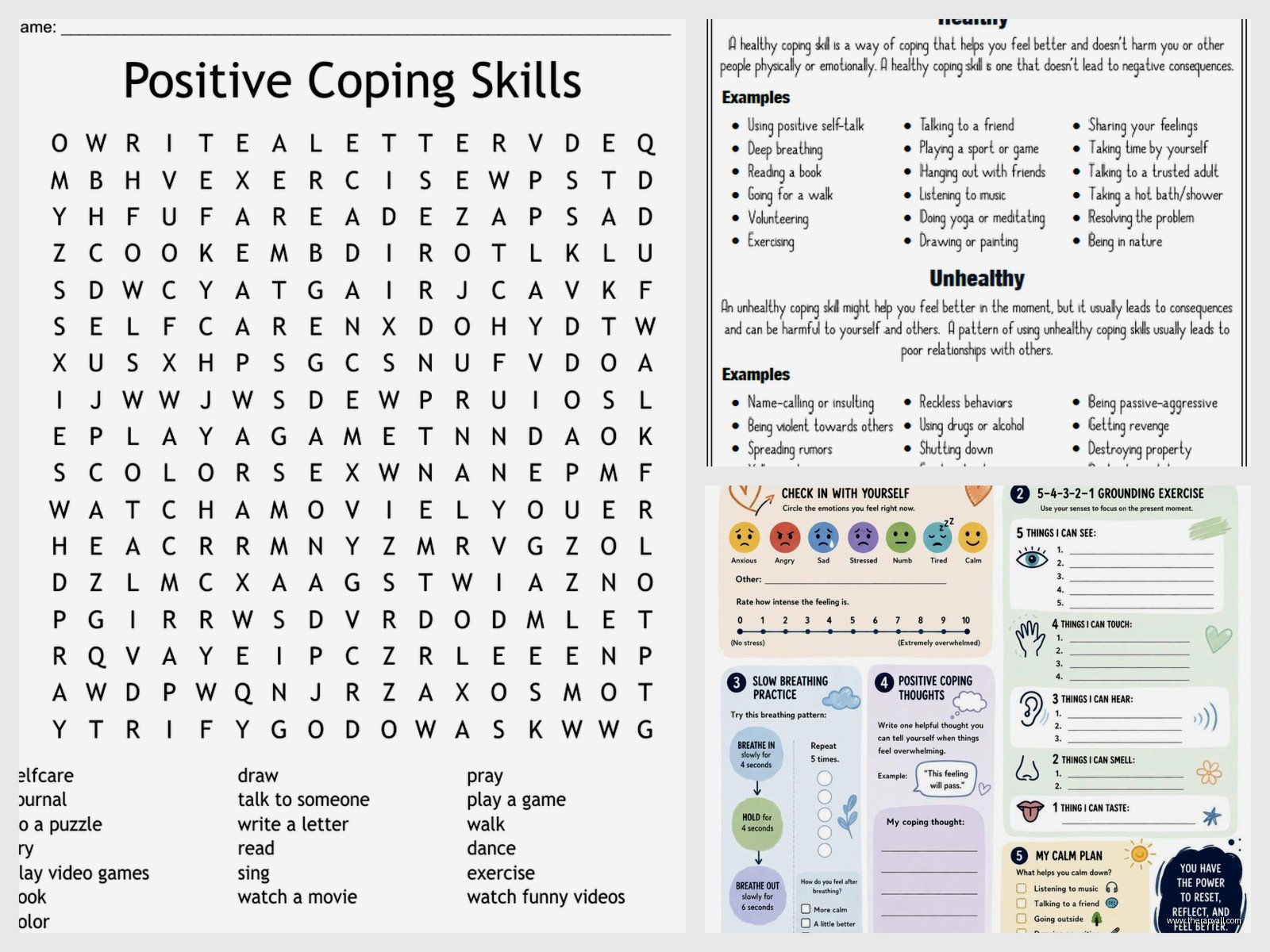
Pleasant events calendars are similar but focus specifically on scheduling enjoyable or meaningful activities in advance. Teens fill in activities they want to do across the week, which combats the passive drift into isolation and rumination that happens with depression and anxiety. The worksheet format makes it feel like a commitment rather than just a vague intention.
Values and Goals Clarification
Values identification worksheets ask teens to rate importance of different life domains—relationships, education, creativity, health, etc.—and then examine whether their current behavior aligns with those values. The disconnect between stated values and actual behavior is often huge for adolescents, and seeing it on paper can be genuinely motivating. Or sometimes it just makes them feel guilty, which is why these need to be used carefully and not just handed out like candy.
Goal-setting sheets break larger objectives into specific, measurable steps with timelines. The SMART goals framework shows up here constantly—Specific, Measurable, Achievable, Relevant, Time-bound. I’ve seen teens roll their eyes at the acronym but then actually use the structure because it makes nebulous goals like “do better in school” into concrete actions like “spend 30 minutes on math homework before dinner Monday through Thursday.”
Sleep and Routine Tracking
Sleep logs record bedtime, wake time, sleep quality, and factors that might affect sleep like caffeine, screen time, or stress levels. Adolescent sleep is a disaster for most teens because of biological shifts in circadian rhythm plus social and academic pressures, and these worksheets at least create awareness of patterns. You’re not gonna fix a teen’s sleep schedule with a worksheet alone, but you might identify that they sleep significantly worse on nights they argue with parents or doom-scroll TikTok until 2am.
Routine builders help establish consistent daily structure, which is protective for basically every mental health condition. These worksheets typically have teens map out an ideal morning routine, after-school routine, and evening routine, then track adherence. The tracking part is important because intentions are worthless without follow-through data.
Anger Management and Impulse Control
Anger logs track situations that trigger anger, intensity levels, physical sensations, thoughts during the anger episode, and behavioral responses. The pattern recognition here is valuable because many teens experience anger as this sudden overwhelming thing, but the logs usually reveal a pretty predictable sequence of escalation. Once you see the pattern, you can interrupt it earlier.
Impulse control worksheets—and honestly this is where I get frustrated with a lot of published materials because they treat impulse control like it’s just about willpower when there are actual neurological and developmental factors at play—focus on pause techniques and consequence evaluation. The “stop and think” model gets worksheeted into various formats, usually with prompts like “what am I about to do?”, “what might happen?”, “is this aligned with my goals?”, “what’s a better choice?”
Self-Esteem and Self-Compassion Building
Positive qualities inventories ask teens to list their strengths, skills, and things they like about themselves. This feels painfully awkward for most adolescents, especially those with depression or trauma histories. The worksheets that work better include prompts like “what would your best friend say you’re good at?” or “what compliment did you receive recently?” because those create distance from direct self-praise, which many teens find unbearable.
Self-compassion exercises adapted from Kristin Neff’s work appear on worksheets that contrast self-critical thoughts with compassionate alternatives. There’s usually a three-column format: harsh self-judgment, acknowledgment of common humanity (everyone struggles), and kind response to self. I’ve watched teens literally cringe while filling these out, but the ones who stick with it do report shifts in their internal dialogue over time.
Making Worksheets Actually Get Used
Digital versus paper is a real consideration. Some teens strongly prefer paper because it feels more private and they can physically destroy it if needed. Others won’t touch anything that isn’t on their phone. I keep both formats available and let the teen choose, though I’ll say the digital versions with auto-save features mean fewer “I lost it” excuses.
Customization makes a massive difference. Generic worksheets that could apply to anyone often end up ignored, but when you can modify prompts to reference a teen’s specific situation, sport, friend group, or interests, engagement goes way up. This is why I’ve started keeping editable templates rather than just PDFs.
The worksheet needs to match current skill level. Handing a complex cognitive restructuring sheet to someone who can barely identify basic emotions is setting them up to fail. You gotta build progressively, starting with simple tools and adding complexity as their capacity grows. And sometimes you need to go back to simpler tools during high-stress periods even if they’ve mastered harder ones—I learned that the hard way when a client who could do advanced CBT work fell apart during exams and needed to return to basic emotion wheels.
Integration with therapy or support matters too. Worksheets used in isolation can help, but they’re significantly more effective when discussed with a therapist, school counselor, or even a supportive parent who knows what the teen is working on. The worksheet creates data and structure for those conversations rather than just “how was your week?” “Fine.”
When Worksheets Don’t Work
Some teens hate writing and will simply refuse worksheet-based tools no matter how well-designed. For them, you need verbal processing, apps, art-based alternatives, or… honestly sometimes just different interventions entirely. Not every tool works for every person, and insisting on worksheets when a teen has clearly rejected them is counterproductive.
Literacy and language barriers get overlooked in a lot of worksheet design. If reading comprehension is a struggle, a text-heavy worksheet becomes another source of shame rather than a helpful tool. Visual worksheets with icons, diagrams, and minimal text work better for these situations.
Worksheets can become avoidance tools if a teen fills them out perfectly but never actually implements anything. I’ve seen this happen where the worksheet itself becomes the “work” and checking boxes feels like progress when no actual behavioral change is occurring. You have to watch for that performative completion versus genuine engagement thing.
ADHD & Neurodiversity
Life Planner Bundle – Life Organizer
Self-Care & Personal Growth
Acceptance And Commitment
Anxiety & Stress
Stress Processing Journal & Reflection Worksheets For Daily Self – Care
Self-Care & Personal Growth
Self – Reflection Guided Journal With Guided Prompts 30
Emotional Wellness
Decision Processing – Thought Processing Journal For Daily Self – Care
Therapist Resources
Physiotherapist Journal PDF Planner Tracker Or Log Book
Self-Care & Personal Growth
Customizable Self – Confidence & Self – Esteem Guided Journal
ADHD & Neurodiversity
ADHD Behavior Tracker PDF Planner Tracker Or Log Book