What Coping Skills Worksheets Actually Do
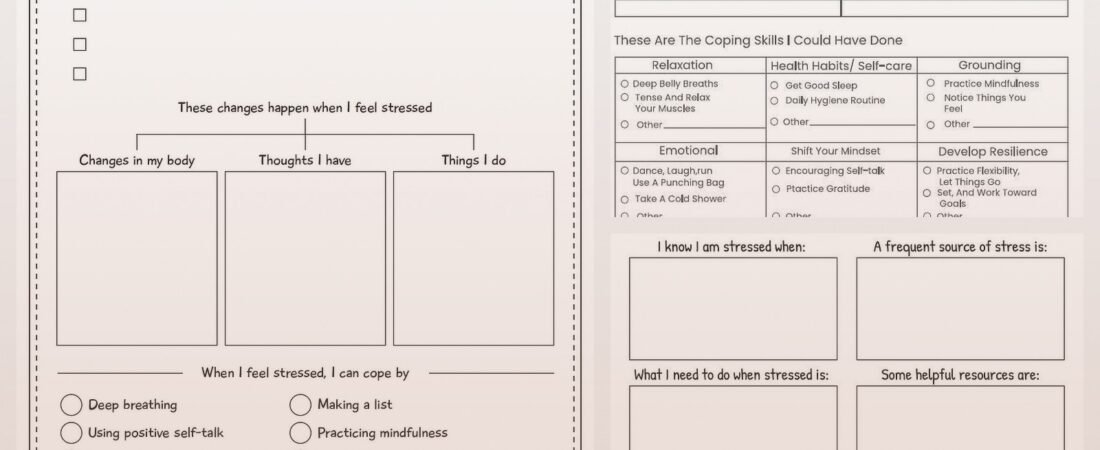
Coping skills worksheets are structured documents that walk you through specific psychological techniques for managing stress, anxiety, emotional overwhelm, or difficult situations. They’re not journal prompts or affirmation sheets. They’re based on evidence-based therapeutic approaches like cognitive behavioral therapy, dialectical behavior therapy, and mindfulness practices. You fill them out when you’re activated or after an event to process what happened and practice different response patterns.
I remember back in 2019, I was running a group therapy session and one guy said he’d been using worksheets for two months but nothing changed. When I asked to see them, he’d just been reading them. Not filling them out. Not applying them. Just reading the instructions like they were gonna work through osmosis or something. That’s when I realized most people don’t actually understand that these are active tools, not passive reading material.
The worksheet format forces you to slow down. When you’re anxious, your brain is moving too fast. Writing interrupts that cycle. The structure keeps you from spiraling into rumination because you have specific questions to answer. It externalizes the problem so you can look at it instead of just feeling trapped inside it.
Thought Records and Cognitive Restructuring
Thought records are probably the most common worksheet format. They usually have columns: situation, automatic thought, emotion, evidence for the thought, evidence against the thought, alternative thought, and new emotion. The goal is to identify cognitive distortions and challenge them with actual evidence rather than just feelings.
You might write down “My boss didn’t respond to my email, she’s definitely mad at me, I’m going to get fired” in the automatic thought column. Then you’re forced to look at actual evidence. Has she fired people for single emails before? Does she respond to every email immediately? Is there another explanation? It sounds simple but when you’re in fight-or-flight mode, you genuinely cannot access this rational thinking without the structure.
What drives me absolutely crazy is when people act like thought records are about “positive thinking” or convincing yourself everything is fine. Nah. It’s about accuracy. Sometimes the evidence does support your anxious thought, and then you can problem-solve instead of just panicking. The worksheet isn’t there to make you feel better artificially, it’s there to make you think more clearly.
Common Cognitive Distortions to Track
Most thought record worksheets include a reference list of cognitive distortions. These are thinking patterns that distort reality in predictable ways. All-or-nothing thinking means you see things in black and white categories. Catastrophizing means you jump to the worst possible outcome. Mind reading means you assume you know what others are thinking. Emotional reasoning means you take your feelings as evidence of truth.
I use these myself constantly. Like if I notice I’m feeling dread about a project, I’ll literally pull up a thought record template on my laptop and work through it. It takes maybe ten minutes. Usually I find I’m catastrophizing or fortune-telling, assuming something will go wrong with no actual basis.
Grounding and Distress Tolerance Worksheets
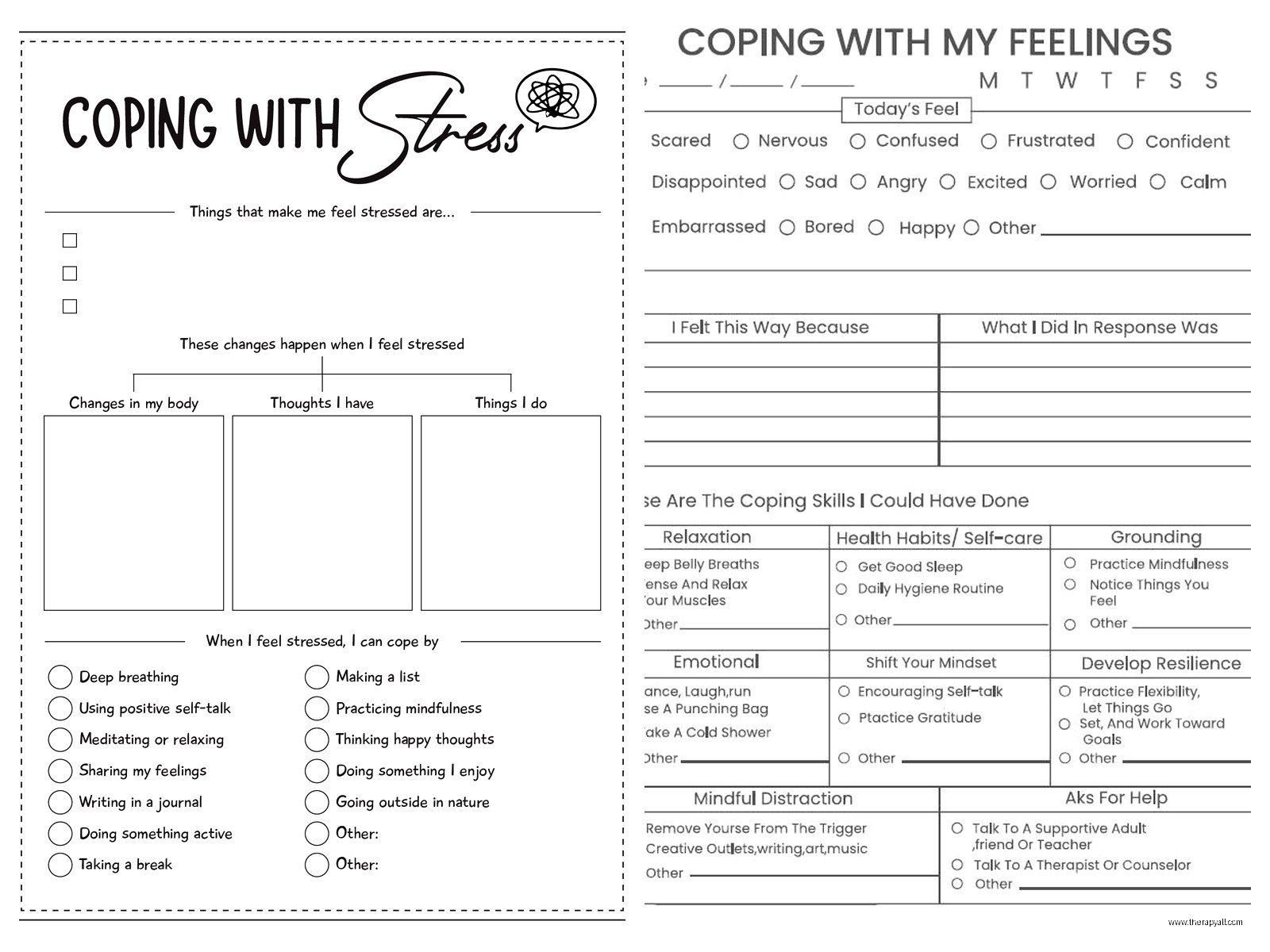
These are different from cognitive restructuring tools. When you’re in acute distress—panic attack, flashback, rage, dissociation—you can’t really do cognitive work. Your prefrontal cortex is offline. You need to regulate your nervous system first.
Grounding worksheets typically guide you through sensory exercises. The 5-4-3-2-1 technique is common: name five things you see, four things you can touch, three things you hear, two things you smell, one thing you taste. Some worksheets have you describe objects in extreme detail. Others use cold water, ice cubes, strong scents, or physical movement.
I keep a modified version of these on my phone because I had a client years ago who had panic attacks on the subway and couldn’t exactly pull out a paper worksheet. She needed something she could do that looked like she was just on her phone. We created a digital version that just had prompts she could scroll through. Describe the person across from you. What color are the seats. Count how many people are wearing black. It worked better than breathing exercises for her because it gave her brain something concrete to do.
TIPP Skills from DBT
Temperature, Intense exercise, Paced breathing, Paired muscle relaxation. This is a DBT intervention specifically for moments when your emotional arousal is like 8 out of 10 or higher. The worksheet version usually explains each technique and has you check off which one you’re going to try, then rate your distress before and after.
Temperature means changing your body temperature quickly—splashing cold water on your face, holding ice, taking a cold shower. This activates the dive reflex and slows your heart rate. Intense exercise means doing jumping jacks, running in place, anything that burns off adrenaline. Paced breathing is specific breath patterns, usually longer exhale than inhale. Paired muscle relaxation is tensing and releasing muscle groups.
You’re supposed to use these before you try to problem-solve or process emotions. If you’re at a 9 out of 10, you can’t think clearly anyway. Get yourself down to a 5 or 6, then use other tools.
Worry Time and Scheduling Worksheets
This is kinda an odd intervention but it works surprisingly well for people with generalized anxiety. You designate a specific 15-30 minute period each day as “worry time.” When anxious thoughts come up during the day, you write them down on a list and tell yourself you’ll think about them during worry time. Then during that scheduled period, you sit down with your list and actually worry about each item.
The worksheet usually has space for the worry list throughout the day, then a section for the worry time session where you write out each worry and either problem-solve it or accept that it’s not solvable right now. There’s also usually a column for tracking whether the worry still feels relevant by the time worry time comes around.
What happens is most worries either resolve themselves or stop feeling urgent. Your brain learns it doesn’t need to interrupt you constantly because there’s a designated time for this. I was super skeptical about this technique when I first learned it—seemed too gimmicky—but I’ve seen it work for so many people that I had to get over myself about it.
My cat keeps knocking my water bottle off my desk and I swear she times it for when I’m most focused, which is not related but just happened again.
Behavioral Activation and Activity Scheduling
These worksheets are more common for depression but they overlap with anxiety management because inactivity and avoidance feed both conditions. You track your activities hour by hour and rate your mood or anxiety level during each activity. Then you can see patterns—what activities improve your mood, what makes it worse, how much time you’re spending in avoidance.
The next step is scheduling activities intentionally. Not just pleasant activities, but specifically things that give you a sense of mastery or accomplishment. The worksheet typically has you plan your day or week in advance, including both necessary tasks and meaningful activities.
I had a period in 2021 where I was writing constantly—like three or four articles a day for different platforms—and I realized I wasn’t actually doing anything else. I started using an activity log myself and discovered I was spending about 11 hours a day writing and maybe 2 hours on everything else combined. No wonder I felt like garbage. The worksheet made it visible in a way that just thinking about it didn’t.
Avoidance Tracking
Some behavioral activation worksheets include specific sections for tracking avoidance. What did you avoid today? What was the short-term payoff? What was the long-term cost? This makes the consequences of avoidance concrete rather than abstract.
You might avoid a difficult conversation with your partner, which gives you immediate relief from anxiety but increases relationship tension over time. Seeing this written out repeatedly helps you recognize the pattern and motivate behavior change. It’s not about shame, it’s about data.
Values Clarification and Committed Action
These come from Acceptance and Commitment Therapy. The worksheet asks you to identify your core values across different life domains—relationships, work, health, personal growth, whatever matters to you. Then you identify specific behaviors that align with those values and specific barriers that prevent you from living according to your values.
The anxiety management piece comes in when you realize a lot of anxious avoidance actually conflicts with your values. You value close relationships but avoid vulnerability. You value professional growth but avoid challenging projects. The worksheet creates cognitive dissonance that can motivate change.
There’s usually a section where you commit to one specific action aligned with your values, even if it makes you anxious. Not eventually, not when you feel ready, but like this week. You write down exactly what you’re gonna do, when, and what obstacles might come up. Then there’s a follow-up section to reflect on what happened.
I’m always annoyed by values worksheets that are just lists of values words to circle, like they’re trying to sell you a motivational poster. That’s not how values work. You need to actually define what the value means to you and why it matters. “Family” as a circled word means nothing. “I want my kids to feel like they can talk to me about anything” is specific enough to guide behavior.
Emotion Regulation and Window of Tolerance
Window of tolerance is this concept from trauma therapy but it’s useful for anyone managing anxiety. You have an optimal zone of arousal where you can function, think clearly, and respond appropriately. Above that window is hyperarousal—anxiety, panic, rage. Below it is hypoarousal—shutdown, dissociation, numbness.
The worksheet typically has you identify your personal signs of being in each zone. What does hyperarousal feel like in your body? What thoughts come up? What do you do behaviorally? Same for hypoarousal. Then you identify what helps you get back into your window of tolerance from each direction.
If you’re hyperaroused, you need calming strategies. If you’re hypoaroused, you need activating strategies. A lot of people try to use the same coping skills regardless of what state they’re in, which is why they don’t work. You can’t calm down from shutdown—you need to wake up your system first, or wait actually that’s not quite right because sometimes you need to rest when you’re in hypoarousal rather than activating, it depends whether you got there from exhaustion or from overwhelm in the first place.
Tracking Triggers and Patterns
Most emotion regulation worksheets include some version of trigger tracking. Not triggers in the internet sense, but actual psychological triggers—situations, sensations, thoughts, or interactions that consistently push you out of your window of tolerance.
You log what happened right before you became dysregulated. Was it a specific person? Time of day? Type of task? Physical state like hunger or fatigue? The goal is pattern recognition so you can either avoid unnecessary triggers or prepare coping strategies in advance for unavoidable ones.
Sleep Hygiene and Anxiety Logs
Sleep problems and anxiety are basically best friends who feed each other constantly. Sleep hygiene worksheets have you track your sleep schedule, pre-bed routine, caffeine intake, screen time, exercise, and sleep environment. Then you rate your sleep quality and next-day anxiety levels.
The correlation becomes really obvious really fast. Three nights of bad sleep and your anxiety baseline shoots up. You’re more reactive, more easily overwhelmed, less able to use other coping skills effectively. The worksheet helps you prioritize sleep as an anxiety management tool rather than something you sacrifice when you’re stressed.
Some versions include a section for middle-of-the-night anxiety, where you write down intrusive thoughts that wake you up. This gets them out of your head so you can try to go back to sleep instead of ruminating for three hours. You tell yourself you’ll deal with it in the morning when you have access to your full cognitive function.
Using Worksheets Effectively
Here’s the thing nobody tells you: worksheets don’t work if you only use them when you’re already in crisis. They work best when you practice them regularly, including when you’re relatively calm. You’re building neural pathways. You’re training your brain to access these strategies automatically.
I usually recommend people pick one or two worksheets that address their specific patterns and use them consistently for at least a month. Not every worksheet will fit everyone. Some people hate thought records but love behavioral tracking. Some people need grounding exercises but find values work irrelevant to their current situation. That’s fine. Use what works.
Keep them accessible. Paper copies in your bag, digital versions on your phone, whatever means you’ll actually use them. I’ve had clients laminate a small grounding exercise worksheet to keep in their wallet. I’ve had others create a note in their phone with their most effective coping skills listed because pulling out a worksheet in public felt too vulnerable.
When to Move Beyond Worksheets
Worksheets are training wheels. Eventually you internalize the process and don’t need the structure anymore. You automatically notice cognitive distortions. You recognize when you’re dysregulated and know what to do. You’ve practiced enough that the skills become intuitive.
But some people benefit from continuing to use worksheets long-term, especially for tracking patterns or for particularly difficult situations. There’s no shame in that. The goal isn’t to prove you don’t need tools anymore. The goal is to manage your stress and anxiety effectively, and if worksheets help you do that, keep using them.
The opposite problem is people who collect worksheets but never actually use them. They download 50 different PDFs and feel like they’re doing something productive, but nothing changes because they’re not engaging with the actual exercises. One worksheet used consistently beats 50 worksheets saved to a folder you never open.