
Mental Health, Therapy resources
Counseling Activities for Teens: Creative Tools for Youth Mental Health

Jun
Why Creative Activities Actually Matter in Teen Counseling
Teens don’t always want to sit across from you and talk about their feelings. I remember this 15-year-old client in 2019 who would literally just stare at the wall for the first ten minutes of every session until I finally put a stack of colored pencils and paper on the table between us. She started doodling while we talked and suddenly everything changed—not because art is magic, but because she had something to do with her hands and didn’t have to perform eye contact the whole time.
Counseling activities for teens serve multiple functions that go beyond just “making therapy fun.” They create distance from overwhelming emotions, provide concrete ways to express abstract feelings, and give adolescents control over how much they share and when. You’re essentially building scaffolding around difficult conversations.
The Difference Between Activities and Busy Work
There’s this misconception that any worksheet or craft project counts as therapeutic work, and it drives me absolutely up the wall. I’ve seen so many generic “feelings wheels” and “mood trackers” that therapists print out without actually thinking about whether they match the teen’s developmental level or presenting issues. A 13-year-old dealing with social anxiety needs different tools than a 17-year-old processing trauma, and slapping a mandala coloring page in front of both of them isn’t clinical work—it’s just killing time.
Effective counseling activities have clear therapeutic goals. Before introducing any activity, you should know what you’re assessing, what skill you’re building, or what conversation you’re opening up. The activity is a vehicle, not the destination.
Art-Based Activities That Actually Work
Drawing and visual expression bypass some of the verbal defensiveness that teens naturally deploy. When a teenager tells you everything is “fine” but draws themselves as a tiny figure in the corner of the page with storm clouds overhead, you’ve got something to work with.
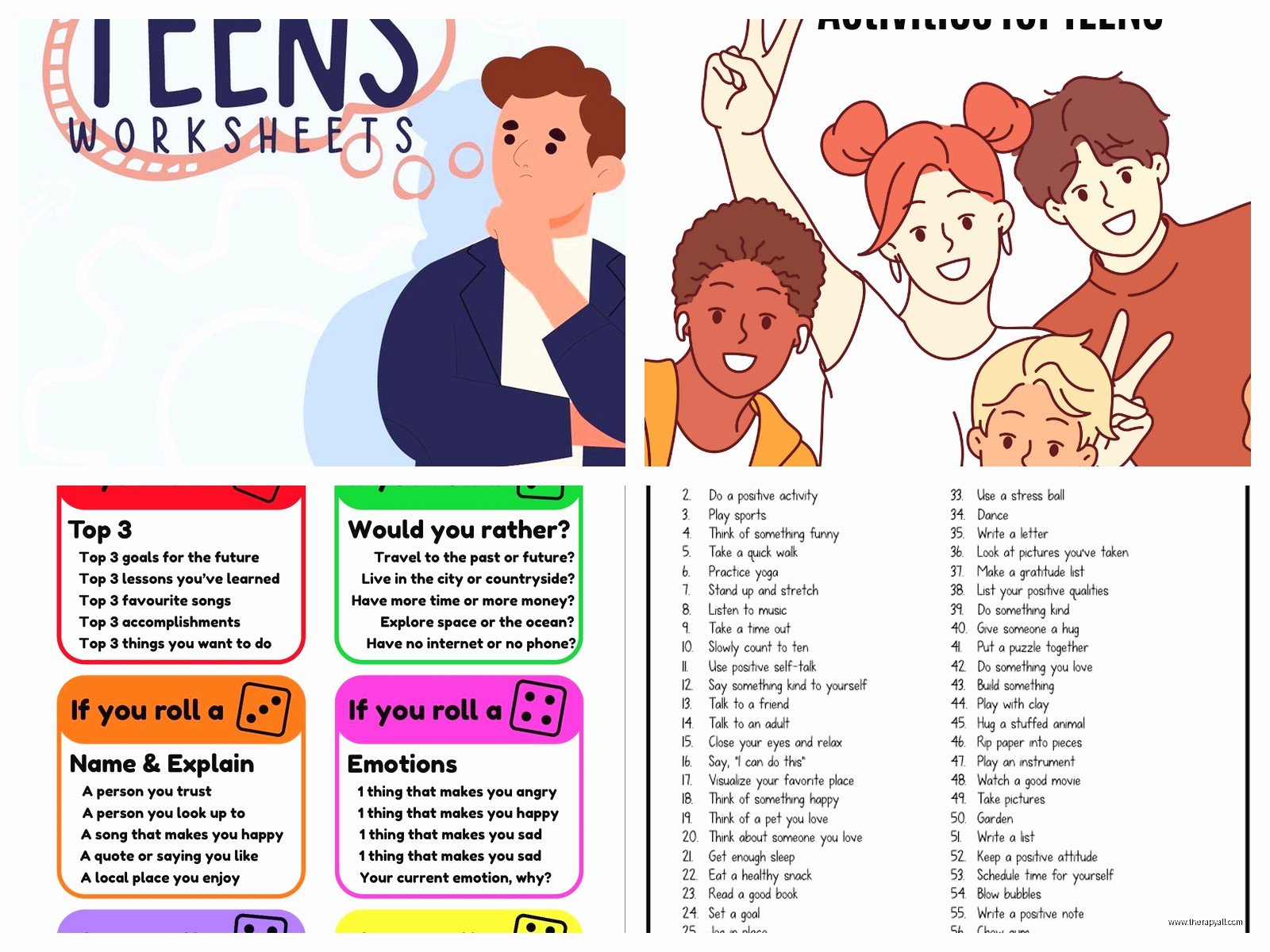
Emotion portraits involve creating faces or figures that represent different emotional states. I usually have teens draw or collage what different feelings look like for them specifically. What does their anxiety look like? Their anger? This isn’t about artistic skill—stick figures work perfectly fine. The goal is externalizing internal experiences so you can examine them together.
Timeline creation helps teens map significant events, relationships, or emotional patterns across their life. You can do this with drawing, with a literal timeline on butcher paper, or digitally if that’s their preference. It’s particularly useful for teens who’ve experienced multiple transitions—moves, divorces, school changes—because it lets them see patterns they might not have articulated before.
Safe space mapping asks teens to draw or describe (words, colors, symbols, whatever) a place where they feel completely safe. This can be real, imaginary, or a combination. For teens dealing with trauma or chronic stress, this activity serves double duty: it assesses their current access to safety and it starts building the neural pathways for what safety could feel like. Sometimes they draw places that don’t exist yet, which tells you something important about their current environment.
Collage Work
Collage is underrated. Teens can use magazines, printed images, fabric, whatever materials you have available. The nice thing about collage is that it removes the “I can’t draw” barrier while still allowing symbolic expression. I keep a bin of old magazines specifically for this—my cat knocked it over last week and now there’s like 47 issues of National Geographic scattered under my desk, but whatever.
Identity collages let teens explore different aspects of themselves: how they see themselves, how they think others see them, who they want to become. Future self-collages work well for goal-setting without the pressure of writing SMART goals or whatever corporate framework doesn’t actually resonate with adolescent development.
Movement and Somatic Activities
Teenagers live in their bodies in ways they often can’t articulate, especially if they’re dealing with anxiety, depression, or trauma. Movement activities create awareness of the body-mind connection and help discharge stored tension.
Grounding sequences teach teens to notice physical sensations as a way to interrupt anxiety spirals or dissociation. This might look like progressive muscle relaxation, but I usually teach it more informally—notice where you’re holding tension, what temperature you feel, what textures you’re touching. The goal is presence, not relaxation necessarily, though that’s often a side effect.
Emotional walks involve moving through space in ways that match different emotional states. How do you walk when you’re angry? Sad? Confident? This works better in private practice settings where you have space, but even in smaller offices you can adapt it. It builds emotional literacy through embodied experience rather than just cognitive labeling.
I’ve noticed that a lot of teens who are athletes or dancers take to somatic work immediately because they already have body awareness, but kids who feel disconnected from their bodies often need it most. You’re gonna meet resistance sometimes—teenagers are self-conscious—so presenting these as experiments rather than exercises helps.
Writing and Narrative Activities
Some teens are verbal processors who actually prefer writing to talking, at least initially. Writing activities create a record they can refer back to and give them time to formulate thoughts without the pressure of immediate response.
Unsent letters let teens express things they can’t or won’t say directly. Letters to people who’ve hurt them, to younger versions of themselves, to their anxiety or depression as if these were separate entities. The power is in the expression, not the sending. Some teens want to ceremonially destroy these letters afterward, which can be its own form of release.
Perspective shifting stories involve retelling a difficult experience from different viewpoints. What happened from your perspective? What might the other person have been experiencing? What would an outside observer see? This isn’t about justifying harmful behavior—it’s about developing cognitive flexibility and reducing black-and-white thinking.
Strength stories ask teens to identify and write about times they successfully handled challenges, even small ones. This builds on narrative therapy principles and counters the problem-saturated stories that dominate when teens are struggling. You’re looking for exceptions to the problem, moments of agency and resilience.
Journaling Structures
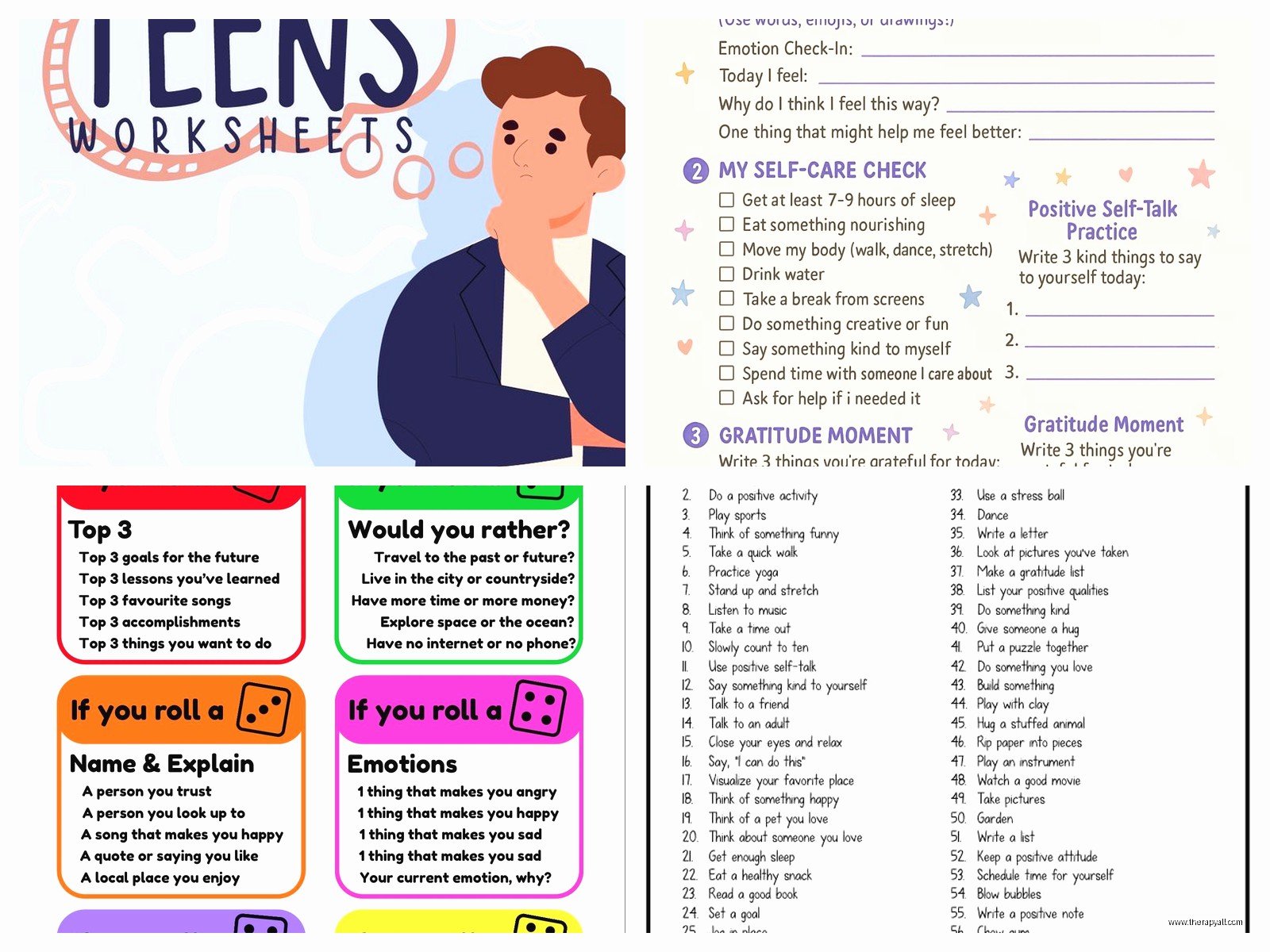
Free-form journaling works for some teens but overwhelms others. I usually offer prompts: “Write about a time you felt proud of yourself,” “Describe your anger as if it were a weather system,” “What would you tell a friend dealing with what you’re dealing with?” The prompts create just enough structure without being restrictive.
Some teens prefer bullet journaling formats where they’re tracking moods, activities, sleep, whatever variables seem relevant to their mental health. This works particularly well for teens who like data and patterns, though you have to watch for it becoming compulsive or another form of self-criticism.
Music and Sound-Based Activities
Music accesses emotion and memory in ways that bypass cognitive defenses. Most teens already have strong relationships with music, so you’re working with something familiar rather than introducing something foreign.
Playlist creation for different moods or situations gives teens a concrete coping tool they’ll actually use. Make a playlist for when you’re anxious, one for when you need energy, one for when you need to cry. The process of selecting songs requires them to think about what they need in different emotional states, which builds self-awareness.
Lyric analysis involves examining songs that resonate with them and exploring why. What about these lyrics speaks to your experience? Are there lines that capture something you haven’t been able to say? This can open conversations about identity, relationships, pain, hope—whatever themes emerge from their musical choices.
Songwriting or rap creation works if you have teens who are already musically inclined, but even teens who aren’t musicians can write simple verses or modify existing songs. It’s another form of narrative expression with the added element of rhythm and rhyme, which some teens find freeing.
Game-Based and Interactive Activities
Games create structured interaction and often lower defenses because they don’t feel like “therapy.” You’re doing something together rather than the teen being the focus of scrutiny.
Feelings charades or Pictionary builds emotional vocabulary and recognition in a low-stakes format. Teens act out or draw emotions and others guess. It’s simple but it gets everyone thinking about how emotions show up in behavior and expression.
The ungame or talking ball activities use randomized prompts or turn-taking structures to facilitate discussion. You might use a beach ball with questions written on it, dice that correspond to different question categories, or card decks designed for therapeutic conversation. The randomization removes the pressure of choosing what to talk about.
Metaphor exploration through games might involve something like Jenga where each block pulled requires answering a question, creating a physical representation of how removing or addressing different issues affects overall stability. Or using chess or checkers to talk about strategy, planning, and consequences. The game becomes a metaphor for something else you’re working on.
Digital and Technology-Based Activities
Teens are digital natives, so ignoring technology in counseling is kinda missing an opportunity. That said, you need boundaries around screen time in session and clear therapeutic rationale.
Photo-based expression using their phone cameras lets teens document their environment, things that matter to them, or moments of different emotional states. They might photograph things that represent their support system, or images that capture how depression feels, or places where they feel safe. It’s like visual journaling but using tools they already have.
Meme creation or curation actually works with a lot of teens because memes are their native language for emotional expression. Having them create or find memes that represent their experience can be surprisingly revealing and it meets them where they already communicate.
Mindfulness apps or biofeedback tools provide real-time data about physiological states. Some teens respond really well to seeing their heart rate decrease during breathing exercises, or tracking their mood patterns over time through apps. The quantification appeals to teens who like concrete evidence and control.
I spent like three months in summer 2021 researching mental health apps for an article and ended up actually using some of them myself, which was—well, that’s a different story, but the point is that digital tools can be legitimately useful if they’re integrated thoughtfully rather than just “here’s an app, go fix yourself.”
Role-Play and Scenario-Based Activities
Role-playing lets teens practice skills in a safe environment and explore different responses to challenging situations. It can feel awkward at first, but most teens warm up to it if you normalize the awkwardness upfront.
Future self-dialogues involve teens imagining a conversation with their future self—maybe themselves at 25 or 30. What would future you want current you to know? What advice would they give? What do you want to tell them about what you’re experiencing now? This builds hope and perspective without being preachy about “it gets better.”
Assertiveness practice through role-play helps teens rehearse difficult conversations—setting boundaries with parents, addressing conflict with friends, advocating for themselves at school. You might role-play with them, or have them practice both sides of the conversation to build empathy and strategy.
Empty chair technique adapted for teens involves them speaking to an empty chair as if someone (or something—their anxiety, their younger self, a person they’re angry with) is sitting there. Then they switch chairs and respond from that perspective. It sounds goofy but it’s actually pretty powerful for exploring ambivalence and internal conflict… or maybe it’s just that teens are still flexible enough developmentally to engage with imaginative techniques without the self-consciousness that adults bring.
Practical Implementation Considerations
You need to match activities to the individual teen’s preferences, developmental level, and presenting issues. A 13-year-old with ADHD needs different pacing and structure than a 17-year-old with depression. Cultural considerations matter too—some activities that seem neutral actually carry cultural assumptions about emotional expression or family dynamics.
Always explain the purpose of an activity before introducing it. Teens are more likely to engage if they understand why you’re asking them to do something rather than feeling like they’re being treated like children or manipulated. “We’re going to draw your anxiety so we can look at it together and figure out what it’s trying to tell you” lands better than “Let’s do some art therapy.”
Keep supplies accessible but not overwhelming. You don’t need a Pinterest-perfect therapy office. Basic art supplies, some magazines for collage, a few games or card decks, maybe a feelings wheel poster—that covers most of what you’ll use regularly. I’ve bought so many specialized therapeutic tools over the years that I used exactly once because they were too gimmicky or too specific.
Build in processing time after activities. The activity itself isn’t the therapy—the conversation that emerges from it is. “What did you notice while you were doing that?” “What surprised you?” “How does this connect to what’s happening in your life right now?” These questions turn activities into actual therapeutic work rather than just crafts hour.
ADHD & Neurodiversity
Life Planner Bundle – Life Organizer
Self-Care & Personal Growth
Acceptance And Commitment
Anxiety & Stress
Stress Processing Journal & Reflection Worksheets For Daily Self – Care
Self-Care & Personal Growth
Self – Reflection Guided Journal With Guided Prompts 30
Emotional Wellness
Decision Processing – Thought Processing Journal For Daily Self – Care
Therapist Resources
Physiotherapist Journal PDF Planner Tracker Or Log Book
Self-Care & Personal Growth
Customizable Self – Confidence & Self – Esteem Guided Journal
ADHD & Neurodiversity
ADHD Behavior Tracker PDF Planner Tracker Or Log Book