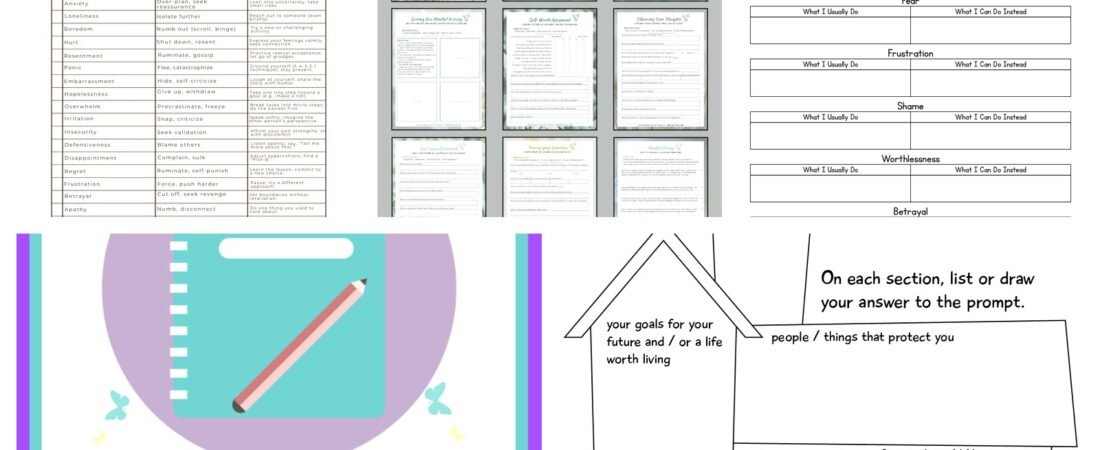
What DBT Worksheets Actually Are
DBT stands for Dialectical Behavior Therapy, which is a type of cognitive-behavioral therapy that Marsha Linehan developed specifically for people with borderline personality disorder, though it’s expanded way beyond that now. The worksheets are structured exercises that walk you through the core skills: mindfulness, distress tolerance, emotion regulation, and interpersonal effectiveness. They’re not just journal prompts or affirmations. They’re systematic tools with checkboxes, rating scales, and specific questions designed to interrupt patterns and build new responses.
I remember around 2019, I was working with this client who kept bringing in random worksheets she’d print from Pinterest, and half of them weren’t even DBT—they were just generic anxiety trackers labeled as DBT because someone put “mindfulness” in the title. It drove me kinda nuts because actual DBT worksheets have a specific structure and purpose within the four modules. You can’t just slap a feelings wheel on a page and call it dialectical anything.
The Four Core Modules and Their Worksheets
Each DBT module has its own set of worksheets, and they build on each other in a specific order, though you can use them out of sequence depending on what you need.
Mindfulness Worksheets
These focus on observing, describing, and participating without judgment. The classic worksheet is the “Wise Mind” exercise where you identify reasonable mind (logic-based), emotion mind (feeling-based), and wise mind (the synthesis). There are also “What” and “How” skills worksheets that break down the actual mechanics of being present. I use these with clients who say they “can’t meditate” because they think mindfulness means sitting cross-legged for an hour. Nah. It’s about noticing one thing at a time.
The observing exercise worksheets usually have you track sensory experiences—what you see, hear, smell, taste, touch—without adding interpretation. Simple on paper, incredibly hard in practice.
Distress Tolerance Worksheets
This is the crisis survival module. TIPP skills (Temperature, Intense exercise, Paced breathing, Progressive muscle relaxation), STOP skill, Pros and Cons worksheets. These are for when you’re in acute distress and need to not make things worse. The worksheets are pretty straightforward: they list the steps, you check off what you did, you rate your distress before and after.
The Pros and Cons worksheet is one people underestimate. It’s not just “list good and bad things.” You’re specifically weighing the pros and cons of tolerating the distress versus the pros and cons of not tolerating it (aka acting on the urge). Four quadrants. Forces you to see that giving in to the impulse has its own set of consequences.
Radical acceptance worksheets are also in this module, and honestly those are the ones that confuse people the most because acceptance sounds like approval or giving up, which it’s not, but—wait, I’ll get to misconceptions in a minute.
Emotion Regulation Worksheets
These help you identify, understand, and change emotional responses. The ABC PLEASE worksheet is probably the most practical one: Accumulate positive emotions, Build mastery, Cope ahead, and then PLEASE (treat PhysicaL illness, balanced Eating, avoid mood-Altering substances, balanced Sleep, get Exercise). You track whether you’re doing these things and how your baseline mood is affected.
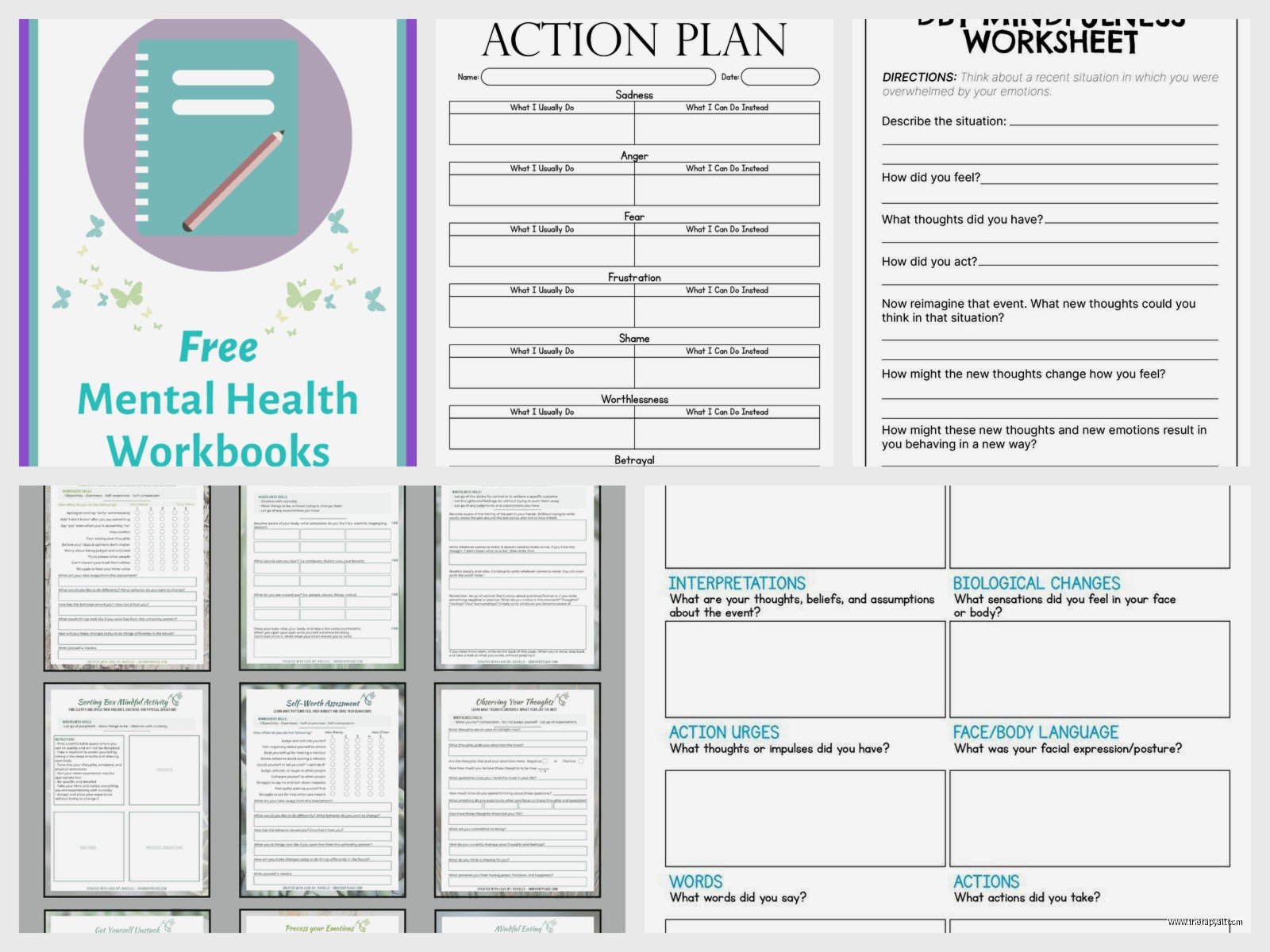
There’s also the opposite action worksheet, which is based on the idea that emotions come with action urges, and sometimes doing the opposite of what the emotion tells you to do is the most effective response. If you’re anxious and want to avoid, you approach. If you’re angry and want to attack, you gently avoid or act kindly. The worksheet walks you through identifying the emotion, checking if it fits the facts, and planning the opposite action.
My cat knocked over my coffee while I was formatting one of these last month and I had this moment of ironic awareness that I needed to use opposite action on my anger about the spill, which… anyway.
Interpersonal Effectiveness Worksheets
DEAR MAN, GIVE, and FAST. These are acronyms for specific communication strategies. DEAR MAN is about asking for what you want or saying no effectively: Describe, Express, Assert, Reinforce, stay Mindful, Appear confident, Negotiate. GIVE is about maintaining relationships: be Gentle, act Interested, Validate, use an Easy manner. FAST is about self-respect: be Fair, no Apologies (unnecessary ones), Stick to values, be Truthful.
The worksheets have you plan out a specific interaction using these frameworks. You write out what you’ll say, anticipate objections, plan your tone. It feels kinda scripted at first, but for people who either cave immediately or go nuclear in conflicts, having a structure helps.
Where to Find Free Printable DBT Worksheets
The actual official DBT worksheets are in Marsha Linehan’s workbooks, which you gotta buy, but there are legitimate free resources that either reproduce similar formats or create variations that stay true to the model.
DBT Self Help
This website has been around forever and offers free downloads of worksheets organized by module. They’re basic PDF formats, black and white, very no-frills. The advantage is they’re clearly organized and you can download individual worksheets or whole packets. They also include diary cards, which are the daily tracking sheets where you monitor emotions, urges, and skill use.
Therapist Aid
They have a mental health worksheets section with some DBT-specific tools mixed in with CBT and other modalities. The quality is high—clean design, clear instructions. Some are free, some require a subscription. The free ones are usually enough for personal use. I appreciate that they mark skill level and provide therapist guidance notes, even though you don’t need a therapist to use them.
Psychology Tools
Similar setup to Therapist Aid. They have free and paid tiers. Their DBT worksheets are well-designed and include some that blend DBT with other approaches, which can be useful or confusing depending on what you need. If you want pure DBT, stick to the ones explicitly labeled as single-module exercises.
Behavioral Tech
This is Marsha Linehan’s organization, and while most of their resources are for clinicians and require payment or training, they occasionally offer free handouts and have a resource library. It’s worth checking because when you get materials from the source, you know they’re not watered down or misinterpreted.
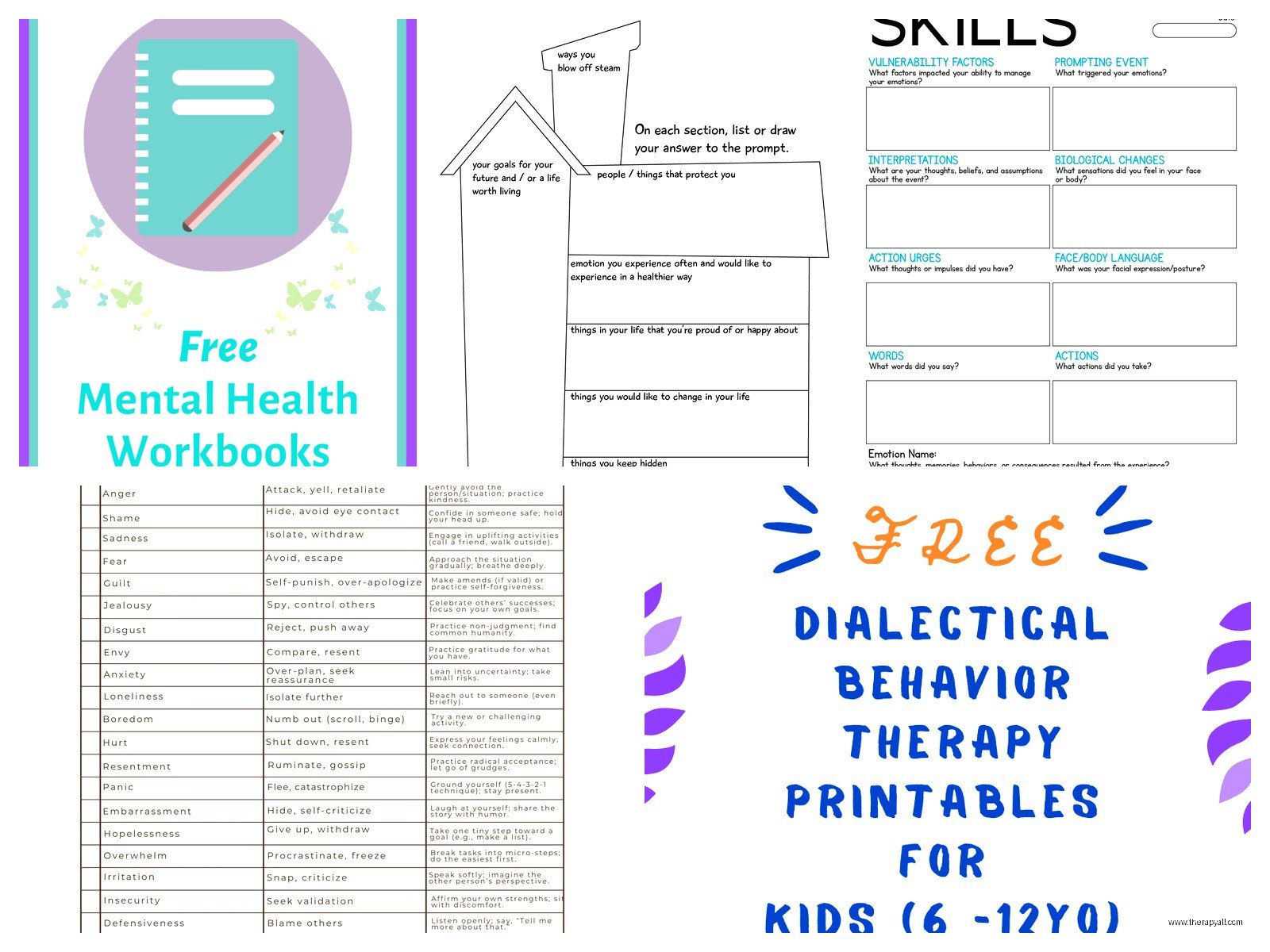
University and Hospital Resources
Some universities with DBT programs offer free patient handouts. Cornell’s DBT program used to have a really solid free packet available, though I think they reorganized their website. Lane County in Oregon has publicly available DBT materials. These are often designed for group therapy settings but work fine for individual use.
How to Actually Use These Worksheets
You don’t just print them and stare at them. I mean, some people do, but that’s not gonna do much.
Start with one module at a time. If you’re in crisis frequently, begin with distress tolerance. If your emotions feel chaotic and unpredictable, start with emotion regulation. If relationships are your primary struggle, interpersonal effectiveness. Mindfulness is foundational, so ideally you’d weave that in regardless, but you don’t have to master it before moving on—that’s another thing that annoys me about how DBT is sometimes taught, this idea that you have to be perfectly mindful before you can learn any other skill, which just sets people up to feel like failures before they even start.
Fill out worksheets in real time when possible, or immediately after a situation. The longer you wait, the more your memory reconstructs things. If you’re using a diary card, do it daily at the same time. Consistency matters more than perfection.
Actually practice the skills outside of crisis. The distress tolerance stuff especially—you can’t learn TIPP for the first time when you’re having a panic attack. Try the temperature technique (cold water on your face, holding ice) when you’re only moderately upset. Build the neural pathway before you desperately need it.
Common Problems With Free Worksheets
A lot of the free PDFs online are poorly formatted for actual printing. Margins are off, text gets cut off, or they’re designed for legal-size paper when most people have letter-size. Check the preview before you print a whole packet.
Some worksheets are too simplistic and some are too complex. The simplistic ones are just like “list three emotions you felt today” with giant blank spaces, which might work for some people but doesn’t really teach the skill. The complex ones have so many sub-questions and rating scales that they become homework you avoid. You want middle ground—enough structure to guide you, enough space to personalize.
Watch out for worksheets that blend DBT with other therapy models without labeling them clearly. There’s nothing wrong with integrative approaches, but if you’re trying to learn actual DBT skills, mixing in ACT or schema therapy elements without knowing it can be confusing. I once reviewed a “DBT worksheet” that was actually just a cognitive restructuring exercise from CBT with the word “mindfulness” thrown in the header. Like, come on.
Diary Cards Deserve Their Own Section
The diary card is the backbone of DBT skills practice. It’s a daily tracking sheet where you rate emotions (0-5 scale usually), mark urges (self-harm, substance use, whatever your targets are), note whether you acted on urges, and check off which skills you used. Some versions include space for medications, therapy appointments, and general notes.
I’m gonna be honest—most people hate diary cards at first. They feel tedious and clinical. But they’re incredibly effective for pattern recognition. After two weeks of tracking, you start seeing that your anger spikes every Tuesday (maybe because of a specific meeting or call), or that you use skills way less on weekends, or that your sleep directly correlates with emotional intensity three days later.
Free printable diary cards are all over the internet. The basic format is pretty standard: days of the week across the top, skills and emotions down the side, boxes to fill in. Some people prefer digital versions—there are apps and spreadsheets—but there’s something about the physical act of filling in a paper card that works better for a lot of people. Less distraction potential than opening your phone.
Customizing Worksheets for Your Needs
Once you understand the framework, you can modify worksheets. If the emotion list doesn’t include what you actually feel, add your own. If the DEAR MAN worksheet assumes an in-person conversation but you need it for an email, adjust the language. The principles stay the same.
You can also create your own tracking sheets. I worked with someone who made a TIPP tracking card the size of a business card that she laminated and kept in her wallet. Just the acronym, checkboxes, and space to rate distress before/after. Worked better for her than a full-page worksheet.
Some people need more visual worksheets with color-coding or icons. If you have design skills or even just access to Canva, you can recreate the basic structures in formats that work better for your brain. Just don’t lose the actual content in the aesthetics—I’ve seen some really pretty “DBT-inspired” worksheets on Etsy that are basically useless because they prioritized looking good over functional design.
What Worksheets Can’t Do
Worksheets aren’t therapy. They’re tools within a therapeutic framework, but doing worksheets alone isn’t the same as DBT treatment, which includes individual therapy, skills group, phone coaching, and a therapist consultation team. If you’re using these worksheets on your own, that’s fine and they can absolutely help, but don’t expect them to replace professional support if you need it.
They also won’t work if you’re not actually willing to try the skills. Filling out a worksheet about opposite action while having zero intention of doing anything differently is just… paperwork. The insight comes from application, not completion.
And worksheets can’t account for every situation or every person’s neurology. DBT was designed with certain populations in mind, and while it’s been adapted broadly, some skills work better for some people than others. If you try a skill repeatedly and it genuinely doesn’t help, that’s data, not failure. You might need a different skill or a different approach entirely, or—and this is important—the situation might actually require action and change, not just skills to tolerate it better.
Printing and Organization Tips
If you’re printing multiple worksheets, get a three-ring binder and dividers for each module. Hole-punch everything or use sheet protectors. Sounds basic, but I’ve seen people print 40 pages of worksheets that immediately become a chaotic pile they never touch again.
Print a few copies of the worksheets you use most often. Don’t print one copy of everything—you’ll end up with a huge binder full of things you never use. Start with 2-3 worksheets per module that address your specific goals, use them for a few weeks, then expand.
Some worksheets are designed to be reusable. The skills checklists, the TIPP steps, the DEAR MAN script template—these you might want to laminate or put in sheet protectors so you can use dry-erase markers and reuse them.
Digital Versus Paper
There are apps and digital platforms for DBT skills now. DBT Coach, MindShift, various therapy apps with DBT modules. They have reminders, tracking features, sometimes even crisis coaching elements. They’re convenient, especially if you’re always on your phone anyway.
But paper worksheets have advantages. No notifications, no battery life, no temptation to switch over to social media. The physical act of writing can slow down racing thoughts. You can spread multiple worksheets out and see patterns across them. And if you’re in a situation where you can’t or shouldn’t be on your phone (certain work environments, school, during social situations), a small paper worksheet is more discreet.
Summer 2022 I was writing like three worksheet roundups a week for different platforms and I started actually using them myself just to test functionality, and I genuinely found I retained the skills better when I hand-wrote the worksheets versus typing them. Could be a personal thing, could be the motor memory component, I don’t know.
Use whatever format you’ll actually use consistently. That’s the only rule that matters.