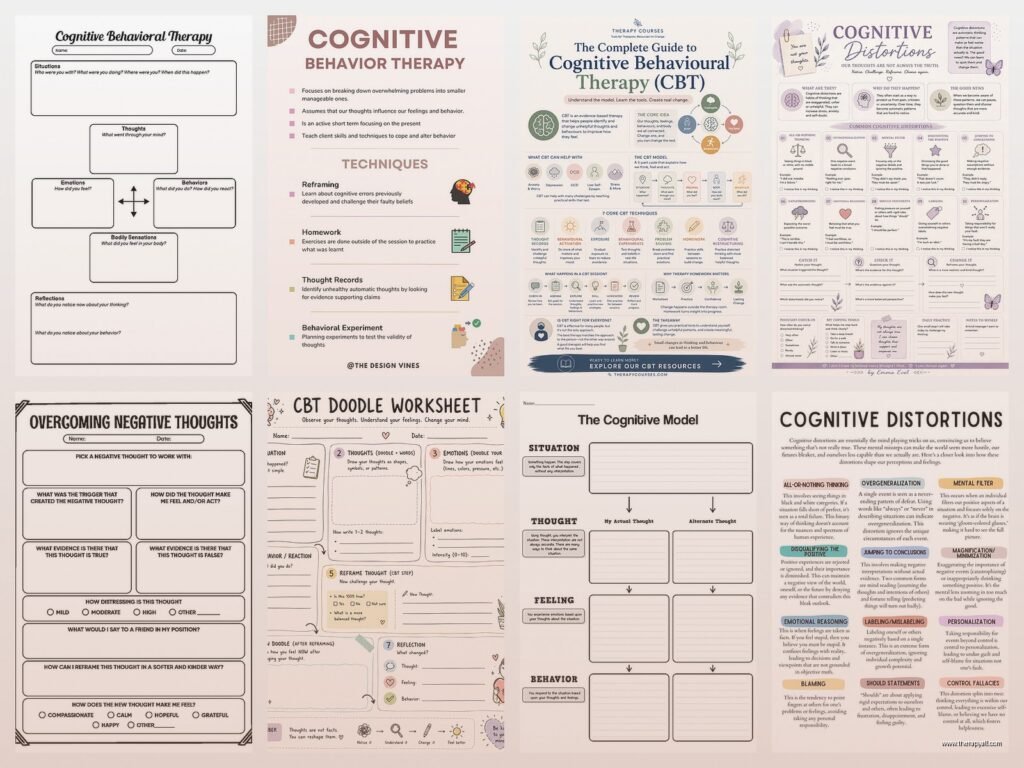
Cognitive Behavioral Therapy (CBT) CBT operates on the premise that your thoughts, feelings, and behaviors are interconnected. Change one, and you can shift the others. I remember sitting in a training session back in 2019 where the instructor kept saying “thoughts aren’t facts” over and over until someone finally asked if we could move on […]
Category Archives: Therapy resources
Know What You’re Actually Looking For Before you start Googling therapists or scrolling through Psychology Today profiles at 2am, you need to figure out what you’re trying to fix or understand. This sounds obvious but I’ve watched people book consultations with five different therapists and then realize they were looking for a life coach, not […]
Online depression therapy is basically what it sounds like—therapy for depression that happens over the internet instead of in a traditional office. You connect with a licensed therapist through video calls, phone sessions, or sometimes messaging platforms. The therapeutic approaches used are the same ones you’d encounter in person: cognitive behavioral therapy (CBT), interpersonal therapy, […]
Online therapy platforms have exploded in the last five years, and honestly, I spent most of 2021 reviewing them for a mental health publication that kept changing their editorial guidelines every other week. You’re looking at dozens of options now, each claiming to be the “best” or “most affordable” or “clinically proven,” which—let me tell […]
Cognitive therapy homework isn’t some optional extra credit assignment you can skip if you’re feeling lazy. It’s the actual mechanism through which change happens outside the therapy room. You spend maybe 50 minutes a week with your therapist, which leaves 10,030 other minutes where your brain is doing its thing, and that’s where homework comes […]
CBT homework assignments are structured tasks your therapist gives you to practice between sessions. They’re not busywork—they’re the actual mechanism through which cognitive behavioral therapy creates change. You show up for an hour a week, but you live in your brain 24/7, so the homework is where you apply what you discussed in session to […]
Therapy homework is the stuff your therapist asks you to do between sessions. It’s not busywork. It’s designed to extend the impact of that one hour per week into the rest of your life, which is where the actual problems live. You don’t get better by talking about your anxiety for 50 minutes and then […]
Guided therapy journals use structured prompts to help you explore thoughts, emotions, and behavioral patterns without needing a therapist in the room. They’re basically scaffolding for self-reflection—pre-written questions that direct your attention toward specific psychological concepts or emotional processes. I remember back in 2019, I was reviewing about a dozen different journaling workbooks for a […]
A therapy journal is just a notebook where you track thoughts, emotions, and patterns between sessions. It’s not a diary. It’s not a gratitude log. It’s a clinical tool that helps you and your therapist work more efficiently, and honestly, I wish more people understood that distinction because the number of times I’ve seen someone […]
Couples therapy homework exists because 50 minutes once a week isn’t enough to rewire how two people communicate, fight, or even just exist together. You need the repetition between sessions, the practice in real environments where emotions actually spike. I remember a couple I worked with back in 2019 who would come in every week, […]