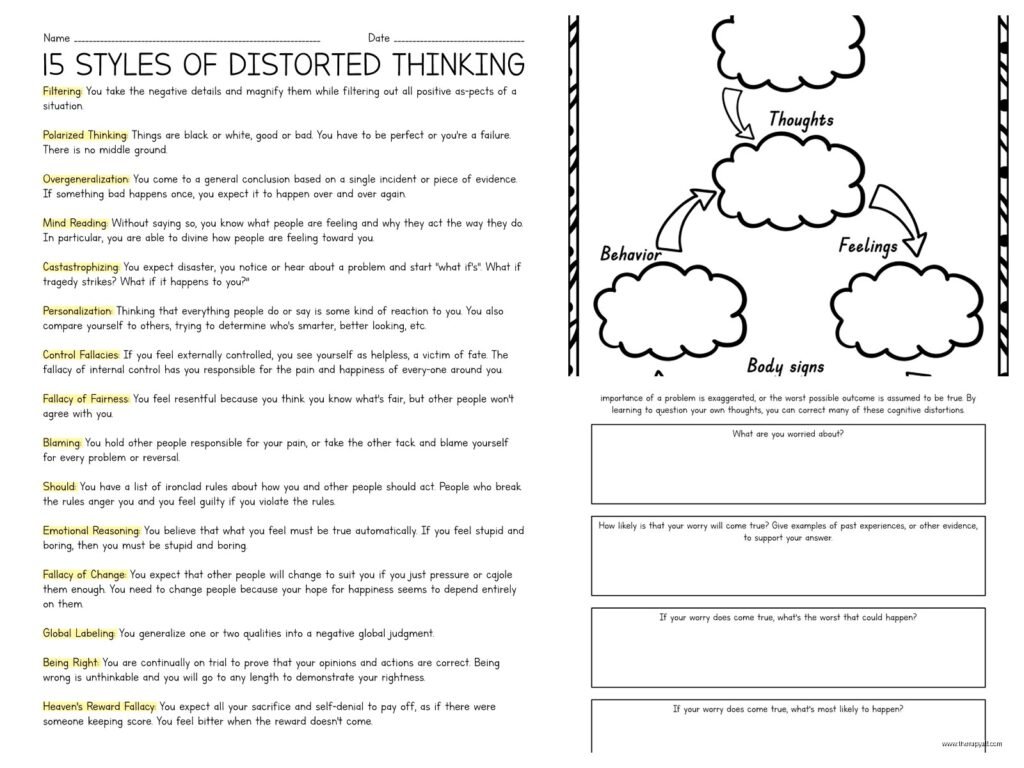
# Thought Restructuring Worksheet: Reframe Negative Thought Patterns Thought restructuring worksheets are paper or digital tools designed to help you identify, evaluate, and replace distorted thinking patterns with more balanced interpretations. The core technique comes from cognitive behavioral therapy, specifically Aaron Beck’s work in the 1960s, and the worksheet format became standard practice because therapists […]
Tag Archives: therapy worksheet
What Thought Defusion Actually Is Thought defusion is one of the core techniques in Acceptance and Commitment Therapy, and it’s about changing your relationship with thoughts instead of trying to change the thoughts themselves. You know how cognitive restructuring asks you to challenge and modify your thoughts? This is different. ACT doesn’t care if your […]
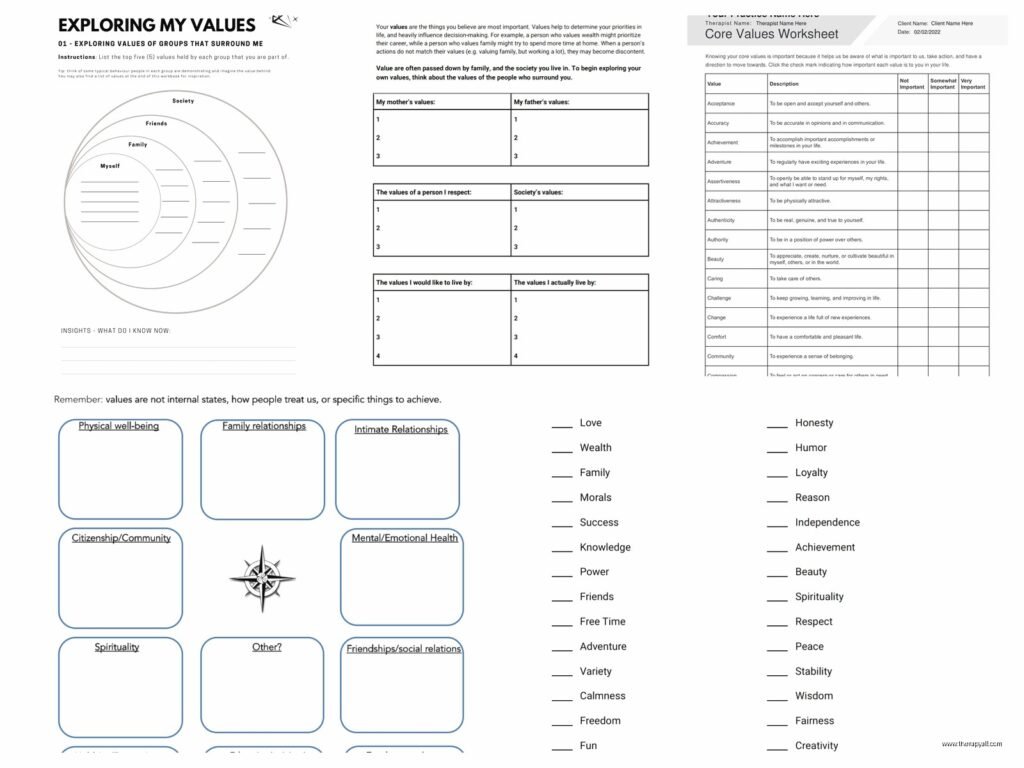
# Understanding the Therapy Values Worksheet Values worksheets show up everywhere in therapy—ACT practitioners love them, CBT therapists use them for goal-setting, even psychodynamic folks will sneak one in when someone’s completely stuck. The basic premise is straightforward: you identify what actually matters to you, not what you think should matter or what your parents […]
# Understanding Therapy Termination Worksheets Therapy termination worksheets are structured tools designed to guide both therapists and clients through the ending phase of a therapeutic relationship. They help organize thoughts, feelings, and reflections about the work done in therapy, and they create space to address unfinished business before saying goodbye. I remember sitting in a […]
SMART goals worksheets show up in therapy offices everywhere because they force specificity in a way that vague goal-setting never does. The framework breaks down as Specific, Measurable, Achievable, Relevant, and Time-bound, which you’ve probably seen on corporate motivational posters, but in mental health settings it actually serves a different function—it stops clients from setting […]
What Self-Monitoring Actually Is Self-monitoring is systematically tracking your own behavior, thoughts, emotions, or physical symptoms over time to identify patterns you wouldn’t otherwise notice. You write down what’s happening in real-time or close to it, usually on some kind of worksheet or log, so you can look back later and see what triggers what, […]
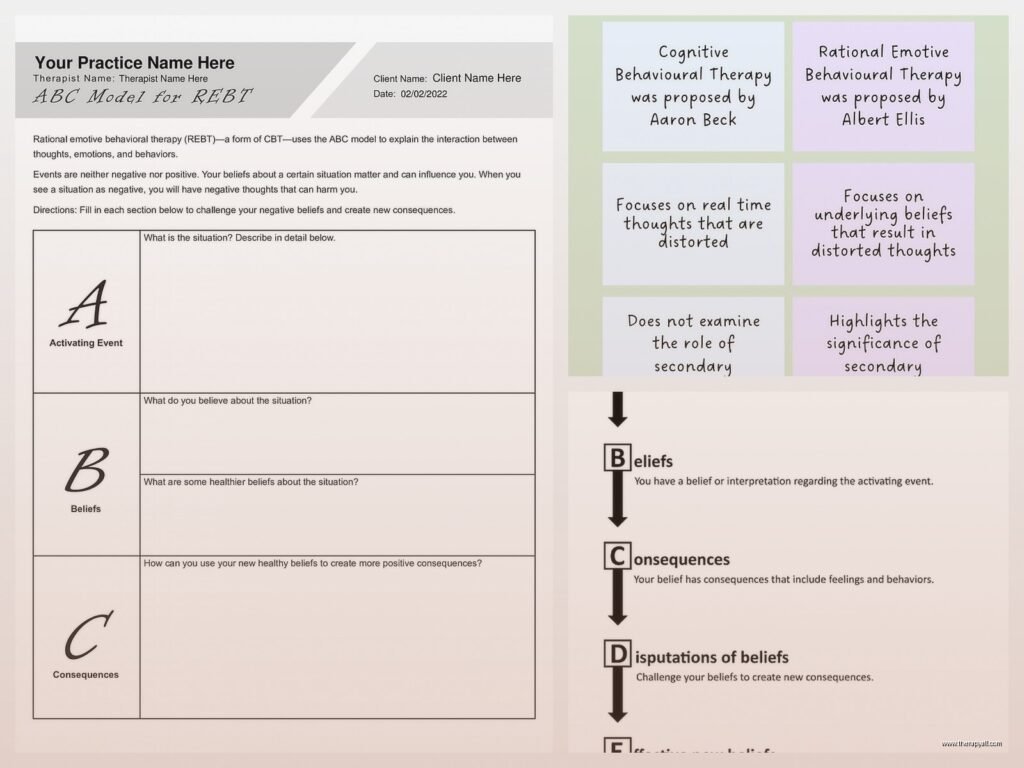
# Understanding REBT Worksheets and How They Actually Work REBT worksheets are structured tools that help you identify irrational beliefs and replace them with rational ones using the ABC(DE) model developed by Albert Ellis in the 1950s. The worksheet format breaks down your emotional reactions into components: the Activating event, your Beliefs about that event, […]
# Understanding REBT Worksheets and How They Actually Work Rational Emotive Behavior Therapy worksheets break down emotional reactions into manageable parts so you can see where your thinking went sideways. The basic structure follows Albert Ellis’s ABC model: Activating event, Belief, and Consequence. Most worksheets add D for Disputation and E for Effective new belief, […]
Polyvagal theory worksheets target the autonomic nervous system through exercises that help you identify which state you’re in and what triggers transitions between them. The theory, developed by Stephen Porges, breaks down the vagus nerve’s role in regulating our stress responses and social engagement. Most worksheets focus on tracking your nervous system states, identifying triggers, […]
What Negative Core Beliefs Actually Are Negative core beliefs are the deep, absolute statements you hold about yourself, other people, or the world. They’re not the surface-level thoughts like “I hate Mondays” or “That meeting sucked.” They’re the foundational assumptions that sit underneath everything else. Stuff like “I am unlovable,” “People will always abandon me,” […]