Tag Archives: therapy worksheet

Narrative Therapy Handouts: Rewrite Your Story with These Tools

# Narrative Therapy Handouts: Rewrite Your Story with These Tools Narrative therapy operates on the premise that people are separate from their problems and that the stories we tell about ourselves shape our identities more than we realize. I remember sitting in a supervision session back in 2019 where my supervisor handed me this crumpled […]
Hot Cross Bun CBT Worksheet: Visualize Thoughts, Feelings & Behaviors

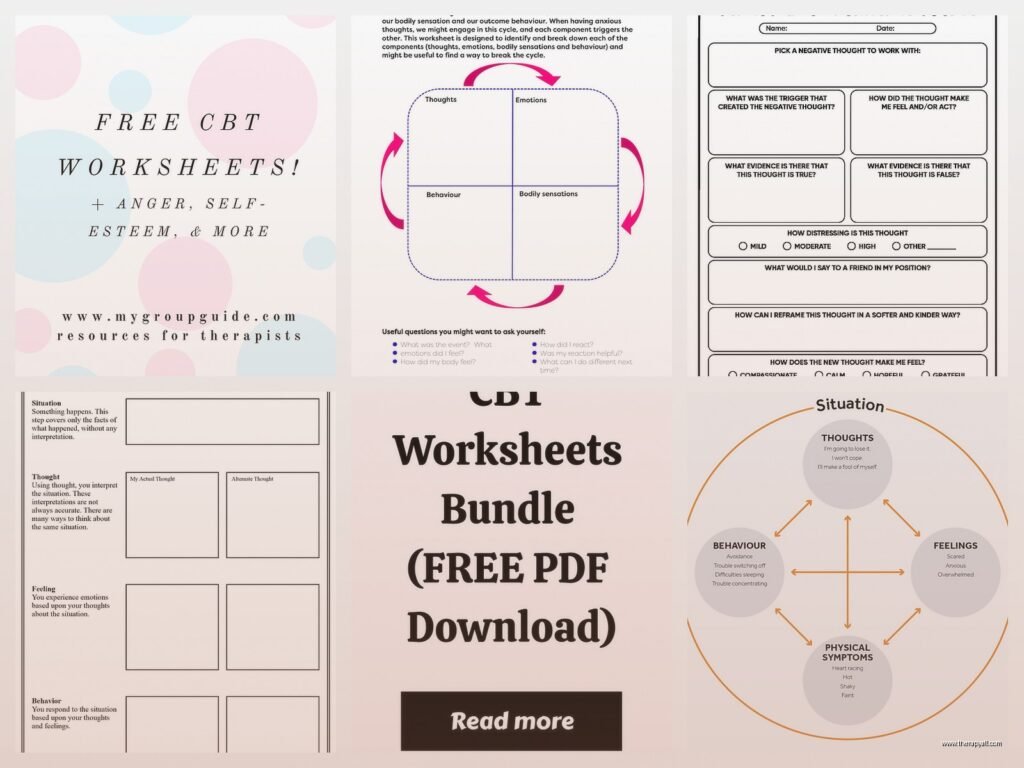
# Understanding the Hot Cross Bun Model in CBT The Hot Cross Bun is a cognitive behavioral therapy framework that maps out how thoughts, feelings, physical sensations, and behaviors all interact with each other in any given situation. Picture an actual hot cross bun—the kind with the cross on top dividing it into four sections. […]

Goal Setting Therapy Worksheet: Define and Achieve Your Objectives

What Goal Setting Therapy Worksheets Actually Do Goal setting worksheets in therapy help you move from vague wishes to concrete action steps. They create structure around what you want to change, why it matters, and how you’ll track progress. Most therapeutic approaches use some form of goal-setting framework because outcomes improve when clients can articulate […]

Free Printable ADHD Therapy Worksheets for Kids and Adults

# Free Printable ADHD Therapy Worksheets for Kids and Adults ADHD worksheets exist because people with attention-deficit/hyperactivity disorder need external structures to manage internal chaos. These printables organize tasks, track symptoms, build coping skills, and help therapists avoid repeating the same instructions seventeen times in one session. I remember around 2019, I was working with […]

Emotion Worksheets: Identify, Understand, and Regulate Your Feelings

What Emotion Worksheets Actually Do Emotion worksheets are structured tools that help you name what you’re feeling, figure out why you’re feeling it, and decide what to do about it. They’re not journaling prompts or affirmations. They’re frameworks—usually one or two pages—that walk you through a specific emotional process using questions, charts, or fill-in-the-blank formats. […]

Distress Tolerance Skills Worksheet: DBT Tools for Crisis Moments

What Distress Tolerance Actually Does Distress tolerance is one of the four modules in Dialectical Behavior Therapy, and it’s basically the crisis management toolkit. When emotions spike so high that your usual coping strategies don’t work—when you’re about to send that text, make that call, or do something you’ll regret in three hours—distress tolerance skills […]

Decatastrophizing Worksheet: Stop Worst-Case Thinking in Its Tracks

Decatastrophizing is a cognitive restructuring technique that challenges the mental habit of jumping to worst-case scenarios. When you’re convinced that missing a deadline will get you fired, that your partner’s silence means the relationship is over, or that a headache is definitely a brain tumor, you’re catastrophizing. The worksheet format gives you a structured way […]

DBT Cheat Sheet PDF: Essential Skills at a Glance

What a DBT Cheat Sheet Actually Does A DBT cheat sheet is a condensed reference document that lists the core skills from Dialectical Behavior Therapy in a format you can print, fold up, or keep on your phone. It’s meant to be grabbed quickly when you’re mid-crisis or just need a reminder of what skill […]

CPT Challenging Beliefs Worksheet: Trauma Processing Exercise

# Understanding the CPT Challenging Beliefs Worksheet Cognitive Processing Therapy uses specific worksheets to help people work through trauma, and the Challenging Beliefs Worksheet is probably the most direct tool in the whole protocol. It’s not gentle. It doesn’t ease you into anything. You write down a stuck point—which is basically a belief that trauma […]

Couples Counseling Handouts: Practical Tools for Every Session

What Makes a Counseling Handout Actually Useful Couples counseling handouts need to do three things: get to the point fast, give people something they can actually use between sessions, and not sound like a corporate training manual. I’ve seen too many therapists hand out PDFs that look like they were designed in 2003 with clip […]